
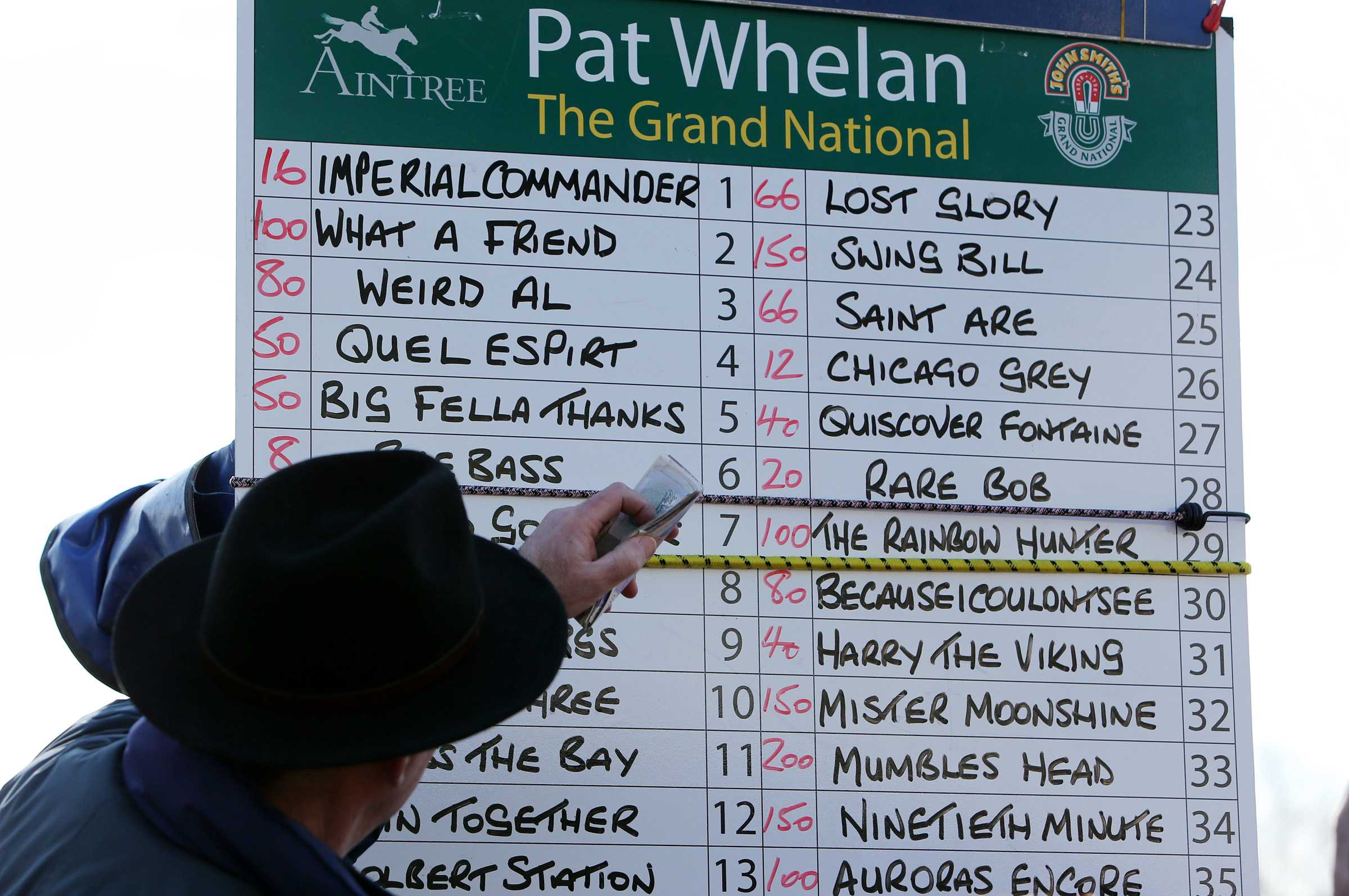
What Are Betting Odds and How Do They Work?
A beginner-friendly guide to reading betting odds, calculating payouts and understanding what each price says about an outcome's probability.

Betting odds are numbers that show an outcome's implied probability and how much a winning bet would pay. They can appear as American, decimal or fractional odds, but every format represents the same underlying price. Learning how to read betting odds helps you identify favourites and underdogs, calculate potential profit and compare prices between sportsbooks.
Odds are prices, not guarantees. They reflect a sportsbook's assessment of an outcome, market information and a built-in margin. That means the probability implied by the posted odds is not necessarily the outcome's true chance of happening.
Betting Odds: Key Takeaways
- Betting odds show potential payout and implied probability in one number.
- Three odds formats dominate: American (+150/-200), decimal (2.50), and fractional (3/2).
- Negative American odds usually identify the favourite, while positive odds usually identify the underdog.
- Decimal returns include the original stake; fractional odds normally express profit relative to the stake.
- Sportsbook prices include a margin called the vig and can change before an event begins.
What Are Betting Odds?
Betting odds are the price attached to a possible outcome. They tell you how much a winning wager could return and the likelihood implied by that price. Shorter odds indicate a higher implied probability and usually a smaller potential profit. Longer odds indicate a lower implied probability and usually a larger potential profit.
For example, a team offered at -200 is priced as a stronger favourite than one offered at -120. An underdog at +300 offers a larger potential return than one at +150, but the higher payout reflects a lower implied chance of winning.
The odds do not tell you whether a bet is good or bad on their own. Value depends on whether you believe the real probability is higher than the probability implied by the sportsbook's price.
How Do Betting Odds Work?
Sportsbooks begin by estimating how likely each outcome is. They convert those estimates into odds, add a margin and publish the resulting prices. Bettors then choose an outcome, enter a stake and use the posted odds to calculate the potential profit and total return.
1. The sportsbook estimates the probability of each possible outcome.
2. Those probabilities are converted into American, decimal or fractional odds.
3. A margin is incorporated into the market price.
4. The bettor selects an outcome and enters a stake.
5. The accepted odds determine the potential profit and total return.
6. If the bet wins, the sportsbook normally returns the original stake plus the profit.
The odds accepted when a wager is confirmed are normally locked in for that bet. Later changes to the market price do not usually alter an already accepted wager, although settlement rules and exceptions vary by operator and market.
How to Read Betting Odds
Start by identifying the format. American odds use plus and minus signs, decimal odds use a multiplier, and fractional odds use a ratio. Next, determine whether the number represents profit or total return. Finally, convert the price into implied probability if you want to compare it with your own estimate.
The following prices are equivalent:
Format | Example | Profit on $100 | Total return | Implied probability |
American | +150 | $150 | $250 | 40% |
Decimal | 2.50 | $150 | $250 | 40% |
Fractional | 3/2 | $150 | $250 | 40% |
The display changes, but the price does not: all three examples imply a 40% break-even probability before considering the full market margin.
How Do American Betting Odds Work?
American odds use a plus or minus sign and a $100 reference point. They scale proportionally, so you do not need to wager exactly $100.
What Do Negative Odds Mean?
Negative American odds usually indicate the favourite. The number shows how much must be risked to make $100 in profit. At -150, a $150 winning bet produces $100 in profit and returns $250 in total.
What Do Positive Odds Mean?
Positive American odds usually indicate the underdog. The number shows the profit from a winning $100 stake. At +150, a $100 winning bet produces $150 in profit and returns $250 in total.
For more examples, see Bodog's guide to American betting odds.
How Do Decimal Betting Odds Work?
Decimal odds show the total return for each unit staked, including the original stake. Multiply the stake by the decimal price to calculate the potential return.
Total return = Stake x Decimal odds
A $20 bet at decimal odds of 2.50 returns $50 if it wins. Because the $50 total includes the original $20 stake, the profit is $30.
See the full guide to decimal betting odds for additional calculations and conversions.
How Do Fractional Betting Odds Work?
Fractional odds show potential profit relative to the stake. The numerator represents the potential profit and the denominator represents the amount staked.
Profit = Stake x (Numerator / Denominator)
A $20 bet at 3/2 produces $30 in profit if it wins. After adding the original $20 stake, the total return is $50. Fractional odds are especially common in the United Kingdom, Ireland and horse racing markets.
How Do You Calculate a Betting-Odds Payout?
Before calculating a payout, distinguish among the stake, profit and total return:
· Stake: the amount risked on the wager.
· Profit: the amount won above the original stake.
· Total return or payout: the returned stake plus the profit.
Odds | Stake | Potential profit | Total return |
-150 | $30 | $20 | $50 |
+150 | $30 | $45 | $75 |
2.50 | $30 | $45 | $75 |
3/2 | $30 | $45 | $75 |
A sportsbook may label the final figure as the potential return, total payout or total win. Check whether the displayed amount includes the stake before confirming the wager.
What Is Implied Probability?
Implied probability is the break-even percentage represented by an odds price. It lets you translate the price into a probability that can be compared with your own assessment. Because sportsbook prices include a margin, the implied probabilities for every outcome in a market normally add up to more than 100%.
Positive American Odds Formula
Implied probability = 100 / (Positive odds + 100) x 100
At +150, the calculation is 100 / 250 x 100, producing an implied probability of 40%.
Negative American Odds Formula
Implied probability = |Negative odds| / (|Negative odds| + 100) x 100
At -150, the calculation is 150 / 250 x 100, producing an implied probability of 60%.
Decimal Odds Formula
Implied probability = 1 / Decimal odds x 100
At decimal odds of 2.50, the calculation is 1 / 2.50 x 100, producing an implied probability of 40%.
For a deeper explanation, see what implied probability means and how to calculate implied probability.
What Are Vig, Juice and Overround?
Vig, short for vigorish, is the sportsbook's built-in margin. It is also called juice. Overround describes how far the combined implied probabilities in a market exceed 100%.
Consider a standard two-sided market priced at -110 on both sides. Each side carries an implied probability of approximately 52.38%, producing a combined total of approximately 104.76%. The amount above 100% is the overround. After normalizing the probabilities, the theoretical sportsbook margin is approximately 4.55% when the action is proportionate to those prices.
That margin gives the sportsbook an expected mathematical advantage, but it does not guarantee a profit on every individual game. Actual results depend on the distribution of wagers, accepted prices and the winning outcome.
For more, read our full Vig guide.
Why Do Betting Odds Change?
Betting odds change when new information or market activity alters the price of an outcome. A sportsbook may move the odds, the point spread or the total before an event and continue repricing markets during live betting.
Common causes include:
· Injuries, starting lineups and roster announcements
· Weather or playing conditions
· New statistical or tactical information
· Betting volume and respected market action
· Changes in the sportsbook's liability
· Movements made by market-leading sportsbooks
· Events unfolding during live play
Line movement is not always a simple attempt to attract equal money on both sides. Sportsbooks also respond to new information, sharper market prices and their own exposure. Once your wager has been accepted, later movement normally does not change the odds on that ticket.
How Do Odds Work Across Different Bet Types?
Odds determine the price and payout of nearly every sportsbook market. The bet type defines what must happen for the wager to win; the accompanying odds determine what that winning wager pays.
Bet type | What the wager covers | How the odds are used |
Moneyline | Which team or player wins | Prices each possible winner |
Point spread | Whether a team covers a set margin | Prices each side of the spread |
Total | Whether a combined score finishes over or under a number | Prices the over and under |
Prop bet | A player, team or event-specific outcome | Prices each available result |
Parlay | Multiple selections combined in one bet | Combines the prices of every leg |
Futures | A longer-term outcome such as a championship | Reflects probability over a longer time frame |
Learn more about the different types of sports bets and how each market is settled.
How to Compare Betting Odds Between Sportsbooks
Sportsbooks can offer different prices for the same outcome because each uses its own models, margin and risk position. Comparing prices - often called line shopping - can increase the potential return without changing your selection.
Sportsbook | Price | Stake | Potential profit |
Sportsbook A | -120 | $100 | $83.33 |
Sportsbook B | -110 | $100 | $90.91 |
Sportsbook C | +100 | $100 | $100.00 |
Before comparing prices, confirm that the sportsbooks are offering the same market, line and settlement terms. A price of -110 at +3.5 points is not directly equivalent to -110 at +3 points.
Practical Betting-Odds Examples
Example 1: Moneyline Favourite
A basketball team is priced at -200. A $50 stake produces $25 in potential profit and a $75 total return. The price represents an implied probability of 66.67%, before comparing all outcomes and removing the sportsbook's margin.
Example 2: Moneyline Underdog
A football team is priced at +170. A $50 stake produces $85 in potential profit and a $135 total return. The price implies a probability of approximately 37.04%. The larger payout reflects a lower implied chance of winning; it does not automatically make the wager better value.
Example 3: The Same Price in Three Formats
An outcome priced at +150 can also be displayed as 2.50 or 3/2. In every case, a $40 winning stake produces $60 in profit and a $100 total return. Each format represents a 40% implied probability.
Common Mistakes When Reading Betting Odds
· Confusing potential profit with total return.
· Reading a minus sign as the amount that can be won rather than the amount required to profit $100.
· Assuming positive odds automatically represent better value.
· Believing the favourite is guaranteed to win.
· Treating implied probability as an exact forecast instead of a market price containing margin.
· Ignoring the vig when comparing two sides of a market.
· Comparing different formats without converting them to equivalent prices.
· Comparing prices attached to different spreads, totals or settlement rules.
· Assuming a larger payout necessarily means a better bet.
· Failing to confirm whether the odds changed before submitting the bet.
Betting Odds vs. Point Spread vs. Probability
| Concept | What It Shows | Format |
|---|---|---|
| Betting Odds | Payout and implied win chance | American, decimal, fractional |
| Point Spread | Margin needed to level two teams | Points (e.g., -6.5) |
| Probability | Pure statistical likelihood | Percentage |
Final Takeaway
Betting odds are easier to understand once you separate their two functions: they indicate how much a winning wager pays and the probability implied by the price. American, decimal and fractional odds display that information differently, but the underlying value remains the same.
Before placing a wager, identify the odds format, distinguish profit from total return and account for the sportsbook's margin. Comparing equivalent prices across licensed sportsbooks can help you avoid accepting a less favourable number, but no set of odds guarantees an outcome. Bet only with money you can afford to lose and treat sports betting as entertainment, not a source of income.
Betting Odds FAQs
What are betting odds in simple terms?
Betting odds are numbers that show how much a winning wager could pay and the probability implied by that price.
How do betting odds work?
A sportsbook estimates the probability of an outcome, converts it into a price and incorporates a margin. The posted odds then determine the potential profit and total return on a winning wager.
How do you read positive and negative odds?
Negative American odds show how much must be risked to make $100 in profit. Positive odds show the profit from a winning $100 stake.
What does -110 mean in betting?
Odds of -110 mean a bettor must risk $110 to make $100 in profit. A smaller stake scales proportionally; for example, $11 at -110 would make $10 in profit.
Are +150, 2.50 and 3/2 the same odds?
Yes. They are equivalent American, decimal and fractional prices. Each implies a 40% probability and returns $250 in total from a winning $100 stake.
What is the difference between profit and total return?
Profit is the amount won above the stake. Total return is the original stake plus the profit.
How do you calculate implied probability?
Convert the price using the formula for its format. For decimal odds, divide one by the decimal price and multiply by 100. American and fractional odds use different formulas.
Why do betting odds change?
Odds change because of injuries, lineup news, weather, betting activity, competing market prices and changes in sportsbook liability. Live odds also react to events as they happen.
Do odds change after you place a bet?
The odds accepted when a bet is confirmed are normally locked in for that ticket, even if the market moves later. Check the operator's rules for exceptions.
Which betting-odds format is easiest for beginners?
Decimal odds are often easiest for payout calculations because they show total return as a direct multiplier. The best format is ultimately the one you can interpret accurately.
Why do sportsbooks offer different odds?
Each sportsbook uses its own pricing models, margin and risk position. Market updates may also reach sportsbooks at different times.
Do higher odds mean a better bet?
No. Higher odds mean a larger potential payout and a lower implied probability. A bet offers value only when its price is favourable relative to the outcome's realistic chance of happening.
Continue Learning
· American odds explained: Read positive and negative prices and calculate potential returns.
· Decimal odds explained: Use decimal multipliers to calculate total payouts.
· What is implied probability?: Understand what an odds price says about break-even probability.
· How to calculate implied probability: Use formulas to convert different odds formats into percentages.
· Types of sports bets: Learn how moneylines, spreads, totals, props and parlays work.
· How live betting works: See why prices change throughout an event.
Sources & Review
The Bodog editorial team is comprised of experts in the iGaming, Sportsbetting, Lifestyle, Travel Wellness and Casino space.
More Articles like this
Fury vs. Joshua Is Finally Here. Is It Five Years Too Late?
Tyson Fury vs. Anthony Joshua is finally happening. Will we get one last great heavyweight fight, or has boxing waited too long?
By James Guill
Best Ontario Sports Betting Apps & Sites for 2026
We compare the best licensed sports betting apps in Ontario using App Store ratings, live betting performance and key features, helping bettors choose their best Ontario sports betting site.
By James Guill
Why More Tennis Pros Are Finding a Second Act in Pickleball
Pickleball is becoming more than a second sport for tennis pros. It’s opening doors to new careers, businesses, and ownership opportunities off the court.

By Cole Rush
Best Alberta Sports Betting Apps & Sites for 2026
Compare the best sports betting apps in Alberta, including licensed sportsbooks, App Store ratings, live betting, mobile features, promotions and more.
By James Guill
Why 'Bet $5, Get $200' Isn't Free Money
Sportsbooks make “Bet $5, Get $200” sound like an easy payday, but bonus bets come with expiration dates, restrictions and payout rules that make that $200 worth less than it appears.
By Cole Rush
Living With Legends: Six Surprising NHL Roommate Stories
From Sidney Crosby and Mario Lemieux to Macklin Celebrini and Joe Thornton, these NHL roommate pairings helped turn young stars into superstars.

By Stuart Hughes

