
What Is Vig in Sports Betting?
Vig, also called juice or vigorish, is the margin built into sportsbook odds. Here's how it works, how to calculate it and why it changes your break-even rate.

Vig in sports betting is the margin a sportsbook builds into its odds. It is short for vigorish and is also commonly called juice. Rather than appearing as a separate charge, vig is reflected in the price and reduces the payout compared with a market offering perfectly fair odds.
For example, an evenly matched two-sided market might be priced at -110 on both outcomes instead of +100. A bettor must risk $110 to make $100 in profit, and the sportsbook's margin is contained in the difference between the posted prices and the market's no-vig probabilities.
Key Takeaways
- Vig, juice and vigorish refer to the margin built into sportsbook odds.
- A -110/-110 market has a 4.76% overround and an approximately 4.55% normalized theoretical margin.
- A bettor wagering exclusively at -110 must win 52.38% of those bets to break even.
- Vig appears in spreads, totals, moneylines, props, parlays and futures, even when it is not obvious.
- Comparing equivalent lines and prices can reduce the amount of vig paid over time.
Are Vig and Juice the Same Thing?
Yes. Vig, juice and vigorish describe the same core concept: the pricing margin included in a sportsbook market. Bettors and sportsbooks often use the terms interchangeably. Vig is the more formal abbreviation of vigorish, while juice is the common slang term.
Related terms such as overround and hold are connected but not identical. Overround measures how far the market's combined implied probabilities exceed 100%. Hold is the share of total money wagered that a sportsbook actually retains after bets are settled. Vig describes the pricing advantage built into the odds before the outcome is known.
How Does Vig Work?
Imagine two equally likely outcomes with no sportsbook margin. Fair prices would be +100 on both sides: a $100 winning stake would produce $100 in profit and a $200 total return.
A sportsbook might instead offer -110 on each side. A winning $110 stake then produces $100 in profit and a $210 total return. The difference between the fair price and the offered price represents the vig.
Vig gives the sportsbook an expected mathematical advantage, but it does not guarantee a profit on every game. The actual financial result depends on how much money is wagered on each side, the prices accepted and which outcome wins.
A Balanced -110 Example
Suppose a sportsbook accepts one $110 wager on each side of an evenly matched point spread. It collects $220 in total stakes. After the game, it returns $210 to the winner: the $110 stake plus $100 profit. The remaining $10 represents 4.55% of the $220 handle.
This is why calling -110 a flat 10% fee is misleading. The bettor risks $110 to make $100, but the sportsbook's theoretical margin is measured against the total balanced handle, not simply the $10 difference attached to one winning ticket.
How Do You Calculate Vig?
To calculate the vig in a complete market, convert every outcome's odds into implied probability, add the percentages and compare the total with 100%.
Step 1: Convert Each Price to Implied Probability
Negative American odds: |Odds| / (|Odds| + 100) x 100
Positive American odds: 100 / (Odds + 100) x 100
At -110, the implied probability is 110 / 210, or approximately 52.38%.
Step 2: Add the Implied Probabilities
52.38% + 52.38% = 104.76%
The combined implied probability is 104.76%. The amount above 100% is the overround.
Step 3: Calculate the Normalized Theoretical Margin
Margin = 1 - (1 / 1.0476) = approximately 4.55%
The 4.76% overround and 4.55% theoretical margin are closely related but not interchangeable. This distinction explains why sources sometimes publish different percentages for the same -110/-110 market.
See Bodog's guides to betting odds and calculating implied probability for a deeper explanation of the underlying formulas.
Why Does Understanding Vig Matter For Sports Bettors?
Understanding vig matters because it is the single biggest obstacle standing between a bettor and long-term profit. The vig matters most for profit margin, since bettors are only profitable if they have made money after accounting for the vig. Bettors who ignore it often think they're breaking even at a 50% win rate, when the math says otherwise.
The target win percentage for high-level sports bettors sits around 52.4% rather than 50.01%, and that 52.4% figure applies specifically to anyone betting exclusively at the -110 price point. Miss that number consistently and you're paying the house to play, no matter how sharp your picks feel.
How Does Vig Actually Work In A Sportsbook's Odds?
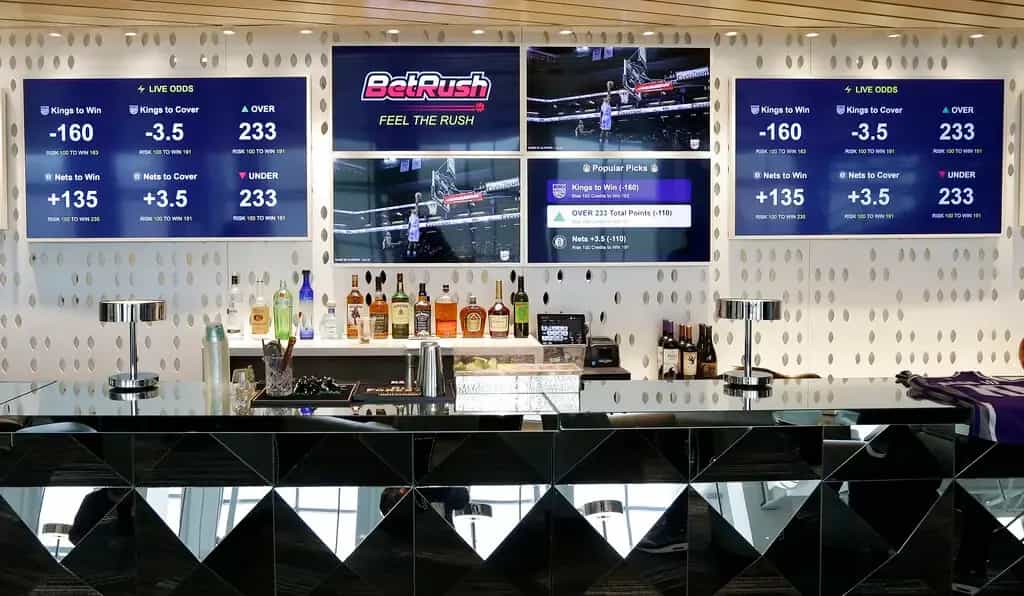
Vig works by pricing both sides of a bet slightly below true 50/50 odds, so the sportsbook profits regardless of which side wins. On a standard point spread, both teams get priced at -110 instead of even money.
A point spread is often listed with -110 odds, and if there was no vig, it would be at even odds, or +100. With the vig, a $100 bet results in a $190 payout instead of the $200 you'd get at true even odds. That missing $10 is the sportsbook's cut, collected no matter which side of the spread hits.
Novice bettors sometimes assume that number represents a flat 10% fee, but the math is a little sharper than that. Risking $110 to win $100 does not translate to ten percent, since that would mean risking $100 to win $90. Risking $110 to win $100 actually translates to 9.1%, because 100 is 90.9% of 110. Getting comfortable with terminology like this is part of building real sports betting literacy, the same kind of foundational vocabulary work bettors do when they study a poker glossary before sitting at a real table.
How Do You Calculate The Vig On A Betting Line?
You calculate vig by converting each side's odds into implied probability, adding those percentages together, and subtracting 100. Implied probabilities exceed 100% because bookmakers build in a profit margin called the vig or juice, and both sides of an NFL spread at -110 carry a 52.38% implied probability each, totaling 104.76%, with the extra 4.76% representing the bookmaker's edge.
That formula scales to markets with more than two outcomes, too. You add up all of the implied probabilities in the market, and in markets with many options both totals typically land over 100%, with the overround representing whatever the total probabilities add up to past 100. Futures markets, where a dozen or more teams share one board, tend to stack that overround far higher than a two-way spread.
Why Does Vig Vary So Much Between Different Bet Types?
Vig varies between bet types because sportsbooks price risk differently depending on liquidity, volatility, and how much action a market attracts. Most sportsbooks charge 4-7% vig on popular markets, while sharp books may charge as low as 2-3%, and props, parlays, and niche markets often carry much higher vig, sometimes 10-20%.
Parlays compound this effect with every leg you add. Each leg added to a parlay compounds the vig from the individual legs, so a two-leg parlay at -110 per leg carries roughly twice the effective vig of a single bet, and the more legs added, the further the parlay payout strays from true fair odds. Futures sit at the top of the vig scale entirely. Futures consistently carry the highest vig of any market, and when you add up the implied probability of all possible outcomes on a championship winner market, the total frequently exceeds 120% to 140% or more.
What Are Some Real Examples Of Vig In Action?
Real examples of vig show up every time you glance at a standard odds board, even when the number isn't labeled. Here's how it plays out across common bet types.
- Standard spread example: Two teams both priced at -110 on a point spread. In games where the betting action is split 50/50 and both teams are listed at -110, the sportsbook makes a profit of around 10% regardless of who wins, as illustrated by a market where both sides carry $11 million in spread bets.
- Balanced-book payout example: If the sportsbook takes equal action on both sides, it collects $110 from the losing side, pays out $100 in winnings plus the $100 stake to the winning side, and keeps $10 as vig revenue.
- Futures market example: A division-winner market with six or more teams. Instead of a tidy 104% overround, the combined implied probability can balloon well past 120%, since markets like the 2021 NFC North division champion odds taken from popular sportsbooks showed one book with a 9.42 overround and another with 8.94.
What Are The Most Common Mistakes Bettors Make About Vig?
The most common mistake bettors make about vig is assuming it's a flat, simple percentage that's the same across every market. In reality, the number shifts constantly by sport, bet type, and even sportsbook.
- Believing losers pay the vig. Winners, not losers, pay vigorish. Many bettors operate under the fallacy that losers pay vigorish, which is wrong. The vig is deducted from what the winning side collects, baked into the payout math itself.
- Assuming -110 always means a 10% fee. As shown above, laying $110 to win $100 works out to roughly 9.1%, not a clean 10%.
- Treating all sportsbooks as equally priced. Sharp books like Pinnacle may charge as low as 2-3%, while mainstream retail books often run notably higher. Skipping line comparison leaves money on the table over hundreds of bets.
- Ignoring how parlays stack vig. Bettors often see an appealing parlay payout without registering that every additional leg compounds the house's edge.
How Does Vig Compare To Other House Edge Concepts Like Hold And Juice?
Vig compares closely to related terms like hold and juice, and in casual conversation, bettors often use them interchangeably, though the terms carry slightly different technical meanings. The vigorish, more commonly referred to as the vig, is the built-in price sports bettors pay to place a wager, and other names for it include juice, rake, take, cut, or hold.
Sharper distinctions do exist beneath that surface. Vig refers to the margin on a single market, while hold refers to the total margin across all bets a sportsbook takes. The table below breaks down how these terms typically get used across betting and gaming contexts.
Terms Explained at a Glance
| Term | Primary Context | What It Measures |
|---|---|---|
| Vig / Juice | Sports betting, individual markets | Margin built into a single line or bet type |
| Hold | Sportsbook operations, reporting | Total margin retained across all wagers over a period |
| House Edge | Casino table and slot games | Mathematical advantage built into a game's payout structure |
| Overround | Odds markets, especially futures | Total implied probability of a market above 100% |
Why Do You Need to Win 52.38% at -110?
The break-even win rate is the percentage of wagers a bettor must win for total profit to equal total losses at a given price. At -110, a bettor must win approximately 52.38% of wagers to break even over a large sample.
Break-even rate = Risk / (Risk + Potential profit)
$110 / ($110 + $100) = 52.38%
A 50% record therefore loses money at -110. Across 100 bets of $110 each, 50 wins would generate $5,000 in profit while 50 losses would cost $5,500, producing a net loss of $500.
How Does Reduced Juice Change the Break-Even Rate?
Reduced-juice pricing lowers the amount a bettor must risk to make the same profit. Even a small price improvement can lower the break-even threshold when repeated over many wagers.
Two-sided price | Break-even rate | Overround | Normalized margin |
-101 / -101 | 50.25% | 0.50% | 0.50% |
-105 / -105 | 51.22% | 2.44% | 2.38% |
-110 / -110 | 52.38% | 4.76% | 4.55% |
-115 / -115 | 53.49% | 6.98% | 6.52% |
These figures assume symmetrical two-sided pricing. Moneylines and markets with three or more outcomes require every listed outcome to be included in the calculation.
For more on how these markets operate, see the guide to types of sports bets.
Why Does Vig Vary by Market and Sportsbook?
Sportsbooks do not apply one fixed margin to every wager. Prices vary according to competition, market liquidity, available information, volatility, trading strategy and each operator's exposure.
Major pregame spreads and totals often have tighter pricing because they attract more betting volume and are offered by many competing sportsbooks. Niche props and futures may have wider margins because their probabilities are harder to estimate, fewer bettors participate and the sportsbook may face more uneven liability.
Live betting can also carry wider or more variable margins. Prices must update quickly as the event unfolds, and bettors have less time to compare the complete market before a selection is suspended or repriced.
Learn more about rapidly changing prices in Bodog's guide to how live betting works.
How Do You Find the Vig in a Moneyline Market?
Moneyline vig is less obvious because the favourite and underdog usually have different prices. The calculation still follows the same process: convert both prices into implied probabilities, add them and measure how far the total exceeds 100%.
For a market priced at -150 and +130:
· -150 implies 60.00%.
· +130 implies approximately 43.48%.
· The combined implied probability is approximately 103.48%.
· The market therefore has an overround of approximately 3.48%.
After removing the margin proportionally, the no-vig probabilities are approximately 57.98% and 42.02%. Those probabilities correspond to fair American prices of roughly -138 and +138.
How Can Bettors Reduce the Impact of Vig?
Vig cannot usually be removed entirely, but bettors can limit its effect by comparing identical markets and avoiding unnecessarily expensive prices.
· Compare the same line at multiple licensed sportsbooks.
· Check both the number and the price, such as +3.5 at -115 versus +3 at -105.
· Compare every outcome in the market rather than evaluating one price in isolation.
· Understand whether a displayed payout includes the original stake.
· Be cautious with markets that contain many outcomes or compound multiple selections.
· Track the average price paid, not only wins and losses.
A lower price is not automatically a good bet, and a higher-vig market is not automatically unplayable. The key question is whether the offered price is favourable relative to the outcome's realistic probability.
Vig, Overround, Hold and House Edge
Term | What it means | When it is measured |
Vig / juice | The pricing margin incorporated into sportsbook odds | Before the event, using the offered market |
Overround | The amount by which combined implied probabilities exceed 100% | Before the event, using every outcome |
Hold | The percentage of handle actually retained after wagers are settled | After results are known or across a reporting period |
House edge | The mathematical advantage built into a casino game's rules and payouts | From the game's long-run expected return |
These terms may be used loosely in everyday betting discussions, but keeping the distinctions clear prevents calculation errors. In particular, overround should not automatically be reported as the sportsbook's realized hold.
Common Mistakes About Vig and Juice
· Calling the 4.76% overround on a -110/-110 market the exact sportsbook hold.
· Treating -110 as a simple 10% fee.
· Assuming vig guarantees the sportsbook a profit on every individual event.
· Believing only losing bettors pay vig; the margin is embedded in the price offered to everyone.
· Looking at only one side of a moneyline market when calculating the margin.
· Assuming every sportsbook or bet type carries the same vig.
· Ignoring the additional margin that can be embedded in parlays, props and futures.
· Comparing prices without confirming that the line and settlement rules are identical.
Final Takeaway
Vig is the cost built into a sportsbook's prices, whether it is called juice, vigorish or margin. It raises a bettor's break-even threshold and helps create the sportsbook's expected advantage across a market.
The most useful way to evaluate vig is to examine every outcome, convert the odds into implied probabilities and distinguish overround from theoretical margin and actual hold. Comparing identical lines can reduce the price paid, but it cannot eliminate risk. Sports betting should be treated as entertainment, and bettors should never wager more than they can afford to lose.
Vig FAQs
What is vig in sports betting?
Vig is the margin a sportsbook incorporates into its odds. It reduces the payout compared with a market offering perfectly fair prices.
Is vig the same as juice?
Yes. Juice, vig and vigorish are commonly used interchangeably in sports betting.
What does -110 mean?
At -110, a bettor must risk $110 to make $100 in profit. A winning wager returns the $110 stake plus $100 profit.
How much vig is in a -110/-110 market?
The two prices create a 4.76% overround and an approximately 4.55% normalized theoretical margin. The bettor's break-even rate on each -110 wager is 52.38%.
Why isn't the vig at -110 simply 10%?
The $10 difference between $110 risked and $100 profit is not divided by the correct market base for measuring margin. With balanced $110 wagers on both sides, the sportsbook retains $10 from $220 in handle, or approximately 4.55%.
What win rate is needed to break even at -110?
A bettor must win approximately 52.38% of wagers at -110 to break even before considering other costs.
Does vig change during live betting?
Yes, sportsbooks may adjust vig dynamically during live events based on risk and betting volume.
Do all legal sportsbooks charge vig?
Yes, all American and Canadian sportsbooks including major online operators all charge the vig, though the amount varies by book and market.
Where does the word "vigorish" come from?
It comes from vigorish, a term with roots in Yiddish and Russian meaning fee or interest.
What is a no-vig line?
A no-vig line is an estimate of fair odds after the sportsbook's margin has been removed from every outcome in the market.
Continue Learning
- What are betting odds?: See how prices communicate payouts and implied probability.
- What is implied probability?: Understand the probability represented by an odds price.
- How to calculate implied probability: Convert American and decimal prices into percentages.
- Types of sports bets: Learn how odds are used across moneylines, spreads, totals, props and parlays.
- How to bet on sports: Review the complete process for placing and managing a sports wager.
Arthur Crowson got his start in traditional newspapers before making the jump to digital media, where he's spent the last ten years writing about poker, finance, crypto, gambling, and emerging tech. Over that time, he's developed a knack for spotting the moments when markets, technology, and gambling pull in the same direction. His work has appeared in publications like PokerListings, CryptoVantage, ValueWalk, and PokerScout.
More Articles like this
Do NHL Stars Lose Their Edge After Signing Huge Contracts?
Do NHL stars really take their foot off the gas after a big payday? We analyzed 29 major contracts to find out.
By Charlon Muscat
Five Iconic World Series Moments Since the Brewers' Appearance
The Brewers are back in the World Series after 44 years. From Bill Buckner's error to the Cubs ending their curse, plenty has happened since 1982.
By Bill Gelman
LeBron to Giannis: Ranking 5 NBA Offseason Stunners
LeBron to Philly, Giannis to Miami, and Wemby staying put. Which NBA offseason move will pay off the most?
By Bill Gelman
NFL Fans Spend $900 to Watch Games. WWE Fans Pay Even More
Think watching every NFL game is expensive? WWE fans would argue otherwise.
By James Guill
How Bad Is It? Ranking the NHL's Original Six by Fan Misery
Nearly 60 years without a Stanley Cup is just the beginning. We rank the NHL's Original Six teams by how much misery their fans have endured.
By Bill Gelman
Why Does Everybody Hate Us? 10 Most Hated Sports Teams Ever
Some teams always win; others get caught breaking the rules. Either extreme is a surefire way to become universally hated, as these 10 sports teams can attest to.
By Stuart Hughes