

Prediction Markets vs Sports Betting: Key Differences
Prediction markets vs sports books: odds, vig, trading vs fixed bets, legality by state, combos vs parlays. Which is better for sports bettors?

What's the difference: Prediction Markets vs Sports Betting?
Short answer: Prediction markets let traders buy/sell event contracts (price = probability) on exchanges like financial markets. Each contract is contract priced to reflect the market-implied probability of an outcome, with prices fluctuating as new information emerges.
Sports betting involves fixed wagers against a bookmaker with vig built into odds. Prediction markets offer wider legal availability and tradable positions; sportsbooks provide massive market selection but higher costs and state restrictions. Sports now account for more than 90% of handle on leading prediction markets, a share that has grown steadily as major platforms expanded their sports contract offerings.
Sports bettors discovering prediction markets (Kalshi, Polymarket) often ask how they compare. While both let you wager on outcomes, they operate on fundamentally different principles. Sports now dominate prediction market volume (>90% handle on some platforms), with most of this activity focused on trading sports contracts—financial instruments tied to sports outcomes. This makes the comparison between sportsbooks and sports prediction markets especially relevant.
This prediction markets vs sports betting guide breaks down structure, pricing, legality, combos/parlays, and when each makes sense: neutral analysis for informed choice. Read our guide best prediction market platforms to start comparing operators.
How Does It Work With Sports Betting?
In sports betting, sportsbooks act as bookmakers: they set odds and take the opposite side of every bet. You wager against the house.
Core mechanics:
- Bookmaker sets odds based on risk models, public sentiment, and line movement
- Vig/juice built into every line (typical -110/-110 = 4.5% house edge)
- Fixed position: bet locked until settlement, no early exit
- Bet types: moneyline, spreads, totals, props, parlays, futures
Example: Eagles -3.5 vs Cowboys
- Bet $110 to win $100 if Eagles cover (the odds determine your potential payout, so a successful wager at -110 yields a $100 profit on a $110 bet)
- Bookmaker profits when total bets balance (or collects vig regardless)
Sportsbooks control pricing. Sharp bettors seek closing line value (beating final odds). Casual bettors chase sportsbook promotions. See our table below for our recommended sports betting apps in your area.
How Does It Work With Prediction Markets?
Prediction markets are decentralized exchanges where traders buy/sell event contracts. Price = crowd probability. For more read our what are prediction markets guide.
Core mechanics:
- Traders set prices through supply/demand (like stocks)
- No vig: YES + NO always = $1.00 (pure probability)
- Tradable anytime: buy low, sell high before settlement
- Participants engage by putting money into contracts, financially backing their predictions
- Contract types: sports, politics, economics, culture, weather: often covering events of significant public interest such as elections, award shows, or major cultural moments
Example: "Eagles win vs Cowboys?"
- YES $0.63 = 63% implied probability (buy for 63¢, win $1 if correct)
- NO $0.37 = 37% implied probability
- Selling positions is possible at any time; for example, sell YES position at $0.72 = lock $0.09/contract profit
See our table below for our recommended prediction market apps in your area (if available).
Top Prediction Markets
.webp)
Event Contracts and Trading
Event contracts are at the heart of prediction markets, offering a unique way for users to put money on the outcome of future events, including everything from major sporting events like the Super Bowl to political outcomes, economic indicators, and even award shows. Unlike traditional sportsbooks, which set fixed odds and act as the house, prediction markets allow users to buy and sell positions on future outcomes in a market-driven environment. Here, the price of each contract reflects the collective sentiment and probability assigned by other users, not by a bookmaker.
Trading event contracts is similar to trading stocks or commodities: users can buy a contract if they believe an event will happen, or sell (take the opposite side) if they think it won't. The price of a contract (typically presented as a value between $0.01 and $0.99) represents the market's consensus probability of the outcome. For example, if a contract on "Team A wins the championship" is priced at $0.65, the market believes there's a 65% chance of that outcome. If the event occurs, the contract pays out $1; if not, it pays $0. This structure allows users to profit by buying low and selling high as the price reflects changing probabilities, or by holding until settlement.
A key structural difference between event contracts and sports betting is how odds are set. In sports betting, traditional sportsbooks set fixed odds with a built-in house edge (vig), making it harder for bettors to profit over time. In prediction markets, the odds are determined by supply and demand among users, creating a more transparent and potentially fairer system. There's no house taking the other side: just other users, and the market itself determines the price.
Event contracts are regulated at the federal level by the Commodity Futures Trading Commission (CFTC), which provides oversight and consumer protections not always present in state-regulated sports betting. This federal oversight allows prediction markets to operate in a broader range of states, even where legal sports betting is not available. Prediction market platforms offering event contracts must comply with strict rules to protect consumers and ensure fair trading, helping to reduce financial risk for participants.
The popularity of event contracts is growing rapidly, especially for high-profile sporting events like the Super Bowl, where trading volume can rival that of top sportsbooks. But prediction markets go beyond sports, offering contracts on political elections, economic data releases, fantasy sports outcomes, and more. This broader range of markets appeals to users interested in trading on real-world events outside the traditional sports betting sphere.
However, trading event contracts carries risk. Users can lose money if their predictions are wrong, and there are ongoing debates about the potential for insider trading or manipulation, especially in markets tied to sporting events or political outcomes. Legal battles have emerged over whether event contracts should be considered gambling, with some critics (including figures from the Trump administration like Donald Trump Jr.) raising concerns about their impact on traditional sports betting and the integrity of sporting events. The Biden administration has taken a more measured approach, focusing on balancing innovation with consumer protections.
Allowing prediction markets and event contracts can also benefit governments by generating tax revenue through transaction fees and platform operations. As more states and federal agencies recognize the economic potential, there is increasing interest in offering event contracts as a regulated alternative to traditional gambling.
In summary, event contracts in prediction markets offer a dynamic, market-driven way to trade on future outcomes across a wide variety of events. While there are financial risks and ongoing legal debates, the transparency, flexibility, and broader event coverage make them an increasingly popular choice for users looking to engage with sports, politics, and other real-world events in a new way. As the landscape continues to evolve, ensuring fair markets and strong consumer protections will be key to their long-term success.
Prediction Markets vs Sports Betting Differences
Feature | Prediction Markets | Sports Betting |
Who sets odds | Traders (supply/demand) | Bookmaker |
Pricing | $0.01-$0.99 = probability | American (+150), decimal (2.50), vig included |
Costs | Trading fees + spreads | Vig/juice (4-10%) |
Position flexibility | Trade anytime (buy/sell/hold) | Locked until settlement |
Market discovery | Crowd wisdom (often beats polls) | Bookmaker models |
Event coverage | Sports + politics/economics | Sports only |
Legal states | 40+ states (federal regulation) | 38 states (state-by-state) |
Fundamental difference: Sportsbooks are bookmaker vs bettor. Prediction markets are trader vs trader.
Pricing Differences: Vig vs Probability
Sportsbook vig guarantees bookmaker profit:
Typical NFL game:
Eagles -3.5: -110 (52.4% implied)
Cowboys +3.5: -110 (52.4% implied)
Total implied probability: 104.8%
Bookmaker's edge: 4.8%
Prediction markets = zero-sum:
Eagles win: YES $0.63 (63%)
Cowboys win: NO $0.37 (37%)
Total: 100% — no house edge
Real cost comparison ($100 wager):
Market | Sportsbook | Prediction Market |
Edge | $4.50 vig | $0.50 spread + $0.25 fee |
Breakeven | 52.4% win rate | 50.5% win rate |
$10K volume | Bookmaker wins $450 | Traders split costs |
Prediction markets are cheaper long-term, but liquidity matters. Thin markets have wide spreads (effective 5-10% cost).
Parlays vs Prediction Market Combos
Parlays combine bets: all must win:
NFL Parlay: Eagles ML + Over 45 + Mahomes 300+ yards
$10 → $150 payout (+1400)
Risk: Single loss = total loss
Prediction market combos chain outcomes:
Combo: "Eagles win AND Over 45 AND Mahomes 300+"
YES $0.12 = 12% implied probability
$100 → $833 payout if all occur
Similarities: High risk/reward, correlated outcomesDifferences:
- Combos are often tradable mid-game
- Pricing reflects crowd correlation estimates
- No vig: pure probability product
Legal Availability: Prediction Markets vs Sports Betting
Sports betting: Legal in 38 states + DC (must pass state legislation). Regulation and legality are determined at the state level, so mobile apps are banned or restricted in CA, TX, FL, and GA despite massive demand.
Prediction markets: Available in 40+ states via CFTC regulation (derivatives, not gambling). Kalshi operates nationwide as a Designated Contract Market despite state-level challenges.
2026 reality: Sports bettors in non-sportsbetting states (TX, CA, FL) can access Kalshi/Polymarket sports markets. Sportsbooks are unavailable there.
Detailed state breakdown: See Bodog's Are prediction markets legal? guide.
Prediction Markets: Pros and Cons
Pros And Cons
- No vig: fairer pricing
- Tradable positions (cut losses)
- Wider legal availability
- Beyond sports (politics, econ)
- Market reacts faster than lines
- Liquidity varies by market
- Fewer prop markets
- Steeper learning curve
- Platform fees/spreads
- Thin markets = wide spreads
- No vig: fairer pricing
- Tradable positions (cut losses)
- Wider legal availability
- Beyond sports (politics, econ)
- Market reacts faster than lines
- Liquidity varies by market
- Fewer prop markets
- Steeper learning curve
- Platform fees/spreads
- Thin markets = wide spreads
Sports Betting: Pros and Cons
Pros And Cons
- Massive market selection
- Familiar odds/UI
- Huge liquidity everywhere
- Promo bonuses common
- Live betting/prop variety
- Vig eats 4-10% long-term
- Locked positions
- State-by-state legality
- Bookmaker controls lines
- Sharpest action first
- Massive market selection
- Familiar odds/UI
- Huge liquidity everywhere
- Promo bonuses common
- Live betting/prop variety
- Vig eats 4-10% long-term
- Locked positions
- State-by-state legality
- Bookmaker controls lines
- Sharpest action first
Liquidity varies considerably across the top prediction market platforms, which means the effective cost of a trade can swing from negligible to sportsbook-level depending on where and when you're trading.
Sports Betting Vs. Prediction Markets: Which System Is Better for Sports Bettors?
Use prediction markets when:
- You want no vig edge (win rate >50% sustainable)
- State lacks sportsbooks (TX, CA, FL access)
- Trading inefficiencies (vs slow-moving lines)
- Hedging portfolio/event risk, including using sports-related event contracts to hedge parlays or specific sports outcomes
- Non-sports events interest you
Stick with sportsbooks when:
- Casual betting (promos, simple UI)
- Massive prop markets (player stats, quarters)
- Live betting volume (sharp lines)
- Traditional formats comfortable (+/- odds)
Reality: Many sharp bettors use both. Arbitrage sportsbook vs prediction market mispricing. Hedge parlays with event contracts: specifically, sports-related event contracts can offer similar user experiences to traditional sports wagering, though they face unique regulatory challenges. The systems complement as prediction markets expand sports coverage.
Final Thoughts on Sports Betting VS Prediction Markets
Prediction markets and sports betting both provide engaging ways to speculate on future outcomes, but they differ significantly in structure, pricing, and regulation. Prediction markets operate as peer-to-peer exchanges where prices reflect real-time probabilities without a built-in house edge, offering tradable positions and broader event coverage beyond sports. Meanwhile, traditional sportsbooks set fixed odds with a built-in vig, focusing mainly on sporting events and operating under state laws with varying availability. Understanding these differences can help bettors choose the platform that best suits their preferences, risk tolerance, and legal accessibility. As prediction markets continue to rise in popularity and expand their offerings, they present a compelling alternative or complement to traditional sports betting.
Prediction Markets vs Sports Betting FAQs
What is the main difference between prediction markets and sports betting?
Prediction markets are peer-to-peer platforms where users buy and sell contracts priced as probabilities, while sports betting involves placing fixed-odds wagers against a bookmaker who includes a house edge (vig).
Are prediction markets legal everywhere in the United States?
Prediction markets are subject to federal oversight by the Commodity Futures Trading Commission (CFTC) and are available in more states than legal sports betting, which is regulated at the state level. However, some states have challenged the legality of sports-related event contracts.
Can I trade prediction market contractsat any time?
Yes, unlike traditional sports bets, locked until settlement, prediction market contracts can be bought or sold at any time before the event concludes, allowing for hedging or locking in profits.
Do prediction markets have a house edge like sportsbooks?
No, prediction markets typically do not have a built-in house edge. Prices reflect the collective market probability, and trading fees are usually the main cost.
What types of events can I bet on in prediction markets?
Prediction markets cover a broader range of events, including sports, political outcomes, economic indicators, entertainment awards, and other real-world events of public interest.
How do payouts work in prediction markets?
Winning contracts pay out a fixed amount (usually $1), while losing contracts pay out nothing. The contract price represents the market's implied probability of the outcome.
Is sports betting safer or less risky than prediction markets?
Both involve financial risk. Sports betting has a house edge that can reduce long-term profitability, while prediction markets' risk depends on market liquidity and price movements. Understanding each platform's mechanics is essential before participating.
Can I use both prediction markets and sportsbooks to improve my betting strategy?
Yes, many experienced bettors use both platforms to leverage different advantages, such as hedging bets, accessing broader markets, or capitalizing on pricing inefficiencies.
Arthur Crowson got his start in traditional newspapers before making the jump to digital media, where he's spent the last ten years writing about poker, finance, crypto, gambling, and emerging tech. Over that time, he's developed a knack for spotting the moments when markets, technology, and gambling pull in the same direction. His work has appeared in publications like PokerListings, CryptoVantage, ValueWalk, and PokerScout.
More Articles like this
Kalshi Wants Margin Trading. What Could Go Wrong?
Kalshi’s proposed margin system would let eligible traders put up less than the full value of some positions, freeing capital for other trades while also introducing a new layer of leverage and risk.

By Charlon Muscat
Kalshi, Polymarket Starting to Price the Midterms as Blowout
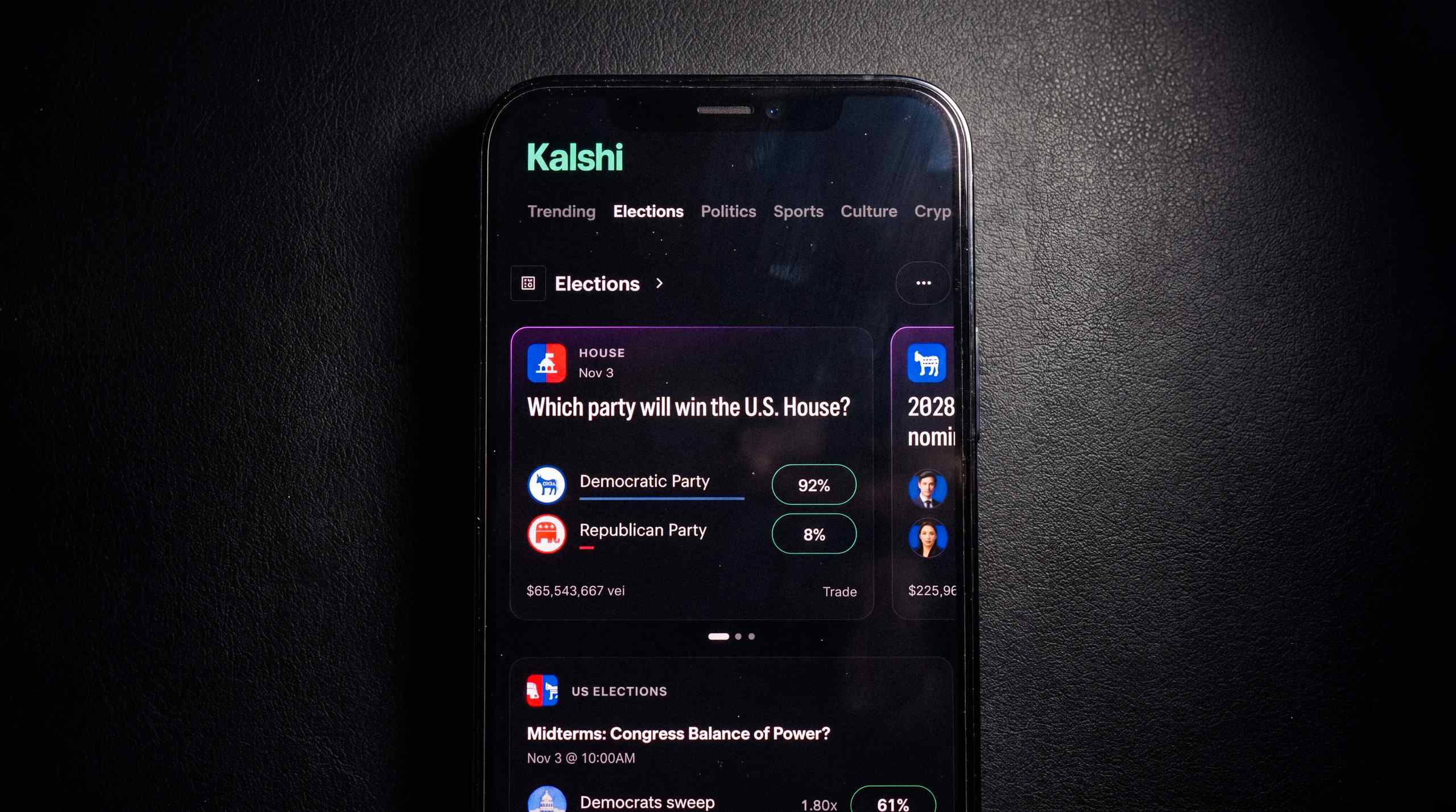
With just over five weeks to go, Kalshi and Polymarket now heavily favor Democrats for the House and give them the edge in the Senate.
By Stuart Hughes
Kalshi’s NFL Volume Is Exploding. Should Sportsbooks Be Worried?
The NFL season is barely underway, but prediction markets have already handled multiple billions in football trading volume. Is that enough to make sportsbooks nervous?

By Charlon Muscat
Best Prediction Market Apps of 2026
Compare the best prediction market apps and platforms for sports, politics and other events, ranked by market selection, fees, liquidity, user experience and availability.

By James Guill
Sydney Sweeney to LeBron: Prediction Markets Bet on Star Power
Sydney Sweeney just became an equity partner at Novig. She joins a growing list of A-listers cashing massive checks from prediction markets, including LeBron James, Timothée Chalamet and many others.

By Cole Rush
Are Prediction Markets Legal?
Prediction market laws depend on the platform, contract and jurisdiction. Learn how CFTC oversight, state disputes and Canadian regulations affect where event contracts can be traded.

By James Guill