

Kalshi vs Polymarket: Which Prediction Market Platform Is Better?
Kalshi wins on CFTC regulation and USD access; Polymarket wins on global market breadth — here's exactly which platform fits your trading style, location, and risk tolerance.

Kalshi vs Polymarket: Which Prediction Market Platform Is Better?
Kalshi and Polymarket are two of the biggest names in prediction markets, and the differences between them have narrowed significantly compared to a year ago.
Both platforms operate CFTC-regulated prediction markets and offer extensive sports markets alongside politics, economics, crypto, weather, entertainment, and other real-world events. Both also let users trade positions instead of making a prediction and waiting for the result.
Since both products offer similar markets, choosing the better platform comes down to the features that best support its users. Today, we will compare both platforms’ market selection, fees, rewards, payment options, and the trading experience to determine which is superior.
Top Prediction Markets
.webp)
Kalshi vs Polymarket: Quick Comparison
| Feature | Kalshi | Polymarket |
|---|---|---|
| Platform Type | CFTC Designated Contract Market (DCM) | Decentralized crypto prediction market |
| Regulation | Regulation CFTC-regulated US exchange | Blockchain-based; 2025 QCEX acquisition |
| Market Focus | Sports, economics, politics | Politics, crypto, global events |
| Trading Currency | USD (ACH/bank) | USDC (crypto wallet required) |
| Liquidity | $50M+ daily | Substantial global daily volume |
| Fees | 0.07% + ~1¢ spread | Gas (~$0.05) + ~0.75% spread |
| US Availability | 40+ states | 10 states (+ VPN common) |
| Mobile App | Native iOS/Android (4.8⭐) | Web/PWA only (4.6⭐) |
| Best For | Regulated US trading | Global crypto-native traders |
Regulation and Legality: How Kalshi and Polymarket Are Governed
Regulation was once one of the easiest ways to separate Kalshi and Polymarket, but that’s no longer the case.
Kalshi's CFTC Regulatory Framework
Since November 2020, the CFTC has designated KalshiEX LLC as a Designated Contract Market. This designation allows Kalshi to operate a federally regulated exchange for event contracts.
Users must complete identity verification, and Kalshi may request additional information or documents to meet its regulatory obligations.
However, sports event contracts involve more complexity. Several states and tribal gaming interests argue that prediction markets offering sports contracts must comply with state gambling laws. Kalshi argues that its exchange falls under the federal commodities regulatory framework.
Federal courts have not reached a uniform conclusion. In September 2026, the Sixth Circuit ruled that Ohio and Tennessee could enforce their gambling laws against Kalshi's sports event contracts. An earlier Ninth Circuit decision involved Nevada, while the Third Circuit previously reached a different conclusion in litigation involving New Jersey.
As a result, CFTC regulation doesn't guarantee availability, and ongoing litigation could heavily restrict sports-related contracts in the future.
Polymarket US Is Also CFTC Regulated
Polymarket US no longer operates as a crypto prediction market. QCX LLC, doing business as Polymarket US, serves as the Designated Contract Market.
Polymarket US operates as a CFTC-regulated exchange, where users trade against other market participants rather than against the platform.
Polymarket has already encountered similar state challenges. In September 2026, New York sued Polymarket, alleging that it operated an unlicensed gambling platform. Polymarket responded with its own federal lawsuit, arguing that the CFTC has exclusive regulatory authority over its prediction-market contracts.
All federal-level litigation surrounding prediction markets will impact Polymarket. If it goes against the industry, Polymarket must enforce the same restrictions as Kalshi.
Markets Offered: What You Can Actually Trade
Kalshi and Polymarket now offer much more similar market selections.
The old idea that Kalshi primarily focuses on economics while Polymarket dominates politics, crypto, and unusual global events no longer accurately describes either platform.
Kalshi: Sports, Economics, Politics and More
Kalshi offers hundreds of markets across sports, politics, culture, and crypto.
Sports have become particularly prominent.
Kalshi offers markets involving game winners, spreads, totals, player performances, futures and live outcomes. Depending on the sport, users can find markets involving the NFL, NBA, MLB, NHL, college sports, soccer, golf, MMA, tennis, esports, and other competitions.
Kalshi also offers Combos, which let users combine eligible outcomes into a single position.
Sports haven't replaced the markets that originally set Kalshi apart. Users can still trade events involving Federal Reserve decisions, inflation, economic data, elections, cryptocurrency prices, weather, entertainment, and other subjects.
That broader selection makes Kalshi more than simply an alternative way to trade sports outcomes.
Polymarket: Sports Have Become a Major Part of the Platform
Polymarket has changed dramatically since its US relaunch, with the biggest change being its expanded sports coverage.
Sports coverage includes NFL, NBA, MLB, NHL, college sports, soccer, UFC, boxing, tennis, golf, motorsports, esports, and numerous other competitions. Live sports trading is also available. For example, current NFL events can contain hundreds of individual markets, while MLB games can include dozens or even hundreds depending on the event.
The platform hasn't abandoned its traditional prediction-market categories. In addition to sports, Polymarket US currently offers contracts for:
- Esports
- Politics
- Crypto
- Weather
- Tech
- Culture
- Economics
Politics, elections, cryptocurrency, and global events remain among Polymarket's biggest draws, but sports are now a significant offering, providing strong liquidity and additional options for smart traders.
Market Type: Kalshi vs. Polymarket
| Market Type | Kalshi | Polymarket |
|---|---|---|
| Fed/macro events | ✅ Deep | ❌ Limited |
| US politics | ✅ Yes | ✅ Deep |
| Global elections | ⚠️ Some | ✅ Deep |
| Crypto price events | ❌ No | ✅ Deep |
| Sports outcomes | Primary volume driver | ⚠️ Launching |
| Cultural events | ❌ Limited | ✅ Yes |
| Economics/earnings | ✅ Strong catalog | ❌ No |
Both platforms have expanded to the point where overlap is considerable. Rather than what you can trade, the better question is whether the markets you want to trade are available and offer sufficient liquidity.
How Trading Works on Each Platform
Kalshi and Polymarket US use similar basic prediction-market mechanics. Contracts represent possible outcomes of future events. A contract trading at $0.65 can be interpreted as the market pricing that outcome at roughly a 65% probability.
A correct contract settles at $1, while an incorrect contract settles at $0. Users also don't have to hold positions until settlement. Contracts can be sold while the market remains open, allowing traders to exit early if prices move in their favor or if they change their view of the event.
That ability to trade positions is one of the biggest differences between prediction markets and conventional sportsbook bets.
Kalshi Trading
Kalshi offers Quick Orders and limit orders.
Quick Orders attempt to execute immediately against available contracts. Limit orders let users specify the price they're willing to accept and remain on the order book until they are matched, canceled, or expire.
This gives experienced traders more control over execution, while Quick Orders provide a simpler option for newer users.
Kalshi also offers tools aimed at more active traders, including Kalshi Pro.
Polymarket US Trading
Polymarket US similarly allows users to enter and exit event-contract positions as prices change. They offer both market and limit order options for contracts.
Traders can also use LiveTrade for in-game sports markets, allowing users to enter and exit positions while an event is underway. Polymarket also offers Combos, which combine multiple sports outcomes into one position.
Both platforms offer far more active position management than when they first launched, benefiting all users.
Fees and Trading Costs Compared
Fees are harder to compare because neither platform can be reduced to a simple flat percentage.
Kalshi Fees
Kalshi's prediction-market fees depend on factors including the number of contracts and contract price. Some markets use different fee structures, and maker fees can apply in certain markets. Kalshi displays the estimated fee before you submit a trade.
Kalshi also operates incentive programs that can offset some trading costs for active users. Its Volume Incentive Program functions as a cashback-style system for qualifying US traders. Eligible users receive a share of a reward pool based on their proportion of qualifying trading volume.
Kalshi also offers Liquidity Incentives for resting orders that improve liquidity in eligible markets.
Polymarket US Fees
Polymarket US also uses a variable fee formula rather than a simple universal percentage.
The exchange charges taker fees on orders that immediately execute against resting orders. The fee changes based on the number of contracts and the contract price, meaning trading costs are generally highest around contracts priced near $0.50 and lower as prices move toward either extreme.
Polymarket US also provides incentives for adding liquidity. Its Liquidity Rewards program pays users for qualifying resting limit orders. Orders are scored based on factors including size and proximity to the best available price, and users receive a proportional share of the applicable reward pool.
Polymarket US currently has more than 100 active Liquidity Rewards programs. Individual programs can cover hundreds or even thousands of markets, with some of the largest reward pools tied to NFL and college football trading.
Which Has Lower Fees?
The answer depends on the types of trades you make. Trade costs depend on the market, contract price, order type, and available liquidity. Rewards can also change the effective cost for eligible users.
The better approach is to compare the actual fee shown for the trade you intend to make and consider whether your trading style qualifies for either platform's liquidity or volume rewards.
Polymarket users tend to have a slight advantage here, as the Liquidity Rewards program can eliminate fees for certain trades after rebates.
But objectively, for average traders, the cost difference will be minimal. High-volume or specialty traders are the ones who can best take advantage of lower fees.
Platform Availability: Where You Can Trade
Both sites now operate in most of the United States, but pending litigation could change that in the near future.
Kalshi Availability
Kalshi accepts eligible US users in 46 states. It is partially or fully restricted in Massachusetts, Michigan, Nevada, and Washington.
Recent court decisions have allowed some states to enforce their gambling laws against Kalshi, while other courts have reached different conclusions.
As multiple lawsuits and injunctions are pending federally, users should therefore check current availability rather than relying on the information provided here. State restrictions are likely to change, possibly dramatically, over the next year.
Polymarket Availability
Polymarket US is available in 42 US states. It is restricted in Arizona, Illinois, Massachusetts, Maryland, Michigan, Montana, Nevada, and Ohio.
Many restrictions result from pending litigation or cease-and-desist orders by state regulators. This list may grow depending on the outcomes of federal litigation.
Polymarket State Restrictions
| Geography | Kalshi | Polymarket |
|---|---|---|
| United States | ✅ Broad availability, subject to legal restrictions | ✅ Polymarket US, subject to restrictions |
| State Restrictions | MA, MI, NV, WA | AZ, IL, MA, MD, MI, MT, NV, OH |
User Experience and Interface Design
Both sites have dramatically updated their UI and improved overall user experience. Polymarket evolved from being a crypto-native DeFi platform to a fully functioning predictions exchange, while Kalshi expanded its offerings to become a US-friendly predictions platform.


Kalshi is a CFTC regulated prediction market that allows users to trade contracts across a wide variety of markets, including sports, the economy, politics, weather, entertainment, and even more niche markets.
Deepest US liquidity
Taker fees apply on all trades
Kalshi User Experience
Kalshi still has many characteristics of a financial trading platform. Users can view changing contract prices, order books, charts, open positions, and portfolio information.
Limit orders provide additional control, while Quick Orders simplify the process for users who don't want to manage the order book directly.
Kalshi also offers native mobile apps. Traders can access markets from iOS and Android, or use the mobile-optimized website.
The exchange mechanics still create a learning curve for someone coming directly from a conventional sportsbook. Still, the basic process becomes straightforward once you understand the relationship between contract prices and probability.
Ironically, Kalshi may be the preferred option for those who want to deposit and cash out with crypto. Kalshi is the only site that lets you deposit and withdraw using cryptocurrency. With Polymarket, you can deposit with USDC, but you can only cash out in USD.


Polymarket is a CFTC-regulated exchange that became legal in the US a few year ago. It features deep markets on politics and the economy and is expanding its sports markets.
24/7 global trading
Customer support may be slow
Polymarket US User Experience
Polymarket US has moved much closer to a mainstream consumer prediction-market experience. The platform trades in dollars rather than requiring users to manage cryptocurrency. This change was necessary to meet regulatory requirements and was a game-changer for non-crypto users wanting to access the platform.
Polymarket also now has native mobile apps on both major platforms. The iOS app currently carries a 4.6 out of 5 rating on Apple's App Store, while the Android app carries a 4.7 rating on Google Play.
Of the two platforms, Polymarket’s app tends to have more negative feedback from players. Some Google Play reviewers have complained about difficulty sorting markets and delays involving deposits or withdrawals.
Some App Store reviewers have praised the interface and ease of depositing but criticized withdrawal and customer-support experiences. While not universal problems, the number of complaints is worth considering if you’re deciding between the app and the browser version.
Polymarket had to overhaul its user experience for US traders.US users no longer need to understand crypto to trade, making the platform more accessible.
Kalshi vs Polymarket: Pros and Cons
Kalshi Pros:
- CFTC-regulated prediction market
- Extensive sports and non-sports selection
- Multiple US payment methods
- Crypto deposits and withdrawals available
- Quick and limit orders
- Volume and liquidity reward programs
- Native mobile apps
- Kalshi Pro for more active traders
- Eligible international users accepted
Kalshi Cons:
- Exchange-style trading has a learning curve.
- Fee structure varies by market and trade.
- Liquidity can affect execution.
- Sports contracts face continuing state-level legal challenges.
- No phone customer support
Polymarket Pros:
- CFTC-regulated US prediction market
- Extensive sports coverage
- Large selection of non-sports markets
- Live sports trading
- Liquidity Rewards program
- Native iOS and Android apps
- USD-based US product
Polymarket Cons:
- US and international products can be confusing.
- Fees vary based on trade characteristics.
- Liquidity varies between markets.
- US product faces state-level legal challenges.
- Crypto is limited to USDC deposits only.
- Some mobile users report withdrawal and navigation issues.
Which Platform Is Right for You?
Kalshi and Polymarket US now overlap enough that the choice is less obvious than it once was.
Kalshi may appeal more to users who want its particular combination of Quick Orders, limit orders, Kalshi Pro, multiple funding methods, and both volume and liquidity incentive programs.
Its broad coverage of economics, politics, crypto, culture, and sports also makes it useful for users who trade across several categories.
Polymarket US may appeal more to users who prefer its interface, extensive sports coverage, and Liquidity Rewards program. Its current sports product has become particularly deep, with major NFL games offering hundreds of individual markets.
If you can’t decide, that’s OK. Eligible traders can also maintain accounts with both platforms. This can give you access to markets that may appear on one platform but not the other and let you compare contract prices before trading.
However, price differences don't automatically create risk-free trading. Fees, liquidity, execution timing, and differences in market-resolution rules can all affect whether two similar contracts are actually equivalent.
The Verdict on Kalshi vs Polymarket in 2026
Kalshi and Polymarket have become direct competitors rather than alternatives. Kalshi no longer has a virtual monopoly on the regulated US prediction market, while Polymarket is no longer the “crypto alternative.”
Both now offer CFTC-regulated US event-contract trading, extensive sports markets, and coverage of politics, economics, crypto, culture, weather, and other events. Both let users enter and exit positions before settlement, and both incentivize users who contribute trading activity or liquidity.
The differences come down to the individual product. Kalshi offers Quick and limit orders, Kalshi Pro, broad payment support, and both liquidity and volume incentive programs. Polymarket US offers extensive sports markets, LiveTrade, Liquidity Rewards, and an interface that has become much more accessible to users without cryptocurrency experience.
Compare fees and liquidity at the individual market level rather than through broad platform-wide claims. The same applies to market selection. Fee structures change regularly and vary by market type.
Ultimately, the answer to which platform is better is, “it depends.” Crypto users may prefer Kalshi, while rewards-minded traders may prefer Polymarket. Beyond that, choosing the better platform comes down to preference.
For eligible users deciding between them, the most practical approach is to compare the specific markets you want to trade, available prices, applicable fees, payment methods, and the interface you prefer.
Visit our Kalshi review and Polymarket review for a closer look at each platform.
Frequently Asked Questions: Kalshi vs Polymarket
Is Kalshi or Polymarket better for US users?
Kalshi is the better choice for most US users. It is CFTC-regulated, accepts USD deposits via ACH, is available in 40+ states, and offers a native iOS and Android app. Polymarket's US access remains limited to a small number of states following its 2022 CFTC settlement, and it requires a crypto wallet to trade.
Is Polymarket legal in the United States?
Polymarket's US legal status is complex. Following a 2022 CFTC settlement and a $1.4 million fine for offering unlawful binary options to US users, the platform restricted US access. Its 2025 acquisition of QCEX has paved the way for re-entry into the US market, but compliant access is currently confirmed in only a limited number of states. US users should verify their state's status before trading.
Which platform has better liquidity — Kalshi or Polymarket?
Polymarket leads in global trading volume overall, driven by its international user base and deep election market liquidity. Kalshi leads for US-specific macro and sports markets, with daily volumes well exceeding $50 million and single-day records surpassing $1 billion during major events such as the Super Bowl. The best platform for liquidity depends on the specific market you want to trade.
Do both platforms require cryptocurrency to trade?
No. Kalshi uses USD exclusively, you fund your account via ACH bank transfer and withdraw directly to your bank. No crypto wallet or cryptocurrency is required. Polymarket requires USDC (a dollar-pegged stablecoin) and a compatible crypto wallet such as MetaMask or WalletConnect. Traders must also convert USDC back to fiat currency separately when withdrawing profits.
Can you trade sports on both Kalshi and Polymarket?
Kalshi has a growing and now dominant sports catalog, NFL, MLB, and NBA markets reportedly account for approximately 90% of platform volume. Sports markets are blocked in certain states, including Nevada and Massachusetts, due to ongoing legal challenges. Polymarket's sports offering is still developing, with a broader sports market launch planned for 2026.
Which prediction market platform has lower fees?
Kalshi is cheaper for active traders. Its total round-trip cost is approximately 0.17% (around $0.85 on a $500 trade), compared to Polymarket's approximately 0.80% (around $4.00 on a $500 trade). Polymarket charges no explicit trading fee but has wider spreads, particularly on lower-volume markets. Both platforms are significantly cheaper than traditional sportsbooks, which typically carry a 4.5% vig.
James Guill is an experienced iGaming journalist with a diverse background spanning IT, poker, and online gambling media. With over 20 years in the industry, he’s covered a wide range of gaming topics and has been featured in outlets like USA Today and G4 TV.
More Articles like this
Kalshi Wants Margin Trading. What Could Go Wrong?
Kalshi’s proposed margin system would let eligible traders put up less than the full value of some positions, freeing capital for other trades while also introducing a new layer of leverage and risk.

By Charlon Muscat
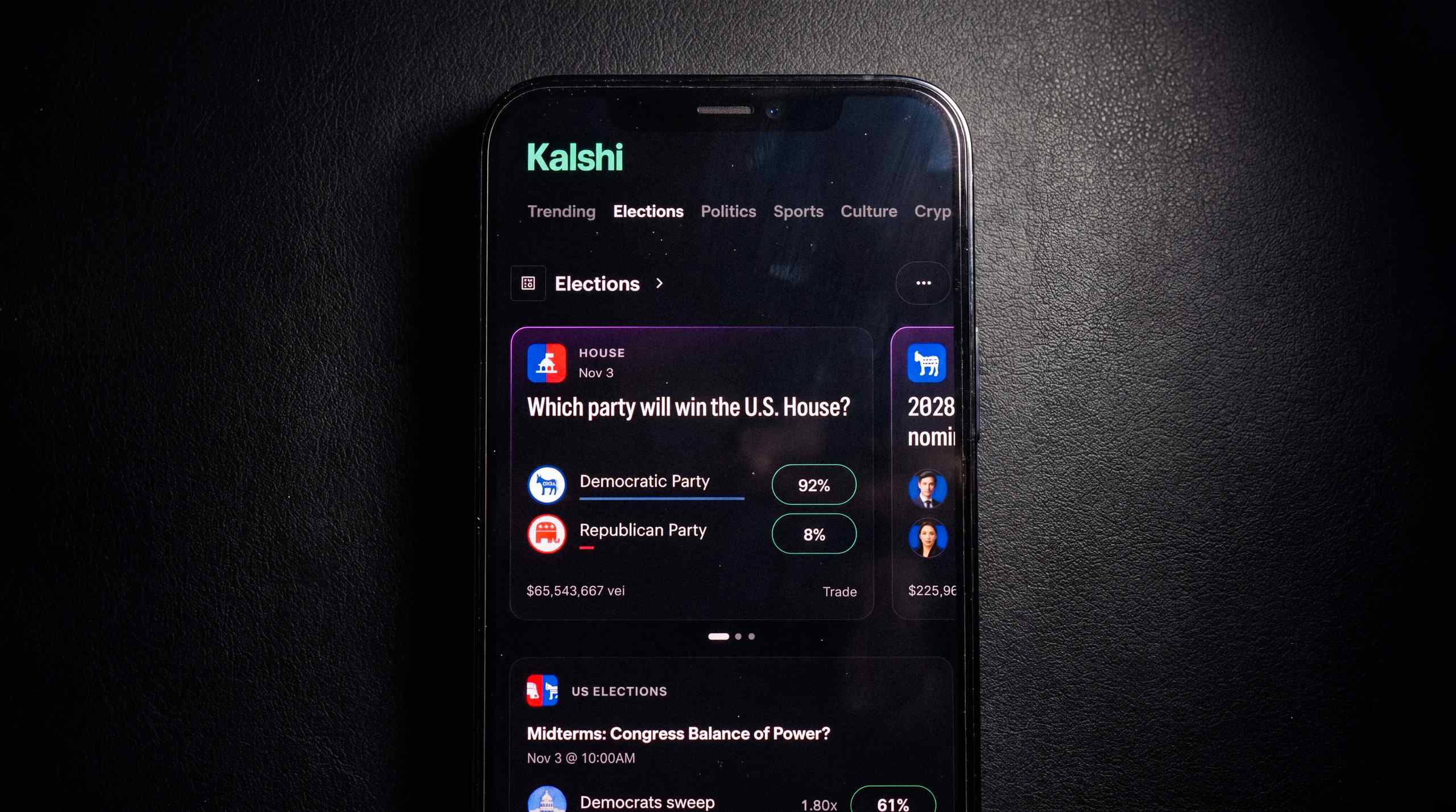
Kalshi, Polymarket Starting to Price the Midterms as Blowout
With just over five weeks to go, Kalshi and Polymarket now heavily favor Democrats for the House and give them the edge in the Senate.
By Stuart Hughes
Kalshi’s NFL Volume Is Exploding. Should Sportsbooks Be Worried?
The NFL season is barely underway, but prediction markets have already handled multiple billions in football trading volume. Is that enough to make sportsbooks nervous?

By Charlon Muscat
Best Prediction Market Apps of 2026
Compare the best prediction market apps and platforms for sports, politics and other events, ranked by market selection, fees, liquidity, user experience and availability.

By James Guill
Prediction Markets vs Sports Betting: Key Differences
Prediction markets vs sports books: odds, vig, trading vs fixed bets, legality by state, combos vs parlays. Which is better for sports bettors?

By Arthur Crowson
Sydney Sweeney to LeBron: Prediction Markets Bet on Star Power
Sydney Sweeney just became an equity partner at Novig. She joins a growing list of A-listers cashing massive checks from prediction markets, including LeBron James, Timothée Chalamet and many others.

By Cole Rush