

Gambling Technology Trends: 5 Technologies That Changed the Industry
From RNGs and live dealer streaming to geolocation and AI, these gambling technology trends transformed the industry—and could help shape what comes next.

Few of the technologies that transformed gambling were actually invented for gambling. They came from telecom, finance, cybersecurity, cryptography and cloud computing—then converged to create an industry that would look radically different without them.
Today's biggest gambling technology trends follow much the same pattern. Artificial intelligence, real-time data, advanced streaming and increasingly sophisticated digital infrastructure are changing how casino games and sportsbooks operate, while earlier breakthroughs such as random number generators (RNGs), geolocation and live dealer technology laid the foundation.
The future of gambling will be defined by technology, according to senior leaders across some of the industry's largest B2B gaming companies.
Paolo Personeni, Managing Director of Managed Betting Services at Sportradar, told iGaming Business in 2022 that gambling operators were automating more of their businesses and relying on increasingly sophisticated data systems. A few years later, the conversation has changed remarkably little. Executives at LuckyStreak, BetGames, Live88, and Vindral continue to point to advances in live streaming, automation, and real-time infrastructure as the technologies driving gambling's next chapter.
But to understand where gambling technology is going, it helps to understand the innovations that got it here.
From RNGs and provably fair games to live dealer streaming, geolocation and AI, these are five technologies that changed gambling, and the trends that could shape what comes next.
You can also check out the 5 Technologies That Changed Casinos Forever.

1. Random Number Generators (RNG)
Random Number Generators (RNGs) have come a long way—thousands of years, in fact. Humans relied on physical methods like dice and coin flips, mainly for games of chance. The first computer-based RNGs emerged in the late 1940s to support scientific computing and simulations. Then, by the mid-1990s, they had become the engine behind the first real money online casinos.
Their ability to generate statistically random, unpredictable outcomes in milliseconds made it possible to recreate casino staples, from slots and roulette to blackjack, video poker, and even modern crash gambling games, entirely in software. As the industry grew, regulators introduced strict testing standards. Third-party companies like eCOGRA and iTech Labs now run millions of simulated rounds to make sure RNGs aren't being tampered with and that every game works exactly as advertised.
2. Provably Fair Technology
But RNGs aren't the end of the story. Because, see, gambling online the traditional way means trusting three things: the casino, its RNG, and the independent auditor who certified it. Provably fair games, such as Stake's Originals and many third-party titles now available on Stake.US, change that by letting you verify every single outcome yourself.
Here’s how provably fair technology works:
- Before you place a bet, the casino picks a random value (server seed) that will be used to help determine the result. Instead of revealing it right away—which would essentially reveal the outcome—it gives you a cryptographic "fingerprint" of that value, called a hash.
- Next, the game feeds the server seed into a publicly documented algorithm, along with a random value you or the casino generates (the client seed) and a counter that increases with every bet (the nonce), to calculate the round's outcome.
- Once the round ends, the casino reveals the original server seed. You can enter it, along with the client seed and nonce, into the platform’s built-in verifier—or any other third-party tool—which recalculates the outcome and confirms it matches the result.
3. Live Dealer Streaming Technology
Live dealer streaming as a concept came about once video streaming, online casino software, and broadband internet had all matured to the point where bringing them together seemed somewhat possible. Playtech made the first real commercial breakthrough in 2003, and at roughly the same time, CWC Gaming launched CasinoWebCam, broadcasting real dealers from a studio in San José to players over the internet.
Rather than inventing something entirely new, I like to think of live dealer casinos as a bridge between the physical and virtual sides of gambling. Suddenly, you could watch professional dealers shuffle cards and spin roulette wheels while placing bets exactly as it happens on physical tables. It also brought the possibility for users to interact with one another through built-in live chat systems.
4. Geolocation
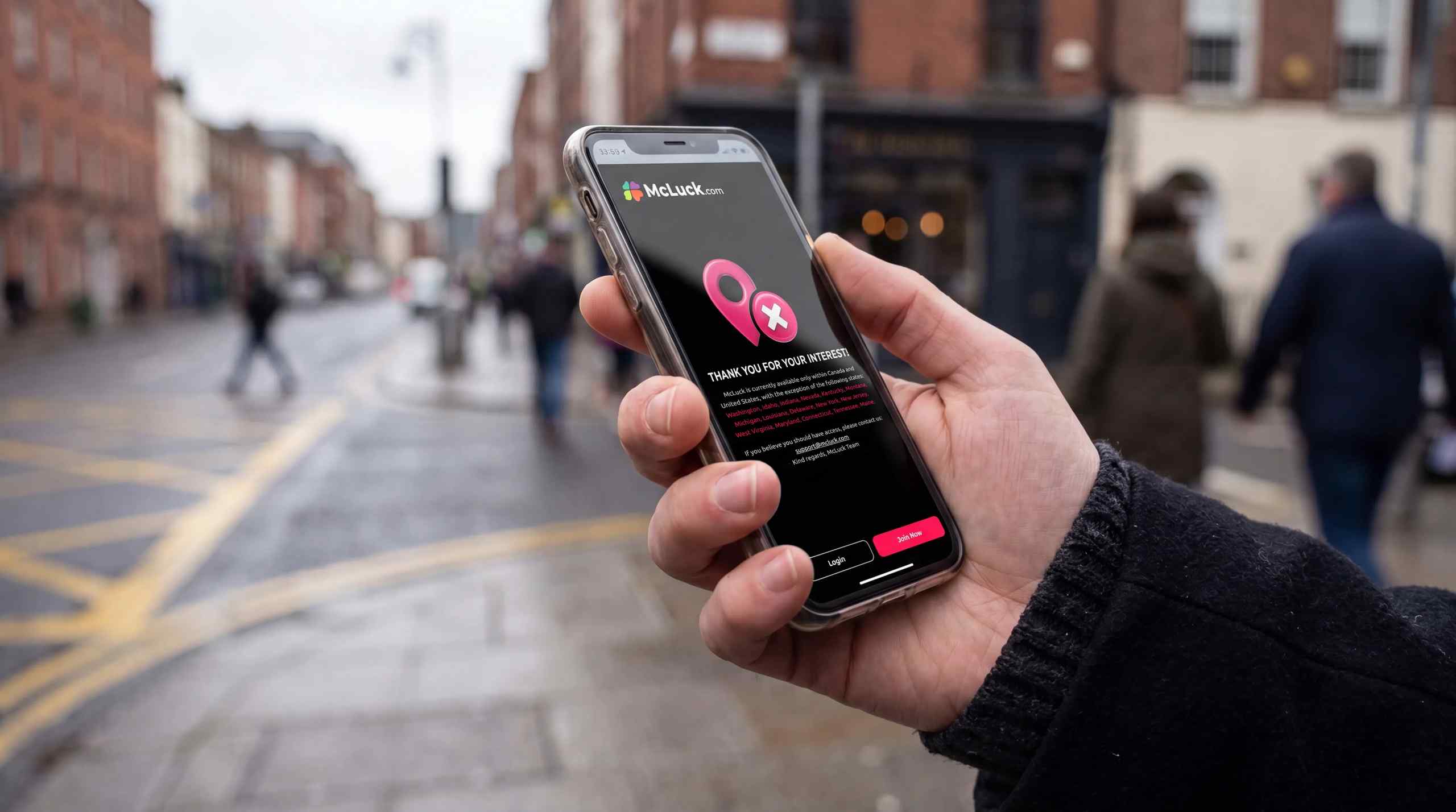
Geolocation solved one of online gambling's biggest regulatory hurdles by allowing operators to verify a player's physical location using a combination of GPS, Wi-Fi signals, IP addresses, Bluetooth, and cell tower data. This is important because, in the US, gambling laws are based on where you're actually standing, not where you live.
In practice, it largely happens behind the scenes. At most, you'll see a pop-up appear on desktop asking to share your browser's location before play can begin. Casino mobile apps typically handle the process automatically once access has been enabled. If the software can't verify where you are — or detects signs that you're masking your location, such as through VPNs or proxies — it'll block access.

5. Artificial Intelligence (AI)
These days, you see artificial intelligence just about everywhere in online gambling. The table below highlights a few examples.
Area | What AI Does | Benefit |
Customer support | AI chatbots handle the first line of support, answering common questions like password resets, account issues, and basic troubleshooting. | Frees up human agents to focus on more complex cases. |
Responsible gambling | AI looks for patterns that may signal gambling harm, such as unusually long sessions, chasing losses, or sudden changes in betting behavior. | Helps operators step in earlier with safer gambling measures. |
Fraud detection | AI scans for suspicious activity, including bonus abuse, multi-accounting, identity fraud, money laundering, and unusual betting patterns. | Detects threats faster than traditional rule-based systems. |
Personalization | AI tailors game recommendations, promotions, and bonuses based on each player's habits and preferences. | Makes the overall experience feel more relevant to the individual player. |
Sportsbook odds management | AI processes massive amounts of live and historical data to help traders price and adjust odds in real time. | Makes fast-moving markets, including sports micro betting, practical at scale. |
➡️ Did you know? Several sports bettors are embracing AI as another tool to help inform their picks.
Sportradar Chief AI Officer Behshad Behzadi also explains how generative AI is being used on the customer-facing side to explain odds and statistics in plain language. You can already see this across many sports betting sites, where AI surfaces key trends from previous matchups and player performance alongside the markets available.
Gambling Technology Trends to Watch in 2026 and Beyond
Every technology covered here, be it RNGs or geolocation, earned its place for a different reason. Many solved problems the industry simply couldn't move forward without. Others, like live dealer streaming, built on what was already there and made the experience better. AI seems to be following the same path, only at a much faster pace. Every few months, another use case seems to emerge somewhere in the gambling ecosystem.
And that's probably how it'll keep going. The gambling industry has a habit of taking technologies once they become good enough and finding new ways to apply them. Whether that's VR tables, AI dealers, or something nobody's talking about yet, the next breakthrough will likely follow the same playbook. Artificial intelligence, immersive technology, real-time data, personalization, and new payment infrastructure are already influencing how gambling platforms are built and how players interact with them. Some are established technologies finding new uses in gambling. Others are still waiting for the breakthrough that turns them from novelty into something players actually use.
Here are five gambling technology trends worth watching.
1. AI and Hyper-Personalization
Artificial intelligence is moving beyond customer-service chatbots.
Online gambling platforms can use behavioral data and machine learning to personalize game recommendations, promotions, interfaces, and other parts of the experience. Instead of every player seeing the same casino lobby, for example, platforms can increasingly tailor what appears based on previous activity and preferences.
The technology also has applications behind the scenes, including fraud detection, compliance, risk management, and responsible gambling tools.
The bigger question is how far personalization should go. The more accurately a gambling platform can predict what keeps someone engaged, the more important transparency, privacy, and responsible gambling safeguards become.
2. AI Dealers and Automated Live Games
Live dealer gambling solved one of online casinos' biggest early problems: recreating some of the atmosphere of a physical casino through a screen.
AI could push that idea in another direction.
Artificial intelligence is already being used to support elements of live casino operations, including bet tracking, game monitoring, and dealer assistance. The next step could involve more sophisticated virtual hosts or AI-powered dealers capable of interacting with players in real time.
That doesn't necessarily mean human dealers are disappearing. The more likely near-term development is a hybrid model in which automation handles more of the infrastructure while human dealers remain part of the entertainment.
3. VR, AR and More Immersive Casinos
Virtual reality casinos have been predicted for years without becoming mainstream. That doesn't mean the idea is dead.
VR technology could eventually allow players to walk through digital casino floors, sit at virtual poker tables, interact with other players, or watch a live dealer from different perspectives. Augmented reality could take a different approach, placing digital casino elements into a player's physical surroundings.
The biggest obstacle may not be gambling technology at all. It is whether enough consumers adopt the hardware and prefer wearing it to simply opening an app.
For now, immersive gambling remains an emerging category rather than the new standard. But if VR and AR hardware becomes cheaper, lighter and more widely used, casinos already experimenting with the technology will have a head start.
4. Real-Time Data and Faster Betting
Sports betting is becoming increasingly immediate.
Faster data feeds, automated pricing systems, cloud infrastructure, and machine learning allow sportsbooks to update odds as events unfold. That makes increasingly granular in-play markets possible and shortens the gap between something happening on the field and a betting market reacting to it.
The same real-time infrastructure can support everything from personalized betting interfaces to integrity monitoring and automated risk management.
Speed has always mattered in gambling. The difference is that the technology is increasingly capable of making the entire experience respond in real time.
5. Blockchain and the Next Generation of Gambling Payments
Blockchain's influence on gambling could ultimately extend beyond simply letting players deposit Bitcoin.
Provably fair games already demonstrate one application by allowing outcomes to be independently verified. Blockchain-based infrastructure can also support digital payments and potentially make certain transactions faster or more transparent.
One emerging area to watch is stablecoins. Unlike cryptocurrencies whose prices can move dramatically, stablecoins are designed to maintain a relatively stable value. That could make them more practical as a payment technology if regulatory frameworks and licensed operators increasingly accommodate them.
Whether blockchain becomes part of mainstream regulated gambling infrastructure remains uncertain. But its most important contribution may prove to be less about crypto speculation and more about payments, verification, and transparency.
The Next Gambling Breakthrough May Come From Somewhere Else
If gambling history teaches us anything, it's that predicting the next transformative technology is difficult.
RNGs emerged from computing. Geolocation relied on technologies developed for navigation and telecommunications. Live dealer casinos became possible because streaming infrastructure improved. Artificial intelligence is now being adopted across almost every major industry.
The next breakthrough could follow the same pattern.
Today's biggest gambling technology trends point toward a future that is faster, more personalized, more automated, and potentially more immersive. But the technology that ultimately changes gambling the most may be one the industry didn't invent—and isn't paying much attention to yet.
Charlon Muscat is an established iGaming expert who entered the space in 2019 and went on to build a name across both casino and sportsbook content.
More Articles like this
Do AI Detectors Like Pangram, ZeroGPT, Grammarly Actually Work?
There are plenty of AI detectors out there – including Pangram, ZeroGPT, Grammarly – but do any of them actually work? The answer might surprise you.

By Cole Rush
Could the NBA's Smart Ball Change Basketball Forever?
The NBA is testing a sensor-equipped ball in preseason games. It won't change a single call this fall, but it points toward faster reviews and fewer officiating arguments.

By Cole Rush
Apple's $3,199 iPhone Duo Is Even Pricier Than You Think
Apple's new $3,199 iPhone Duo is the priciest iPhone ever. But even after adjusting nearly two decades of Apple pricing for inflation, the size of the gap is surprising.
.webp)
By Cole Rush
10 iPhone Battery Tips That Bust Common Battery Myths
Your iPhone can chew through battery even when nothing seems to be happening. Plenty of old-school tips barely help, while others kill the features you paid for in the first place.

By Charlon Muscat
Could GTA VI Bring Back Casinos? Here’s What We Know So Far
GTA VI has lottery signs and gambling references, but Rockstar hasn’t confirmed a casino. Here’s what the clues and GTA’s history tell us so far.

By Charlon Muscat
How Streamers and YouTubers Rewired Gambling Culture
Forget billboards. The gambling industry's most effective marketers are streamers who build parasocial relationships and promote affiliate codes. Here's how they work, why they work, and what it means for you.
By Cole Rush