

Prediction Market Reviews
Read our prediction market reviews and see how we assess platforms for regulation, liquidity, fees, market selection, trading experience, payouts and usability

Top Prediction Markets
.webp)
Choosing a prediction market platform involves more than comparing which events you can trade. Regulation, liquidity, fees, spreads, market depth and trading tools can all affect the experience, while availability and payment options can determine whether a platform is practical for you in the first place.
Our prediction market reviews examine these factors alongside contract rules, settlement processes, deposits and withdrawals, platform usability and how clearly each provider explains its costs and terms. We also consider where platforms and their major market categories are available.
We apply a consistent review framework across each platform so you can understand its strengths, limitations and who it may be best suited for. If you want to compare our highest-rated options side by side, see our guide to the best prediction market platforms.
Prediction Market Reviews List
Explore our individual prediction market reviews for a closer look at each platform's markets, fees, liquidity, trading experience, availability, strengths and limitations.
- Kalshi Review: Our assessment of Kalshi's event contracts, trading experience, fees, liquidity and CFTC-regulated exchange structure.
- Polymarket Review: A closer look at Polymarket's global event markets, blockchain-based trading, liquidity and platform experience.
- ProphetX Review: Our review of ProphetX's sports-focused, peer-to-peer trading model and federally regulated exchange.
- Novig Review: An assessment of Novig's sports-focused markets, trading experience, fees and availability.
- Crypto.com Prediction Markets Review: Our review of Crypto.com's sports and event contracts within its broader trading ecosystem.
- Robinhood Prediction Markets Review: A look at prediction market trading within Robinhood's brokerage platform.
- Kalshi vs Polymarket
Looking specifically at the two biggest names? Read our Kalshi vs Polymarket comparison to see how they differ.
Why Prediction Markets Need a Different Review Method
Prediction markets can cover many of the same events as sportsbooks, but the trading experience is different enough that reviewing them requires different criteria. Prices can change as participants trade, making factors such as liquidity, bid-ask spreads, fees and execution particularly important.
A platform with thousands of contracts isn't necessarily better than one with fewer, more active markets. We consider whether there is enough liquidity to enter and exit positions efficiently, whether costs are clearly disclosed, how contracts are resolved and whether users can understand the price and potential payout before trading.
We also examine regulatory structure, geographic availability, deposits and withdrawals, trading tools and usability. Together, these factors provide a more complete picture than market selection alone.
For a deeper look at how the two models differ, including odds and pricing, trading versus fixed bets, fees, liquidity and regulation, read our full Prediction Markets vs Sports betting Comparison Guide.
How Bodog Does Prediction Market Reviews: The 6 Pillars We Won't Compromise On
Every prediction market review we publish uses the same six-pillar framework. These criteria help us assess not only what a platform offers, but how well it performs for users in practice.
| Pillar | What We're Actually Asking |
|---|---|
| Market Liquidity & Depth | Trading activity, bid-ask spreads and order book depth, including how easily users can enter or exit positions without significantly affecting the price. |
| Pricing & Execution | How clearly prices are displayed, the order types available, potential slippage and whether users have enough information to understand the price at which they may trade. |
| Range of Markets | The breadth and depth of available contracts across sports, politics, economics, finance, entertainment and other categories. |
| User & Trading Experience | Navigation, mobile experience, account setup, order placement, trading tools and how easy the platform is to understand and use. |
| Fees & Transaction Costs | Trading fees, spreads and other applicable costs, including how clearly the platform explains what users may pay. |
| Regulation & Availability | The platform's regulatory structure, geographic availability, market restrictions and the protections and rules that apply to users. |
We apply these six pillars consistently across our prediction market reviews while accounting for differences between platforms. A sports-focused exchange, for example, shouldn't be judged on the number of political markets it offers, but it should still meet the same standards for liquidity, transparent costs, trading experience and regulatory clarity.
Trading Mechanics: Pricing, Liquidity and Execution
How a prediction market handles trading is a major part of our review process. A large market selection means little if users struggle to enter or exit positions at reasonable prices.
We examine liquidity and market depth, including whether active markets have enough buyers and sellers to support efficient trading. We also consider bid-ask spreads, since wider spreads can increase the effective cost of entering and exiting a position.
Execution matters too. We look at the order types a platform provides, how clearly prices are displayed and whether users have enough information to understand the price at which an order is likely to be completed. Thin markets can increase the risk of slippage, particularly when larger orders are placed or prices are moving quickly.
Finally, we assess fees and other trading costs. A platform can offer strong liquidity and attractive markets but still provide poor value if its costs are excessive or difficult to understand.
Together, liquidity, spreads, execution and fees help us assess the quality of the trading experience rather than simply counting the number of contracts available
Responsible Prediction Market Trading
Prediction markets involve real financial risk. A contract can settle at $0.00, meaning you can lose the full amount paid for a position, and frequent trading can make it easy to lose track of how much money you have committed across different markets.
We consider responsible-use features when reviewing platforms, including tools that can help users monitor or restrict their activity where available. We also look at whether platforms clearly explain potential losses, fees, contract rules and settlement before users trade.
Set a budget you can afford to lose and avoid increasing position sizes simply to recover previous losses. Real-time prices and mobile access can encourage frequent trading, so keeping track of both open positions and total spending is important.
If trading starts affecting your finances, relationships or wellbeing, stop using the platform and seek appropriate support. Available responsible-use and self-exclusion resources vary by platform and jurisdiction.
The Bottom Line on Prediction Market Reviews
A useful prediction market review should do more than describe a platform or repeat its marketing claims. It should examine the factors that affect the actual user experience, including regulation, liquidity, fees, market selection, trading mechanics, availability and usability.
That's the approach we take with every prediction market platform we review. We apply a consistent methodology, consider costs and limitations alongside features, and update our assessments as platforms, regulations and market conditions change.
Our goal isn't to suggest that every prediction market platform is right for every user. It's to give you the information needed to understand how each platform works, where it performs well, where it falls short and how it measures against the same standards we apply across our prediction market reviews.
More Articles like this
Kalshi Wants Margin Trading. What Could Go Wrong?
Kalshi’s proposed margin system would let eligible traders put up less than the full value of some positions, freeing capital for other trades while also introducing a new layer of leverage and risk.

By Charlon Muscat
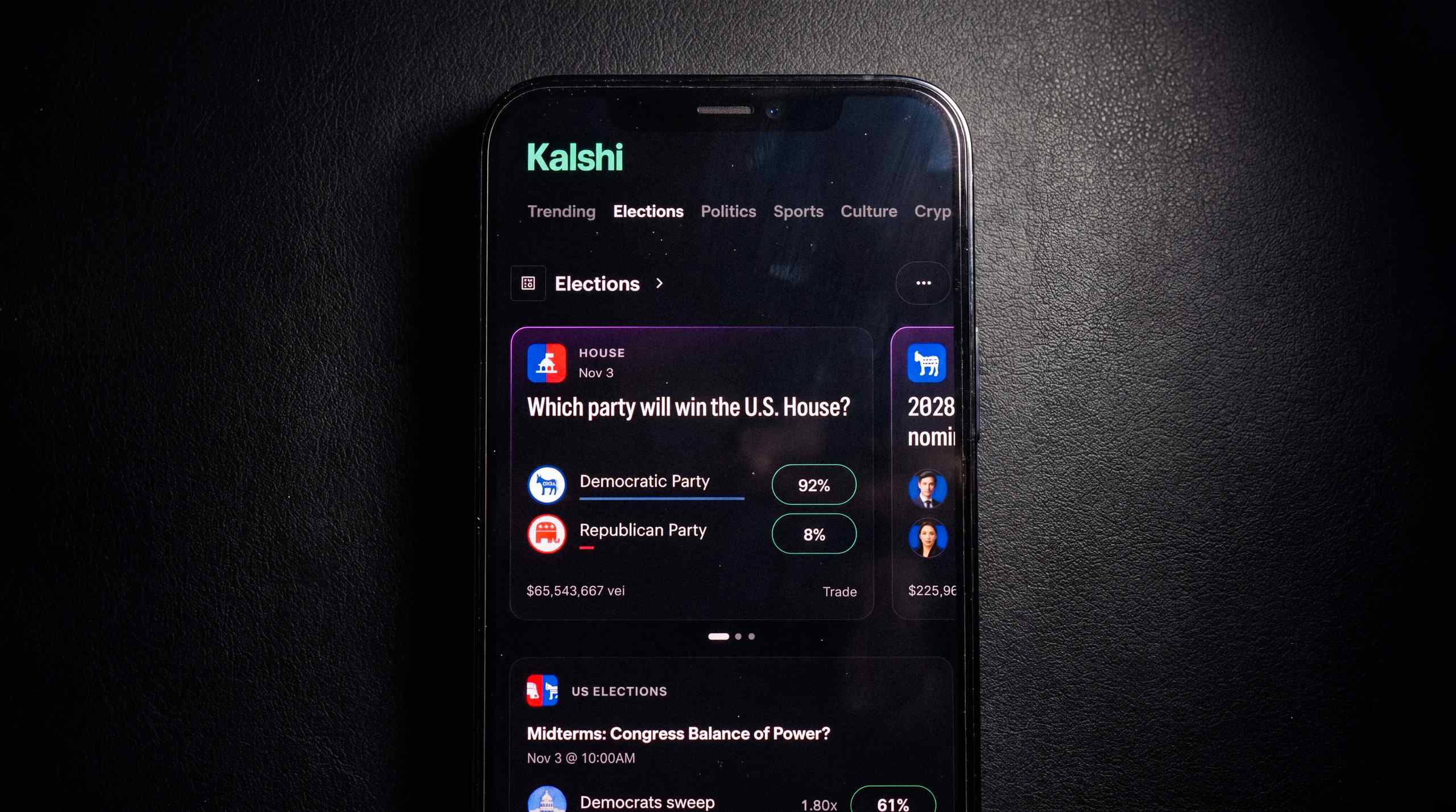
Kalshi, Polymarket Starting to Price the Midterms as Blowout
With just over five weeks to go, Kalshi and Polymarket now heavily favor Democrats for the House and give them the edge in the Senate.
By Stuart Hughes
Kalshi’s NFL Volume Is Exploding. Should Sportsbooks Be Worried?
The NFL season is barely underway, but prediction markets have already handled multiple billions in football trading volume. Is that enough to make sportsbooks nervous?

By Charlon Muscat
Best Prediction Market Apps of 2026
Compare the best prediction market apps and platforms for sports, politics and other events, ranked by market selection, fees, liquidity, user experience and availability.

By James Guill
Prediction Markets vs Sports Betting: Key Differences
Prediction markets vs sports books: odds, vig, trading vs fixed bets, legality by state, combos vs parlays. Which is better for sports bettors?

By Arthur Crowson
Sydney Sweeney to LeBron: Prediction Markets Bet on Star Power
Sydney Sweeney just became an equity partner at Novig. She joins a growing list of A-listers cashing massive checks from prediction markets, including LeBron James, Timothée Chalamet and many others.

By Cole Rush