
Why Degens Love Kalshi’s 15-Minute Bitcoin Markets
Ultra-short binary contracts on Bitcoin’s next move have turned Kalshi into a 24/7 trading floor for crypto fans, sports bettors and algorithmic traders.

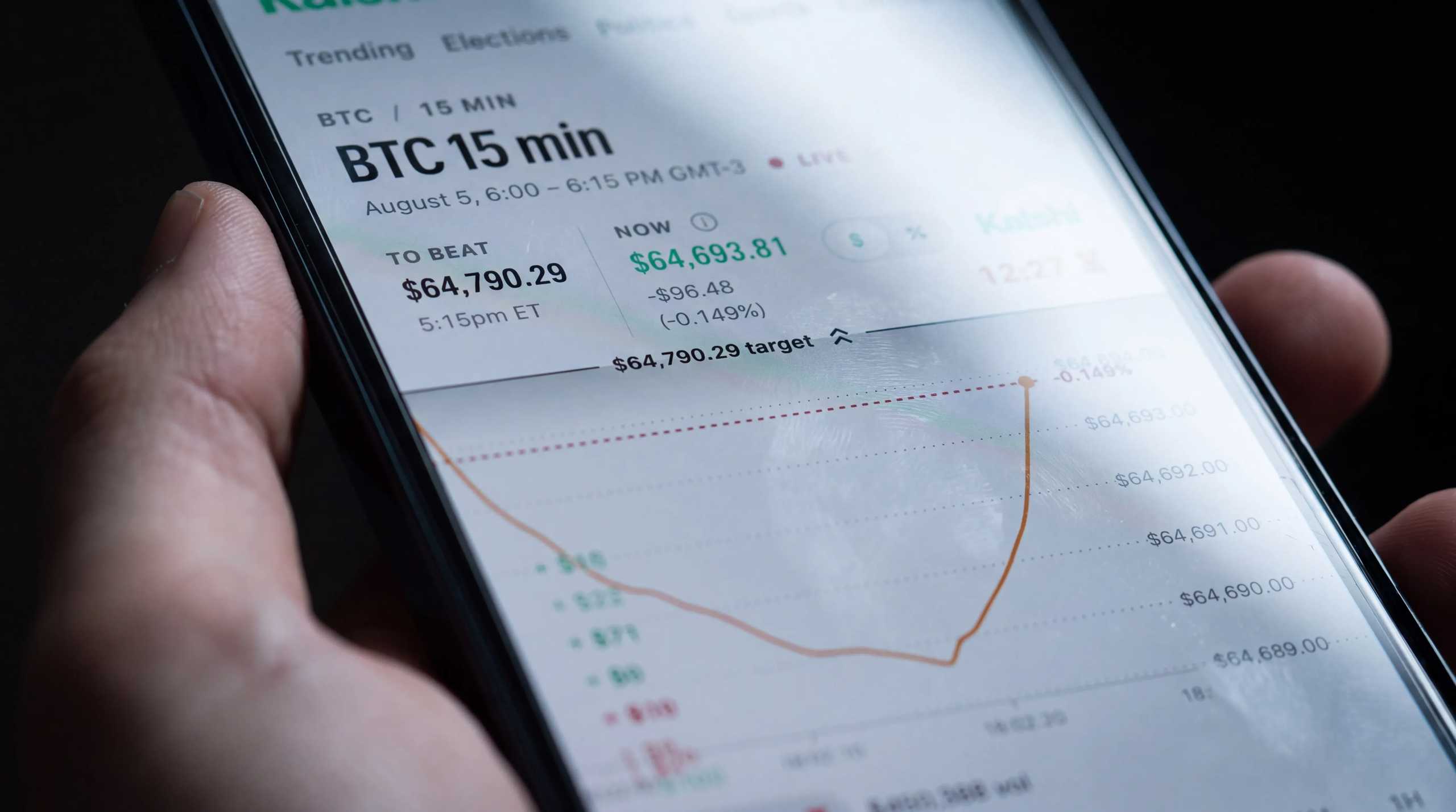
Most prediction markets resolve over days, weeks or even months, but some traders are diving into Kalshi’s 15-minute Bitcoin contracts.
The contracts flip the longer-term prediction markets contract concept on its head, settling every quarter hour and creating an almost continuous stream of trading opportunities. For a growing slice of users, these markets have become a hybrid of prediction markets, sports betting, and high-frequency crypto trading.
They carry a binary yes/no outcome, instant feedback, and a new contract rolling in every 15 minutes. It’s no surprise that “degens” have quietly flocked to one of Kalshi’s most active product lines.

What Are Kalshi’s 15-Minute Bitcoin Markets?
At their core, these are binary event contracts that ask a simple question: “Will Bitcoin be up or down in the next 15 minutes?”
Each contract is tied to a specific target price and time window. If you buy an “Up” contract, you’re betting that Bitcoin’s price will be above that target at settlement. If you buy “Down,” you’re betting it will be below.
Settlement doesn’t come from Kalshi’s own order book. Instead, the final value is based on CF Benchmarks’ Real-Time Index (CFB RTI), which aggregates spot prices from major crypto exchanges once per second. In the last minute before expiration, 60 index prices are collected and averaged to produce the official settlement price. That means the last trade on Kalshi’s book doesn’t decide the outcome; the external index does.
Each contract is priced between $0.01 and $0.99, reflecting the market’s implied probability of that outcome. A contract trading at $0.60 suggests the market sees a 60% chance of that event occurring. If your prediction is correct at settlement, the contract resolves at $1; if it’s wrong, it resolves at $0.
You don’t have to hold until expiration. Traders can buy and sell contracts during the 15-minute window. Exiting early locks in profits or cuts losses as the price moves. The result is a fast, binary, options-style product that feels more like a prop bet on Bitcoin’s next move than a traditional investment.
Why Have They Become So Popular?
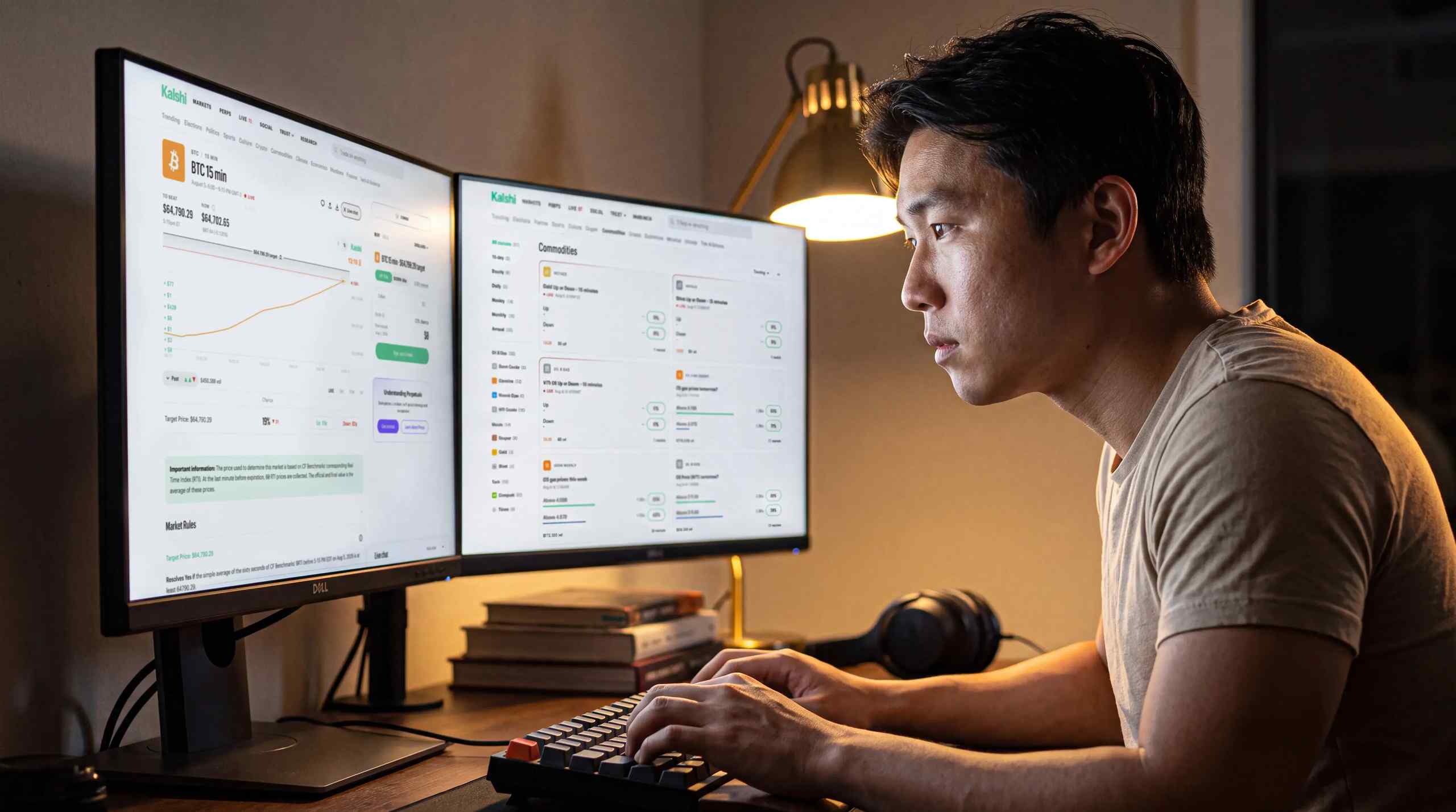
The appeal is straightforward. There is constant action, instant settlement, and a simple yes/no format. Instead of waiting days for political or sports markets to resolve, a new Bitcoin contract pops up every 15 minutes, 24/7. For people who enjoy rapid decision-making, this is a natural fit compared to longer-term prediction markets.
Bitcoin’s volatility adds to the attraction. Even small moves can swing contract prices dramatically in seconds, creating frequent opportunities to enter, exit, or flip positions. The low barrier to entry, simply a Kalshi account funded in dollars, with no need to hold crypto directly, also helps.
For casual users, it feels like high-speed action on Bitcoin’s next price. For more serious traders, it’s a liquid, regulated venue to express very short-term views on crypto direction without dealing with perpetuals, funding rates, or leverage mechanics on offshore exchanges.
Who’s Actually Trading Them?
The participant mix is diverse, which is part of what makes these markets so active.
| Trader Type | Why They Participate | Typical Holding Period | Primary Goal |
|---|---|---|---|
| Casual Trader | Simple yes/no bet on BTC direction | Minutes to 15 minutes | Quick profit or fun |
| Sports Bettor | Action between games, instant resolution | Minutes to 15 minutes | Entertainment and edge |
| Crypto Trader | Express short-term views without holding BTC | Minutes to 15 minutes | Directional speculation |
| Algorithmic Trader | Automated strategies on regular cadence | Seconds to 15 minutes | Systematic edge |
| Quantitative Trader | Backtested models on 15-min windows | Seconds to 15 minutes | Risk-adjusted returns |
The structure naturally encourages automation with a new contract every 15 minutes, standardized settlement, and a clear, rules-based resolution process. It’s no accident that some users publicly discuss running AI or indicator-based bots on these markets, with claims of outsized returns from systematic trading.
How Are These Different From Traditional Crypto Trading?
It’s important to understand this is not trading Bitcoin itself. It is trading a prediction contract on whether Bitcoin will be above or below a certain price in 15 minutes.
These contracts:
- Don’t require owning or storing crypto.
- Are settled in dollars.
- Have a fixed maximum payout rather than unlimited upside or downside.
Compared to perpetual futures:
- There’s no leverage in the traditional sense, though the binary payoff creates leveraged-like exposure.
- No funding rates or margin calls; you simply buy or sell contracts.
- Outcomes are binary rather than linear with price.
Compared to options:
- These are simpler with no strike selection beyond the target price, no Greeks, no expiration dates beyond the 15-minute window.
- Payouts are capped, unlike options’ potentially uncapped payoff profiles.
Compared to leveraged crypto exchanges:
- Kalshi is a CFTC-regulated designated contract market in the U.S., operating under federal oversight.
- Settlement uses an external, regulated index, not a single exchange’s price.
Are They Gambling, Trading, or Something New?
Reasonable people can view these markets differently. To some, they look like gambling with their ultra-short timeframes, binary outcomes, and a degen-friendly vibe. To others, they’re a form of trading that lets traders express informed views on Bitcoin’s direction using a regulated, transparent product.
These contracts do blur the line between prediction markets, financial trading and gambling. They borrow the simplicity of sports betting props, the immediacy of crypto trading and the event-based structure of prediction markets.
Whether it is gambling, trading or something new, they’ve become one of Kalshi’s most interesting product experiments and a magnet for anyone who wants to bet on Bitcoin’s next 15 minutes.
These markets aren’t for everyone, but for a certain kind of trader, one who thrives on speed, simplicity, and constant feedback, Kalshi’s 15-minute Bitcoin contracts have quickly become a new favorite playground.
Pat Evans is a Grand Rapids-based journalist and editor covering the intersection of business, sports, lifestyle, and gambling regulation. With a background in business journalism and legislative reporting (LSR, iGamingBusiness), he brings an analytical, human-focused approach to stories about modern trends. His work has appeared in regional and national publications, and he is also the author of two books on beer history.
More Articles like this
NBA Targets Risky Bets. Will Kalshi, Polymarket Play Ball?
The NBA is banning several easily manipulated bets at sportsbooks. But will Kalshi and Polymarket follow suit?

By Stuart Hughes
Kalshi Wants Margin Trading. What Could Go Wrong?
Kalshi’s proposed margin system would let eligible traders put up less than the full value of some positions, freeing capital for other trades while also introducing a new layer of leverage and risk.

By Charlon Muscat
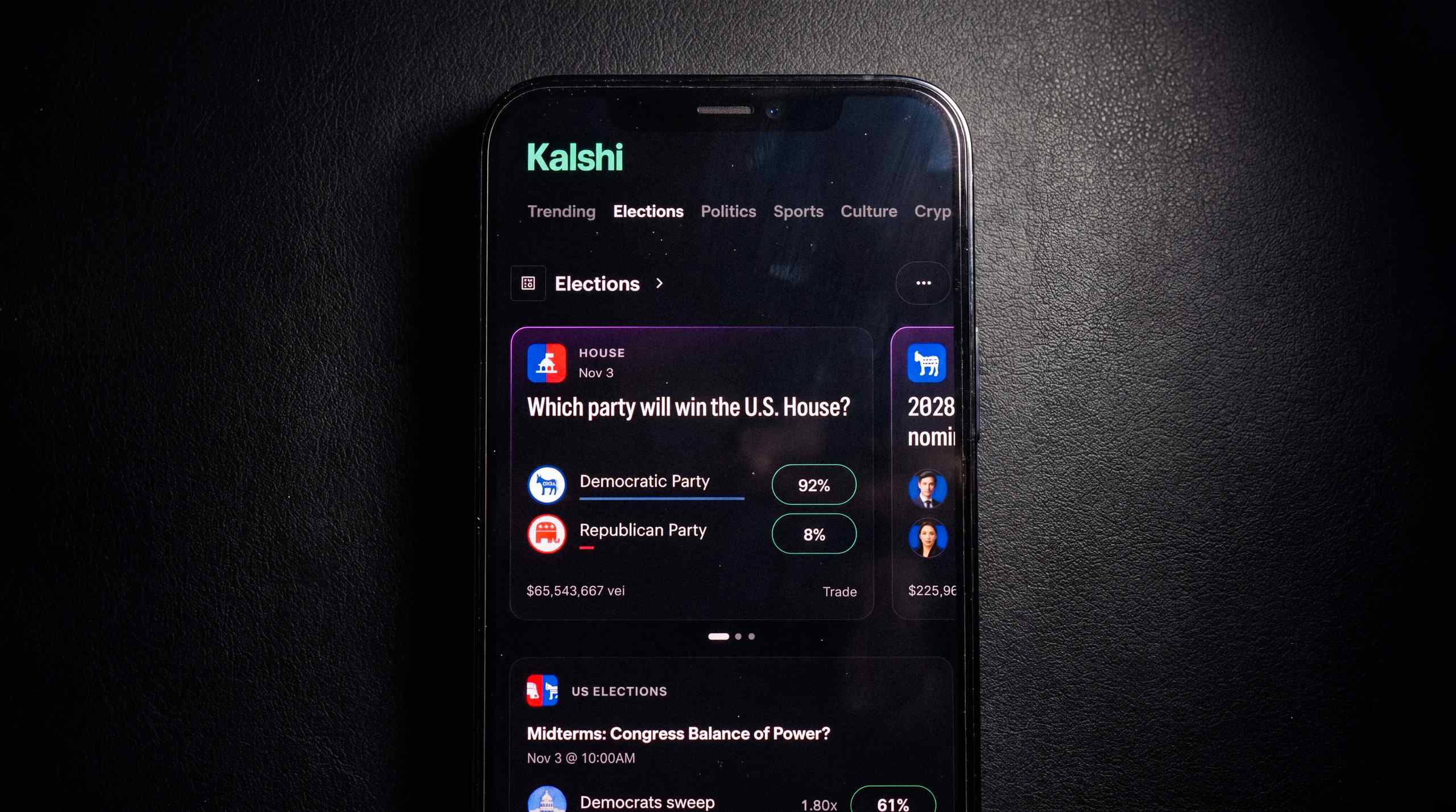
Kalshi, Polymarket Starting to Price the Midterms as Blowout
With just over five weeks to go, Kalshi and Polymarket now heavily favor Democrats for the House and give them the edge in the Senate.
By Stuart Hughes
Kalshi’s NFL Volume Is Exploding. Should Sportsbooks Be Worried?
The NFL season is barely underway, but prediction markets have already handled multiple billions in football trading volume. Is that enough to make sportsbooks nervous?

By Charlon Muscat
Best Prediction Market Apps of 2026
Compare the best prediction market apps and platforms for sports, politics and other events, ranked by market selection, fees, liquidity, user experience and availability.

By James Guill
Prediction Markets vs Sports Betting: Key Differences
Prediction markets vs sports books: odds, vig, trading vs fixed bets, legality by state, combos vs parlays. Which is better for sports bettors?

By Arthur Crowson