
Kalshi, Polymarket Starting to Price the Midterms as Blowout
With just over five weeks to go, Kalshi and Polymarket now heavily favor Democrats for the House and give them the edge in the Senate.

With just over five weeks left before the 2026 midterms, prediction markets have become as much a part of election coverage as polling averages.
Kalshi and Polymarket are increasingly converging on a strong Democratic midterm performance.
Initially, Kalshi and Polymarket agreed on a strong advantage for Democrats in the House but were split on the Senate with Kalshi giving a slight edge 52% to Republicans, but Polymarket, in sharp contrast, gave a 66% edge to Democrats for the Senate.
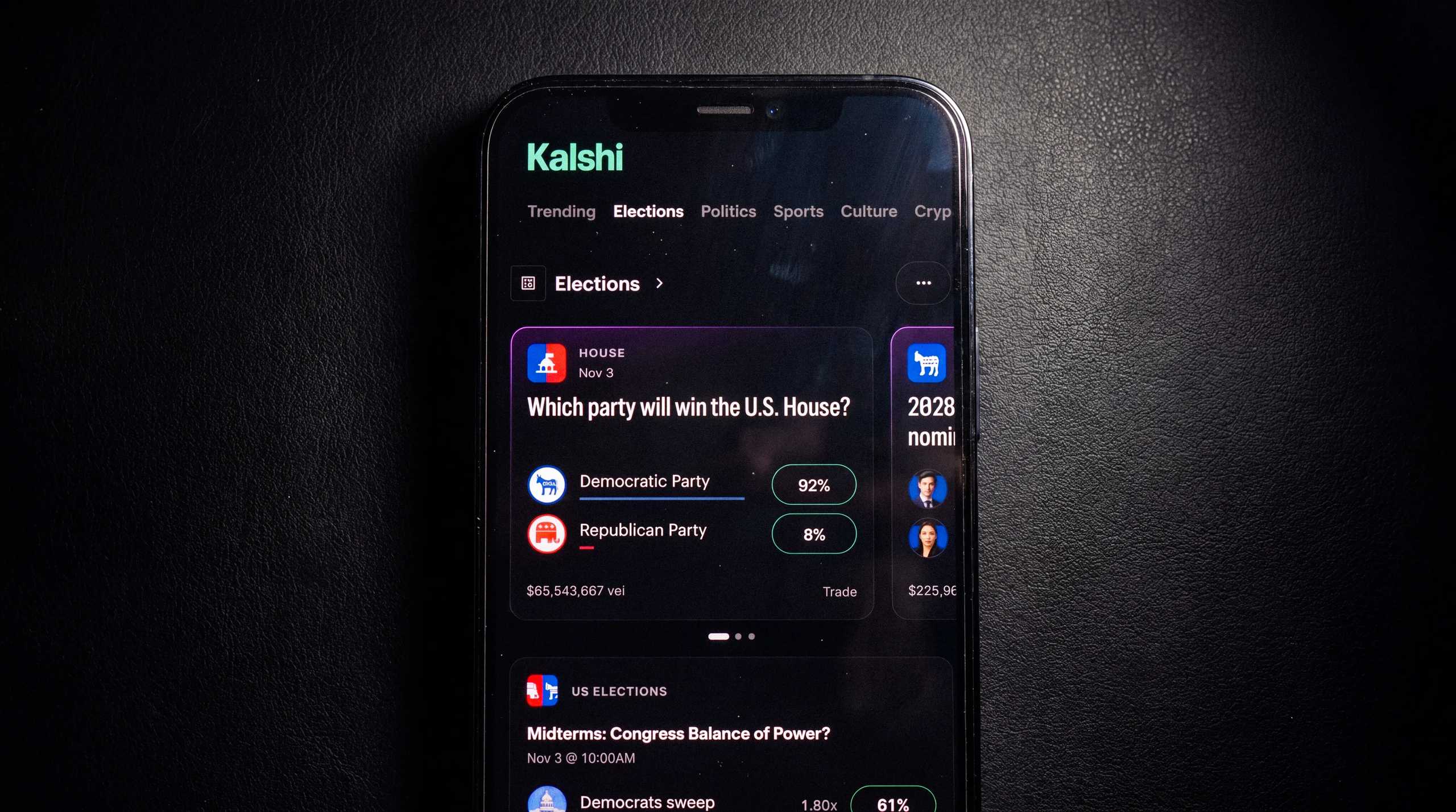
The difference has now been wiped away and Kalshi and Polymarket are pricing Democrats as a 92% favorite to retake the House and roughly 60% to retake the Senate.
Why does this matter? Six weeks out from the 2024 election, Polymarket priced Harris vs. Trump as essentially a coin flip but things started to move quickly for Trump in the following weeks. By a week before Election Day, Trump was trading around 66% on Polymarket.
The point being that it’s worth taking a closer look at prediction markets over the next few weeks if you’re looking for hints on the upcoming midterms.
Here’s a closer look at what Polymarket and Kalshi are saying about the midterms.
The House: About as Close to Consensus as Markets Get
On Kalshi, the market pricing House control puts Democrats at 91% and Republicans at 9%, with more than $38 million traded on the contract as of late September. The number has ticked even further towards Democrats over the past few days, giving them a commanding lead.
Polymarket’s combination markets have a similar lead. Adding its "Democrats Sweep" and "Republican Senate, Democratic House" outcomes puts the implied probability of Democratic House control well above 90%.
Both platforms are pricing a wave election for the House, driven by the same structural facts: Republicans hold a narrow majority, midterms are historically brutal for the president's party, and Democrats currently enjoy one of their strongest generic ballot leads of the cycle.
The Senate Is No Longer a Coin Flip
Earlier this month, the Senate looked relatively safe for Republicans, but now that is under threat as well.
Around Sept. 12, both Kalshi and Polymarket shifted dramatically towards Democratic control in the Senate. Earlier, the two leading prediction markets diverged significantly, but at the time this article was published, both had stabilized around 62% for Democrats retaking the Senate.
Why the shift? There’s a variety of factors, but recent polling has shown voters getting disgruntled about health care, the cost of living and the war in Iran.
Texas and Iowa have surprisingly become legitimate battlegrounds where Democrats have a chance of flipping the status quo.
The Races Actually Deciding the Senate
Democrats need a net gain of four seats to flip the chamber, and the map narrows to a handful of toss-ups. Kalshi's individual state markets, current as of late September, show the tightest contests clustered in the Sun Belt and Midwest.
| Senate Race | Democratic Candidate (Kalshi %) | Republican Candidate (Kalshi %) |
|---|---|---|
| Texas | James Talarico (60%) | Ken Paxton (40%) |
| Ohio (special election) | Sherrod Brown (59%) | Jon Husted (41%) |
| Maine | Troy Jackson (65%) | Susan Collins (36%) |
| Michigan | Abdul El-Sayed (62%) | Mike Rogers (38%) |
| Iowa | Josh Turek (42%) | Ashley Hinson (58%) |
A week ago, several of these races were close to coin flips, but there has since been a sharp swing toward Democratic candidates.
Some of the most dramatic include James Talerico in Texas and Sherrod Brown in Ohio where both candidates moved 10 points ahead of their opposition.
Maine and Michigan were already leaning Democrat but moved even further in that direction. Iowa is the one race where Republicans still hold the edge.
Beyond Control: Seat Counts and Wave Scenarios
Kalshi also runs markets on the overall scale of the outcome. Its “blue wave” market is now priced at about 84% Yes, while the more aggressive “blue tsunami” scenario sits near 49%, putting a much larger Democratic gain close to a coin flip. Kalshi defines a blue wave as Democrats finishing with at least 218 House seats and 49 Senate seats, while a blue tsunami requires at least 235 House seats and 51 Senate seats.
The odds that Democrats finish with more than 52 Senate seats sit around 36%, while a 50-50 chamber is priced near 16%, both plausible outcomes rather than fringe bets.
What the Trading Volume Says
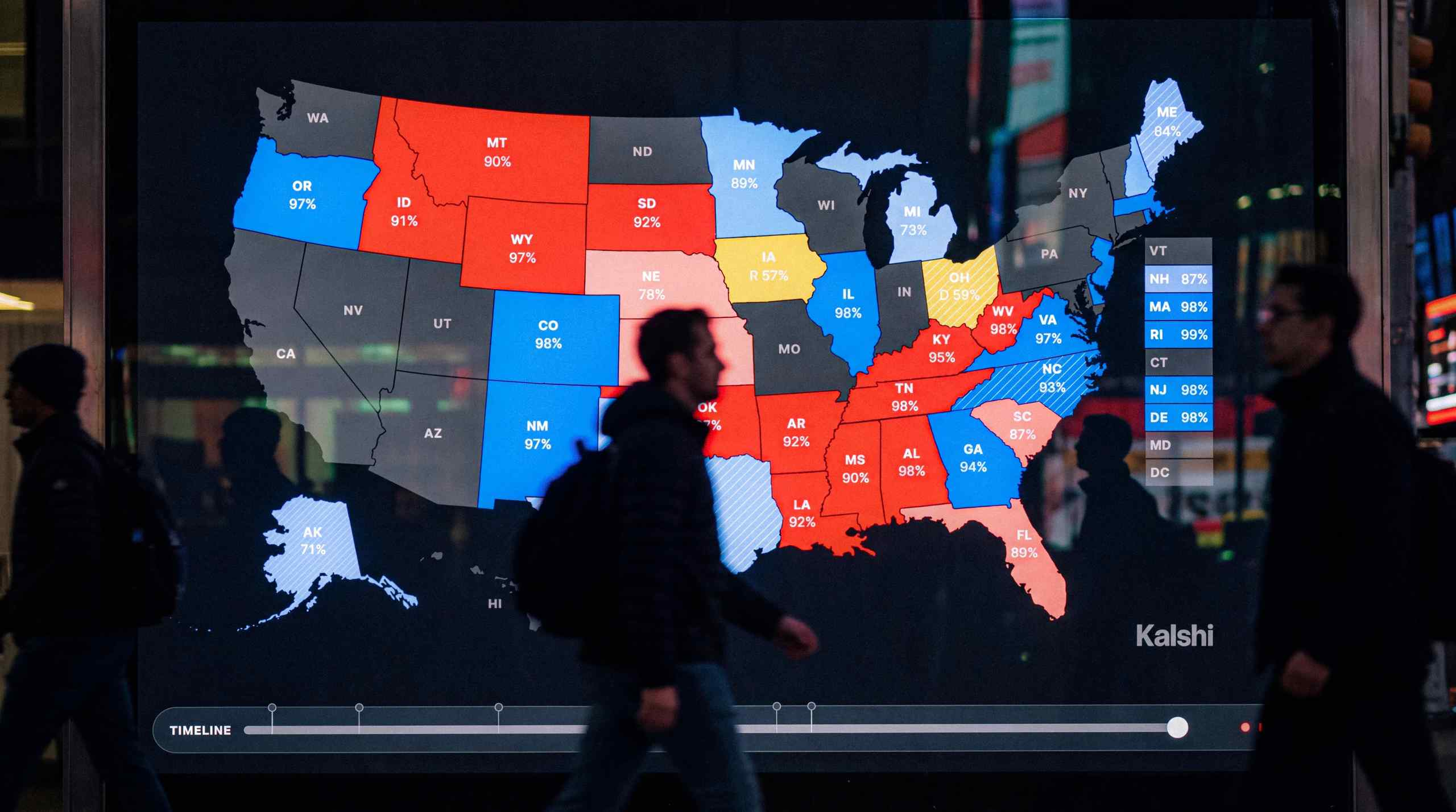
Trading volume matters because it's a rough proxy for how much real conviction, and how much scrutiny, sits behind a given price. The House control market alone has drawn more than $38 million on Kalshi, while Polymarket's Senate market and its combined Balance of Power markets have moved at least $18 million. Election officials have taken notice too. PBS News reported that trading volume on Kalshi and Polymarket has been "skyrocketing" this cycle, with officials cautioning that billions of dollars could ultimately be wagered on questions like House and Senate control before November. That's a separate debate from whether the prices are accurate, but it's part of why these markets get more media attention with every cycle.
Markets vs. Polls: Mostly Aligned, Senate Still Lags
On the generic congressional ballot, Nate Silver's Silver Bulletin polling average had Democrats up roughly 7.5 points in mid-September, climbing from a 6.4-point lead at the start of the month, and closer to an 8-point edge once adjusted for likely voters. That lead is large enough, historically, to match the kind of decisive House flip both Kalshi and Polymarket are pricing. On the House, in other words, the markets and the polls are telling the same story.
It’s roughly the same story for the Senate, although independent race analysis remains more cautious about Senate control.
The Bottom Line
Just over five weeks out, prediction markets are getting more confident about a strong Democratic performance in the midterms.
The House looks heavily tilted toward Democrats in both markets, while the Senate remains considerably more competitive, with several toss-up states, and a national mood that hasn't fully sorted out how it applies to a map this specific. For readers trying to understand how these odds actually get priced, that's the value of watching more than one market at once. Agreement tells you what's settled, while discrepancies tell you where to keep watching.
Market Snapshot (as of late September 2026)
| Market | Kalshi | Polymarket | Reported Volume |
|---|---|---|---|
| House control | Dem 92% / Rep 8% | Dem 93%+ (implied) | Polymarket $13M; Kalshi displayed volume varies by page/view |
| Senate control | Dem 62% / Rep 38% | Dem 63% / Rep 38% | Kalshi $37.5M+; Polymarket $5.3M |
| Blue wave (Senate) | Yes 84% / No 26% | — | $585K |
| Core four Dem sweep | Yes 59% / No 41% | — | $350K |
Figures pulled September 28, 2026.
Stuart Hughes is a London-based freelance journalist covering sports, travel, lifestyle, and technology. He’s worked with brands like Lenovo, Best Western, and Frontier Airlines, bringing a global perspective shaped by years of travel.
More Articles like this
Kalshi Wants Margin Trading. What Could Go Wrong?
Kalshi’s proposed margin system would let eligible traders put up less than the full value of some positions, freeing capital for other trades while also introducing a new layer of leverage and risk.

By Charlon Muscat
Kalshi’s NFL Volume Is Exploding. Should Sportsbooks Be Worried?
The NFL season is barely underway, but prediction markets have already handled multiple billions in football trading volume. Is that enough to make sportsbooks nervous?

By Charlon Muscat
Best Prediction Market Apps of 2026
Compare the best prediction market apps and platforms for sports, politics and other events, ranked by market selection, fees, liquidity, user experience and availability.

By James Guill
Prediction Markets vs Sports Betting: Key Differences
Prediction markets vs sports books: odds, vig, trading vs fixed bets, legality by state, combos vs parlays. Which is better for sports bettors?

By Arthur Crowson
Sydney Sweeney to LeBron: Prediction Markets Bet on Star Power
Sydney Sweeney just became an equity partner at Novig. She joins a growing list of A-listers cashing massive checks from prediction markets, including LeBron James, Timothée Chalamet and many others.

By Cole Rush
Are Prediction Markets Legal?
Prediction market laws depend on the platform, contract and jurisdiction. Learn how CFTC oversight, state disputes and Canadian regulations affect where event contracts can be traded.

By James Guill