

Kalshi Wants Margin Trading. What Could Go Wrong?
Kalshi’s proposed margin system would let eligible traders put up less than the full value of some positions, freeing capital for other trades while also introducing a new layer of leverage and risk.

On Kalshi, being right about an event six months out means tying up capital for that period unless you exit early.
Buying $100 worth of contracts is one thing, but for institutional traders managing several positions with six- or seven-figure exposure, every dollar posted as collateral is capital unavailable for the next trade. Margin trading, assuming regulators sign off, is Kalshi’s answer to that capital-efficiency problem.
I went through regulatory filings alongside product documentation, and in this article I break down how the proposal is supposed to work while also tracing where Kalshi seems headed next.
Kalshi seeks margin trading for event contracts
Kalshi Klear, the exchange’s clearinghouse, filed a proposal with the Commodity Futures Trading Commission (CFTC) on September 22 for risk-based margin on eligible event contracts. Getting the green light would let qualifying participants, either approved self-clearing members or eligible customers using FCMs, post only part of the required collateral upfront, and thus, have more capital available for other uses while those positions are open.
A Kalshi spokesperson told CNBC that sports, culture and mention markets would continue under full collateralization. Meanwhile, a memo shared with the network said leverage could make longer-dated contracts more attractive for institutions. It also proposed higher capital requirements as expiry approaches so borrowed exposure declines near settlement.

How does Kalshi’s risk-based margin work?
US prediction markets have generally operated on a fully collateralized basis, meaning 100 “Yes” contracts worth 60 cents each requires paying $60 upfront because that represents your maximum possible loss.
Kalshi’s proposed model instead calls for only a portion of that upfront, based on position risk. Let me give you an example:
- Suppose the market asks whether U.S. inflation will exceed 4% this year. You buy 100 “Yes” contracts at 60 cents each.
- For this hypothetical, assume the margin requirement is $20, or roughly 33% of the $60 maximum loss.
- A drop in Yes from 60 cents down to 50 makes your 100-contract position worth $10 less.
- If the required margin then rises to $25, another $15 would be needed before the account meets that threshold.
- Without that payment, the exposure could be liquidated before settlement.
- Should the opposite happen (‘Yes’ rises from 60 cents to 70 instead), mark-to-market gains add $10 of account equity and provide more cushion above the required margin.
- Closer to resolution, the required collateral generally rises toward full coverage.
Kalshi’s margin trading proposal applies a similar capital-efficiency concept already used in perpetual futures, where traders post collateral to control larger exposure to cryptocurrencies and precious metals while gains or losses track underlying prices. Now the filing takes that basic idea into eligible event markets, whose contracts instead resolve around a defined yes-or-no outcome.
➡️ New to all this? Here’s everything you need to know about how prediction markets work.
Professional trading tools are already part of Kalshi’s platform
Kalshi pushed further toward professional trading this July by releasing a free desktop-first terminal as public beta software for active participants managing more complex workflows. “We built Pro to give them the cockpit they deserve,” product lead Andy Chang said during launch.
The account, balance, positions, orders and underlying exchange are the same as standard Kalshi, but Pro layers several additional tools on top, including:
- Canvas: The new interface lets users place up to 12 markets beside one another, each with its own book, chart and order panel, then resize or reorder as needed.
- Saved views: Custom Canvas setups can preserve selected tiles, layouts, columns, and panel modes so different trading configurations are available again without rebuilding them manually.
- Markets screener: A live table helps scan roughly 2,000 listings by price, spread, depth, volume, expiry, liquidity, category plus buying skew from one screen.
- Live trades tape: Public fills appear continuously across the exchange, while filters can narrow activity toward larger transactions or particular events.
- Trading-desk order management: This adds a persistent blotter for positions, orders and fills, alongside queue position, inline amendments, bulk cancellations plus drag-to-reprice functionality directly against the book.
- Advanced book views: Kalshi Pro offers one-sided, two-sided, Maker plus Taker displays alongside a full price ladder and click-to-prefill order entry.
- Fast-entry controls: You can skip the review screen and send orders with a tap or keyboard command, even use quick-expiry buttons and finer price steps where supported for faster execution.
- High-resolution charts: For selected fast-moving contracts, Pro offers trade-by-trade short-term views plus specialized displays that compare underlying prices against target levels in near real time.

Up next for Kalshi
Aside from margin trading, Kalshi has other pieces moving as the company works toward its stated ambition of becoming a full-service financial exchange. On September 18, the CFTC received proposed rule changes covering perpetual futures tied to individual stocks plus qualifying ETFs. Regulatory approval would allow those contracts to provide continuous exposure without a fixed expiration date.
There was another development earlier, this one from Reuters, which reported Kalshi preparing to seek CFTC approval for a West Texas Intermediate crude perpetual futures contract offering 24/5 trading. Oil could bring different customers onto the venue while adding supply-shock risks into the same venue. Kalshi has also continued expanding its live perpetual lineup. On October 6, it launched US500, copper and aluminum perpetuals, while other proposals, including currencies and rates, remain in the regulatory pipeline.
Kalshi’s clearinghouse announcement promised broader categories and faster listings, and recent launches are starting to show what that strategy looks like in practice. A customer might express a Fed view through an event contract, then take gold exposure via a perpetual inside Pro. For the company, that means more chances to capture an active trader’s business under one account.
Dead Ends: The Kalshi products and proposals that did not last
I went back through a year of Kalshi filings and product changes, this time focusing on the initiatives that changed course along the way, to understand better how the platform’s roadmap has evolved.
| Feature | Original plan | Terminated / withdrawn on | Status |
|---|---|---|---|
| January fee rebate | Monthly rebates up to 80% | Aug. 31, 2025 | Abandoned. Never launched despite earlier certification |
| OTC swap rebate | Institutional rebates tied to qualifying volume | Sept. 29, 2026 | Terminated | Program ended well before original 2027 endpoint |
| Perpetual deposit rewards | Deposit incentives for self-clearing members | Aug. 5, 2026 | Withdrawn | Submission pulled before implementation |
| Employee test trades | Limited internal testing under compliance controls | Aug. 4, 2025 | Withdrawn | Rule proposal pulled before taking effect. |
| FOOTBALLSTATS incentives | Rewards for football-stat component liquidity | Aug. 17, 2026 | Reworked | Narrow proposal replaced by broader sports program |
Where Kalshi goes next
Where Kalshi seems intent on going now is toward bigger exchange products and institutional-grade infrastructure. Incentives, like the January fee rebate and perpetual deposit rewards program, alongside specialized regulatory proposals, have been the pieces more often withdrawn.
For active participants, approval for margin trading would leave capital available across several contracts instead of locking the full amount behind each position. Kalshi Pro users already have a substantial set of tools at their disposal, from Canvas and market screeners through live trade feeds and advanced order management, while additional asset classes are still moving through the pipeline.
Beyond margin, plenty is still tied up at the CFTC, including stock and ETF perpetuals, crude oil, currencies, and rates, and approval will decide what reaches the exchange next.
Charlon Muscat is an established iGaming expert who entered the space in 2019 and went on to build a name across both casino and sportsbook content.
More Articles like this
Can Prediction Markets Stop Traders From Harassing Athletes?
Kalshi and Novig are taking steps to identify and punish traders who harass athletes, but can these programs effectively reduce abuse?

By James Guill
NBA Targets Risky Bets. Will Kalshi, Polymarket Play Ball?
The NBA is banning several easily manipulated bets at sportsbooks. But will Kalshi and Polymarket follow suit?

By Stuart Hughes
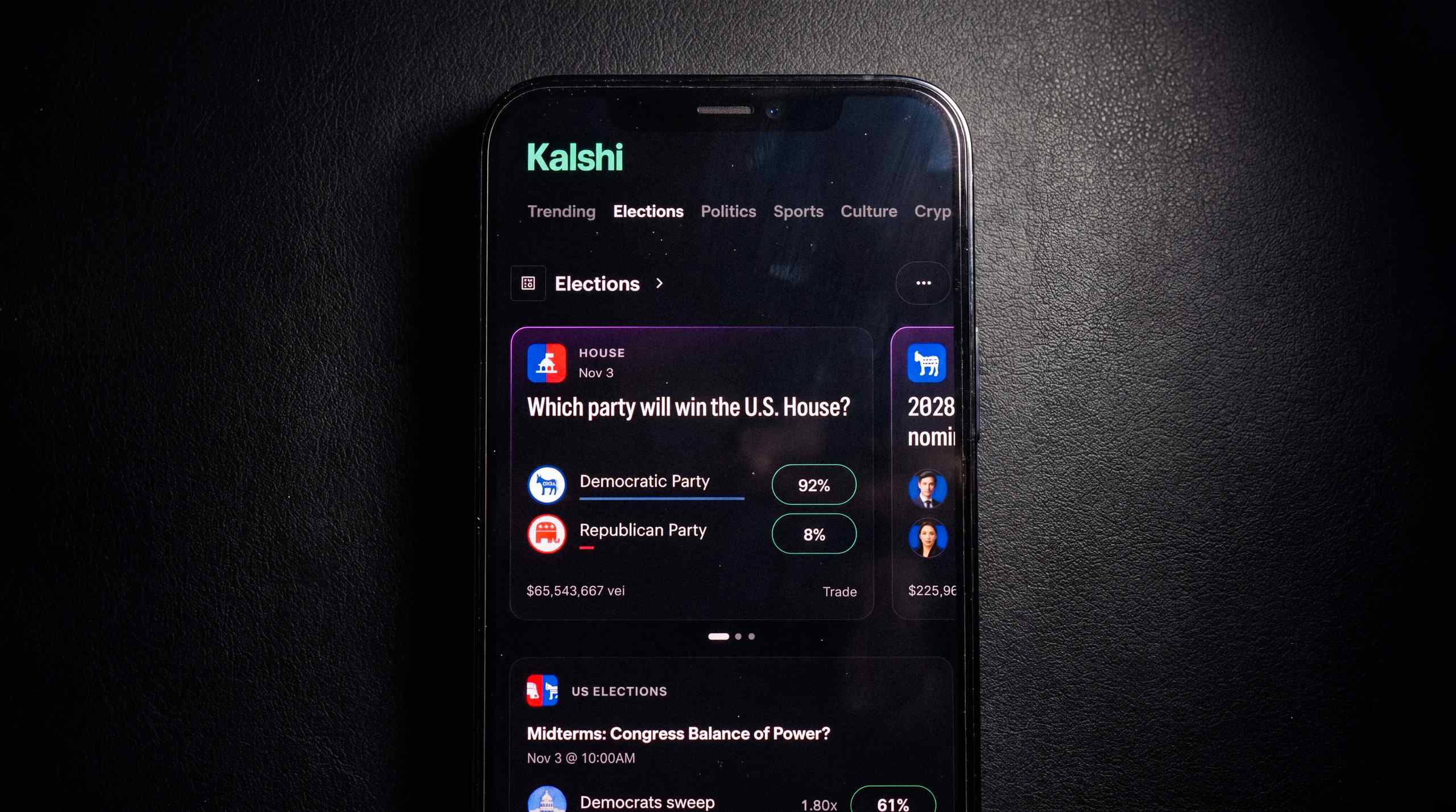
Kalshi, Polymarket Starting to Price the Midterms as Blowout
With just over five weeks to go, Kalshi and Polymarket now heavily favor Democrats for the House and give them the edge in the Senate.
By Stuart Hughes
Kalshi’s NFL Volume Is Exploding. Should Sportsbooks Be Worried?
The NFL season is barely underway, but prediction markets have already handled multiple billions in football trading volume. Is that enough to make sportsbooks nervous?

By Charlon Muscat
Best Prediction Market Apps of 2026
Compare the best prediction market apps and platforms for sports, politics and other events, ranked by market selection, fees, liquidity, user experience and availability.

By James Guill
Prediction Markets vs Sports Betting: Key Differences
Prediction markets vs sports books: odds, vig, trading vs fixed bets, legality by state, combos vs parlays. Which is better for sports bettors?

By Arthur Crowson