
Was There Irregular Betting Activity in the World Cup? Maybe
FIFA found no evidence of match manipulation at the 2026 World Cup, yet the independent Group of Copenhagen flagged seven incidents for further scrutiny. Are the two watchdogs contradicting each other—or can unusual betting activity no longer be judged solely by whether a contest was compromised?

A recent New York Times article suggests that FIFA and an independent international integrity body are at odds over whether there was irregular betting activity during the 2026 FIFA World Cup. Maybe it's intentional. Maybe it isn't. But I think the headline reaches a bit too far for the attention-grabbing angle. To me, it's also the least interesting part of the story.
Seven betting alerts despite FIFA's clean bill of health
Days after FIFA's Integrity Task Force concluded it found "no suspicious betting activity or indications of potential match manipulation" across all 104 World Cup matches, the Group of Copenhagen, an independent integrity network operating under the Council of Europe's Macolin Convention, disclosed that their own monitoring operation identified seven yellow notices warranting further review, including the following:
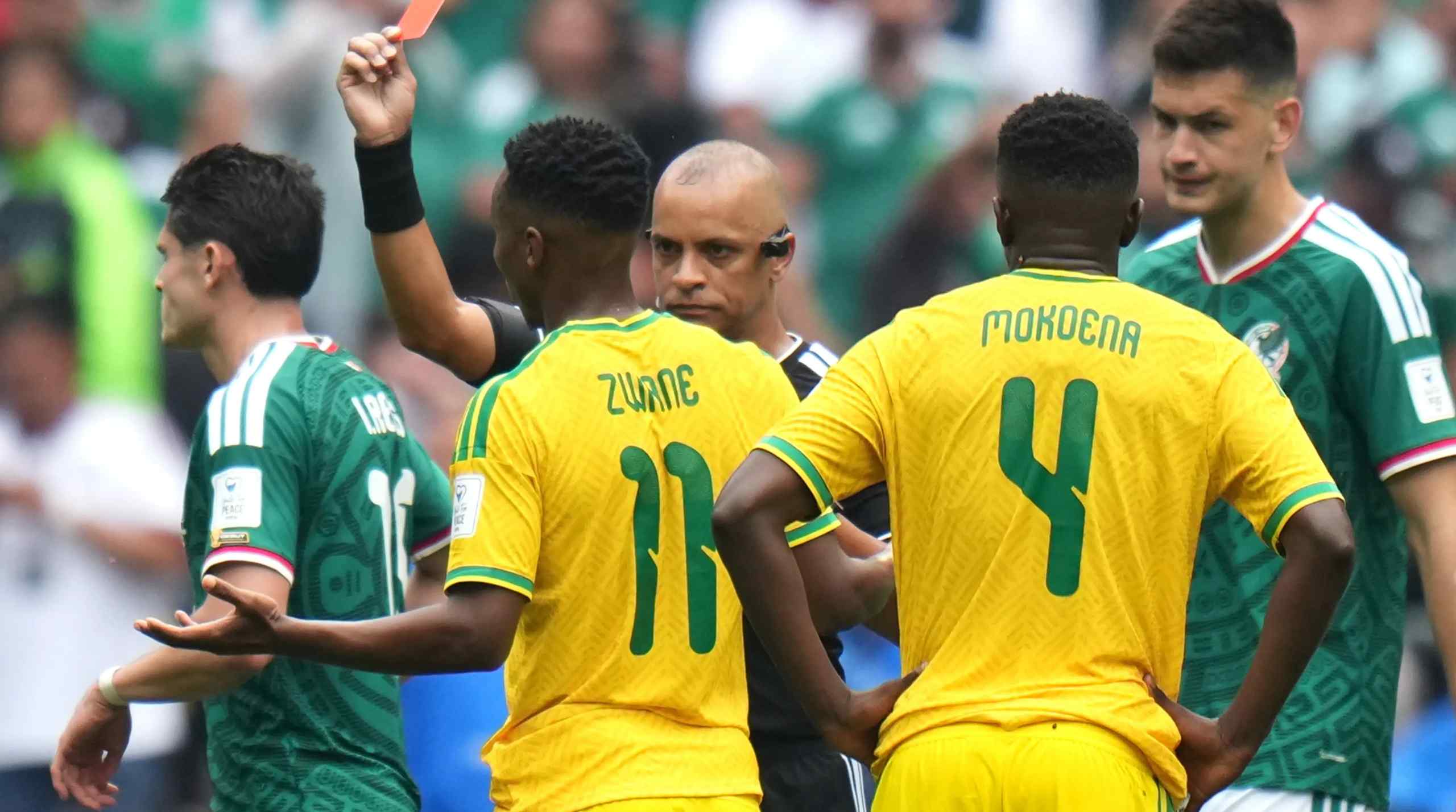
- South Africa vs. Mexico: Themba Zwane's 84th-minute red card in the tournament opener.
- Spain vs. Cape Verde: Nearly $4.8 million wagered on Polymarket that Spain would fail to beat Cape Verde before the match ended in a scoreless draw.
- Spain vs. Saudi Arabia: A 3½-minute VAR review ultimately disallowed Ferran Torres' goal in Spain's 4-0 victory.
- USA vs. Belgium: Polymarket opened a market on whether USMNT striker Folarin Balogun would be eligible to play before FIFA announced that his red-card suspension had been lifted.
As part of its tournament-wide monitoring operation, the group placed 15 matches under enhanced surveillance and reviewed 12 major on-field controversies for potential integrity risks.
Why the findings aren't actually contradictory
At first glance, it looks like two of soccer's top integrity watchdogs came away from the World Cup with completely different takeaways. In reality, they weren't necessarily trying to answer the same question in the first place.
The FIFA Integrity Task Force serves as the governing body's operational coordination hub for safeguarding competitions against match manipulation and other integrity threats before, during and after each tournament. We first saw it in action during the 2019 Women's World Cup, when FIFA assembled an international coalition that included INTERPOL, Sportradar, regulators and dozens of other organizations—including the Group of Copenhagen—to share intelligence in real time. At the 2026 FIFA World Cup, their job was pooling data from across the global sports betting ecosystem and determining whether credible evidence showed a match had been compromised.
The Group of Copenhagen, on the other hand, looks for signs that could put the tournament at risk. Their job is figuring out whether any red flags warrant further scrutiny.
Traditional indicators of match manipulation
Not long ago, most suspicious betting activity in soccer was viewed through the lens of match manipulation. The usual scenarios saw some individual, whether a player, referee, manager or, in rarer cases, an entire team, deliberately influencing outcomes. A major incident involving them all was the 2009 Bochum scandal, in which a transnational syndicate allegedly recruited more than 200 people, sometimes paying over $100,000 per match, to manipulate games before profiting through illegal gambling markets. As micro betting took off, investigators increasingly focused on individual in-game incidents like yellow cards and corners that might not look unusual to the naked eye.
As a matter of routine, sports integrity units monitored global betting markets before, during and after matches, searching for odds movements or wagering patterns that could not be explained by the action on the field or publicly available information, such as team news, injuries or lineup changes. Unusual patterns triggered additional scrutiny. This is when analysts review match footage and compare gambling activity across operators while consulting any available intelligence from bookmakers, monitoring partners and, when necessary, law enforcement. If multiple indicators pointed toward possible manipulation, the matter would escalate into a formal integrity investigation to gather evidence establishing whether the match had in fact been compromised.
The potential integrity challenges arising from prediction markets
Prediction markets muddy the traditional link between suspicious betting activity and match manipulation. Suddenly, abnormal market activity can have far more legitimate and illegitimate explanations, meaning it’s much harder for integrity analysts to determine whether a red flag actually reflects a compromised contest. Let me give you a few examples:
Potential Integrity Risks in Sports Prediction Markets
| Potential scenario | How it could create abnormal market activity | Questions for integrity analysts |
|---|---|---|
| Sportsbook hedging | Imagine a sportsbook receives heavy betting on one side and hedges its exposure by taking the opposite position in a prediction market—much like the New York bar that used Kalshi to offset the cost of its Knicks promotion. Gains on one position help offset losses on the other. | Is the trading consistent with commercial hedging, or could it reflect insider trading or an attempt to manipulate the market? |
| Information asymmetry | Sudden price or volume changes as a trader acts on information that is not yet reflected in the market | Is the activity simply a fast reaction to leaked information, or does it involve confidential access unavailable to other participants? |
| Cross-market trading | A trader intentionally influences prices in one market to profit from the resulting movements in another. | Can the activity be explained by ordinary cross-market arbitrage? If not, could it be a case of financial market manipulation rather than sports-related integrity concerns? |
| Event contract design | Additional contracts beyond traditional match and outright betting markets create new opportunities to trade on nonpublic information. | If the trading reflects insider information, did it arise from manipulation or from the unauthorized disclosure of legitimate confidential information (e.g., a club official leaking a star player injury). The latter may constitute an integrity breach through the misuse of privileged information, even though no sporting contest was technically compromised. |
Where this leaves integrity monitoring
For decades, abnormal betting activity—especially when paired with something unusual on or off the field—invariably raised eyebrows. Of course, not every case revolved around gambling, though. Teams and players have also broken the rules purely for sporting reasons, like avoiding relegation. But the bottom line was always the same: did somebody cheat the game?
Prediction markets make that much harder to answer because the same trading patterns can now have several plausible explanations beyond soccer manipulation. That doesn't necessarily mean anyone tampered with what happened on the field, even if it still amounts to a breach of confidentiality under the competition's regulations. Or it may simply reflect third-party traders engaging in financial market misconduct rather than anything affecting the sporting contest itself.
Charlon Muscat is an established iGaming expert who entered the space in 2019 and went on to build a name across both casino and sportsbook content.
More Articles like this
Kalshi Wants Margin Trading. What Could Go Wrong?
Kalshi’s proposed margin system would let eligible traders put up less than the full value of some positions, freeing capital for other trades while also introducing a new layer of leverage and risk.

By Charlon Muscat
Kalshi, Polymarket Starting to Price the Midterms as Blowout
With just over five weeks to go, Kalshi and Polymarket now heavily favor Democrats for the House and give them the edge in the Senate.
By Stuart Hughes
Kalshi’s NFL Volume Is Exploding. Should Sportsbooks Be Worried?
The NFL season is barely underway, but prediction markets have already handled multiple billions in football trading volume. Is that enough to make sportsbooks nervous?

By Charlon Muscat
Best Prediction Market Apps of 2026
Compare the best prediction market apps and platforms for sports, politics and other events, ranked by market selection, fees, liquidity, user experience and availability.

By James Guill
Prediction Markets vs Sports Betting: Key Differences
Prediction markets vs sports books: odds, vig, trading vs fixed bets, legality by state, combos vs parlays. Which is better for sports bettors?

By Arthur Crowson
Sydney Sweeney to LeBron: Prediction Markets Bet on Star Power
Sydney Sweeney just became an equity partner at Novig. She joins a growing list of A-listers cashing massive checks from prediction markets, including LeBron James, Timothée Chalamet and many others.

By Cole Rush