

From AI Music to GTA VI: Five Prediction Markets I Want to See
Prediction markets already cover everything from interest rates to AI releases, but plenty of fascinating questions remain off the board. Here are five markets I’d love to trade—and the settlement, legal and liquidity problems standing in the way.
.webp)
"Trade what's next."
That’s the official tagline of Kalshi, but the reality is there are still some limitations on what’s available for trading on the prediction market giant. I’m not just talking about violent, harmful, or illicit events, either. There are plenty of prospective markets that simply haven’t been added to the site.
Over the years, prediction markets have evolved from a niche pastime of political enthusiasts to a cultural phenomenon. The range of topics, which now includes inflation rates, the Federal Reserve’s decisions, climate disasters, film awards, and the introduction of new AI models, would have been unimaginable in the previous decade.
I found myself thinking of the possibilities that have not been explored yet, not the most unusual ideas that I could come up with, but the ones I would gladly engage in trading if somebody solved all the legal and logistical issues.
What makes a great prediction market?
A market I would want to participate in has several traits that separate it from a fun-sounding proposition. The important traits of a good market include an objective result, straightforward rules of settlement, general interest, adequate liquidity, and limited potential for manipulation.
This is why some obvious prediction markets haven’t emerged yet on platforms like Kalshi and Polymarket.
While you might be tempted to ask whether Jessica Biel and Justin Timberlake will have a long-lasting relationship, the answer could be based on confidential information that those outside of the relationship simply don't have.
Whether a particular movie is good or bad is also highly subjective.
Essentially, for a market to succeed, it has to be based upon something verifiable and concrete.
Five prediction markets I’d love to see
Here are the top five markets I'd most like to see added to Kalshi. This is obviously subjective, and it's questionable as to whether these are actually possible, but this is what I'd like to trade.
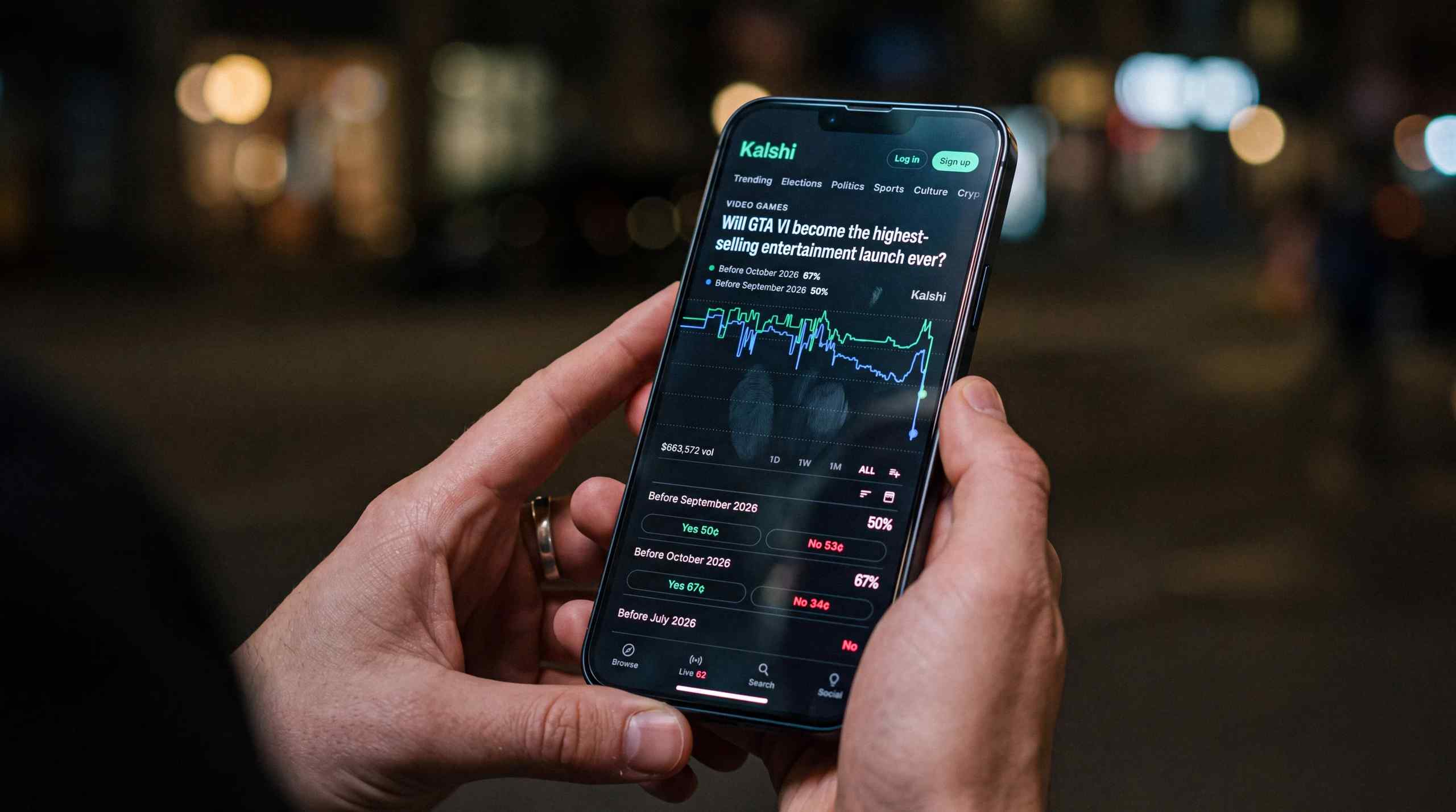
1. Will GTA VI become the highest-selling entertainment launch ever?
I'd trade this one in a heartbeat. GTA V already features prominently on most best-selling lists, and hype surrounds GTA VI. There are already plenty of markets for GTA VI, but I want the biggest one of them all: GTA VI to set all-time entertainment launch sales record.
To calculate everything correctly, first-week and total sales must be compared against those of other top products. Why hasn't this been done yet? The problem is in the definition of the term "most successful launch," which refers to the sales of different kinds of products and thus lacks a single standard in each industry. So a scoreboard needs to be created first.
2. Will an AI-generated song reach #1 on the Billboard Hot 100?
This has a nice mix of tech anxiety and pop culture fun. Traders might be music followers, AI oppositionists, and spectators of catastrophe in the making. There are already a number of markets for AI-generated songs hitting the Billboard Hot 100, but I’d like to see them aim a little higher and post a market on whether an AI-generated song will reach #1. Settlement is theoretically simple, as Billboard has charts made weekly, nevertheless, the difficulty lies in the definition. Do Suno tracks with humanly written lyrics qualify? How about human singing with AI music? Currently, the market does not exist, as there has been no definite understanding of "AI-made" concepts, with Billboard remaining unclear about disclosure rules. Without an unambiguous definition, no clear settlement is possible.
3. Will a humanoid robot be legally employed with a salary and tax ID?
This is the one that makes me laugh a little, but I genuinely think it's coming. While businesses like Figure and Tesla are trialing humanoid robots in warehouses, it becomes an issue of whether any jurisdiction recognizes robots as "employees" with tax filings and payroll, not just equipment on lease. There is currently no legal definition of a robot as a person under labor law, nor are there companies wishing to experiment with it in public. With robotics progressing at the speed of light, there is every reason to believe that this story will become a reality within ten years.
4. Will an active NFL player become a U.S. president?
I find this idea interesting because it is crazy in a good way but not completely impossible. Basically, if someone is on an active roster at the time of the election, they win. Gerald Ford, George H.W. Bush, and Dwight D. Eisenhower all played amateur sports, but no professional athlete has gotten close to the White House.
In addition, former NFL kicker Jay Feely recently won the Republican primary for Arizona’s 1st Congressional District, proving that athletes continue to consider politics (especially after their sports careers are finished.
This one might take a while to settle, but crazier things have happened in US elections lately, and you never know who might step up to the plate in 2028.
5. Will a country officially adopt a four-day workweek nationwide?
The combination of public policy and lifestyle aspiration is what makes the issue interesting. Pilot initiatives in Belgium, Iceland, and the UK suggest that the topic is appealing and not a mirage. In fact, it is easy to argue one way or another. If the national government introduces a new law introducing a four-day workweek, we will have knowledge as opposed to opinion. The reason why we don’t have it yet is not due to any failure on a policy level but because we are at the beginning of the process.
The markets that are probably impossible
Fun things don't always become successful markets.
Any instance in which the success of a market depends on subjective judgment like “best of” awards, confidential information like marital status or illness, easy manipulation where a small group has an unfair advantage over others, or simple ethics such as predicting people's deaths or problems is avoided for good reason.
The success of prediction markets stems from their outcomes being verifiable and everyone having an equal chance to win.
The moment it becomes dependent on a judge's opinion or a secret only a few people know, a market ceases to exist and turns into simply guessing.
Which existing markets once sounded ridiculous?
It is interesting to note that what today’s markets regard as common were once the subjects of laughter.
Until recently, betting on the interest rate movements by the Federal Reserve was a unique activity carried out by bond market dealers rather than something that anyone with a smartphone app could engage in.
Betting on the dates on which AI models are created would confuse the majority of people, while nowadays it is one of the most popular betting categories on various platforms.
Even betting on the weather and movie earnings, which are now widely used betting categories, would not have been deemed reasonable several years ago.
What could prediction markets look like five years from now?
While I may not know where exactly this leads, I see its general direction.
Consumer tech industries such as foldable phones, smart glasses, and breakthroughs in robotics will emerge as hardware cycles accelerate faster than before.
Going even further, groundbreaking developments such as fusion energy generation or disease cures will be turned into tradable items with the help of research timeline following.
Entertainment will surely develop and will break the borders of box office and streaming tallies.
Climate markets could continue developing past hurricane season into such categories as green energy generation achievement.
Business markets will likely already begin including IPO timing and other launch delays of the new products.
Success is never guaranteed, however, with the loosening of regulation and the greater work of the public in prediction markets, all niches of the creative industry will be established in the prediction format.
Wild market scorecard
| Proposed Market | Estimated Time to Resolution | Difficulty to Verify | Likelihood It Could Exist |
|---|---|---|---|
| GTA VI highest-selling launch ever | 1-2 years post-launch | Low (public sales data) | High |
| AI-generated song hits #1 on Hot 100 | Uncertain, depends on chart rules | Medium (definition disputes) | Medium |
| Humanoid robot legally employed | 5–10 years | Medium (legal ambiguity) | Medium |
| An active NFL player becomes president | Unlikely within any single cycle | Low (clear election results) | Low |
| Country adopts four-day workweek nationwide | 3–7 years | Medium (legislative record is public) | Medium |
All the ratings lead to the same obvious issue that haunted me as I was coming up with this article: is there a way to know who wins? Markets rated "high" or "medium" have public and verifiable data. Meanwhile, markets rated "low" are not impossible to know but are a few steps away from either legal clarity, proper-chart clearances, or, as it is in the case with the NFL president, an even more astonishing coincidence of timing.
Lucie brings almost 20 years of iGaming experience, combining sports writing expertise with deep casino knowledge. Her work spans live sports coverage, slot mechanics, player-focused reviews, and strategic casino content. Known for her no-nonsense, first-hand approach, Lucie cuts through jargon to deliver clear, practical insights for both operators and players.
More Articles like this
Kalshi Wants Margin Trading. What Could Go Wrong?
Kalshi’s proposed margin system would let eligible traders put up less than the full value of some positions, freeing capital for other trades while also introducing a new layer of leverage and risk.

By Charlon Muscat
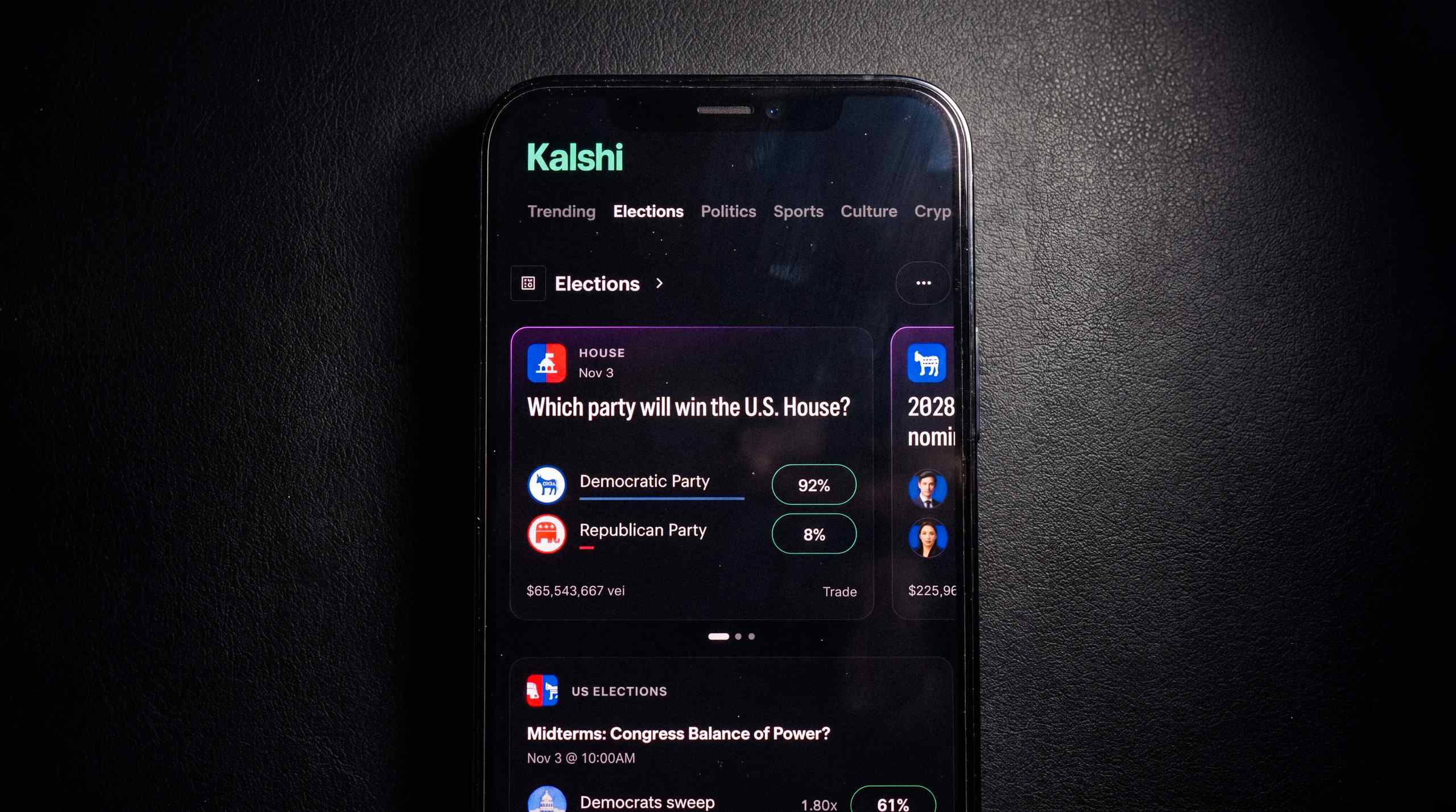
Kalshi, Polymarket Starting to Price the Midterms as Blowout
With just over five weeks to go, Kalshi and Polymarket now heavily favor Democrats for the House and give them the edge in the Senate.
By Stuart Hughes
Kalshi’s NFL Volume Is Exploding. Should Sportsbooks Be Worried?
The NFL season is barely underway, but prediction markets have already handled multiple billions in football trading volume. Is that enough to make sportsbooks nervous?

By Charlon Muscat
Best Prediction Market Apps of 2026
Compare the best prediction market apps and platforms for sports, politics and other events, ranked by market selection, fees, liquidity, user experience and availability.

By James Guill
Prediction Markets vs Sports Betting: Key Differences
Prediction markets vs sports books: odds, vig, trading vs fixed bets, legality by state, combos vs parlays. Which is better for sports bettors?
By Arthur Crowson
Sydney Sweeney to LeBron: Prediction Markets Bet on Star Power
Sydney Sweeney just became an equity partner at Novig. She joins a growing list of A-listers cashing massive checks from prediction markets, including LeBron James, Timothée Chalamet and many others.
By Cole Rush