
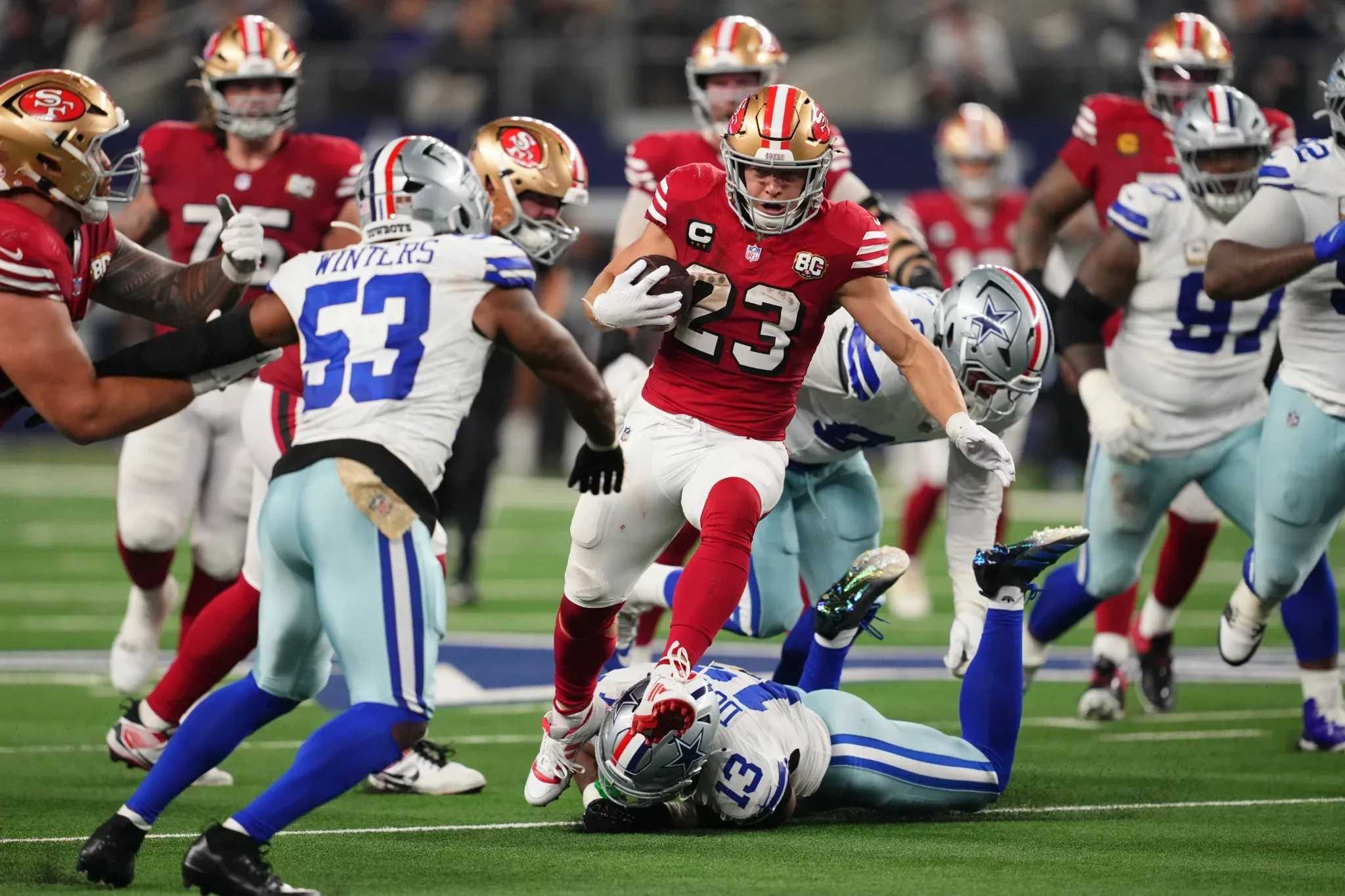
Injury Protection, Prediction Markets' Latest Sportsbook Bet
Sportsbook features are increasingly becoming part of prediction markets, raising the stakes for traditional operators.

Parlays, player props, live trading, and now protection when a player leaves early. All of it has found its way into prediction markets. Kalshi’s latest move picks up on a promise sportsbooks have long used to reassure customers placing player-prop bets that their money won’t go to waste because of an injury.
More than ever, we’re seeing new features make prediction markets look like sportsbooks, to the point some say they’re indistinguishable. But are they really offering the same experience? And what advantages, if any, do traditional sportsbooks still have?
Kalshi adds Injury Protection with its own settlement rules
A new addition to Kalshi’s sports offering gives traders protection against early player exits, a first for prediction markets. Users trading eligible player props, including touchdowns, passing yards, points, rebounds, assists and three-pointers, may still get paid out on the contract if the player participates in at least one first-half play, does not return after halftime or in overtime, and has not already reached the target.
What separates this from similar injury programs at traditional sportsbooks such as Fanatics and DraftKings is that here you don't get the stake back. A protected contract instead settles at a pregame fair price set by the exchange.
Say the exchange sets that price at 60¢. Here's what happens per contract:
- Bought at 45¢ → 60¢ − 45¢ = 15¢ profit
- Bought at 75¢ → 60¢ − 75¢ = 15¢ loss
Both figures are before fees.
On top of that, there's no official injury designation needed. If the athlete in question meets the condition of playing in the first half and not returning later, the special settlement applies.
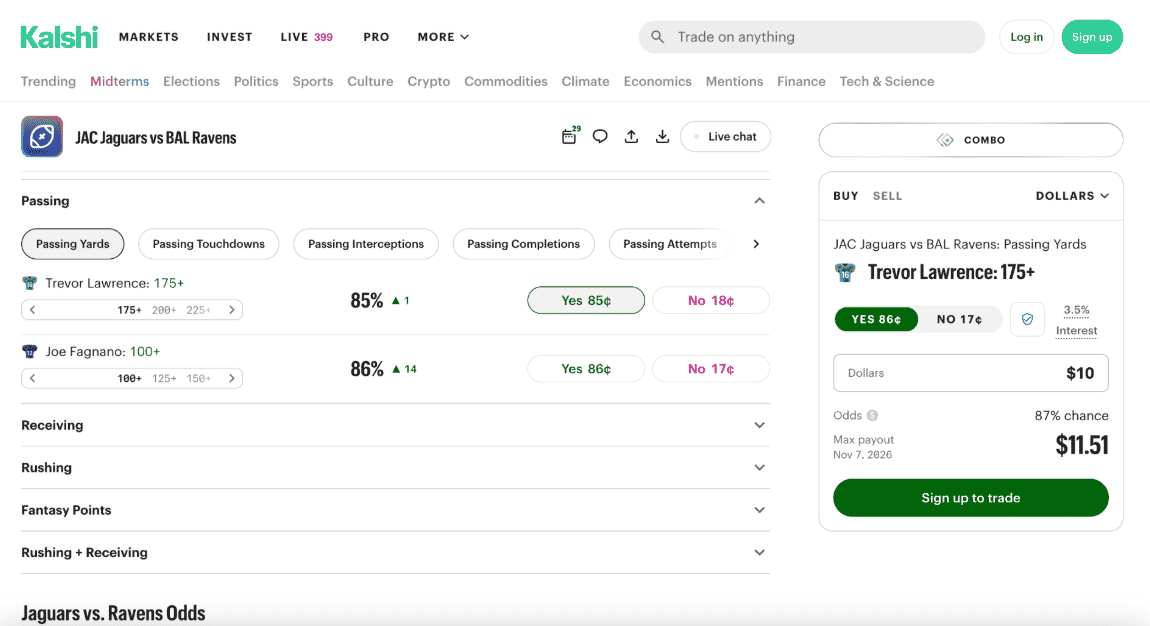
At Kalshi, the Protected Markets feature took effect in early October, initially covering select NFL player props. DraftKings' DKeX exchange has filed to offer similar protection for NBA player props. Similar to FanDuel Sportsbook charging an extra 3% for Bet Protect+, Kalshi treats standard and covered selections as separate products with different pricing. I tested the toggle on Trevor Lawrence to throw for 175 or more yards against Baltimore, where switching the shield on lifted the quoted chance one point to 87%, while the maximum payout on a $10 stake fell to $11.51 from $11.63.
Prediction Markets vs. Sportsbook Features
Injury protection is only one piece of the growing overlap between prediction markets and sportsbooks.
| Feature | Prediction Markets | Sportsbooks |
|---|---|---|
| Moneylines, spreads, totals | Common | Common |
| Player props | Limited selection | Common |
| Same-game parlays and combos | Some platforms | Common |
| Live betting and trading | Common | Common |
| Live streaming, scores and game trackers | Some platforms | Some platforms |
| Social features and community chats | Some platforms | Some platforms |
| VIP and loyalty programs | Some platforms | Common |
| Early payouts and substitution protection | Rare | Some platforms |
| Microbetting and each-way wagers | Rare | Some platforms |
| No Sweat Bets and profit boosts | Rare | Some platforms |
What Prediction Markets Have Picked up from Sportsbooks
Here's something that might surprise anyone who got into prediction markets over the past two years. For most of their modern history, these platforms had very little in common with sportsbooks. Elections, economic indicators and other real-world events were the main focus.
Go further back to the academic roots, and the whole idea was that people putting money behind their predictions might collectively produce better forecasts than conventional methods. The entertainment angle is a much more recent development.
Then, in 2024, the U.S. presidential election put prediction markets in front of a much bigger audience. Several platforms, including Kalshi and Crypto.com, rode that wave of attention into sports trading, the latter making the first move that December with NFL championship-winner contracts offered through its CFTC-regulated derivatives exchange, marking a first for the federally regulated U.S. market.
The industry has since moved well beyond picking champions, adding several features straight out of the sportsbook playbook, including:
- Traditional betting markets: Moneylines, point spreads and over/under totals now appear as sports contracts, so traders have familiar options for backing game outcomes and scoring results.
- Player props: Quarterback passing yards, NBA rebounds, assists or three-pointers, each tied to an individual athlete's performance.
- Social features: Sites like Polymarket and OG.com offer group chats and community spaces where traders exchange picks and discuss upcoming events in real time.
- Same-game combos: Multiple picks are bundled into one contract, generally requiring every leg to hit for a full payout.
- Live in-game trading: After kickoff, eligible contracts remain open, so traders have the option to buy or sell positions as market prices shift throughout the game.
- Live streaming: Polymarket has added in-app broadcasts for select competitions through Genius Sports and Sportradar, including soccer, tennis and basketball. Kalshi also announced a streaming partnership with Catalist Sports this September.
- Live scores and game trackers: DraftKings Predictions has expanded its in-play statistics and dedicated sports hubs, while Kalshi provides live game data, including scores, clocks and play-by-play information for supported events.
- Loyalty programs: Frequent traders may qualify for VIP perks such as priority support and exclusive rewards, much like members of sportsbook loyalty clubs.
➡️ Read More: How do prediction markets work?
What Sportsbooks Offer that Prediction Markets Don't
For all the sportsbook features now available on prediction markets, the resemblance only goes so far. Traditional operators still have a few advantages up their sleeves.
Early Payout
bet365 offers this feature on eligible pregame win bets across soccer, basketball, baseball and football. Once the selected team takes a big enough lead, the wager pays as a winner, even if it eventually loses. FanDuel and DraftKings occasionally offer similar Early Win promotions through tokens bettors apply before placing the wagers.
Sub On Play On
For anyone betting soccer player props, Sub On Play On means an eligible wager doesn't die when the selected athlete gets pulled before the final whistle. bet365 introduced the feature first, before FanDuel launched its own version called SuperSub, both available in select competitions, including MLS, the Champions League, Premier League and World Cup.
Say you back Lionel Messi to score anytime, only for him to get subbed off in the 70th minute without finding the net. If his replacement scores, the ticket still pays at the original odds.
Micro betting
Micro betting markets cover wagers on the next pitch, play or possession, often settled within seconds. Prediction exchanges haven't widely adopted it, and liquidity is one likely obstacle. Each short-lived contract needs willing counterparties, while delayed game data exposes market makers to traders with fresher information. Sportsbooks face fewer matching constraints because they quote their own odds.
No Sweat Bet
Think of this as a second chance on eligible wagers. If your pick loses, the sportsbook returns the original stake as a Bonus Bet, up to a specified limit. A winning selection pays normally, while promotional credits generally have expiration dates and exclude their face value from future payouts.
Profit Boost
Sportsbooks have several ways to sweeten a winning ticket. DraftKings offers percentage-based tokens bettors apply to eligible wagers for extra profit without increasing their stake. At bet365, daily Bet Boosts feature improved odds on selected bets, sometimes even preassembled parlays. FanDuel takes another approach through Boost Builder, where each additional eligible leg raises the bonus percentage, subject to promotional limits.
Each-way betting
Popular in golf and horse racing, the standard each way bet splits the stake between two outcomes, one backing a tournament winner and another covering a specified finishing position. bet365 goes further through Each Way Extra; you can choose more paid places in exchange for shorter odds.
Are PM apps Becoming Sportsbooks in Everything but Name?
Seeing how much has changed in only two years, the line between prediction markets and sportsbooks is getting harder to draw, at least from a customer's perspective. What's still different, for the most part, is the business model underneath.
One matches buyers and sellers of event contracts; the other accepts wagers at odds it sets. That, and the regulatory framework. Federally registered exchanges operate under CFTC oversight, while sportsbooks need state gaming licenses, though whether state gambling laws also apply to sports event contracts remains disputed.
Speaking to Axios in April, Kalshi’s founders acknowledged the commercial importance of sports, saying those markets boost customer engagement, revenue and platform liquidity. They still defended the exchange model as fundamentally different from a sportsbook, which is an awkward distinction to maintain publicly, given that the Ninth Circuit Court of Appeals noted in its August 28, 2026 ruling that Kalshi had advertised itself as “the first app for legal sports betting in all 50 states.”
Charlon Muscat is an established iGaming expert who entered the space in 2019 and went on to build a name across both casino and sportsbook content.
More Articles like this
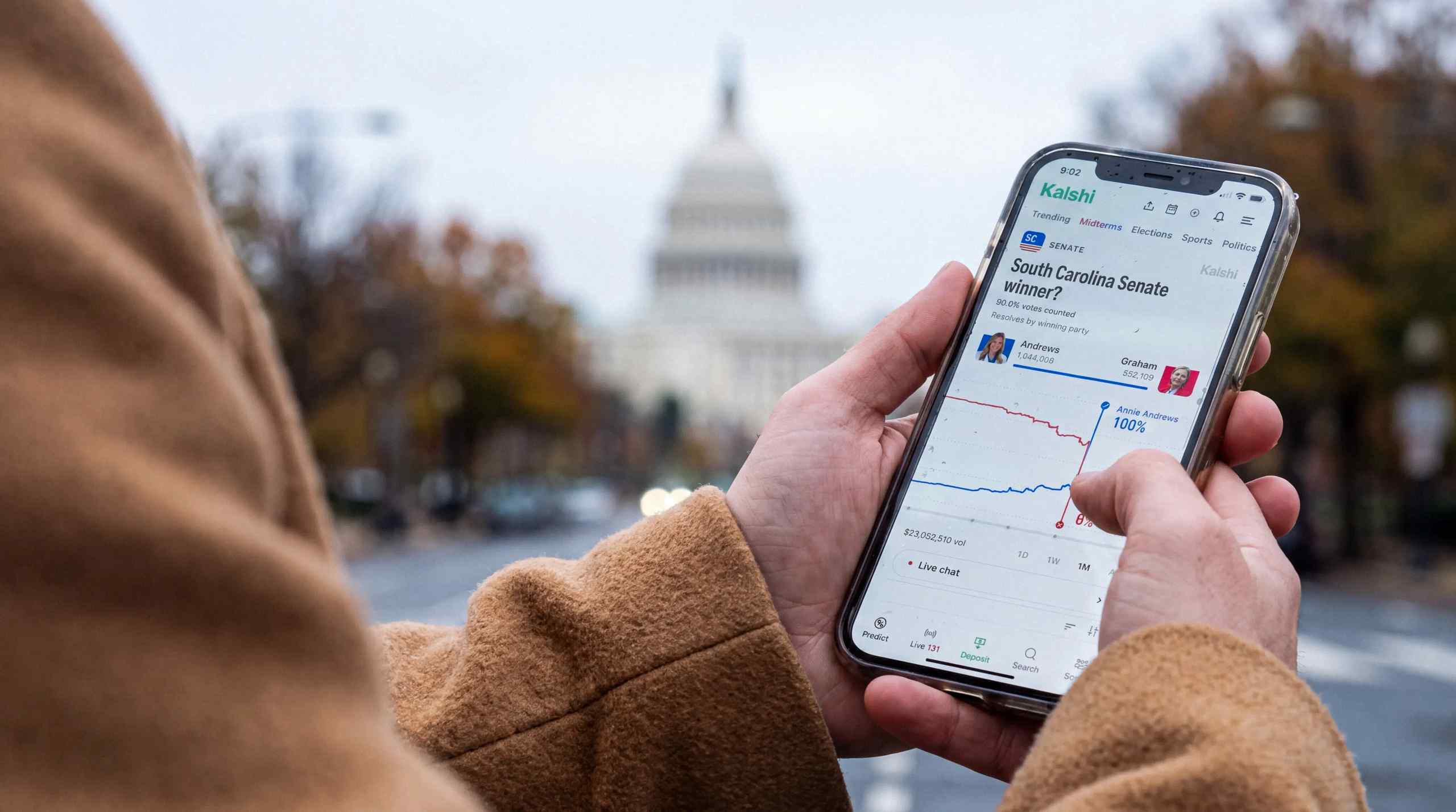
Did Kalshi Get the Midterms Correct? (Spoiler: Yes)
Prediction markets backed Trump in 2024 and now the Democrats in 2026, but will Kalshi's winning streak soften opposition to election betting?
By Stuart Hughes
Could AI Chips Become the Next Oil? Kalshi Thinks So
Kalshi wants traders betting on the future cost of AI computing power, but a dispute involving federal regulators could complicate its plans.
By Stuart Hughes
Can Prediction Markets Stop Traders From Harassing Athletes?
Kalshi and Novig are taking steps to identify and punish traders who harass athletes, but can these programs effectively reduce abuse?
By James Guill
NBA Targets Risky Bets. Will Kalshi, Polymarket Play Ball?
The NBA is banning several easily manipulated bets at sportsbooks. But will Kalshi and Polymarket follow suit?

By Stuart Hughes
Kalshi Wants Margin Trading. What Could Go Wrong?
Kalshi’s proposed margin system would let eligible traders put up less than the full value of some positions, freeing capital for other trades while also introducing a new layer of leverage and risk.

By Charlon Muscat
Kalshi, Polymarket Starting to Price the Midterms as Blowout
With just over five weeks to go, Kalshi and Polymarket now heavily favor Democrats for the House and give them the edge in the Senate.
By Stuart Hughes