
A Slot Machine Built on Kalshi Raises Bigger Questions
A Betr executive built a working slot machine on top of Kalshi's real-money contracts, then got blocked for it. The interface was gambling. The infrastructure underneath raises a bigger question.
%20(1).webp)
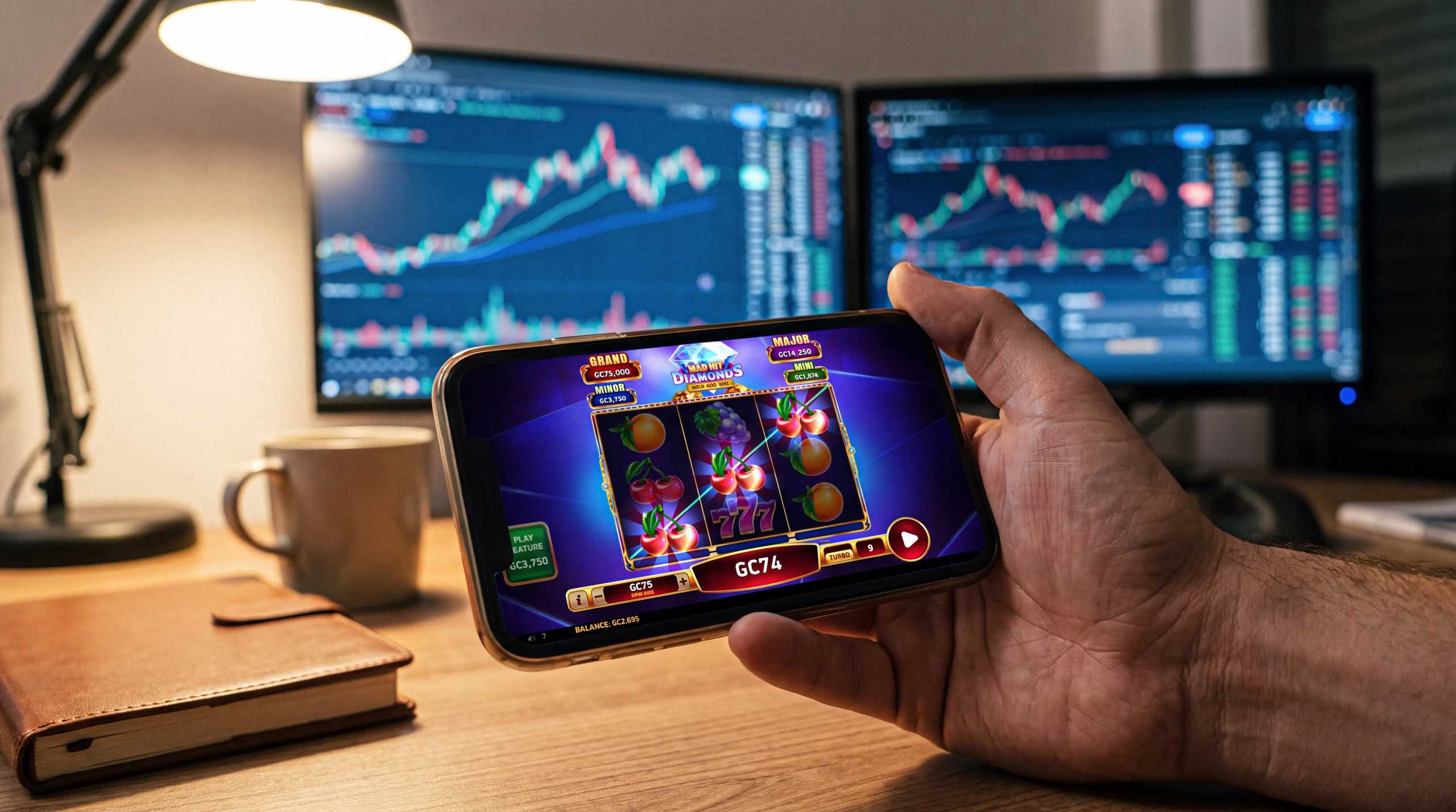
On June 17, Betr COO Alex Ursa posted a demo on X: a slot-style interface he'd built using Kalshi's API and real-money event contracts. The front end looked like a casino game, spinning reels, adjustable volatility, and a payout screen. The machinery underneath was pure prediction market infrastructure. Kalshi blocked his account days later, saying the experiment violated its policies. The interesting part isn't that it happened. It's what it exposes about how malleable this infrastructure already is.
What Did Ursa Actually Build?
Ursa described the product simply: a slot built on top of Kalshi's APIs. According to his original post, the interface staked $10 across nine in-play sports markets, with each contract functioning as a reel symbol. He said he could tune the setup to run more or less volatile. Every spin lost money in the demo he posted, which he noted matter-of-factly. The distinction from an ordinary slot machine is the engine underneath the reveal: no random number generator, just real Kalshi positions resolving in real time. The front end looked like casino gambling. The back end was a collection of event contracts.

Why This Is More Interesting Than One Weird Slot
Prediction markets are still young as mainstream consumer products, and developers are only beginning to explore what can be built on their prices, contracts, and APIs. A slot interface is one option. Fantasy-style games, automated trading tools, entertainment products, and forecasting dashboards are all plausible directions, none of them confirmed, likely, or necessarily legal. What Ursa's demo actually shows is that the underlying contracts don't care what interface sits on top of them. Prediction markets may end up functioning as the foundation on top of which other products get built, just as much as they function as standalone sites people visit directly.

The Limits Became Obvious Almost Immediately
Kalshi didn't wait long to answer the question. Spokesperson Elisabeth Diana told reporters the company blocked Ursa's account because the experiment was against Kalshi's policies and was never a Kalshi product. That response sits on top of a genuinely unresolved legal question: does changing the interface change the legal nature of what's underneath it? Kalshi has spent 2026 arguing in court that its contracts are financial products, not gambling, a position multiple states have challenged directly. A CFTC proposed rule from June 2026 draws its own line, flagging event contracts as contrary to the public interest when they settle on "purely random events, such as the spin of a roulette wheel." Ursa's slot wasn't random; it ran on live sports outcomes, which may be exactly why it's a harder case to crack.
Kalshi Slot Experiment at a Glance
| Detail | What Happened |
|---|---|
| Date | June 17, 2026 |
| Builder | Alex Ursa, Betr COO |
| Infrastructure | Kalshi API, real Kalshi event contracts, no RNG |
| Reported stake | $10 staked across nine in-play sports markets |
| Volatility | Described by Ursa as adjustable, tuned low for the demo |
| Outcome | Kalshi blocked Ursa's account, citing a policy violation |
Prediction Markets Are Still Figuring Out What They Are
This experiment is one data point in a much larger pattern. Prediction markets increasingly overlap with sportsbooks, financial exchanges, casinos, crypto trading, and gaming apps all at once, and that flexibility may be both their biggest advantage and their biggest regulatory headache. Nevada's own regulators illustrate the tension well. The state has spent much of 2026 fighting Kalshi in court over whether its contracts count as gambling. At the same time, Nevada Gaming Control Board Chair Mike Dreitzer told an industry audience the Board is evaluating a prediction-style slot machine of its own, one he'd seen demoed at a European trade show. Betr, for its part, just restructured to offer event contracts directly through an acquired CFTC-registered broker. Nobody involved seems fully settled on what category this product belongs to, which is exactly the point.
The Bottom Line
Ursa's slot will probably never become a real commercial product. That may not be the important part. Prediction markets have grown fast enough that developers are already finding uses platforms, regulators, and lawmakers didn't anticipate. The interesting question isn't just which events can become markets anymore. It's what products can be built once those markets become infrastructure that other things get bolted onto.
Cole Rush is a freelance writer, crossword constructor, and creative tinkerer with more than 10 years of experience writing about anything and everything. Cole’s primary area of expertise is the gambling industry, covering the expansion of sportsbooks and online casinos alongside emerging spaces like sweepstakes casinos and prediction markets.
More Articles like this
Kalshi Wants Margin Trading. What Could Go Wrong?
Kalshi’s proposed margin system would let eligible traders put up less than the full value of some positions, freeing capital for other trades while also introducing a new layer of leverage and risk.
By Charlon Muscat
Kalshi, Polymarket Starting to Price the Midterms as Blowout
With just over five weeks to go, Kalshi and Polymarket now heavily favor Democrats for the House and give them the edge in the Senate.
By Stuart Hughes
Kalshi’s NFL Volume Is Exploding. Should Sportsbooks Be Worried?
The NFL season is barely underway, but prediction markets have already handled multiple billions in football trading volume. Is that enough to make sportsbooks nervous?

By Charlon Muscat
Best Prediction Market Apps of 2026
Compare the best prediction market apps and platforms for sports, politics and other events, ranked by market selection, fees, liquidity, user experience and availability.

By James Guill
Prediction Markets vs Sports Betting: Key Differences
Prediction markets vs sports books: odds, vig, trading vs fixed bets, legality by state, combos vs parlays. Which is better for sports bettors?

By Arthur Crowson
Sydney Sweeney to LeBron: Prediction Markets Bet on Star Power
Sydney Sweeney just became an equity partner at Novig. She joins a growing list of A-listers cashing massive checks from prediction markets, including LeBron James, Timothée Chalamet and many others.
By Cole Rush