
What Is Implied Probability?
This article explains what implied probability means in sports betting, how to calculate it from American, decimal, and fractional odds, and how Bodog bettors can use it to spot value.

Implied probability in sports betting is the percentage chance of an outcome happening, as suggested by a bookmaker's betting odds. It converts moneyline, decimal, or fractional odds into a win percentage, and it always includes the sportsbook's built-in profit margin.
Implied Probability Key Takeaways
- Implied probability converts any odds format (American, decimal, fractional) into a percentage chance of winning.
- Every sportsbook line includes vig (juice), so implied probabilities across a market always add up to more than 100%.
- Comparing implied probability to your own estimate of true probability is how bettors identify value bets.
- Removing the vig ("de-vigging") reveals the sportsbook's true, fair probability estimate.
- Implied probability applies to moneylines, spreads, totals, props, and futures, though its usefulness varies by market.
Quick Facts
| Category | Detail |
|---|---|
| Difficulty Level | Beginner to intermediate |
| Estimated Time to Learn | 15 to 20 minutes |
| Best Suited For | Sports bettors comparing lines, value hunters, new bettors learning odds math |
| Related Topic | Vig and overround (bookmaker margin) |
Why Does Implied Probability Matter for Sports Bettors?
Implied probability matters because it turns confusing odds numbers into a plain percentage you can actually evaluate against your own predictions. Without converting odds to probability, it is difficult to tell whether a price genuinely reflects a team's chances or just looks appealing on the surface. Bettors who skip this step are essentially betting blind on whether a line offers real value.
Sharper bettors treat implied probability as a baseline, not a final answer. Once you know the percentage a sportsbook is pricing in, you can weigh it against injury news, matchup trends, or your own model. That comparison is the entire foundation of long-term profitable betting.
How Do You Calculate Implied Probability From American Odds?
Implied probability from American odds is calculated with one of two formulas depending on whether the odds are positive or negative. For negative odds, the formula is odds divided by (odds plus 100), multiplied by 100, and for positive odds it's 100 divided by (odds plus 100), multiplied by 100.
Here's how that plays out with real numbers. For positive American odds of +150, implied probability equals 100 divided by 250, which is 40 percent, while for negative odds of -150, it's 150 divided by 250, or 60 percent. The bigger the favorite, the higher the implied win percentage attached to the price.
Working through the exact math by hand is a useful skill for spotting mispriced lines quickly, and bettors who want a structured walkthrough of the process can review the full mechanics in how to calculate implied probability across all three major odds formats.
How Does Vig Affect Implied Probability in a Betting Line?
Vig affects implied probability by inflating the total percentage across a market above 100%, which is how sportsbooks guarantee themselves a profit margin. Implied probabilities exceed 100% because they include the bookmaker's margin, so -110 odds on both sides work out to 52.4% plus 52.4%, or 104.8%, with the extra 4.8% representing the bookmaker's profit.
That extra percentage isn't random. Overround occurs when the sum of implied probabilities for all possible results is above 100%, while vigorish is the bookmaker's percentage profit on total stakes. Standard point-spread and total lines carry a predictable amount of built-in margin, which is why -110 shows up on so many boards.
Spotting that margin is central to reading a line correctly, a concept covered further in what is expected value in poker, where the same edge-versus-house-cut logic applies to a different game entirely.
How Do You Find Value Bets Using Implied Probability?
Value bets are found by comparing your own estimate of an outcome's true probability against the sportsbook's implied probability, and betting when your number is higher. Compare the implied probability to your own assessment of true probability; if your probability is higher than the implied probability, you have a value bet, such as believing a team has a 55% chance to win when the odds imply only 50%, a 5% edge.
This is the mathematical engine behind every disciplined betting strategy. Convert the odds into a percentage and you've found the implied probability, the win rate the sportsbook is pricing in, and beating that number with your own model is how you build an edge. The gap between your estimate and the book's number is your theoretical edge, though it only pays off with disciplined, repeated application across many bets.
Implied Probability vs. Fair Probability: What's the Difference?
| Concept | Implied Probability | Fair Probability |
|---|---|---|
| Definition | Win percentage suggested by posted odds | True win percentage with vig removed |
| Includes Vig? | Yes | No |
| Total Across Market | Above 100% | Exactly 100% |
| Best Use | Reading a live sportsbook line | Judging true market consensus |
Fair probability strips out the sportsbook's cut so the numbers on each side of a market add up to exactly 100%. Fair probability is found using no-vig odds, so if both teams are -110, implied probability is 52.4% each while fair probability is 50% each, with the 4.8% difference being the vig. Bettors who confuse the two often overestimate their edge, since the implied number always overstates the sportsbook's actual confidence in an outcome.
What Are Common Examples of Implied Probability in Action?
Implied probability shows up every time a sportsbook posts a line, and working through real numbers makes the concept concrete.
Example 1: A Lopsided Moneyline
Consider an NBA game where a home favorite is priced heavily on the moneyline. Based on odds results, the favorite might carry slightly better than a three-in-four chance of winning, and when you add both sides together, the total comes to around 104.5%, with the extra percentage explained by the vig the sportsbook is charging. That gap confirms the book isn't offering a coin-flip price on either side.
Example 2: A Pick'em Point Spread
Now picture a point spread where both sides are priced at -110. A standard NFL point spread priced at -110 on both sides gives each side an implied probability of 52.4%, and 52.4% plus 52.4% equals 104.8%, not 100%, with that extra 4.8% representing the vig. Recognizing that built-in cut before placing a bet keeps expectations realistic.
Example 3: A Plus-Money Underdog
Finally, consider a decimal-odds example on an underdog. Using the formula where positive odds apply 100 divided by (odds plus 100) and negative odds apply odds divided by (odds plus 100), odds of -150 convert to an implied probability of 150 divided by 250, or 60%. Flip that to the other side of the market and the underdog's number would land well under 50%, illustrating how quickly implied probability shifts with the price.
What Common Mistakes Do Bettors Make With Implied Probability?
The most common mistake bettors make with implied probability is treating it as the sportsbook's true, unbiased prediction rather than a number padded with margin. Implied probability includes vig, so the actual market-estimated probability is lower after removing it, and bettors shouldn't assume a book thinks a -200 favorite has exactly a 66.67% chance to win since that figure includes the house's margin.
A second frequent error involves mixing up the formulas themselves. The formulas for positive and negative American odds are different, and mixing them up produces wildly incorrect probabilities, so always double-check which type of odds you're working with before calculating.
A third mistake is skipping the de-vig step entirely when comparing your projection to the market. If you estimate a team at 55% and the implied probability is 52.38% at -110, you might think you have a 2.6% edge, but after removing the vig, the true market probability might be 50%, meaning your real edge against fair odds is actually 5%. Skipping this step can lead to overconfident bet sizing on an edge that doesn't really exist.
How Does Implied Probability Compare to Related Betting Concepts?
Implied probability is closely related to several other odds-based concepts, though each measures a slightly different piece of the puzzle. Vig, expected value, and pot odds all draw from the same core math but answer different questions about risk and reward.
Defining Terms
| Concept | What It Measures | How It Relates to Implied Probability |
|---|---|---|
| Implied Probability | Win percentage suggested by odds | The base conversion all other concepts build on |
| Vig / Overround | Bookmaker's built-in profit margin | The reason implied probability totals exceed 100% |
| Expected Value | Average profit or loss per bet over time | Uses implied probability as an input to project long-run results |
| Pot Odds (Poker) | Ratio of call cost to potential pot | A parallel probability concept applied to poker decisions |
Expected value takes implied probability a step further by projecting long-run profit. The EV formula in plain terms is win probability times profit if you win, minus lose probability times stake if you lose, so a $100 bet on a team at +200 with a 38% estimated win probability produces an EV of roughly plus $14. Poker players work through a related version of this math when sizing calls, a process detailed in how to calculate poker pot odds, where the pot size replaces the sportsbook's odds as the reference point.
Bodog Insight: Turning Implied Probability Into Smarter Bets
Implied probability is the percentage chance of an outcome that a sportsbook's odds suggest, always inflated slightly by the vig baked into the price. Converting American, decimal, or fractional odds into that percentage is the first real step toward separating a good bet from a bad number that just looks tempting.
The real skill isn't the conversion, it's the comparison. Bettors who consistently beat the number the market implies, after stripping out the vig, are the ones who turn probability math into a repeatable edge. Bodog bettors who build this habit into their pregame routine put themselves ahead of anyone still betting on gut feel alone.
Implied Probability FAQs
What is implied probability in simple terms?
Implied probability in simple terms is the win percentage that a sportsbook's odds suggest for a given outcome. It's the likelihood of an outcome actually occurring as implied by the odds a sportsbook sets for that outcome, displayed as a percentage.
How do you convert decimal odds to implied probability?
You convert decimal odds to implied probability by dividing 1 by the decimal odds and multiplying by 100. Decimal odds are simpler to convert since the formula is implied probability equals 1 divided by decimal odds, then multiplied by 100.
Why do implied probabilities add up to more than 100%?
Implied probabilities add up to more than 100% because sportsbooks build their profit margin, called vig or overround, directly into the odds. Sportsbooks collect the vig by adding it into the odds as overround, setting probabilities so the total implied probability of all potential outcomes exceeds 100%.
Is implied probability the same as the true chance of winning?
No, implied probability is not the same as the true chance of winning because it still contains the bookmaker's margin. Implied probability includes the bookmaker's margin (vig), while fair probability represents the true market assessment without vig.
How do you remove the vig to find fair probability?
You remove the vig by dividing each side's implied probability by the total implied probability across the market. To find the true no-vig fair probability, divide each implied probability by the total, so in a coin-flip example, 52.4% divided by 104.8% equals exactly 50%, the actual fair probability.
Does implied probability work the same way for player props and futures?
Implied probability applies to player props and futures the same way it applies to moneylines, though the results can be less precise. Implied probability is most commonly used for moneyline odds, but it can be applied elsewhere, though the value of the results will vary based on the bet type.
What's a typical vig on a standard point spread?
A typical vig on a standard point spread is close to 4.5 to 5 percent, reflected in odds of -110 on each side. Standard vig on point spreads is around 4.76%, reflected in -110/-110 odds, though it varies by market and sportsbook.
Continue Learning
- How to Calculate Implied Probability: a step-by-step breakdown of converting American, decimal, and fractional odds into percentages.
- What Are Implied Odds in Poker: how a related probability concept guides betting decisions at the poker table.
- What Is Expected Value in Poker: a look at projecting long-run profit using probability and payout math.
- How to Calculate Poker Pot Odds: a companion guide to comparing call costs against potential winnings.
Sources & Review
The Bodog editorial team is comprised of experts in the iGaming, Sportsbetting, Lifestyle, Travel Wellness and Casino space.
More Articles like this
Why Does Everybody Hate Us? 10 Most Hated Sports Teams Ever
Some teams always win; others get caught breaking the rules. Either extreme is a surefire way to become universally hated, as these 10 sports teams can attest to.
By Stuart Hughes
5 Outrageous Sports Rules That Need to Die
From a missed signature disqualification to a two-minute penalty for a tucked-in jersey, find out about the top five dumbest rules in sport that leave common sense in the locker room.

By Stuart Hughes
The 10 Most Unforgettable Quotes in Sports History
From Jordan's hard truths to Healy's cheeseburger dig, these legendary greats uttered 10 iconic quotes that turned out to be as memorable as their sporting achievements.

By Stuart Hughes
Eight Years, Eight NBA Champions. Is Parity Here to Stay?
Eight different teams have won the NBA championship in eight years, the longest such streak in league history. Can the Knicks finally break the cycle, or will another contender claim the crown?
By Bill Gelman
Is This the Biggest Acquisition Era in Sports Betting History?
Sportsbooks, prediction markets, and sweepstakes apps are fighting for the same customers. We compared 11 welcome offers to see who's offering the biggest incentives.

By Cole Rush
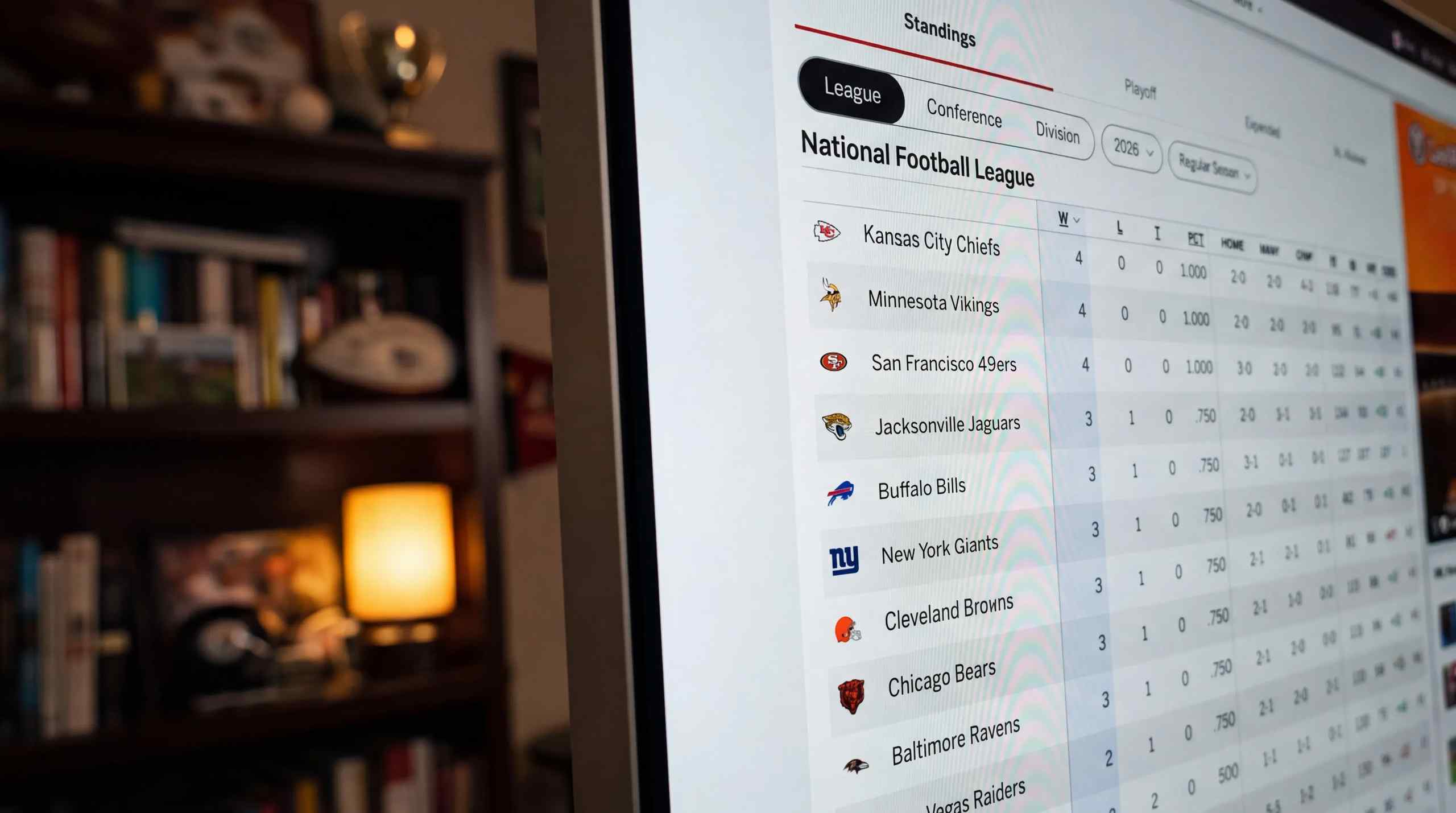
Does a 4-0 NFL Start Mean You're Playoff Bound?
A 4-0 start can put your team on the fast track to the playoffs, but history shows that even Super Bowl champions don't always start strong.
By Marcus Mosher