
What Would Prediction Markets Have Looked Like in The Odyssey?
Prediction markets have priced elections, IPOs, and awards shows. Here's how traders would have priced Troy's fall, the Cyclops, the Sirens, and Odysseus's 20-year commute home, with real market logic and zero hindsight.
%20(1).webp)
If you were formulating pop culture trivia questions about the summer of 2026, The Odyssey and Kalshi would be excellent candidates for answers to the movie and sports categories.
The blockbuster movie is Hollywood ace director Christopher Nolan’s highest-grossing film ($1.3 billion and climbing) and the prediction market app broke its monthly trading volume record in July ($37.7 billion).
Prediction markets let people trade contracts on everything from elections to the Emmys, all priced in cents that double as implied odds. It's a strange kind of magic: a number between one and 99 that tells you exactly how nervous the crowd is.
Now imagine that magic existed nearly 3,000 years ago, on a beach outside Troy. A version of The Odyssey where traders speculate on whether Odysseus ever makes it home, whether a wooden horse becomes history's greatest military gamble, or whether a sea god can hold a grudge for two decades.
Treat every outcome like a real market would, priced on information, not on knowing how the story ends.
How Would an Odyssey Prediction Market Work?
Real markets price on what's knowable in the moment, not on hindsight (which, I’ve heard, is 20/20). A Kalshi trader pricing a Fed decision looks at available data, incentives, and precedent.
An Odyssey trader would work the same angles. Think known military strength outside Troy's walls, the historical behavior of the gods and demigods involved, or the motives of everyone involved, from Penelope's suitors to Poseidon's ego.
Plus, half the important information belongs to characters who aren't telling anyone.
Information asymmetry runs the whole story. Odysseus knows things the suitors don't. Athena knows things everyone else doesn't, and her trading pattern would look a lot like the suspiciously perfect win rate that always somehow lines up with the outcome.
The Markets
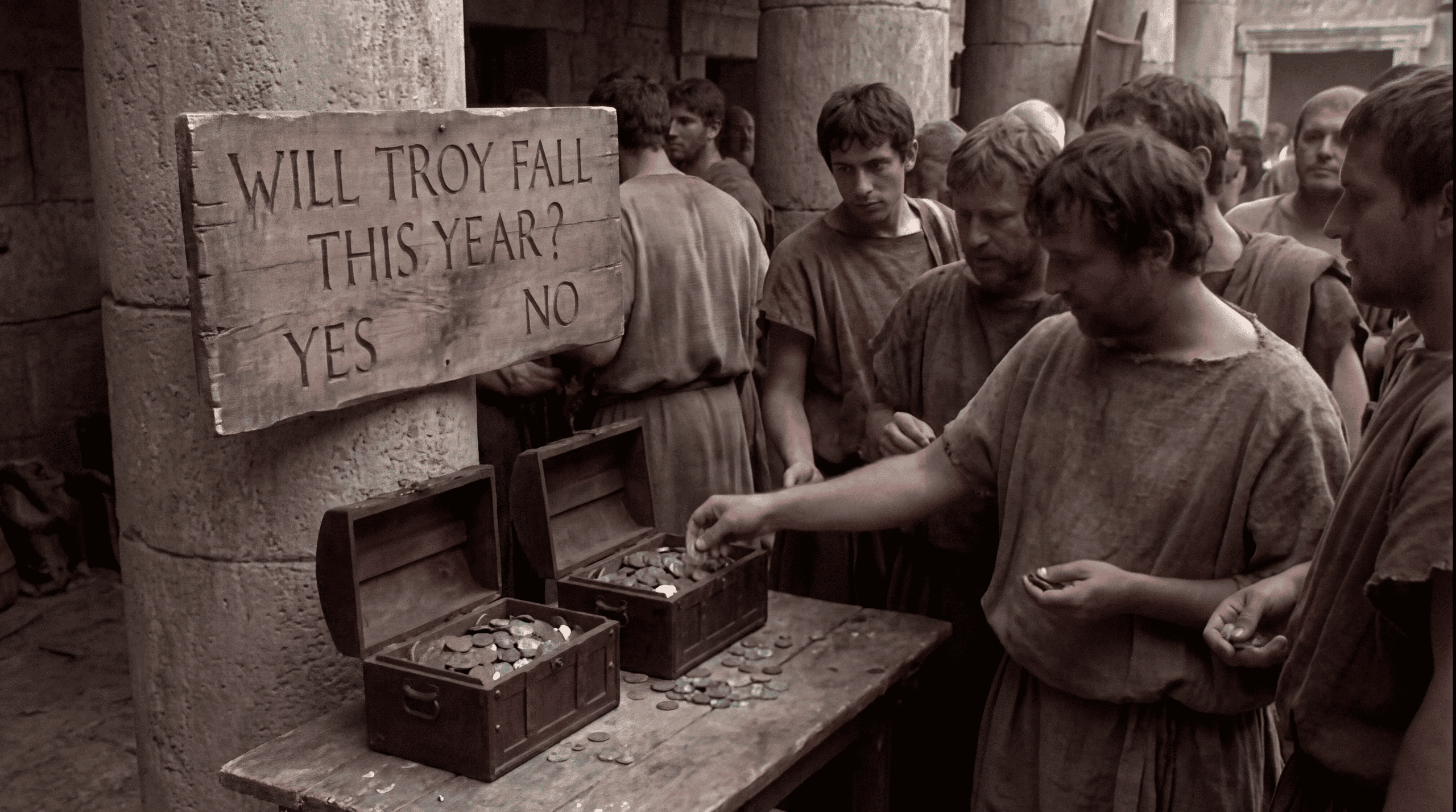
Will Troy Fall This Year?
Yes: 8 cents. No: 92 cents.
This contract relists every year of the war and trades near the same range for nine straight seasons, a decade-long stalemate market nobody wants to hold overnight.
Traders debate whether Greek numbers or Trojan walls matter more, right up until somebody stops asking about walls and starts asking about horses.
Confidence: 7
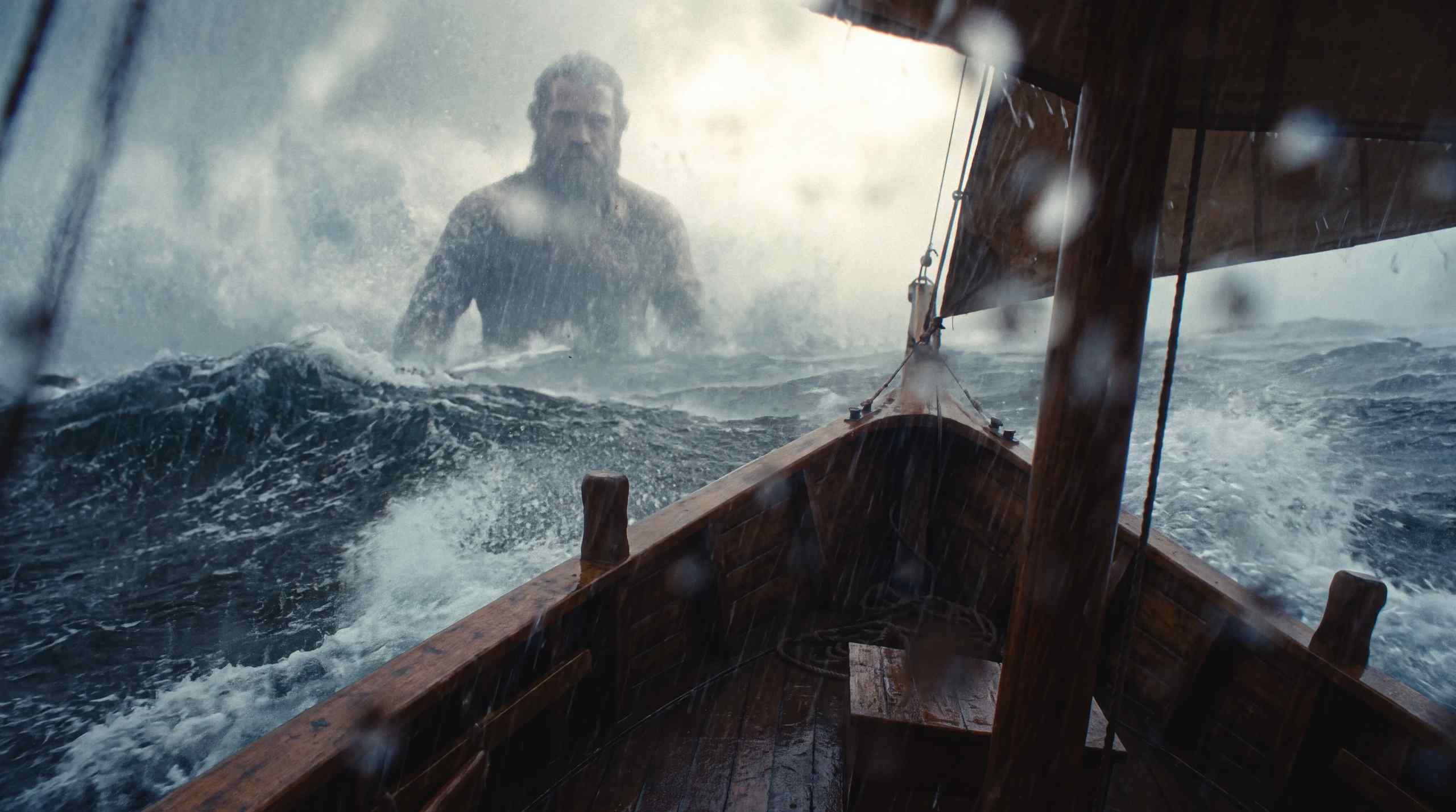
Will the Trojans Bring the Horse Inside the City?
Yes: 62 cents. No: 38 cents.
A gift from an enemy who just packed up and left looks great until someone remembers Laocoön warned everyone about Greeks bearing gifts roughly one sentence before a sea serpent ate him. This is the most genuinely contested market in the whole war.
Confidence: 5
Will Odysseus Blind the Cyclops?
Yes: 88 cents. No: 12 cents.
Once Polyphemus starts eating the crew two at a time, the leans heavily to “yes.” The debate isn't outcome. It's method, and "sharpened stake plus fake name" looks real tempting right now.
Confidence: 8
Will the Crew Survive Aeolus's Bag of Winds?
Yes: 25 cents. No: 75 cents.
They're handed the winds in a bag, told not to open it, and sail to within sight of home. Betting against a bored crew's self-control has been profitable since the Bronze Age.
Confidence: 6
Will the Sirens Kill Odysseus?
Yes: 15 cents. No: 85 cents.
He already has the workaround from Circe before he's within earshot. The real trade is whether the crew's wax earplugs hold, not whether the captain survives.
Confidence: 7
Will Every Crew Member Die Before Reaching Ithaca?
Yes: 93 cents. No: 7 cents.
This is the one market that earns its extreme price. Between the Laestrygonians, Scylla, and a crew that eats the one herd of cattle they were explicitly told not to touch, the odds of survival collapse quickly.
Confidence: 8
Will Poseidon Successfully Prevent Odysseus From Returning Home?
Yes: 20 cents. No: 80 cents.
A god can make a decade miserable. Overriding a hero's fate is a different tier of power, and the market knows the difference even if Zeus’s bro doesn’t.
Confidence: 6
Will Penelope Marry One of the Suitors?
Yes: 18 cents. No: 82 cents.
Twenty years is a long time to stall a house full of freeloaders with a loom trick, but her track record is spotless, and the market respects a streak.
Confidence: 6
Will Odysseus Kill All of the Suitors?
Yes: 71 cents. No: 29 cents.
Revenge is the entire back half of the story, but "all of them" is a high bar in a crowded hall with more than one exit. There’s reason to fade the crowd on this one.
Confidence: 6
Final Settlement
The best trade in the entire story is buying Yes on Odysseus eventually returning home at the exact moment he looks like the worst bet on the board: shipwrecked, alone, washed up on Calypso's island with nothing left and every companion dead.
Odds on returning home would have tanked right there, and anyone who bought in anyway, on reputation alone, would have cashed out a hero's welcome.
Fading the suitors would have been the safe, boring value play the whole time. Nobody who bets against a man's own dog recognizing him after twenty years deserves to keep their money.
Cole Rush is a freelance writer, crossword constructor, and creative tinkerer with more than 10 years of experience writing about anything and everything. Cole’s primary area of expertise is the gambling industry, covering the expansion of sportsbooks and online casinos alongside emerging spaces like sweepstakes casinos and prediction markets.
More Articles like this
Kalshi Wants Margin Trading. What Could Go Wrong?
Kalshi’s proposed margin system would let eligible traders put up less than the full value of some positions, freeing capital for other trades while also introducing a new layer of leverage and risk.

By Charlon Muscat
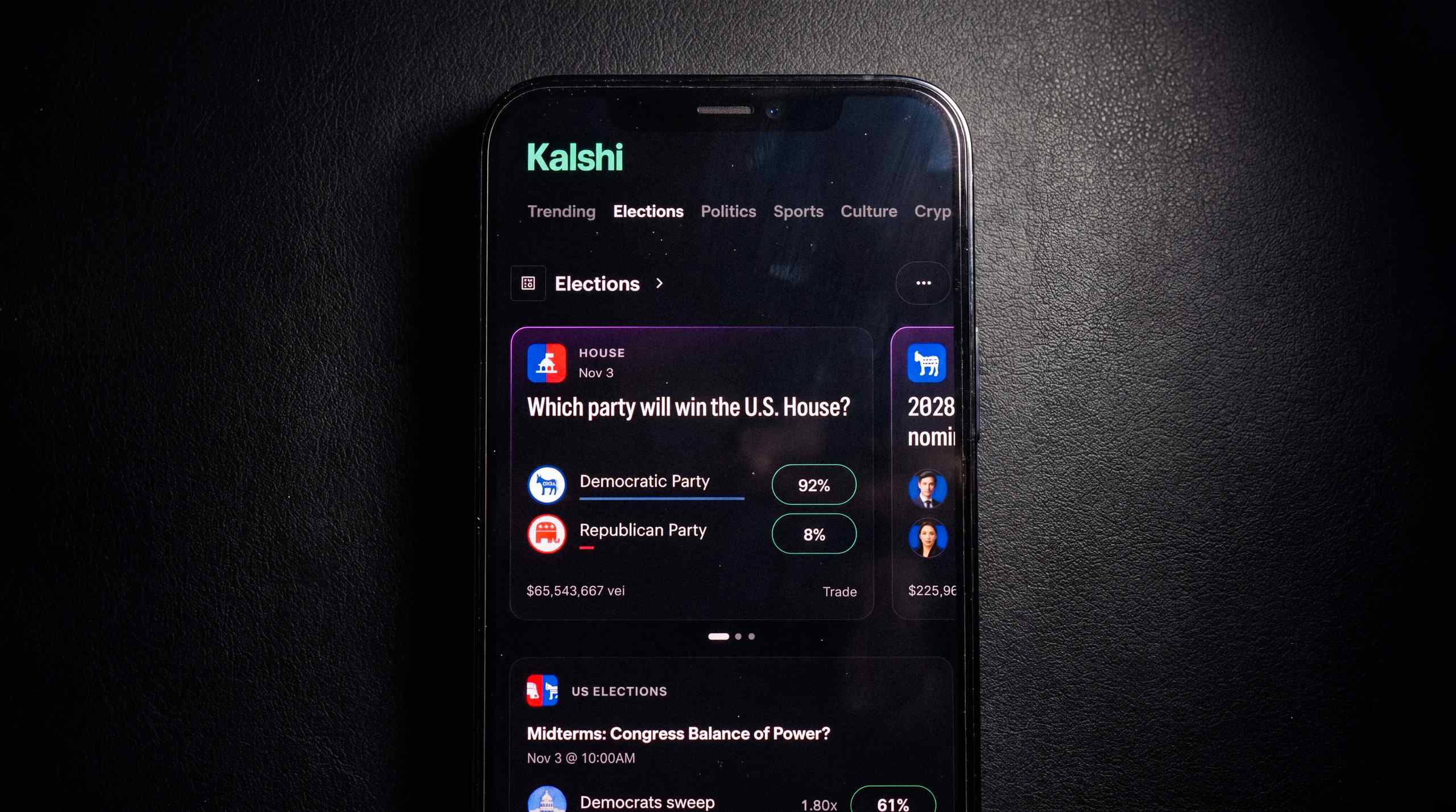
Kalshi, Polymarket Starting to Price the Midterms as Blowout
With just over five weeks to go, Kalshi and Polymarket now heavily favor Democrats for the House and give them the edge in the Senate.
By Stuart Hughes
Kalshi’s NFL Volume Is Exploding. Should Sportsbooks Be Worried?
The NFL season is barely underway, but prediction markets have already handled multiple billions in football trading volume. Is that enough to make sportsbooks nervous?
By Charlon Muscat
Best Prediction Market Apps of 2026
Compare the best prediction market apps and platforms for sports, politics and other events, ranked by market selection, fees, liquidity, user experience and availability.

By James Guill
Prediction Markets vs Sports Betting: Key Differences
Prediction markets vs sports books: odds, vig, trading vs fixed bets, legality by state, combos vs parlays. Which is better for sports bettors?
By Arthur Crowson
Sydney Sweeney to LeBron: Prediction Markets Bet on Star Power
Sydney Sweeney just became an equity partner at Novig. She joins a growing list of A-listers cashing massive checks from prediction markets, including LeBron James, Timothée Chalamet and many others.

By Cole Rush