

Casino Carpets Are Ugly. But Not for the Reason You Think
Casino carpets have long been accused of keeping gamblers disoriented and glued to the games. The truth is considerably more practical, though just as strange.
%20(1).webp)
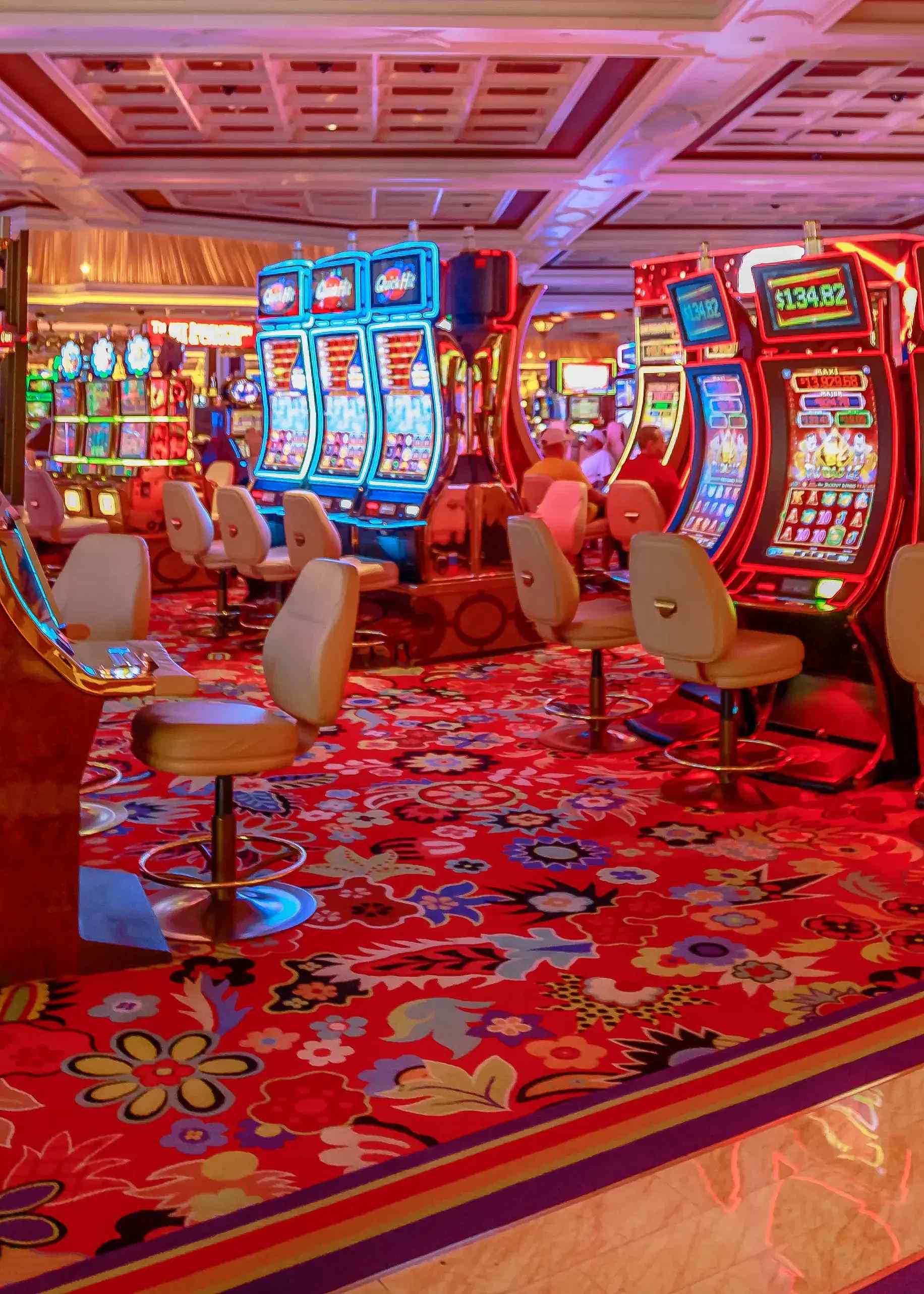
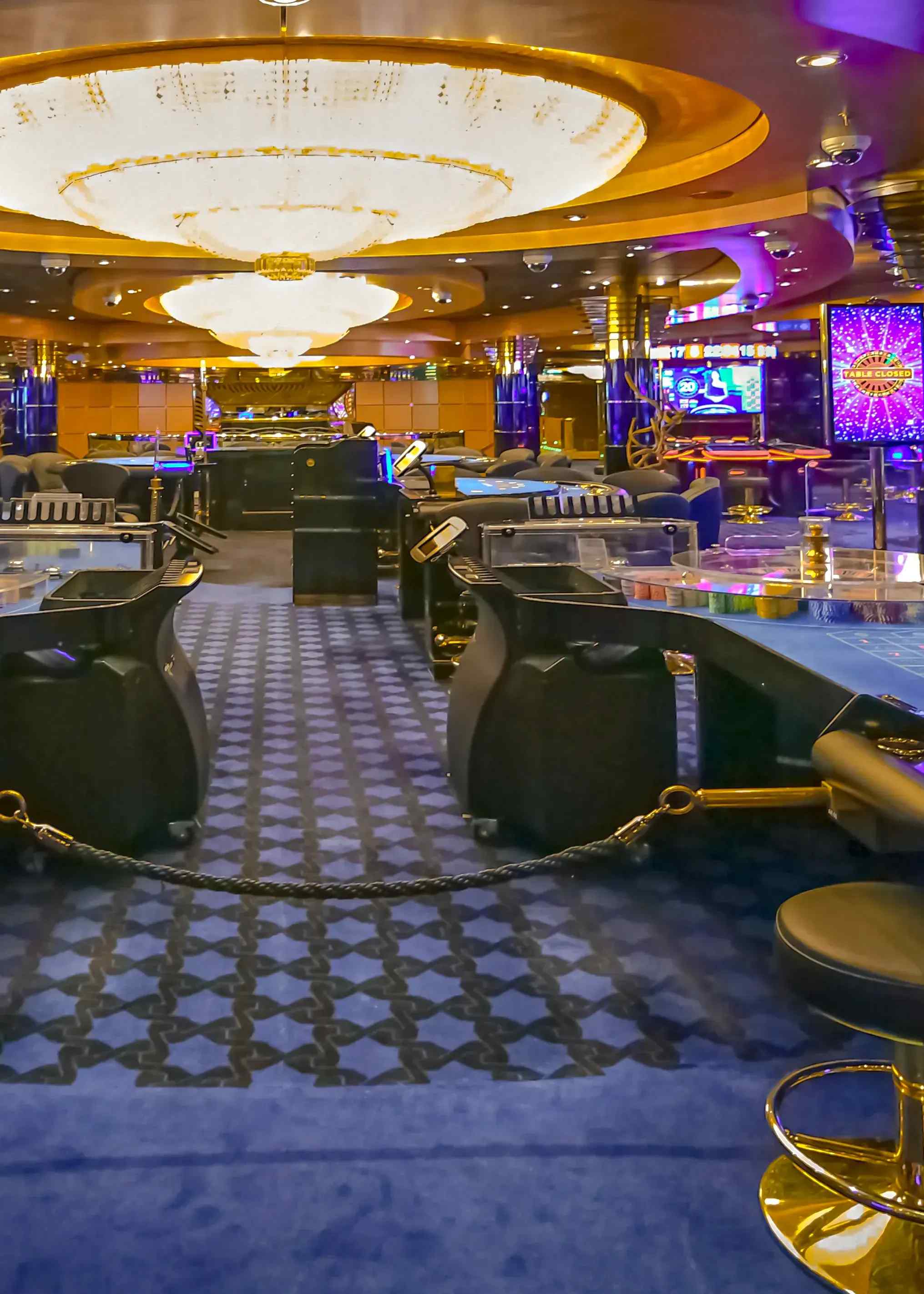
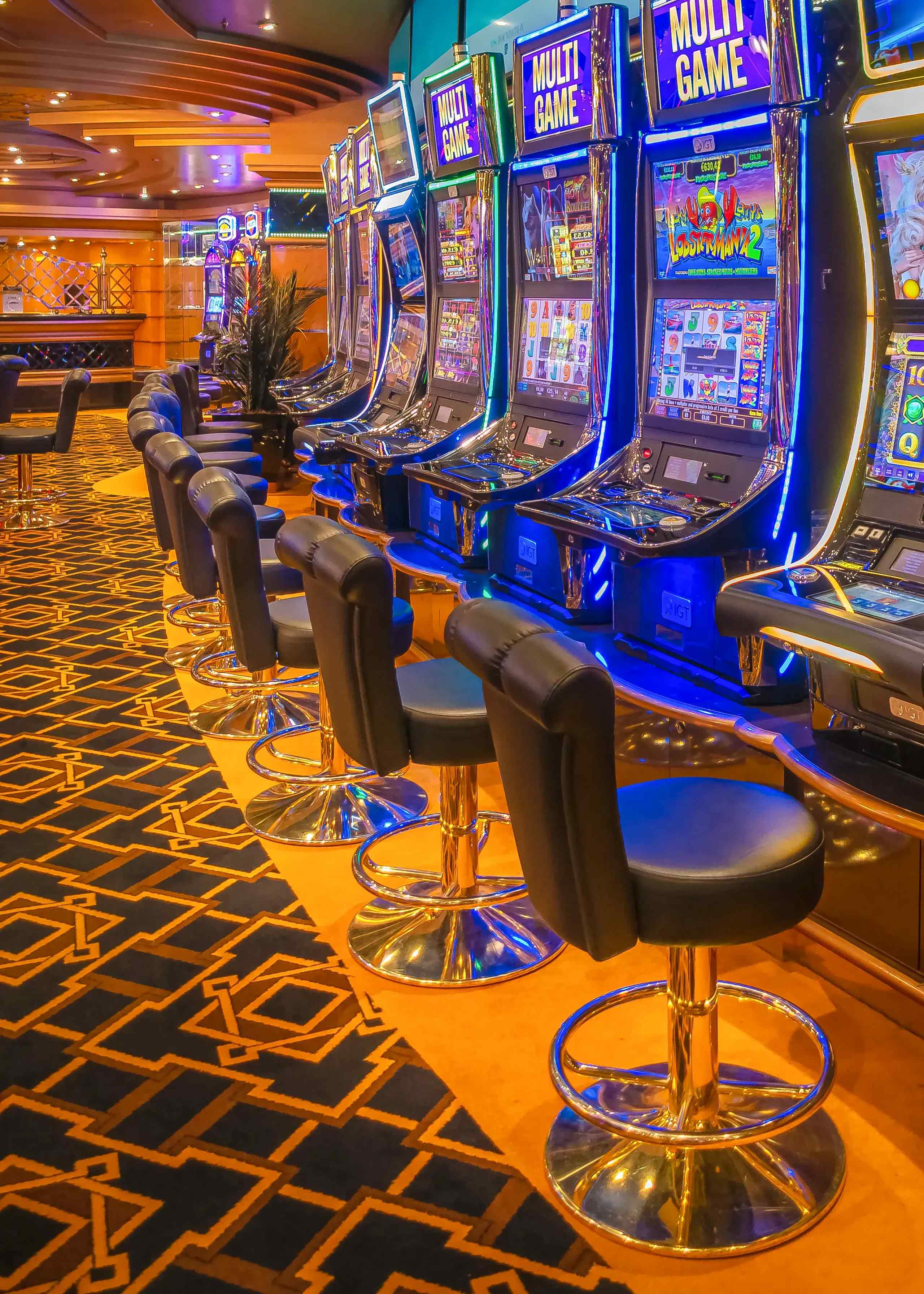
Every casino floor in America seems intent on giving customers a rotten feast for the eyes. The playbook is “take a pattern too busy for a living room, spread it across 100,000 square feet, and put it under carpet where millions of feet will walk over it every year.”
Ask anyone why casino carpet looks like that, and they'll probably repeat the same theory. It's designed to disorient you, to keep your eyes moving toward the slot reels instead of resting on the floor.
That theory traces back almost entirely to one line. David Schwartz, director of UNLV's Center for Gaming Research, once wrote that casino carpet is "an exercise in deliberate bad taste that somehow encourages people to gamble." The quote spread everywhere, repeated in enough casino trivia lists and viral posts that it now reads as concrete fact. Schwartz has since indicated the line was somewhat tongue-in-cheek, and that he'd rather the piece lean harder into the far less conspiratorial explanation.
The Psychology Case
The disorientation theory isn't outright false, but it’s definitely exaggerated. Aggressive, high-contrast patterns are genuinely uncomfortable to look at for long stretches, and casinos are built to discourage eye contact with anything that isn't a moneymaker. Next time you roam the casino floor, look for windows or clocks and tell me how many you see. A carpet designed to be visually unpleasant fits into the broader strategy of keeping attention locked on the tables and machines. The trouble is that the carpet's specific role in that strategy has never been rigorously separated from the windowless, clockless architecture around it. It's a compelling theory riding on one popularized quote. A witty saying with some truth to it isn’t the same as a proven fact.
The Practical Case
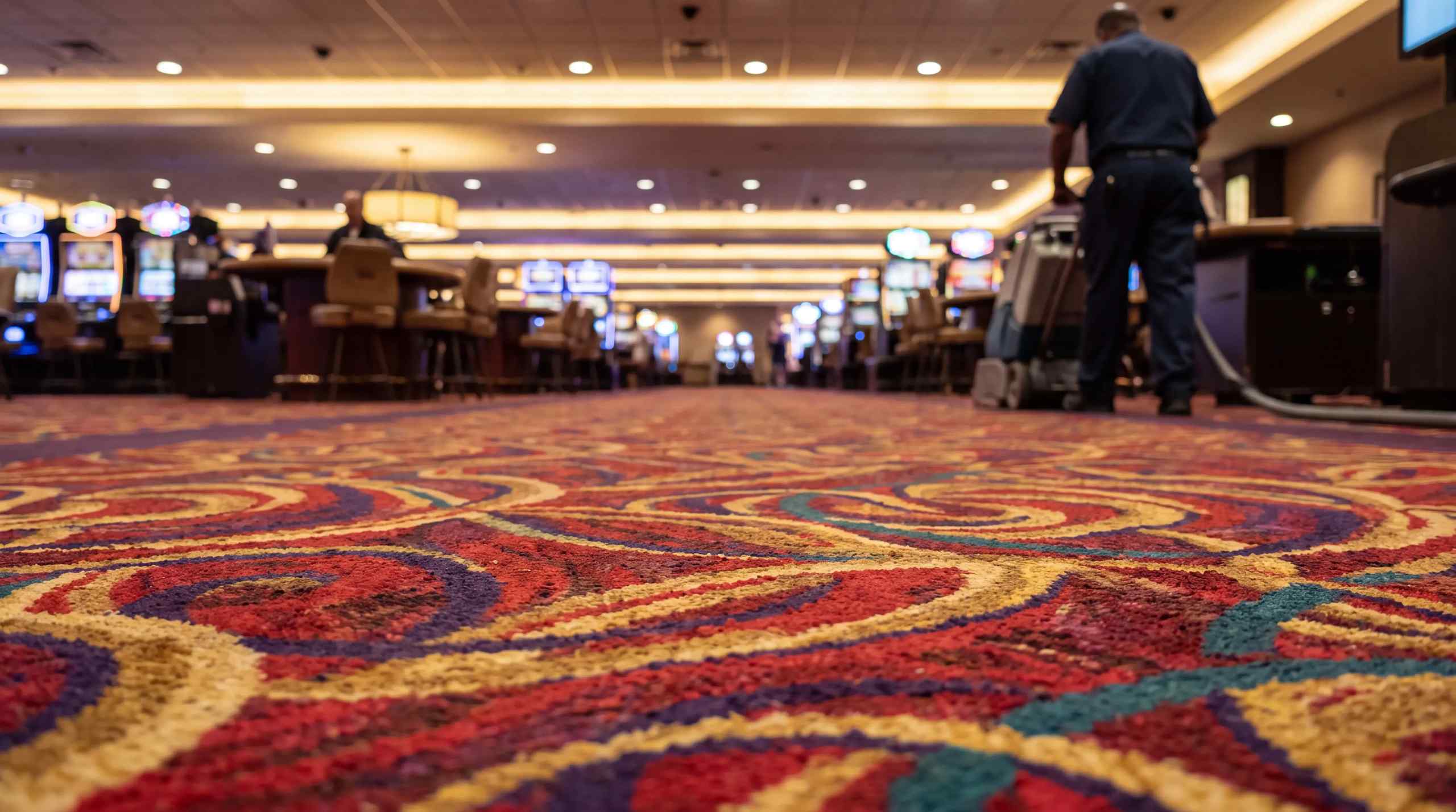
Bill Friedman, author of "Designing Casinos to Dominate the Competition" and one of the most cited authorities on casino floor design, makes a much less exciting argument. He lists pattern, color, longevity, and comfort as the four qualities that matter when choosing carpet, and says flatly that it "should have a small or tight pattern, so the inevitable nonremovable stains will be less likely to show." Thousands of shoes trod on a casino floor every day. Plain flooring shows the well-worn path between the entrance and the popular slot machines within weeks, along with every spilled drink and stray cigarette burn along the way. A dense, chaotic pattern hides it all and stretches the functional life of a very expensive floor, which matters a lot when that floor covers an area the size of several football fields.
Two Popular Theories on Casino Carpet
| Theory | Core Claim | Supporting Evidence |
|---|---|---|
| Psychology | Pattern disorients gamblers, keeps eyes on the games | Schwartz's original quote, general "no clocks or windows" casino design strategy |
| Practical | Pattern hides stains and foot-traffic wear | Bill Friedman's design guidance, decades of flooring-industry consensus on pattern and maintenance |
A Short History of the Loudest Floor in America
Nevada's carpet tradition goes back further than most people assume. Reno's Riverside Hotel Casino was carpeting floors as early as the 1930s, and Binion's Gambling Hall became the first fully carpeted casino in Las Vegas. When the Flamingo opened in 1946, it used abstract patterns in pastel greens, a notably restrained choice compared to what came later. Casinos of that era earned the nickname "carpet joints," pairing red carpet with red wall coverings, chandeliers, and brass to build a deliberately opulent atmosphere meant to loosen wallets.
Patterns stayed simple and repeated frequently through the mid-century decades, then the 1990s pushed the aesthetic into full maximalist kitsch, the era most people picture when they imagine an "ugly casino carpet" in the first place. Today's high-end casino carpet, the kind found in a modern Strip resort, uses more sophisticated designs with far longer repeat distances, a version of the same stain-hiding logic dressed up for a fussier clientele.

So Which Is It?
The boring answer appears to be the better-supported one. Casino carpets are busy because busy patterns hide stains and wear, withstand enormous foot traffic and help establish a property's visual identity. Whether those patterns also keep gamblers stimulated or focused on the games is plausible, but much harder to prove.
It's the same instinct behind most casino design decisions, covered in how the house always wins. Think small, boring choices that happen to also work in the house's favor, whether or not anyone planned it that precisely. Before assuming every strange design choice on a casino floor is a deliberate trick, remember how many common gambling fallacies start the same way: a clever theory that's more satisfying than the boring, practical truth.
Cole Rush is a freelance writer, crossword constructor, and creative tinkerer with more than 10 years of experience writing about anything and everything. Cole’s primary area of expertise is the gambling industry, covering the expansion of sportsbooks and online casinos alongside emerging spaces like sweepstakes casinos and prediction markets.
More Articles like this
Are eBay's "Spin the Wheel" Listings Just Gambling?
A corner of eBay Live auctions off wheel spins instead of actual items. Bid starts at $1, the price climbs, and the winner finds out what they bought only after the wheel stops. Here's why that's not really shopping.

By Cole Rush
The Strange Gambling Laws Behind Cruise Ship Casinos
Cruise ship casinos only open once a ship clears territorial waters, and the odds, oversight, and rules that follow are nothing like a Vegas floor. Here's what actually changes at sea.

By Cole Rush
Six Reasons Bettors Are Starting to Ditch Credit Cards
States are increasingly questioning whether borrowed money has any place in gambling. From instant interest to damaged credit, the risks can extend far beyond the bet itself.

By Charlon Muscat
How Subscriptions Use Gambling Psychology to Hook You
Streaming services, apps, and subscription boxes may look nothing like a casino, but many tap into the same psychological forces that make gambling so hard to walk away from.

By Cole Rush
The Best Gambling Songs Ever Written, Ranked
From Kenny Rogers to Sting, these seven songs go beyond casino clichés to capture the risk, psychology and obsession behind gambling.

By Cole Rush
Best Online Blackjack Sites & Casinos for Real Money
Compare online blackjack sites for real money, including game rules, RTP, live dealer blackjack, table limits and legal availability across the U.S.

By James Guill