

The Strange Gambling Laws Behind Cruise Ship Casinos
Cruise ship casinos only open once a ship clears territorial waters, and the odds, oversight, and rules that follow are nothing like a Vegas floor. Here's what actually changes at sea.
%20(1).webp)
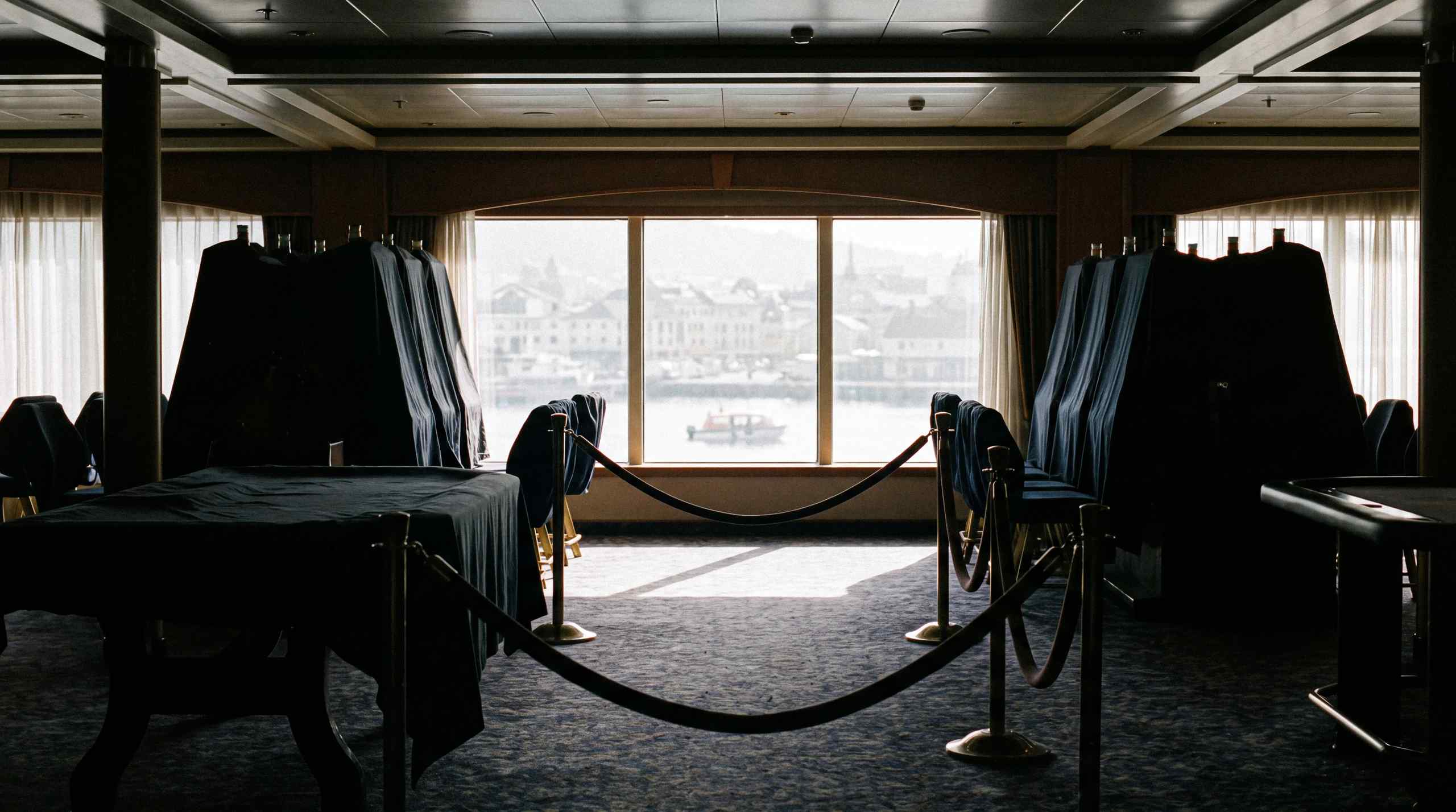
Step onto a cruise ship on embarkation day, and the casino is dead. The normally illuminated, ringing and dinging slots are dark and silent. Tables are covered, doors are roped shut, and the vibe is generally a not-so-subtle “stay away.”
Then comes a moment when the ship clears a specific border or coastline, and the casino lights up, opening its doors to the seafarers on board. This all happens for a very specific reason, and it’s tied up in gambling law.
Cruise ship casinos exist in a legal zone that has nothing to do with the cruise line's preference and everything to do with where the ship physically is. Once you understand that, the complexities of a shipboard casino ( why the odds run worse than a regulated floor, why nobody posts payout data, why the rules shift by cruise line) start to make a lot more sense.
The Law That Makes It Possible
In the United States, gambling devices are broadly illegal to manufacture, possess, or operate within a state's territorial waters under the Johnson Act, codified at 15 U.S.C. § 1175. That statute treats a vessel the same way it treats a building: if you're within a state's boundaries, the state's gambling laws apply, full stop.
The Johnson Act carves out an exception, though. Once a vessel is beyond the boundaries of any state or U.S. possession, the federal prohibition doesn't apply. That's the entire legal basis for the on-again, off-again casino you experience on a cruise. Inside U.S. territorial waters (generally 12 nautical miles from shore), the casino has to stay closed. Past that line, it can legally operate under whatever rules govern the ship itself.
Cruise ships are “flagged” to a specific country and therefore obey that country’s rules onboard. The vast majority of cruise ships sailing out of U.S. ports aren't U.S.-flagged. They're registered in Panama, the Bahamas, Malta, or Liberia, a practice known as "flags of convenience." That registration determines which country's maritime authority actually has jurisdiction over the casino games running on that ship, and it's almost never the same regulator that oversees a Las Vegas or Atlantic City floor.
Why the Odds Are Genuinely Different
When it comes to odds, the cruise ship legal quirk becomes something that affects your wallet. Let’s compare the odds and regulations of Nevada, which famously has very little water and, therefore, very few cruise ships.
Nevada's slot machines must meet a statewide minimum payback, and the Nevada Gaming Control Board publishes monthly and annual revenue and hold data as public record. Cruise lines carry no equivalent disclosure obligation. No regulator requires a cruise casino to publish its slot hold percentages, and in practice, most don't.
The lack of reporting shows up in the actual numbers. Land-based slot RTP in regulated U.S. markets typically lands in the low-to-mid 90% range. Cruise ship slots are commonly programmed lower, with some penny denominations dipping into the 80% to 85% range. Table games follow the same pattern in miniature: a cruise blackjack table paying 6:5 on a natural blackjack instead of the standard 3:2 adds roughly 1.4 percentage points to the house edge, and a video poker machine paying six credits on a flush instead of the traditional nine shifts a 99.5% expected return under perfect strategy closer to 94.9%.
Cruise Casino Odds vs. a Regulated Land Floor
| Game | Typical Land-Based (Nevada) | Typical Cruise Ship |
|---|---|---|
| Slot machines (RTP) | Low-to-mid 90% range | 80%-90%, with some penny slots lower |
| Blackjack payout | 3:2 on a natural | Often 6:5 on a natural |
| Video poker | "9/6" machines common (99.5% expected return) | "6/5" machines common (94.9% expected return) |
| Public payback disclosure | Required by state regulator | Not required |
| Regulatory oversight | State gaming control board | Ship's flag-state maritime authority |
This doesn’t mean a cruise ship casino is rigged or hostile to players. It means the guardrails that keep a Nevada floor within a narrow, publicly verifiable range simply don't exist at sea in the same way, so the games skew toward whatever the operator finds most profitable.
Why the Casino Keeps Shutting On and Off
The same jurisdictional logic explains the stop-and-start pattern of a multi-port itinerary. Every time the ship enters another country's territorial waters, be it docking in Cozumel, cruising close to Grand Cayman, or approaching a U.S. port on the way home, the casino has to close under that nation's law, not just U.S. law. That's why the floor can go dark multiple times on a single week-long cruise, sometimes for a few hours at a stretch, sometimes for most of a port day.
Some cruise lines handle this differently. "Cruises to nowhere," round-trip voyages that never make a foreign port call, exist largely because of a 1990s wrinkle in the Johnson Act that let certain states carve out exceptions for exactly this kind of itinerary. It's part of why gambling-focused day cruises out of a handful of U.S. ports remain legal at all, even though a straightforward domestic boat trip with a casino attached would otherwise run headfirst into state gambling law.
Playing With Eyes Open
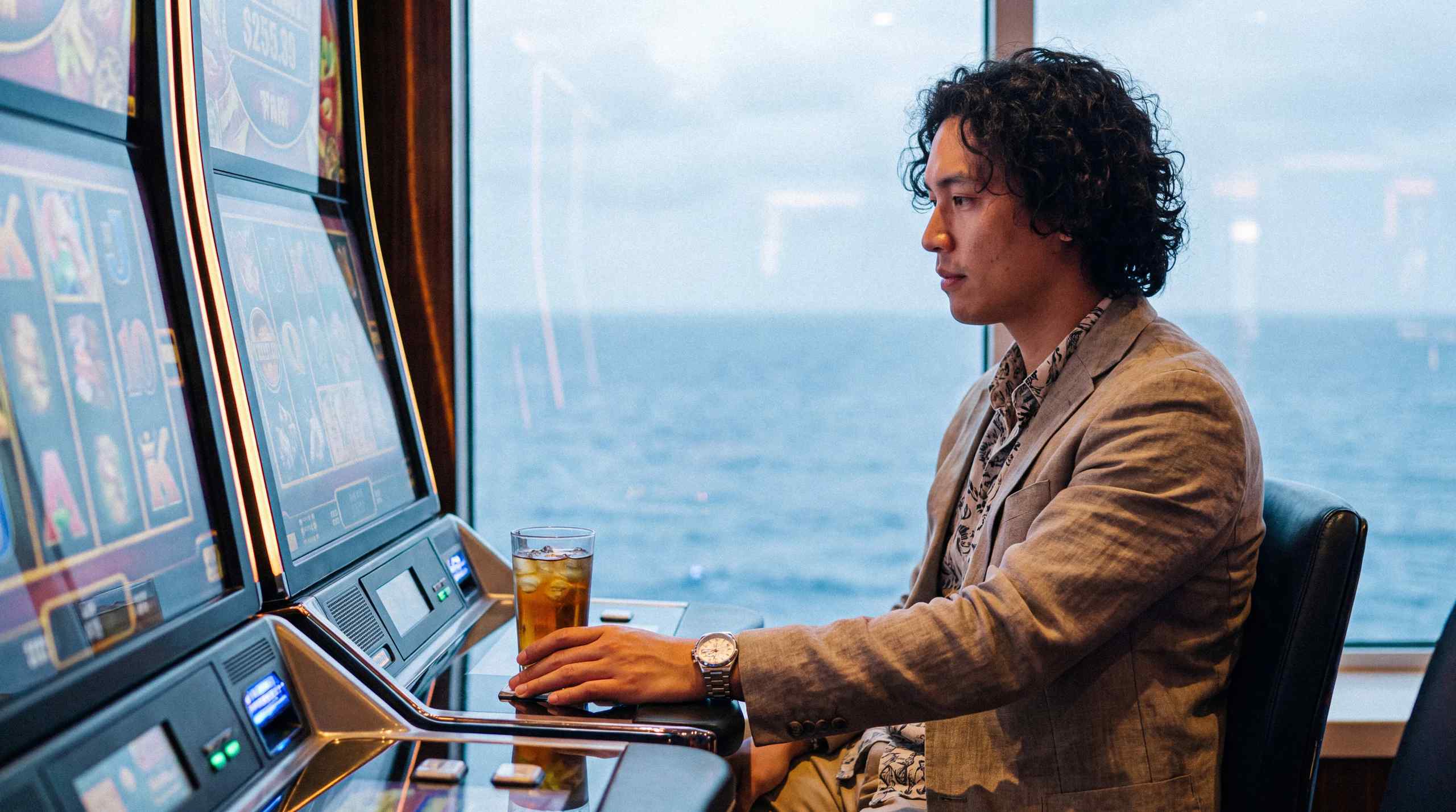
Is any of this a good reason to avoid a cruise ship casino? Not necessarily, if you’re in the mood to play some slots or table games. Instead, treat it like any unregulated market: assume the house edge runs a little steeper than it would on a regulated sportsbook or casino floor, keep your bankroll modest, and don't assume machine settings mirror what you'd find at a major Strip resort. The psychology that gets people to overspend, chasing a hot streak, assuming a near-miss means a win is close, doesn't change just because you're floating in international waters instead of standing on the Strip.
Cruise ship casinos aren't illegal, and they aren't a scam. They're just operating under a different rulebook, one written for the ship's flag, not the state whose coastline you can still see from the pool deck. Knowing that going in is the difference between being surprised by the odds and just being informed by them.
Cole Rush is a freelance writer, crossword constructor, and creative tinkerer with more than 10 years of experience writing about anything and everything. Cole’s primary area of expertise is the gambling industry, covering the expansion of sportsbooks and online casinos alongside emerging spaces like sweepstakes casinos and prediction markets.
More Articles like this
Are eBay's "Spin the Wheel" Listings Just Gambling?
A corner of eBay Live auctions off wheel spins instead of actual items. Bid starts at $1, the price climbs, and the winner finds out what they bought only after the wheel stops. Here's why that's not really shopping.

By Cole Rush
Casino Carpets Are Ugly. But Not for the Reason You Think
Casino carpets have long been accused of keeping gamblers disoriented and glued to the games. The truth is considerably more practical, though just as strange.

By Cole Rush
Six Reasons Bettors Are Starting to Ditch Credit Cards
States are increasingly questioning whether borrowed money has any place in gambling. From instant interest to damaged credit, the risks can extend far beyond the bet itself.
By Charlon Muscat
How Subscriptions Use Gambling Psychology to Hook You
Streaming services, apps, and subscription boxes may look nothing like a casino, but many tap into the same psychological forces that make gambling so hard to walk away from.

By Cole Rush
The Best Gambling Songs Ever Written, Ranked
From Kenny Rogers to Sting, these seven songs go beyond casino clichés to capture the risk, psychology and obsession behind gambling.

By Cole Rush
Best Online Blackjack Sites & Casinos for Real Money
Compare online blackjack sites for real money, including game rules, RTP, live dealer blackjack, table limits and legal availability across the U.S.

By James Guill