
Are eBay's "Spin the Wheel" Listings Just Gambling?
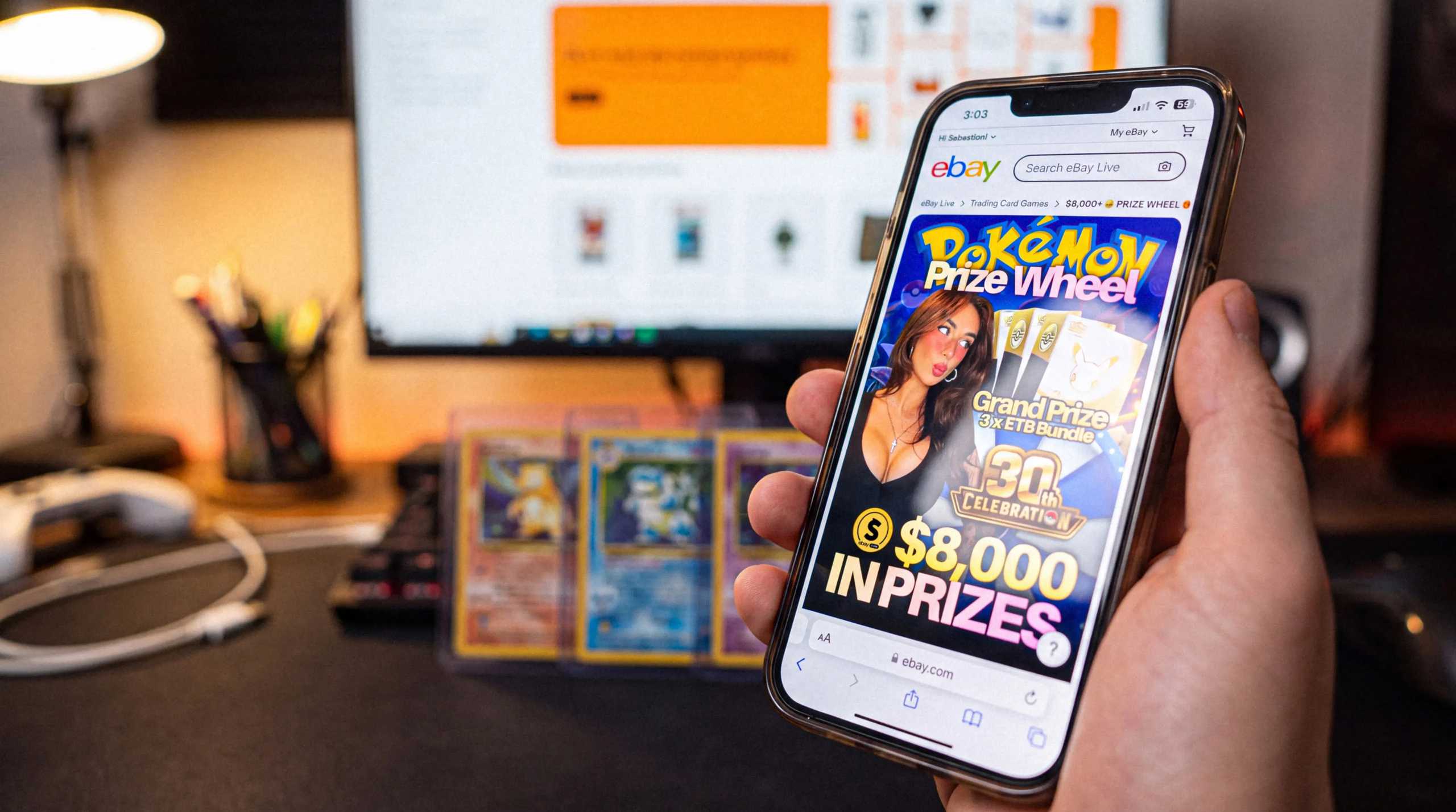
A corner of eBay Live auctions off wheel spins instead of actual items. Bid starts at $1, the price climbs, and the winner finds out what they bought only after the wheel stops. Here's why that's not really shopping.
%20(1).webp)
A friend asked me for some help selling his old trading cards and sports cards. Little did I know this endeavor would end up with me plunging down the rabbit hole of eBay Live, the auction platform's livestream shopping feature. Think of it as part auction house, part QVC, and part TikTok.
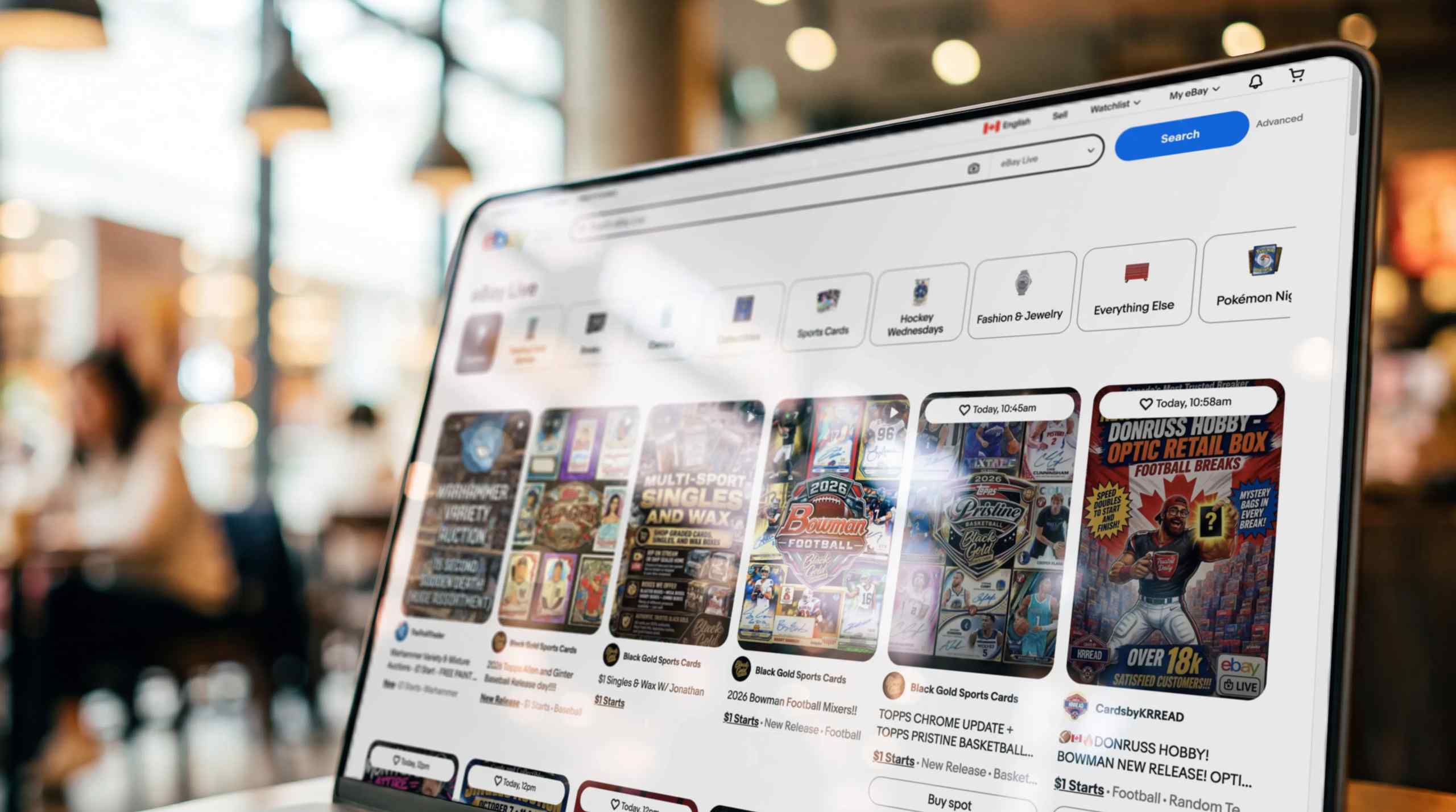
Sellers go live, usually with a flashy background or eye-catching setup, and list items for bidding in real time. In many cases, the items are shown on screen: a specific Pokémon card, an iPad, an unopened pack of cards, a pair of Jordans.
Things get a little more interesting when you stumble upon a stream that isn't selling cards. Well, it is selling cards, you just don't know which ones. In these streams, you aren't bidding on a specific card, slab, or pack. You're bidding on a spin or a pick. If you win, the spin or random pick determines what you actually receive. If it sounds a lot like gambling, I can tell you firsthand that it certainly feels that way, even down to the messages saying "Bid Responsibly" on certain shops. How does this work and how is it allowed? Let's take a closer look.
Where eBay Stands on These Auctions
eBay Live grew out of a trading-card and collectibles launch and now runs a real program for "breaks," where a seller opens a box or case of cards live while buyers who've purchased a team, player, or division in advance watch to see what gets pulled for their slot. Per eBay's own breaks program, spots can be sold at a fixed price or through auction, but only by pre-approved sellers, and buyers know exactly which slot they own before anything gets opened. Crucially, eBay requires an accompanying sweepstakes with a no-purchase-necessary entry option for every break, which is the detail that keeps the format on the right side of the law.
That last part matters more than it sounds. Most states define an illegal lottery using the same three-part test: a prize, chance, and consideration, meaning something of value paid to enter.
Washington's Attorney General laid it out plainly in a 1963 opinion: "a lottery consists of three elements: (1) prize; (2) chance; and (3) consideration."
Remove any one of the three and the promotion stops being a lottery. A free entry option removes consideration. That's the whole trick, and it's why legitimate sweepstakes always include some version of "no purchase necessary."
Where the Wheel-Spin Auctions Break From That
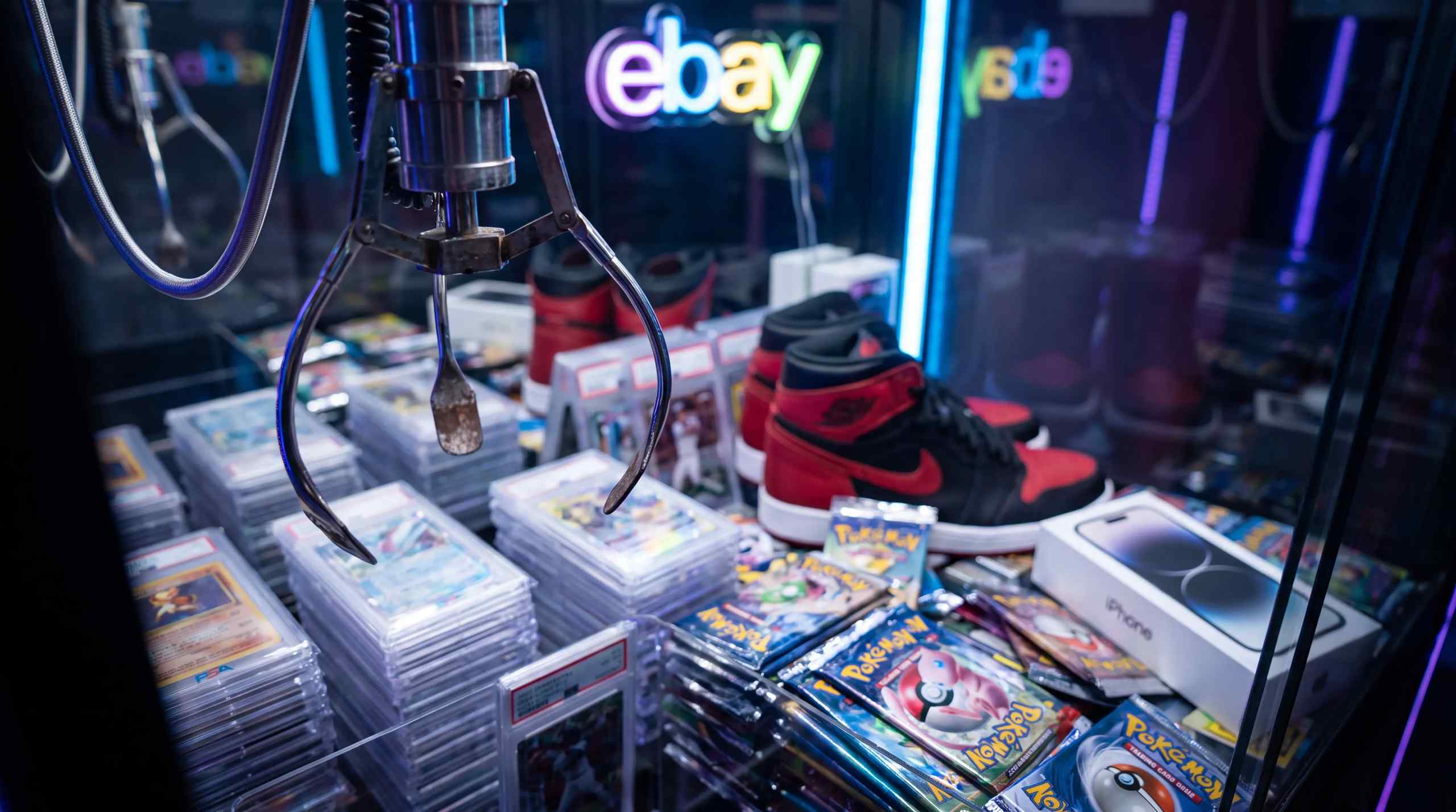
Wheel-spin listings keep all three elements intact: a prize (whatever the wheel lands on), chance (nobody knows the outcome until the spin), and consideration (the winning bid, sometimes over $100). Nowhere is there a disclosed prize pool, published odds, or a free way to enter. The buyer is bidding blind on an outcome decided only after the money changes hands, nothing like the known slot a break buyer purchases.
eBay's Chance Listings Policy bans contests, lotteries, raffles, and random drawings outright, and spells out what's allowed instead: case, box, and pack breaks with an assigned slot, and grab bags or mystery boxes only if the listing discloses general contents and doesn't dangle a single high-value item unless everyone gets one. A wheel-spin auction fits neither. Nothing is assigned in advance, and nothing about the contents or odds is disclosed. It's closer to the exact thing the policy was written to keep off the platform.
Rip Till You Hit: The Break With No Finish Line
Scroll long enough and you'll run into a format sellers call "rip till you hit." A host names a target card and keeps opening packs live until it shows up. Whoever holds that spot wins the pull. Everyone else gets whatever filler came out along the way, and nobody knows how many packs that'll be until the seller actually hits.
That's meaningfully different from a standard break, even marketed like one. eBay's breaks exception exists because the buyer receives a known, fixed unit, the entire pack, box, or slot paid for. In rip-till-you-hit, what you bought is a spot in an open-ended draw, and how much you get back depends on luck, not anything defined at checkout. TikTok Shop has wrestled with this directly: its gambling policy, updated as recently as August 2026, still allows "pull-until-you-win" breaks, but only for sellers clearing a minimum performance bar, using sealed product with guaranteed delivery. eBay's own policy carves out nothing similar, leaving rip-till-you-hit in the same gray zone as an unlicensed raffle: money's gone before anyone knows what it bought.
The 200-Slot Mystery Box
Then there's the format that looks the most honest of the bunch, which is exactly why it's worth a second look. Picture a seller listing 200 numbered slots, telling you upfront that 18 hold a graded slab and the other 182 hold ordinary packs, then letting you bid on a slot number before anything opens. That's more transparency than a wheel spin, and it checks half the box on eBay's grab-bag exception: general contents, disclosed.
It fails the other half. eBay's policy says a grab bag can't single out an item with real monetary or collector's value "unless they are included with every purchase." Eighteen slabs inside 182 packs is exactly that, just with the odds published instead of hidden. Whatnot runs something similar under the name Surprise Sets, requiring sellers to disclose contents as part of the format itself, capped at 500 items per pool. eBay has no built-in feature like it, so a 200-slot box there is improvising a mechanic the platform never approved. Disclosed odds don't fix that.
How eBay's Game Formats Work
| Format | How it works | Meets eBay's exceptions? |
|---|---|---|
| Case/box/pack break | Buyer's team or slot is known before the pull; pre-approved sellers only; free-entry sweepstakes included | Yes |
| Grab bag / mystery box | General contents disclosed upfront; no single item singled out unless guaranteed | Yes, if disclosed |
| Wheel-spin mystery auction | Bidder pays an unknown, escalating price for an outcome revealed only after payment; no disclosed odds or free entry | No |
| Rip till you hit | Buyer pays into an open-ended pull with no fixed quantity guaranteed | No fixed exception covers it |
| 200-slot mystery box | Odds disclosed, but a handful of valuable slots are singled out among common ones | No, fails the "no singling out" condition |
Why the Bidding War Makes It Worse, Not Better
A flat-price mystery box is already a gray area. Turning it into an auction adds a layer: bidders aren't just paying for a chance, they're competing against each other for it, pushing the price well past what the average outcome is worth. That's the same dynamic behind penny auctions and live-shopping "drop" events, scarcity and social proof stacked on a random payout.
The Council on Compulsive Gambling of New Jersey, which runs the 800-GAMBLER helpline, has called out this structure on e-commerce mystery box listings, noting the amount someone pays has no bearing on what they receive, and that viral big-win clips do most of the marketing. One bidder pays $125 for a $15 pack. The next pays $10 and pulls a box worth ten times that. Nobody posts the video of the spin, or the fortieth rip, that landed on nothing, the same bias that keeps slot floors busy even though the math never favors the player.
The Simple Test
None of this requires a regulator to sort out. If a listing tells you exactly what you're buying before you pay, it's a purchase. If the price is fixed or rising but the contents, or the quantity, stay hidden until the money's gone, that's a wager, whatever eBay's category tags call it. The wheel-spin sellers, the rip-till-you-hit hosts, and the 200-slot box operators aren't doing anything eBay has approved; they're each borrowing a piece of the theater, the live reveal, the countdown clock, while dropping the thing that made the format legal: a fixed, known purchase. That gap is exactly where a casino floor would be required to post its odds. On a livestream, nobody has to.
Cole Rush is a freelance writer, crossword constructor, and creative tinkerer with more than 10 years of experience writing about anything and everything. Cole’s primary area of expertise is the gambling industry, covering the expansion of sportsbooks and online casinos alongside emerging spaces like sweepstakes casinos and prediction markets.
More Articles like this
Casino Carpets Are Ugly. But Not for the Reason You Think
Casino carpets have long been accused of keeping gamblers disoriented and glued to the games. The truth is considerably more practical, though just as strange.

By Cole Rush
The Strange Gambling Laws Behind Cruise Ship Casinos
Cruise ship casinos only open once a ship clears territorial waters, and the odds, oversight, and rules that follow are nothing like a Vegas floor. Here's what actually changes at sea.

By Cole Rush
Six Reasons Bettors Are Starting to Ditch Credit Cards
States are increasingly questioning whether borrowed money has any place in gambling. From instant interest to damaged credit, the risks can extend far beyond the bet itself.

By Charlon Muscat
How Subscriptions Use Gambling Psychology to Hook You
Streaming services, apps, and subscription boxes may look nothing like a casino, but many tap into the same psychological forces that make gambling so hard to walk away from.

By Cole Rush
The Best Gambling Songs Ever Written, Ranked
From Kenny Rogers to Sting, these seven songs go beyond casino clichés to capture the risk, psychology and obsession behind gambling.

By Cole Rush
Best Online Blackjack Sites & Casinos for Real Money
Compare online blackjack sites for real money, including game rules, RTP, live dealer blackjack, table limits and legal availability across the U.S.
By James Guill