
What a Knicks Promo Revealed About the Future of Prediction Markets
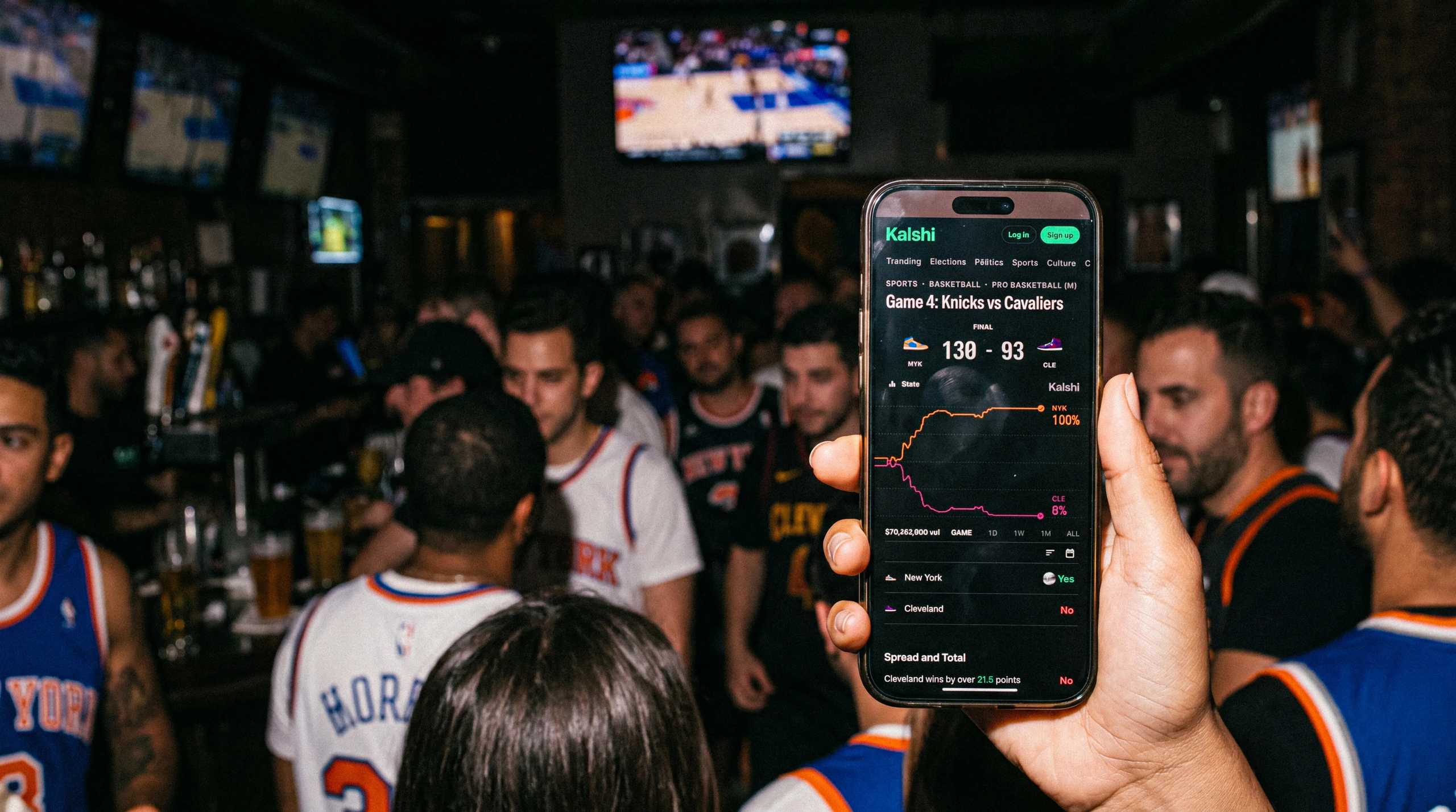
Prediction markets may have just found their first real-world business use case. A Manhattan bar owner turned a potential giveaway disaster into a profitable hedge using Kalshi.

A New York bar owner lost thousands of dollars on a Knicks promotion that awarded free food and drink to customers. It wasn’t a complete write-off, however, as the bar owner also won $13,000 at the same time thanks to Kalshi.
With inflation squeezing margins and consumer demand becoming increasingly difficult to forecast, the experiment raises an intriguing question: could prediction markets become a practical risk-management tool for businesses?
The bar that used Kalshi as a hedge
Prediction markets are proving to be more than a trading venue. The Jeffrey, a local Manhattan bar, struck gold after running a Kalshi-backed promo for Game 1 of the NBA Finals.
It all started when owner Andy Freedman personally funded a promotion that gave customers 1% off their tabs for every point the Knicks outscored the Cavs. Apparently, he wasn't counting on a 37-point blowout, which ended up costing the bar $4,000.
For the matchup against the Spurs, Kalshi approached Freedman with an idea: buy $5,000 worth of contracts tied to a Knicks victory and use the position to back an even bigger promotion — free food and drinks to all customers if they win.
With the market implying a 37% probability of that outcome, the trade would return more than $13,000, leaving the bar with roughly $8,500 after recouping its initial outlay. That should be enough to cover the customers’ tabs. Had the Knicks lost, the contracts would have settled at zero, but the extra foot traffic was expected to offset the cost.
➡️ Learn more about how prediction markets work
What prediction markets were originally supposed to do
Long before data analytics became a pillar of financial decision-making, prediction markets existed as a way to forecast future events through data aggregation. Economist Friedrich Hayek argued that knowledge is scattered throughout society. No single person possesses all relevant information.
The idea was that, instead of asking one expert what they think will happen, you gather information from hundreds or thousands of people, each with different knowledge and perspectives.
Early prediction markets focused on questions surrounding election results, economic developments, and other uncertain events. Participants risked money on their forecasts, creating a financial incentive to contribute honest assessments rather than opinions or speculation.
Although prediction markets can resemble sports betting on the surface, the underlying objective was largely academic. Researchers viewed them as a tool for measuring collective intelligence and testing whether markets could serve as effective forecasting mechanisms.

Other potential real-world uses
By pairing market incentives with large volumes of crowdsourced data, prediction markets create a forecasting mechanism that can be applied across several sectors. The table below covers a few examples.
| Metric | Target Stakeholder | Business Outcome | |
|---|---|---|---|
| Corporate Strategy | Product launch dates and revenue targets | Internal employees | Overrides overly optimistic project forecasts; Exposes hidden logistical issues |
| Environmental Impact | Regional rainfall, heatwaves, & hurricane counts | Energy firms and agricultural giants | Allows power grids and shipping networks to prepare before extreme weather hits |
| Public Health | Virus mutation rates and infection spikes | Doctors and pharmaceutical managers | Allows hospitals to get ahead of the incoming patient curve |
| Entertainment | Box office revenue, streaming numbers, and major awards | Media analysts, studios, and fans | Maximizes studio marketing budgets and distribution windows |
Could sports businesses use prediction markets?
Sports businesses may be among the most practical users of prediction markets because so much of their revenue depends on uncertain outcomes. For example:
- Stadium operators estimate attendance long before a season begins and adjust staffing, concessions, and event operations accordingly.
- Broadcasters make programming and advertising decisions based on projected audience interest.
- Sponsors commit marketing budgets before knowing whether a team will generate the level of engagement needed to justify the investment.
- Restaurants, bars, hotels, and other businesses near venues prepare for demand that often depends on team performance and playoff success.
- Merchandise retailers forecast inventory needs before consumer interest fully materializes.
By taking positions in markets tied to those same events, they could potentially offset losses when outcomes move against them.
Where the theory meets reality
No prediction market is completely foolproof or failure-free. These platforms present some considerable operational challenges. Liquidity concerns and market size limitations are among the top structural hurdles. For example, niche contracts face the danger of going “stale” if there aren’t enough interested buyers. High-profile events, like presidential elections, World Cup, or Super Bowl predictions, bring in billions of dollars in trading volume, whereas smaller trades, like regional weather metrics, have too few buyers and sellers to remain competitive. As a result, the aforementioned crowdsourcing strategy loses its efficacy, rendering the probability data unreliable.
In addition to the asset constraints, an air of legal uncertainty plays a significant role in the potential hazards of prediction markets. Internationally, government officials have conflicting opinions on regulatory procedures and legitimacy. This year alone, PBS News reports that the United States Commodity Futures Trading Commission sued three states for assuming wrongful dominion over platforms like Kalshi and Polymarket, which the federal organization deemed as illegal gambling.
What prediction markets could look like in five years
According to research from Coalition Greenwich, 73% of market structure specialists believe institutional investors will soon find tangible value in data generated by prediction markets. Assuming that the platforms gain more clarity on government regulations, broader business adoption will be very likely in the near future, allowing niche contracts to expand.
As prediction markets become more integrated into corporate planning, companies may use them alongside forecasting tools to aggregate dispersed information and improve decision-making. If adoption continues to grow, these platforms could evolve beyond their reputation as online betting venues and become a recognized source of forecasting intelligence. In some cases, their role may begin to resemble parts of traditional financial markets by producing contracts that allow businesses to hedge against global economic uncertainty and improve risk-management strategies.
Charlon Muscat is an established iGaming expert who entered the space in 2019 and went on to build a name across both casino and sportsbook content.
More Articles like this
Kalshi Wants Margin Trading. What Could Go Wrong?
Kalshi’s proposed margin system would let eligible traders put up less than the full value of some positions, freeing capital for other trades while also introducing a new layer of leverage and risk.

By Charlon Muscat
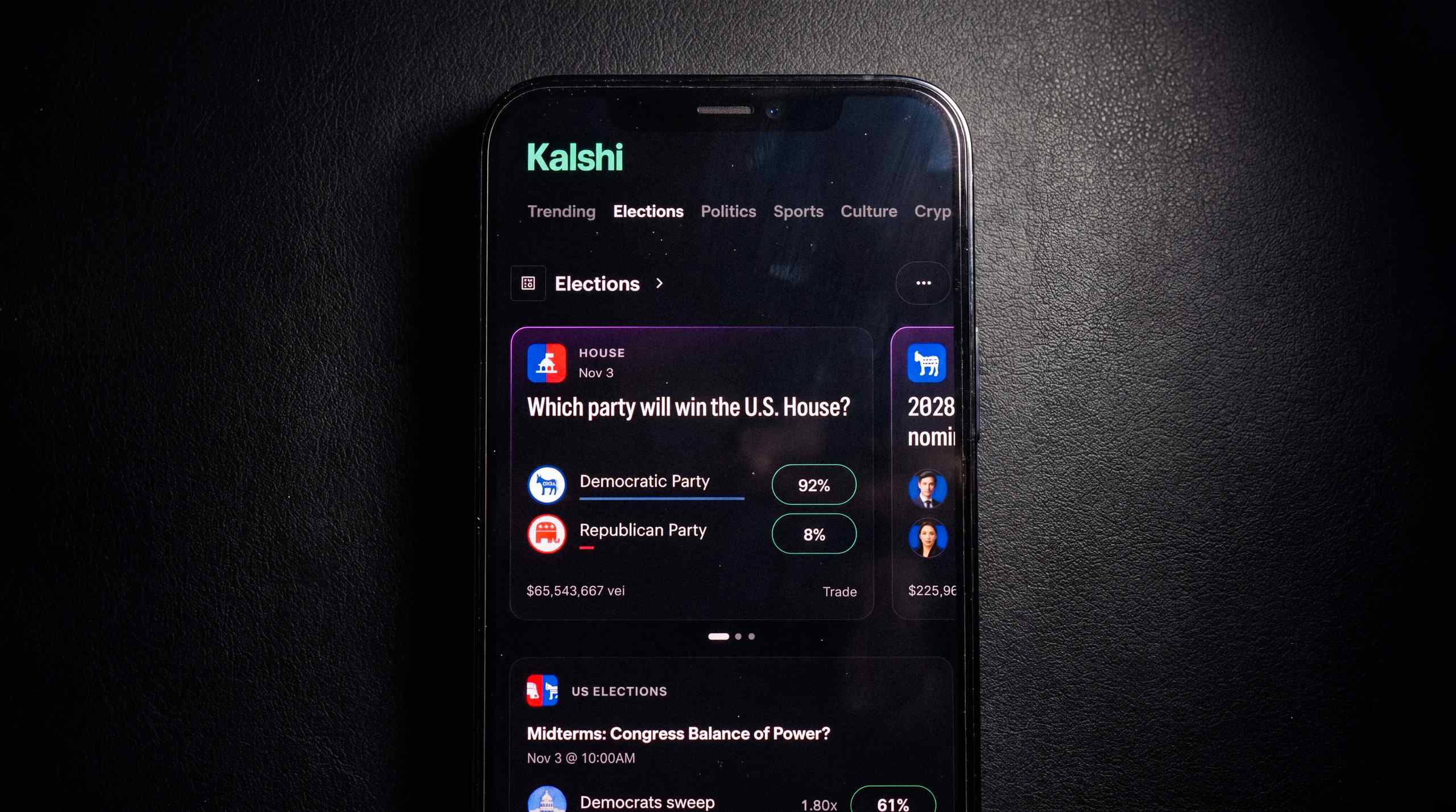
Kalshi, Polymarket Starting to Price the Midterms as Blowout
With just over five weeks to go, Kalshi and Polymarket now heavily favor Democrats for the House and give them the edge in the Senate.
By Stuart Hughes
Kalshi’s NFL Volume Is Exploding. Should Sportsbooks Be Worried?
The NFL season is barely underway, but prediction markets have already handled multiple billions in football trading volume. Is that enough to make sportsbooks nervous?
By Charlon Muscat
Best Prediction Market Apps of 2026
Compare the best prediction market apps and platforms for sports, politics and other events, ranked by market selection, fees, liquidity, user experience and availability.

By James Guill
Prediction Markets vs Sports Betting: Key Differences
Prediction markets vs sports books: odds, vig, trading vs fixed bets, legality by state, combos vs parlays. Which is better for sports bettors?

By Arthur Crowson
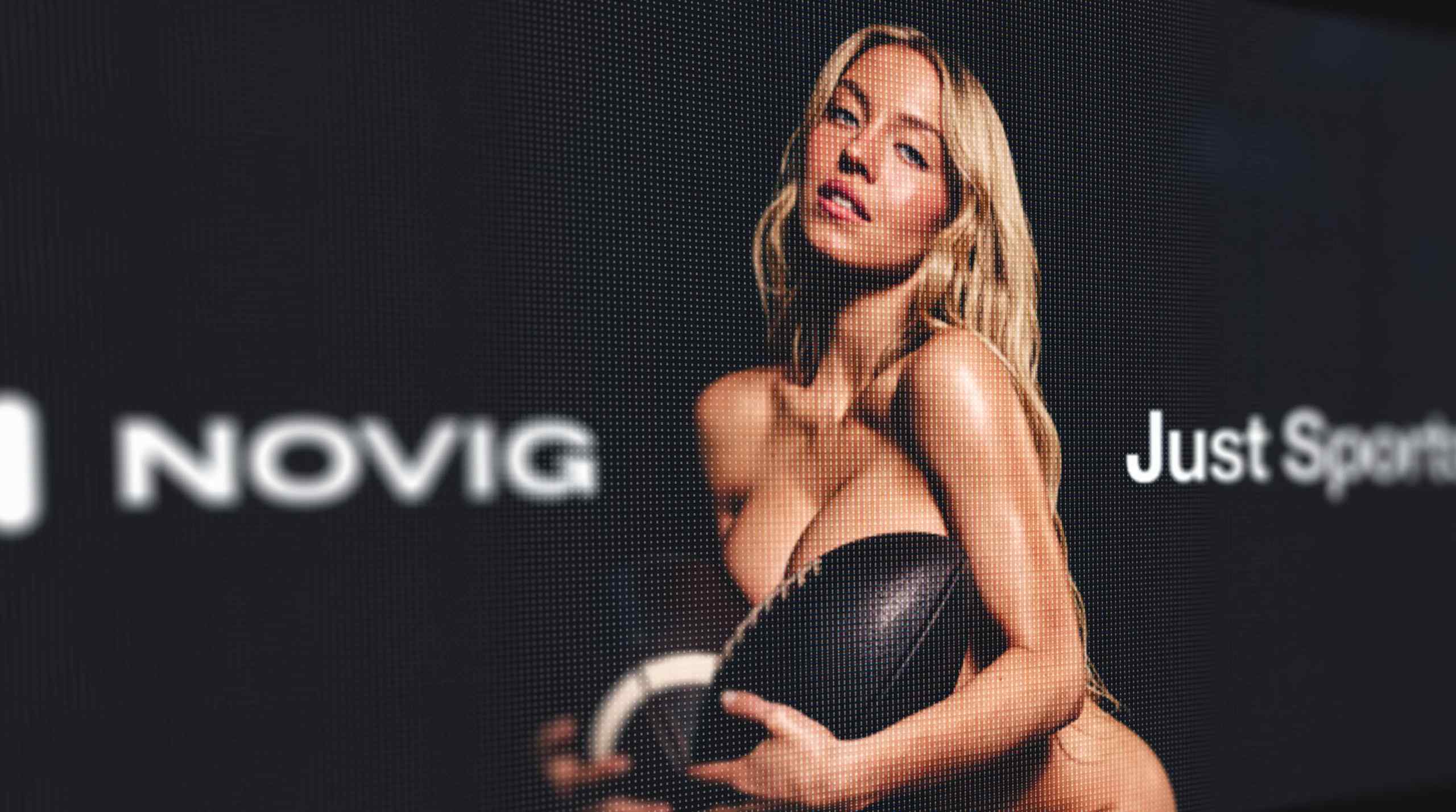
Sydney Sweeney to LeBron: Prediction Markets Bet on Star Power
Sydney Sweeney just became an equity partner at Novig. She joins a growing list of A-listers cashing massive checks from prediction markets, including LeBron James, Timothée Chalamet and many others.
By Cole Rush