

Inside the $35,000 “Hair Dryer” Hack on Polymarket
A suspicious temperature spike, which no one actually felt, triggered big payouts and exposed how fragile market outcomes can be when data is compromised.

Two traders reportedly walked away with over $35,000 on Polymarket weather contracts. The story caught fire when Météo-France alleged the spike was the work of a hair dryer rather than the sun. French authorities are still investigating the case, though this has highlighted that even systems built for accuracy can fail when the underlying data is compromised.
The Paris temperature oracle manipulation case
Last April, a temperature sensor at Paris-Charles de Gaulle Airport appeared to have been deliberately manipulated. CNN was among the first to report on the incident after Météo-France said it had formally filed a complaint over anomalies recorded across two specific dates:
- April 6: At around 7:00 p.m. local time, the sensor recorded a sudden spike, reaching 22°C, despite temperatures across Paris holding closer to 18°C throughout the day. The reading showed the expected levels shortly after.
- April 15: A second, near-identical event occurred, with the same sensor again registering 22°C, roughly four degrees above temperatures observed the previous day.
Further raising doubts, both events determined the outcome of a prediction market on Polymarket, where one user reportedly profited around $14,000 from the first incident. Nine days later, another account, identified as “xX25Xx,” placed a $120 trade on Paris temperatures exceeding 18°C (99% of other users said it would not) and went on to earn more than $21,000 in profit, according to The Wall Street Journal, citing data from Bubblemaps.
This is not the first time Polymarket has been drawn into controversy. An exclusive CNN investigation published in late March found that a trader made nearly $967,000 since 2024 by correctly predicting U.S. and Israeli military actions against Iran. These included positions opened hours before strikes in October 2024, June 2025, and February 2026, with win rates reaching up to 93%.

How prediction markets work
Prediction markets like Polymarket, Kalshi, and PredictIt allow users to trade contracts based on real-world events. Prices reflect the implied probability of that result occurring, so a $0.80 tag suggests an 80% chance as determined by the market. This is the main difference between prediction markets and sports betting, where participants trade against each other, while sportsbooks act as the counterparty to your wager and build in a margin.
The most common prediction market format is binary; one outcome pays out if the event happens, while the other settles if it does not. Going back to the Paris example, the headline would have said something like “Will Paris record a temperature above 18°C today?” Your job is to take a yes or no position. Each contract settles at $1 if the condition is met. The difference between the purchase price and that $1 is the gross profit. Here is an example:
Prediction Market Example
| Scenario | Outcome |
|---|---|
| Buy 100 “Yes” contracts at $0.80 each | Total cost: $80 |
| Event happens | Contracts settle at $1.00 → You receive $100 → Profit: $20 |
| Event does not happen | Contracts settle at $0.00 → You receive $0 → Loss: $80 |
➡️ Did you know? Many people turn to prediction markets because they can make money on crypto outcomes without trading the asset itself. This works by answering simple questions like whether a token stays above a level, hits a new high, or drops within a set timeframe.
Prediction market vulnerabilities
Unlike betting on NFL spreads, prediction market settlement is not based on what you personally see happen. Instead, each contract has a predefined resolution source written into it, often referred to as an oracle. One of the main vulnerabilities, as we saw in the Paris case, is that these external data feeds can be compromised or simply wrong, leading to contracts settling on the wrong result. Then there are other reasons the system can break, such as:
- Low liquidity: Thin markets mean prices can move a lot on small trades, which makes signals less reliable.
- Susceptibility to manipulation: People might be able to influence the underlying event or push prices with size.
- Regulatory uncertainty: Many prediction markets operate in legal gray areas. Oversight can be limited, and enforcement is often unclear or slow to catch up.
- Herd behavior: Prices can move away from fundamentals when traders follow momentum, and without a bookmaker to correct them, deviations last longer.
Smart trading vs manipulation
The thing with prediction markets is they often fall into a blurry space where it’s hard to tell if someone’s trading smart or crossing into manipulation.
On one end, you have participants acting on better or faster information. Whether this is right or wrong depends on how the edge is obtained. In most cases, forming a stronger view from publicly available data is considered fair. The problem starts when people are trading on confidential data, which can be illegal or at least unethical, depending on the jurisdiction.
More severe cases are when participants attempt to influence the event itself, kind of resembling match fixing in sports. There’s also a scenario where deliberately large trades move prices or influence sentiment.
➡️ Read more: How much betting is too much for sports?
Trusting prediction markets moving forward
Prediction markets have existed for decades, but crypto-based platforms have expanded access and made them more widely used in recent years. Now they're becoming tools for pricing expectations around politics, finance, weather, sport, and all sorts of global events.
The reason they’re gaining so much traction is that participants can turn uncertainty into a tradable price by putting money behind their views. On top of that, they are available in forms that reach users even in jurisdictions where traditional betting, especially on politics or entertainment, is restricted. Popular offshore and blockchain-based platforms like Polymarket then offer even fewer constraints.
But cases like the one in Paris show they’re still early-stage and fragile. A single manipulated data point stops prices from reflecting real probability and starts rewarding manipulation. For participants to trust the system, stronger oversight must be introduced, which, with minimal regulation, is difficult to achieve. It also requires more reliable data sources and safeguards that can detect and prevent this kind of interference.
Charlon Muscat is an established iGaming expert who entered the space in 2019 and went on to build a name across both casino and sportsbook content.
More Articles like this
Kalshi Wants Margin Trading. What Could Go Wrong?
Kalshi’s proposed margin system would let eligible traders put up less than the full value of some positions, freeing capital for other trades while also introducing a new layer of leverage and risk.

By Charlon Muscat
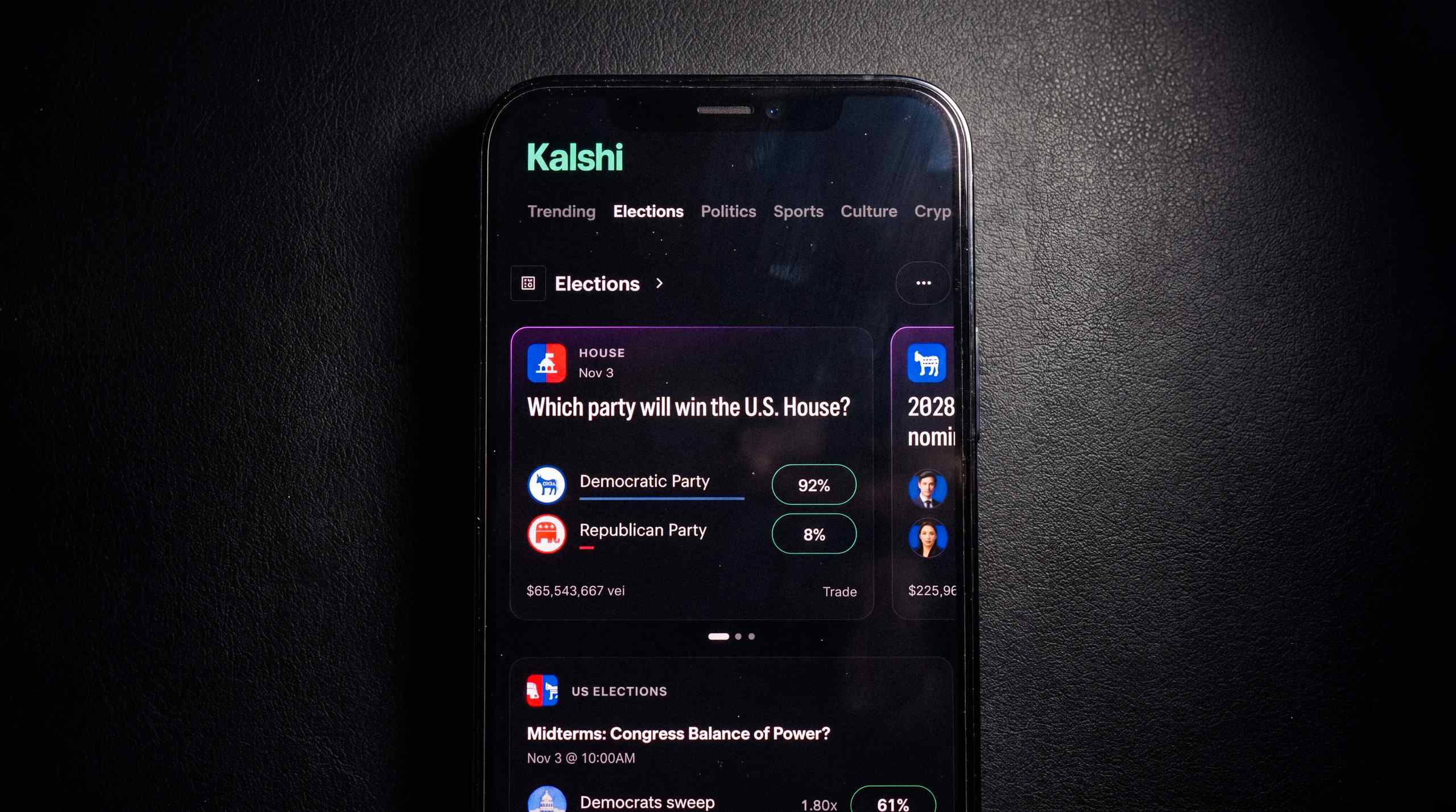
Kalshi, Polymarket Starting to Price the Midterms as Blowout
With just over five weeks to go, Kalshi and Polymarket now heavily favor Democrats for the House and give them the edge in the Senate.
By Stuart Hughes
Kalshi’s NFL Volume Is Exploding. Should Sportsbooks Be Worried?
The NFL season is barely underway, but prediction markets have already handled multiple billions in football trading volume. Is that enough to make sportsbooks nervous?

By Charlon Muscat
Best Prediction Market Apps of 2026
Compare the best prediction market apps and platforms for sports, politics and other events, ranked by market selection, fees, liquidity, user experience and availability.

By James Guill
Prediction Markets vs Sports Betting: Key Differences
Prediction markets vs sports books: odds, vig, trading vs fixed bets, legality by state, combos vs parlays. Which is better for sports bettors?

By Arthur Crowson
Sydney Sweeney to LeBron: Prediction Markets Bet on Star Power
Sydney Sweeney just became an equity partner at Novig. She joins a growing list of A-listers cashing massive checks from prediction markets, including LeBron James, Timothée Chalamet and many others.
By Cole Rush