What Is a Bad Beat in Poker?
Bodog explains what a bad beat is in poker, why it happens, how bad beat jackpots work, and how players can manage the emotional and strategic fallout of a tough loss.

A bad beat is a poker hand in which a player holds a statistically strong hand, gets the money in as the clear favorite, and still loses to an opponent who catches an unlikely card to win the pot. It is one of the most talked-about and misunderstood moments in the game, and it happens to every player who puts in enough volume at the tables.
Bad Beat Key Takeaways
The key takeaways about a bad beat in poker summarize the core facts every player needs before sitting down at a cash game or tournament table.
- A bad beat happens when a statistically favored hand loses to a weaker hand that improves on later streets.
- There is no universal rulebook definition; players generally agree a one-outer or a hand favored by 80 percent or more qualifies.
- Bad beat jackpots pay out when a very strong losing hand, often quad eights or better, is beaten by an even stronger hand.
- Bad beats are a byproduct of variance, not proof of bad play, and stronger players learn to separate results from decisions.
- Online play tends to produce more bad beats per session simply because more hands are dealt per hour.
Why Does Understanding a Bad Beat Matter in Poker?
A player who recognizes a bad beat as a normal statistical outcome, rather than a personal injustice, avoids the tilt-driven mistakes that turn one unlucky hand into a losing session.
Recognizing the pattern also helps players evaluate whether they actually made a sound decision or whether the "bad beat" was really a case of overvaluing a marginal hand.
How Common Bad Beats Are in Different Scenarios
| Preflop or Postflop Scenario | Favored Hand | Underdog Hand | Approximate Win Rate for Favorite |
|---|---|---|---|
| All-in preflop | Pocket aces | Pocket jacks | ~80% |
| Flopped set vs. flush draw | Set of jacks | Nut flush draw | ~65-70% |
| Turned flush vs. two pair | Nut flush | Two pair (needs a full house) | ~96% |
| Full house vs. one-outer | Small full house | Quads on the river | ~98% |
What Causes a Bad Beat in Poker?
A bad beat in Texas Hold'em poker is caused by a mathematically favored hand running into an unlikely combination of community cards that completes a stronger hand for the opponent. This typically happens in one of two ways:
- An opponent calls despite poor pot odds and gets rewarded anyway
- Two very strong hands collide and the better hand simply loses to an even better one, a scenario often called a cooler.
Terms like equity, outs, and pot odds all factor into whether a hand truly qualifies as a bad beat, and players who want the full vocabulary can check the poker glossary for definitions of these related concepts.
What Poker Skills Reduce the Risk of a Costly Bad Beat?
- Narrowing the field before the money goes in and avoiding situations where multiple opponents can catch live cards.
- Tightening preflop ranges, betting for value instead of limping, and folding hands that only look strong on the surface all shrink the number of ways an opponent can improve.
None of these adjustments eliminate variance completely. A well-played hand can still lose to a legitimate one-outer on the river.
How Should You React When You Suffer a Bad Beat?
The correct reaction when you suffer a bad beat is to review whether the decision itself was sound before reacting emotionally to the outcome. If the money went in with the best of it, the loss was simply variance doing what variance does, and dwelling on it only invites tilt. Stepping away from the table for a few minutes, reviewing the hand later with a clear head, and reminding yourself that one hand means little over a large sample are all practical ways to reset.
What Are Real Examples of a Bad Beat in Poker?
Real examples of a bad beat in poker usually involve a premium starting hand or a flopped monster that gets outdrawn on a late street.
In one common example, a player holds pocket Aces, gets all the chips in preflop against pocket Jacks, and then watches the flop bring a Jack that gives the opponent a set and the eventual pot.
A second example unfolds after the flop rather than before it. A player flops a full house with pocket Jacks on a board of Jack-Ten-Ten, bets aggressively with a hand that looks unbeatable, and then loses when the turn and river complete a runner-runner straight flush for the opponent holding two suited connectors that looked worthless before the flop.
In hands like these, the losing player was rarely making a mistake; a sharp opponent applying exploitative poker strategy might have folded those same connectors long before the flop, but a looser calling station simply got lucky and cashed in.
What Are Common Mistakes Players Make About a Bad Beat?
- Confusing a bad beat with a hand that was never actually favored in the first place.
- Assuming online poker rooms are "rigged" instead of recognizing that faster hand speed simply produces more variance events per hour.
- Letting one bad beat influence unrelated decisions later in the same session.
- Ignoring the difference between a bad beat and a cooler, where both players had legitimate reasons to commit chips.
Bad Beat FAQs
What exactly counts as a bad beat in poker?
Most players agree a bad beat requires a hand that was a heavy favorite, often 80 percent or better, losing to a weaker hand that improves on a later street.
Is a bad beat the same as a cooler?
No, a cooler involves two genuinely strong hands colliding where neither player made an error, while a bad beat usually involves a clear underdog getting lucky.
Do bad beats happen more often online?
Bad beats can feel more frequent online because faster dealing speeds mean more hands, and therefore more variance events, per hour of play.
How do bad beat jackpots work?
A bad beat jackpot pays a progressive prize funded by table rake when a very strong hand, such as quads or better, loses at showdown to an even stronger hand.
Can a bad beat mean I played badly?
Not necessarily; if the money went in with the best equity, the loss is variance rather than a strategic error.
Why do bad beats cause tilt?
Bad beats cause tilt because losing with a statistically strong hand feels unjust, and that emotional reaction can lead to impulsive decisions in later hands.
Arthur Crowson got his start in traditional newspapers before making the jump to digital media, where he's spent the last ten years writing about poker, finance, crypto, gambling, and emerging tech. Over that time, he's developed a knack for spotting the moments when markets, technology, and gambling pull in the same direction. His work has appeared in publications like PokerListings, CryptoVantage, ValueWalk, and PokerScout.
More Articles like this
Why Poker Keeps Surviving Every New Gambling Trend
New gambling trends come and go, but poker keeps finding a way to stay in the game.
By Lucie Turner
Lucas Jumalon Wins: The Highs and Lows of the 2026 WSOP Final Table
Lucas Jumalon led throughout the final table to capture the 2026 WSOP Main Event bracelet and $10 million. Here’s how the final table unfolded, plus the biggest broadcast highs and lows.
By James Guill
Who Will Win the 2026 WSOP Main Event?
Lucas Jumalon heads into the 2026 WSOP Main Event final table as the overwhelming chip leader. Is his chip lead truly overwhelming or will someone else rise to win?
By James Guill
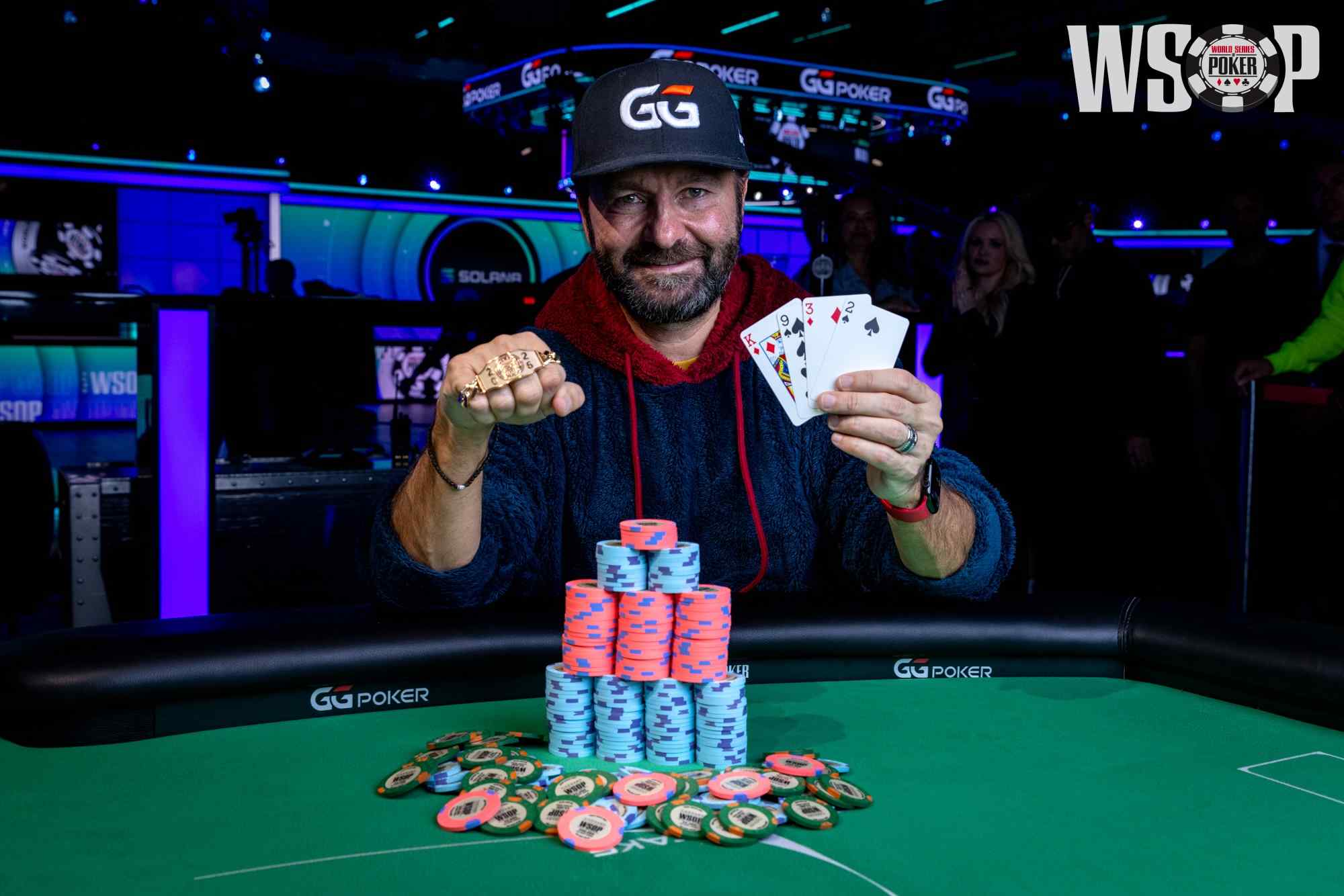
Ranking Daniel Negreanu's Eight WSOP Bracelet Wins
Daniel Negreanu's eighth WSOP bracelet adds another chapter to one of poker's greatest careers. We rank every bracelet win by prestige, competition, historical significance, and legacy.
By Lucie Turner
2026 WSOP Main Event Final Table Set. Who Wins $10 Million?
A $10 million first prize is on the line as nine players return in August to battle for poker's biggest championship. Meet the 2026 WSOP Main Event finalists.

By Arthur Crowson
What is a Bounty Poker Tournament?
This guide explains what a bounty tournament is in poker, how knockout payouts work, and how standard, progressive, and mystery bounty formats differ.
By Arthur Crowson