What is Exploitative Poker Strategy?
A direct, evidence-based breakdown of exploitative poker strategy and how players can use it to attack real opponent weaknesses at the table.

Exploitative poker strategy is a decision-making approach where a player deliberately deviates from balanced, theoretically "correct" play in order to attack a specific opponent's observable weaknesses, such as folding too often, calling too loosely, or bluffing too rarely. It trades mathematical safety for maximum profit against imperfect opponents.
Key Takeaways
- Exploitative poker strategy targets specific opponent mistakes rather than following a fixed, balanced range.
- It generates higher win rates against weak or predictable players than a purely balanced approach.
- The tradeoff is vulnerability. A player who deviates too obviously can be counter-exploited by sharp opponents.
- Exploitative play works best at low and mid stakes, live tables, and against recreational players.
- Reading patterns, using a HUD, and tracking tendencies are the core tools that make exploitative adjustments possible.
Quick Facts About Exploitative Poker Strategy
| Category | Details |
|---|---|
| Difficultly level | Advanced. Requires hand reading and pattern recognition |
| Estimated time to learn | 10,000 hands |
| Best suited for | Cash games grinders, live poker players, and anyone facing recreational opponents |
| Related topic | GTO poker theory and how it contrasts with exploitative adjustments |
Why Does Exploitative Poker Strategy Matter For Everyday Players?
Exploitative poker strategy matters for everyday players because most opponents at low and mid stakes make consistent, identifiable mistakes that a balanced strategy simply ignores. This approach recognizes that players play far from optimal play, and this opens the opportunity to massive profit margins, which are not available to GTO strategies.
For a player grinding cash games or weekly tournaments, understanding this concept is the difference between leaving money on the table and systematically taking it.
Practical value also comes from confidence. Once a player understands why an adjustment is profitable, decisions become faster and less emotional. Knowing when to stay balanced and when to adjust turns basic poker knowledge into real skill.
Exploitative Poker vs. Balanced Approach
| Factor | Exploitative Strategy | Balanced Approach (GTO) |
|---|---|---|
| Primary goal | Maximize profit against specific mistakes | Minimize losses against any opponent |
| Basis for decisions | Observed opponent tendencies and history | Mathematical equilibrium and solver output |
| Risk profile | Higher reward, higher counter-exploit risk | Lower variance, harder to punish |
| Best game type | Live tables, recreational-heavy fields | High-stakes online, tough regulars |
| Skill demand | Reads, pattern tracking, adaptability | Memorization, range construction, solver study |
What Does Exploitative Poker Strategy Actually Look Like In Practice?
Exploitative poker strategy in practice means changing specific actions, like bet sizing, bluff frequency, or calling ranges, based on what a particular opponent has shown at the table. An exploitative poker strategy is more dynamic and reactive, and takes the habits and patterns of the player into account, so if an opponent folds too often to continuation bets, an exploitative strategy would involve more bluffing against them, and if a person calls too often on the river, a player should bet thinner and bluff less.
This is different from randomly changing gears. A player studying how to bluff in poker still needs the fundamentals of hand reading and bet sizing before layering exploitative reads on top, since the core mechanics of a credible bluff have to be in place before any read-based adjustment can work. Without that foundation, an aggressive exploit is just a guess dressed up as a strategy.
What Tools Help Players Apply Exploitative Poker Strategy Correctly?
The tools that help players apply exploitative poker strategy correctly are tracking software, hand history review, and disciplined note-taking on opponent tendencies. Online, a tracking display that surfaces stats like fold-to-3-bet or river call frequency turns guesswork into data, and a heads-up display overlay showing those exact stats in real time is what separates a guess from a calculated exploit. Live, the same information has to be gathered manually through observation and memory across sessions.
How Does Exploitative Poker Strategy Differ From GTO Poker Theory?
Exploitative poker strategy differs from GTO poker theory in its starting assumption: GTO assumes a perfect opponent, while exploitative play assumes an imperfect one and attacks accordingly. GTO play aims to be unexploitable by maintaining a mathematically balanced strategy, while exploitative play deliberately deviates from balance to attack specific weaknesses in your opponents.
Exploitative poker is a style of play that focuses on taking advantage of specific opponents' weaknesses, tendencies, or imbalances, involving strategic adjustments such as folding too often in certain positions or calling too often in certain situations.
Most working professionals blend both frameworks depending on the seat and the field, treating GTO as a stable default and exploitative reads as a scalpel for specific spots. Understanding this dynamic thoroughly usually requires studying GTO poker theory on its own terms before learning where and why to deviate from it.
What Are Real Examples Of Exploitative Poker Strategy At The Table?
Real examples of exploitative poker strategy at the table involve concrete, repeatable adjustments against a specific type of opponent rather than vague "aggression." The scenarios below show how the concept plays out hand by hand.
Example 1: The Over-Folding Regular
An opponent folds to continuation bets on the flop more than 65% of the time across a tracked sample. A player applying exploitative poker strategy increases their continuation-betting frequency against that specific opponent, firing more bluffs into pots they would otherwise check back, because the data confirms the fold rate is real rather than a short-term blip.
Example 2: The Calling Station
A recreational player calls down with weak pairs and never folds top pair regardless of pressure. Here, exploitative poker strategy means cutting bluff frequency almost entirely against that player while betting thinner value hands for more streets, since a hand that would be a bluff-only spot against a balanced opponent becomes a value bet against a station.
Example 3: The Passive Big Blind Defender
An opponent rarely three-bets from the big blind and folds most marginal holdings to a raise. A player can widen their opening range from late position specifically against that opponent, understanding that expected value in poker rises here not because of theory, but because of that opponent's documented passivity.
What Common Mistakes Do Players Make With Exploitative Poker Strategy?
The common mistakes players make with exploitative poker strategy usually involve acting on too little information or overcorrecting once an exploit is found. Recognizing these errors early prevents costly, repeated leaks.
- Exploiting on a small sample: Adjusting after three or four hands rather than a statistically meaningful sample leads to false reads and misapplied aggression.
- Overexploiting into predictability: Pushing an edge so hard that the deviation itself becomes obvious, which is exactly how a sharp opponent counter-exploits back.
- Ignoring position and stack depth: Applying the same exploit regardless of stack size or seat, when both variables change how profitable that adjustment actually is.
- Confusing one bad session with a real tendency: Treating a single unusual hand as proof of a pattern instead of confirming it across multiple, separate occasions.
- Abandoning fundamentals entirely: Using exploitative reads as an excuse to skip solid baseline strategy, leaving the player with no fallback against unreadable opponents.
Exploitative Poker Strategy Vs GTO Poker: Which Approach Should A Player Choose?
Choosing between exploitative poker strategy and GTO poker theory depends almost entirely on the strength and predictability of the opponents at the table. Neither is universally superior, and the right choice in any given session depends on who a player is sitting with and how much information they have on them.
When to Use Exploitative Strategy vs. GTO Poker
| Situation | Recommended Approach |
|---|---|
| Facing recreational or predictable players | Exploitative poker strategy |
| Facing strong, adaptive regulars | GTO poker theory as a default |
| Uncertain or unknown opponent | Start balanced, shift to exploitative once patterns emerge |
| Short-handed, high-variance formats | Exploitative poker strategy |
| Deep-stacked, high-stakes online games | GTO poker theory |
Frequently Asked Questions About Exploitative Poker Strategy
Is exploitative poker strategy better than GTO?
Exploitative poker strategy is not universally better than GTO. It produces higher win rates against weak, identifiable opponents, while GTO protects a player against being read and countered by strong ones.
Can beginners use exploitative poker strategy?
Beginners can use exploitative poker strategy, but only after learning fundamental hand values, position, and bet sizing, since exploits are adjustments layered on top of a sound baseline, not a replacement for one.
Does exploitative poker strategy work online and live equally well?
Exploitative poker strategy works in both formats, though live play often provides more reliable tells and longer session data, while online play relies more heavily on tracked statistics and hand histories.
How much data does a player need before exploiting a tendency?
A player generally needs a meaningful, repeated sample of an opponent's actions in a specific spot before adjusting, rather than reacting to one or two hands, since small samples frequently produce false patterns.
Is exploitative poker strategy riskier than balanced play?
Exploitative poker strategy carries more risk because deviating from balance can be counter-exploited if an opponent notices the pattern, while balanced play sacrifices some profit for greater protection.
Do professional poker players use exploitative strategy exclusively?
Professional poker players rarely use exploitative strategy exclusively. Most blend a balanced baseline with targeted exploitative adjustments depending on the specific opponent and game format.
Conclusion: The Bodog Insight On Exploitative Poker Strategy
Exploitative poker strategy rewards players who pay attention. It is not a shortcut or a gimmick, it is a disciplined method of turning observed opponent mistakes into calculated, repeatable profit, while balanced play serves as the stable foundation to fall back on against tougher competition. The players who win consistently at Bodog's tables are rarely the ones chasing a single "correct" system. They are the ones who read the room, adjust with purpose, and know exactly when to switch gears. That is the edge worth building.
Continue Learning
- GTO Vs Exploitative Poker: a direct comparison of both strategic frameworks and when each one wins.
- GTO Poker Explained: a breakdown of Game Theory Optimal concepts and how solvers build balanced ranges.
- Poker HUDs Explained: how tracking software surfaces the opponent data exploitative players rely on.
- What Is Expected Value In Poker: the math behind why profitable exploits actually work over time.
Arthur Crowson got his start in traditional newspapers before making the jump to digital media, where he's spent the last ten years writing about poker, finance, crypto, gambling, and emerging tech. Over that time, he's developed a knack for spotting the moments when markets, technology, and gambling pull in the same direction. His work has appeared in publications like PokerListings, CryptoVantage, ValueWalk, and PokerScout.
More Articles like this
Why Poker Keeps Surviving Every New Gambling Trend
New gambling trends come and go, but poker keeps finding a way to stay in the game.
By Lucie Turner
Lucas Jumalon Wins: The Highs and Lows of the 2026 WSOP Final Table
Lucas Jumalon led throughout the final table to capture the 2026 WSOP Main Event bracelet and $10 million. Here’s how the final table unfolded, plus the biggest broadcast highs and lows.
By James Guill
Who Will Win the 2026 WSOP Main Event?
Lucas Jumalon heads into the 2026 WSOP Main Event final table as the overwhelming chip leader. Is his chip lead truly overwhelming or will someone else rise to win?
By James Guill
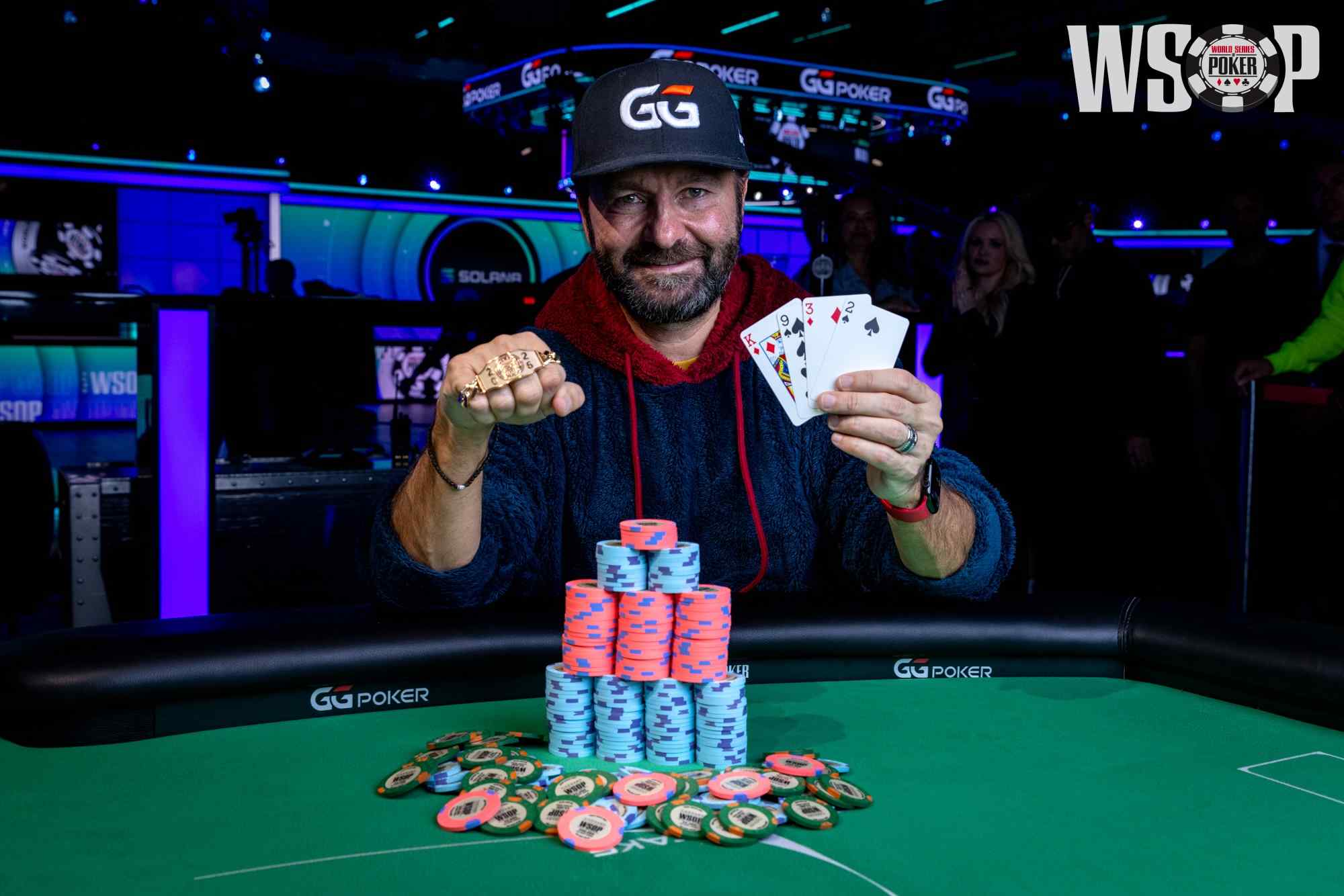
Ranking Daniel Negreanu's Eight WSOP Bracelet Wins
Daniel Negreanu's eighth WSOP bracelet adds another chapter to one of poker's greatest careers. We rank every bracelet win by prestige, competition, historical significance, and legacy.
By Lucie Turner
2026 WSOP Main Event Final Table Set. Who Wins $10 Million?
A $10 million first prize is on the line as nine players return in August to battle for poker's biggest championship. Meet the 2026 WSOP Main Event finalists.

By Arthur Crowson
What Is a Bad Beat in Poker?
Bodog explains what a bad beat is in poker, why it happens, how bad beat jackpots work, and how players can manage the emotional and strategic fallout of a tough loss.
By Arthur Crowson