Why Poker Keeps Surviving Every New Gambling Trend
New gambling trends come and go, but poker keeps finding a way to stay in the game.
.webp)
You’ve experienced the “This new thing is going to kill poker forever” feeling before, right? That happens to me a lot.
Daily Fantasy Sports (DFS), then legalized sports betting became huge, the things that are said to be the nail in the coffin for poker keep on coming!
And now we have crypto casinos, prediction markets, AI gambling tools ... And every single time, the obituary for poker gets written a little too early.
I'm not going to act as though poker continues to be part of that huge boom in which it saw its greatest success between 2003 and 2006. The smoky back rooms and the 'Moneymaker Effect' have been and gone.
The thing about poker that most people don't understand is that it has never been about being the loudest or flashiest.
Poker continues to survive because of one thing that the slot machines and sports gaming apps can’t offer, structurally - it’s you against other people, and not you against the house.
The fundamentals never lie
This is why poker refuses to die. At the casino, the math is an ongoing, slow leak. You might as well push the chips to the middle if you're playing blackjack or spinning the reels - the math will bleed you dry over time.
But poker turns the house edge on its ass. There's a little bit taken out by the casino (called the rake), but the cash flows from player to player, and in the long run, skill, discipline, and nerve actually make a difference.
Let me give you the real numbers: the global poker market was valued at considerably less than sports betting, which hit nearly $17 billion in 2025, and commercial casino revenue shattered previous records by reaching $78.7 billion in 2025, marking a 9.2% increase over the previous year.
In 2025, online poker generated $6.27 billion. Not the steep exponential increase we saw in the mid-2000s, but still nowhere near a dying industry.
Notably, online poker, specifically in America, is steadily growing at 7% per year through 2025 (with total revenue up from $56.61 million to $60.55 million per year and monthly revenue up from roughly $4.72 million to $5.05 million).
Despite the fact that these growth rates seem small, they still reveal an overarching purpose for the entire group: a well-developed, well-established, stable business with enough time to adapt to varying conditions.
Playing poker is not gambling; it is a game of skill and strategy. You are competing against other people. In contrast, playing slots is simply gambling: you hit a button and hope for the best.
When playing poker, you should study your opponent, determine your pot odds and make good decisions to maximize your chances of success. With this level of variance, however, players can become frustrated and give up. The feeling of control keeps them coming back to play again and again.
Trends come and go, poker stays
Let me give you a tour of the last decade of 'poker killers' and see how it all played out in reality:
DFS boomed around 2015. DraftKings and FanDuel dropped hundreds of millions of dollars on ads. The story was the same kind of skill-based gameplay as poker, just quicker and easily accessible from your phone. Some poker players did flood into DFS; that's true, but it was additive rather than substitutive.
The two appeal to the same type of strategic thinking, but poker brings a tangible, real-time element missing in DFS, live bluffing, social elements, and, critically, adaptation to your particular opposition.
The legalization of sports betting starting in 2018 was expected to be the nail in the coffin. All of a sudden, each state was opening up, and you could bet from your cell phone and pretty much bet on everything. Who wants to grind poker for four hours a day when a sports bet is settled in under two minutes?
Ironically, Sportsbooks and Casinos have realized that the lifetime value of a poker player is greater than that of a slots player. The acquisition cost of a poker player is much smaller than that of a slots player, but the player retention is far more significant.
Sports bettors leave quickly, while poker players learn strategy, visit forums and play for years.
Polymarket and other crypto gambling/predictive markets are more popular than ever because they pay out instantly and are 100% anonymous, but they attract a different audience looking for something very different from what Poker has to offer.
Poker is for players who have a cool head and can remain stoic, getting prepared to lose many hands before finally winning one.
This is just one of the reasons why Poker will still be around for many years to come, as many people love playing Poker for its complexity rather than its speed of play.
Poker is an identity, not a hobby
A professional slot player would never refer to themselves as such; however, many poker players absolutely hate being labeled as a gambler! They use terms like 'skill' and 'control' to describe their identity and want to distinguish themselves from gamblers.
I’ve spent time with people who wouldn't even step inside a casino if they could avoid it, but would sit down and play no-limit poker for 8 hours non-stop because they see it as a game rather than gambling.
All of that identity is supported by an entire system: Twitch streams, Discord solvers, the YouTube strategy, and live events such as the World Series of Poker (WSOP).
There were 100 events held by WSOP last year with a staggering $480 million given away and a $60 million-guaranteed Super Main Event. This is no niche hobby- this is a global spectacle.
Hustler Casino Live has created a spectator sport around cash games, similar to watching a Super Bowl. Huge bluffs, massive pots, and an insane amount of incredible poker experience combine to make this a great activity for both seasoned & novice players to learn and play in the same environment.
People do not just bet on poker. They become poker players.
Why poker is structurally valuable to operators
Poker is a way to keep people involved and engaged. It isn’t a quick play like a slot machine; poker is more fun, social, and tactical.
Unlike other casino games, such as slot machines, poker has a unique retention feature.
Players in poker spend many hours or days engaging in social interaction with other players, negotiating strategies to win. The hybrid live/online format will be dominant by 2026, with satellite qualifiers; players will play in live finals and complete the event online. The two game types will no longer compete.
The emergence of AI sportsbooks or VR casinos as threats to poker will not occur, since the demand and skills required for poker still exceed those of the new, quick-thrill, easy-money games. The poker game is not just about money.
For a lot of us, that’s the whole point.
Lucie brings almost 20 years of iGaming experience, combining sports writing expertise with deep casino knowledge. Her work spans live sports coverage, slot mechanics, player-focused reviews, and strategic casino content. Known for her no-nonsense, first-hand approach, Lucie cuts through jargon to deliver clear, practical insights for both operators and players.
More Articles like this
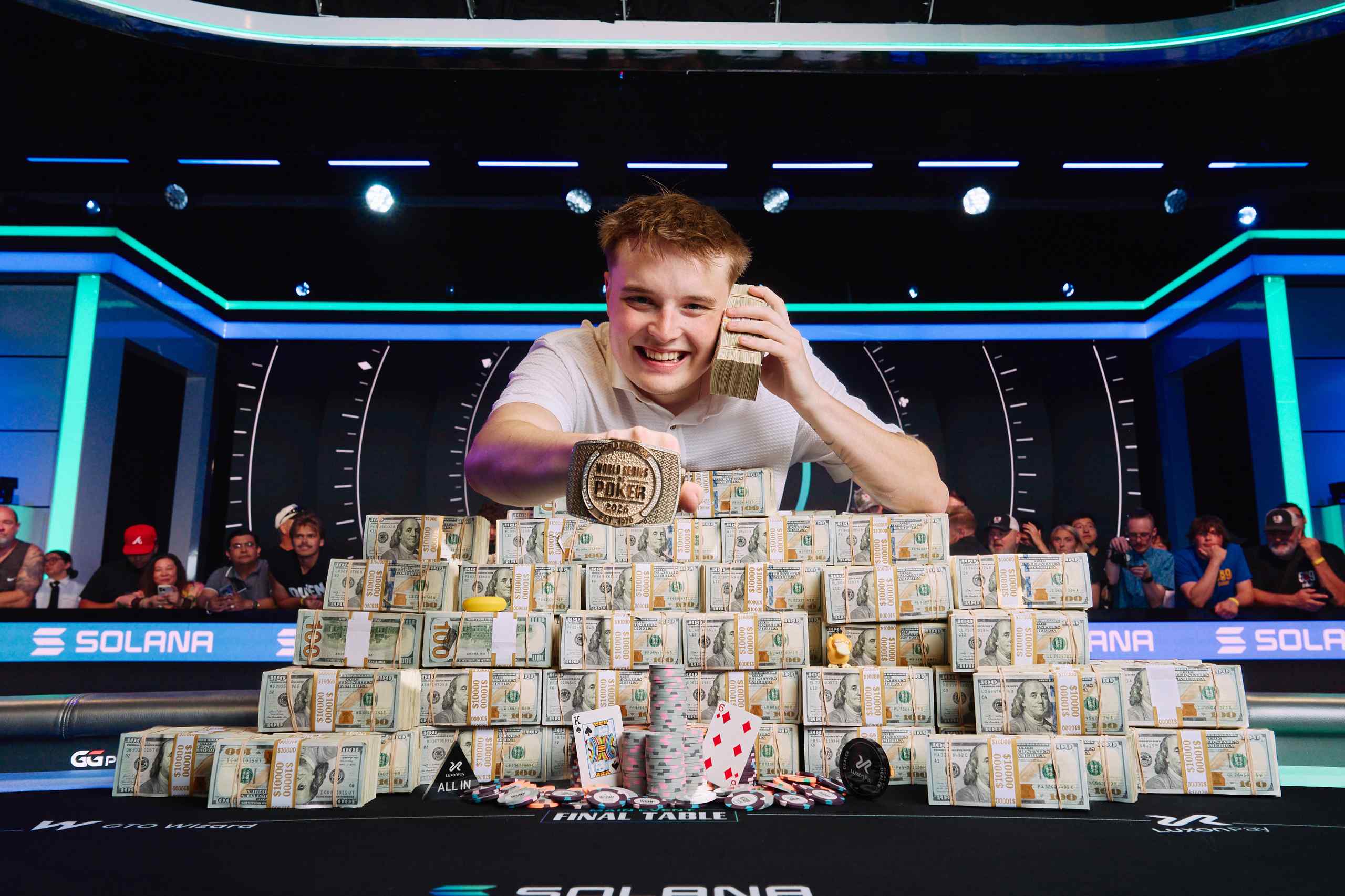
Lucas Jumalon Wins: The Highs and Lows of the 2026 WSOP Final Table
Lucas Jumalon led throughout the final table to capture the 2026 WSOP Main Event bracelet and $10 million. Here’s how the final table unfolded, plus the biggest broadcast highs and lows.
By James Guill
Who Will Win the 2026 WSOP Main Event?
Lucas Jumalon heads into the 2026 WSOP Main Event final table as the overwhelming chip leader. Is his chip lead truly overwhelming or will someone else rise to win?
By James Guill
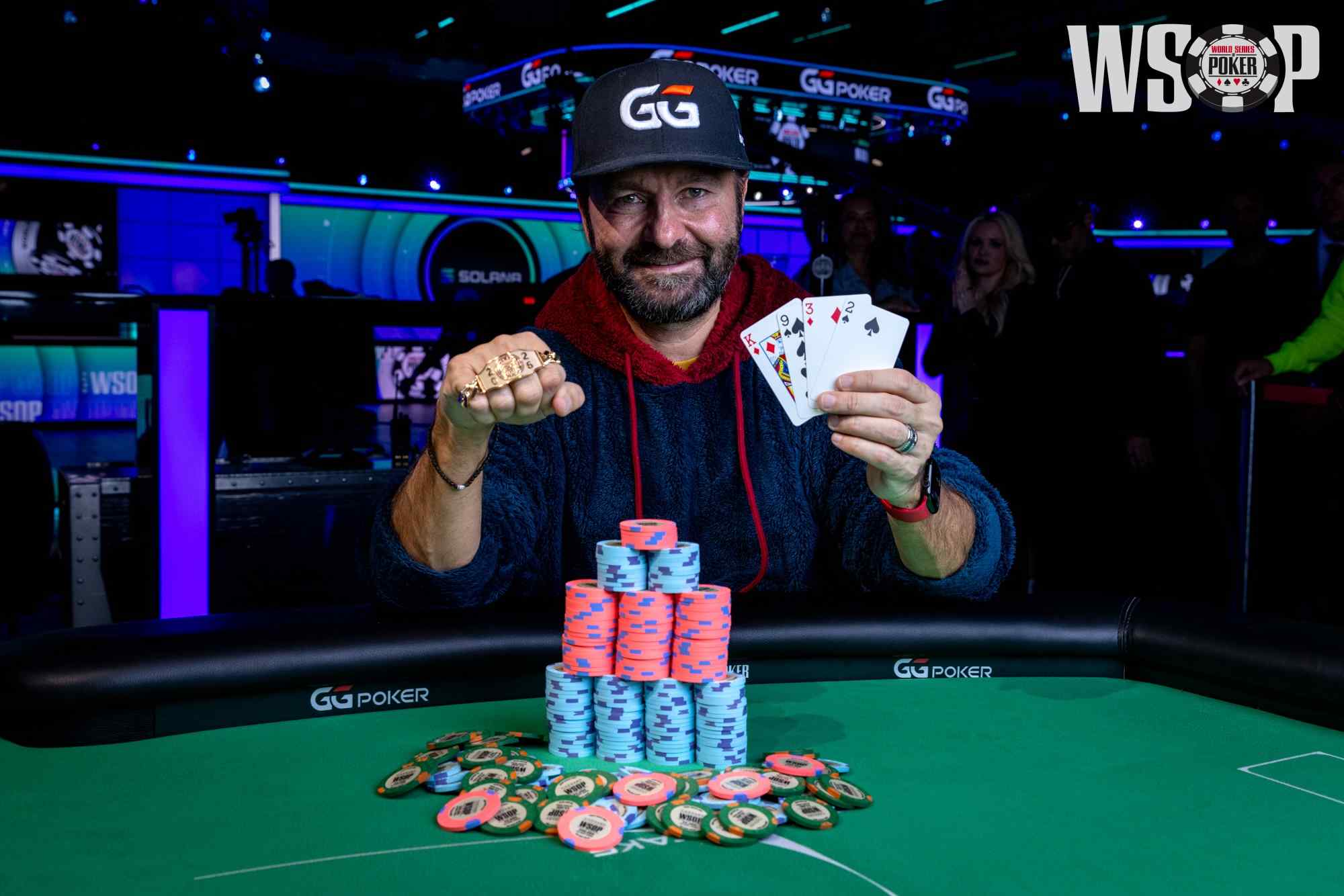
Ranking Daniel Negreanu's Eight WSOP Bracelet Wins
Daniel Negreanu's eighth WSOP bracelet adds another chapter to one of poker's greatest careers. We rank every bracelet win by prestige, competition, historical significance, and legacy.
By Lucie Turner
2026 WSOP Main Event Final Table Set. Who Wins $10 Million?
A $10 million first prize is on the line as nine players return in August to battle for poker's biggest championship. Meet the 2026 WSOP Main Event finalists.

By Arthur Crowson
What Is a Bad Beat in Poker?
Bodog explains what a bad beat is in poker, why it happens, how bad beat jackpots work, and how players can manage the emotional and strategic fallout of a tough loss.
By Arthur Crowson
What is a Bounty Poker Tournament?
This guide explains what a bounty tournament is in poker, how knockout payouts work, and how standard, progressive, and mystery bounty formats differ.
By Arthur Crowson