
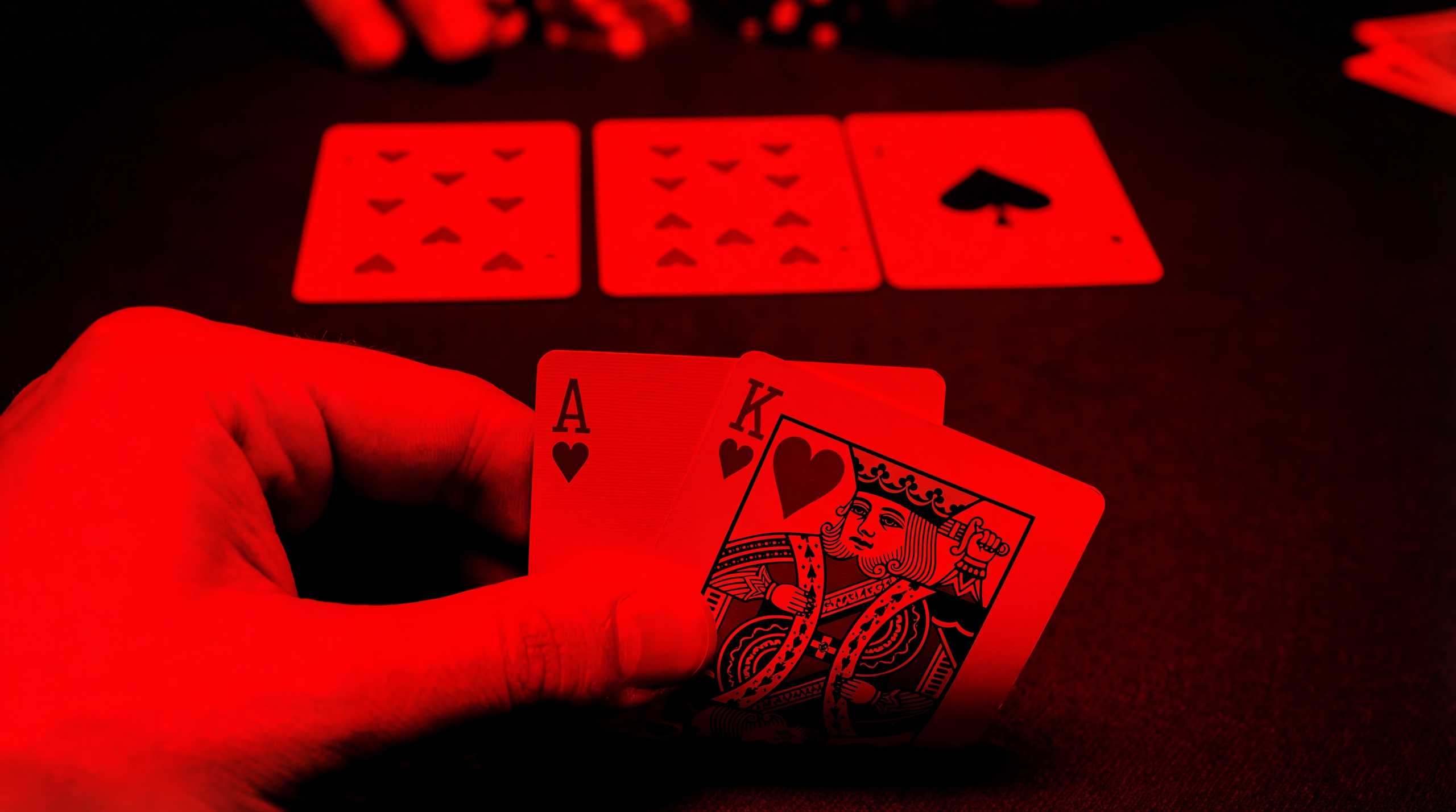
Poker Odds for Beginners: Outs, Probability, & Pot Odds Explained
Master the math behind poker odds — from counting outs and calculating pot odds to making +EV decisions that build profit over time.

Poker might look like a game of pure chance, but it's actually built on mathematics. Understanding poker odds transforms the game from intimidating guesswork into informed decision-making.
When you know the odds of hitting your flush draw or completing your straight, you stop playing based purely on luck and start playing based on strategy.
This guide breaks down the essential math behind poker odds in plain language: no advanced calculus required. Whether you're playing at home with friends or considering regulated online poker, these fundamental concepts will help you make smarter choices at every decision point.
What Are Poker Odds?
Poker odds represent the probability that a specific outcome will occur. In practical terms, they answer the question: How likely am I to win this hand if I stay in?
Poker odds are the mathematical probability of improving your hand compared to the risk-reward ratio of the current bet.
Odds are typically expressed in two ways:
Percentage format: "You have a 25% chance of hitting your draw."
Ratio format: "You have 3-to-1 odds against completing your hand."
Understanding odds is crucial because poker is a game played over many hands, not individual moments. A single hand doesn't prove you made the right decision; the law of averages proves it over time. If you make mathematically sound decisions (positive expected value decisions, also known as +EV), your results will improve significantly across dozens or hundreds of hands.
Poker odds are a fundamental concept that every poker player needs to understand to elevate their game and become successful.
Why Odds Matter
Poker odds connect directly to three outcomes:
- Short-term results: One hand might still go against the odds
- Long-term profitability: Consistently making +EV decisions compounds
- Confidence: Understanding the math removes emotion from tough calls
What Are Outs in Poker?
An out is any card that improves your hand to a likely winner. If you have a drawing hand, the number of outs gives you your winning odds. Counting your outs is the first step in calculating whether you should stay in a hand.
How Outs Work
Imagine you hold a flush draw on the flop (four cards to a flush). There are 13 cards of each suit in a standard deck. You've seen four cards of your suit already, which means 9 cards of your suit remain in the deck. Those 9 cards are your outs; they could complete your flush. When counting outs for a flush draw, it's important to recognize if your outs are of the same suit or different suits, as this affects your chances of completing a possible flush and helps avoid overcounting.
Not all outs are created equal:
- Clean outs: Cards that almost certainly improve you to a winning hand
- Dirty outs: Cards that help but might also help your opponent (e.g., an overcard that completes your opponent's straight)
- Thin outs: Cards that barely improve your hand and may still allow you to lose
Common Poker Outs Reference Table
| Draw Type | Number of Outs | How It Works |
|---|---|---|
| Flush Draw | 9 | 13 suited cards in the deck, 4 you've seen = 9 outs (typical "nine outs" scenario for a flush draw) |
| Open-Ended Straight Draw | 8 | Both ends complete (e.g., 5-6-7-8 needs 4 or 9) |
| Gutshot Straight (Inside Draw) | 4 | Only one rank incomplete (e.g., 5-6-8-9 needs 7). Also known as an "inside straight" or "gutshot." This is a classic "four outs" situation. |
| Pair to Two Pair or Trips | 5 | Any remaining card matching your pair |
| Two Overcards | 6 | Any king or ace (if holding K-A against a 2-3-4 flop). This is a common "six outs" scenario. |
| Flush Draw + Open-Ended Straight | 15 | 9 flush outs + 8 straight outs, minus any overlap |
| Flush Draw + Gutshot | 12 | 9 flush outs + 4 straight outs, minus any overlap |
- "Four outs" often occurs when you need one specific card to complete an inside straight (gutshot).
- "Six outs" can happen when you have two overcards and need to pair either one.
- "Nine outs" is typical for a flush draw, where any card of your suit completes your hand.
- When counting combined outs (flush + straight), subtract any cards you've double-counted. For example, a flush draw + gutshot might have the 5 of your suit, which completes both a flush AND a straight; count it only once.
How to Count Your Outs: Step-by-Step
- Step 1: Identify your current hand strength: Do you have a pair? A draw? A high card? For review, here's Bodog's guide to poker hand ranking.
- Step 2: Identify winning cards: Which cards would likely win the hand?
- Step 3: Count cards already visible: How many of those winning cards have you already seen (in your hand, on the board, or from opponents who have folded)? When counting outs, also consider the possible hands of other players, as some outs may improve their hands as well.
- Step 4: Subtract from the deck total: A standard deck has 52 cards: 13 of each rank and suit. Subtract the cards you've seen.
- Step 5: Account for dirty outs: Would any of these cards also help your opponent or other players? Reduce your count conservatively.
Probability & Odds Cheat Sheet
Once you know your outs, you can calculate your probability of hitting them. Here are the odds you'll face most often:
A poker odds chart can also be a helpful visual guide for quickly referencing the probabilities of hitting common draws.
After the Flop (Two Cards Remaining)
| Draw Type | Outs | Probability of Hitting | Odds Against You |
|---|---|---|---|
| Flush Draw | 9 | 35% | 1.86-to-1 |
| Open-Ended Straight | 8 | 32% | 2.13-to-1 |
| One Pair | 5 | 20% | 4-to-1 |
| Gunshot Straight | 4 | 16% | 5.25-to-1 |
| Two Overcards | 6 | 24% | 3.16-to-1 |
| Flush + Gutshot | 12 | 45% | 1.22-to-1 |
| Flush + OESD | 15 | 54% | 0.85-to-1 |
Note: These probabilities are also known as card odds. Card odds represent the likelihood of drawing a specific card (an out) to improve your hand, and are essential for making strategic poker decisions.
What this means: If you have a flush draw (9 outs), you'll make your flush about 35% of the time by the river. Put another way, you'll miss about 65% of the time.
After the Turn
One Card Remaining
| Draw Type | Outs | Probability of Hitting |
|---|---|---|
| Flush Draw | 9 | 20% |
| Open-Ended Straight | 8 | 17% |
| Gutshot Straight | 4 | 9% |
| Any Pair | 5 | 11% |
| Two Overcards | 6 | 13% |
The Rule of 2 and 4 (Mental Math Shortcut)
You don't need to memorize all those percentages. Use this quick approximation:
- After the flop: Multiply your outs × 4 ≈ your % chance of hitting by the river
- After the turn: Multiply your outs × 2 ≈ your % chance of hitting on the river
Example: You have a flush draw (9 outs) after the flop.
- 9 outs × 4 = 36% (actual: 35%)
Example: You have an open-ended straight draw (8 outs) after the turn.
- 8 outs × 2 = 16% (actual: 17%)
This mental shortcut is accurate enough for real-time decisions.
Pot Odds Explained
Knowing your outs is only half the battle. The other half is pot odds: understanding whether the money in the pot is worth the risk of calling a bet. Pot odds represent the ratio of the size of the pot to the wager you must place. Pot odds dictate decision-making by indicating how often a player must win to make a profitable call.
The Pot Odds Formula
Pot Odds = Call Amount ÷ (Total Pot Size + Call Amount)
The total pot size is a key component in this calculation. To determine your pot odds, see how many times the amount you need to call fits into the total pot size. This gives you a ratio. For example, if pot odds equal 0.25, you're getting 4-to-1 odds (or 25% implied win rate needed).
Real-World Example: The Flush Draw Scenario
The situation:
- Current pot: $100
- Opponent bets: $20
- You have a flush draw (9 outs, ~35% to hit)
- You're facing a decision: call or fold?
Step 1: Calculate pot oddsCall Amount = $20Total pot after your call = $100 + $20 + $20 = $140Pot Odds = $20 ÷ $140 = 0.143 (or roughly 7-to-1)
Step 2: Compare odds to your winning percentage
- Your odds: 7-to-1 (you need to win 1 in 8 times, or 12.5%)
- Your actual chance: 35%
- Result: Call (you need 12.5% to win, and you have 35%)
You should always compare your pot odds to your winning odds to determine if making the call is a profitable call.
Step 3: Why this mattersIf you make this call 8 times (and the cards run true), you'll lose 5 times and win 3 times. Each time you win, you collect $140. Over 8 calls:
- 3 wins × $140 = $420
- 5 losses × $20 = -$100
- Net profit: $320 (positive expected value ✓)
Pot Odds Decision Guide
Quick Summary
| Pot Odds | Ratio | Win % Needed | Flush Draw Equity? | Straight Equity? |
|---|---|---|---|---|
| 0.25 | 4-to-1 | 20% | ✓ Call | ✓ Call |
| 0.33 | 3-to-1 | 25% | ✓ Call | ✓ Call |
| 0.50 | 2-to-1 | 33% | ✓ Call | ✓ Marginal |
| 0.67 | 1.5-to-1 | 40% | ✗ Fold | ✗ Fold |
| 1.0 | 1-to-1 | 50% | ✗ Fold | ✗ Fold |
Example Situations: Should You Call?
Here are five real decisions you might face, with the math worked out. To determine if your call is profitable, you need to analyze your opponent's likely range of hands. Considering range equity: your hand's equity against the entire range of possible hands your opponent could have, can help you make better decisions.
Scenario 1: Flush Draw on the Flop
Your hand: K♣ Q♣Board: 2♣ 5♦ 9♠Opponent's bet: $50 into a $100 potAction: You need to call $50
Your math:
- Outs: 9 (any club)
- Equity: ~35%
- Current pot odds: To decide whether to call, evaluate the current pot odds: $50 ÷ ($100 + $50 + $50) = 25%
- Decision: CALL (35% > 25% needed) ✓
Scenario 2: Gutshot on the Turn
Your hand: J♠ 10♠Board: 2♣ 5♦ 9♠ 4♥Opponent's bet: $40 into an $80 potAction: You need to call $40
Your math:
- Outs: 4 (any 8 for a straight, also known as a gutshot or inside straight draw)
- Equity: ~9%
- Pot odds needed: $40 ÷ ($80 + $40 + $40) = 22%
- Decision: FOLD (9% < 22% needed) ✗
Pot Odds vs. Implied Odds: What's the Difference?
Pot odds are what you're getting right now from the current pot.
Implied odds estimate what you might win from your opponent if you hit your draw, including future bets. Implied odds are especially important in no-limit Texas hold'em when the current pot odds do not reflect the potential winnings you could make on later streets. However, implied odds are less relevant when facing an all-in bet, since there are no additional chips to win.
Example
Pot odds say fold (you're only getting 5-to-1 on a flush draw that's 4-to-1 to hit).
But implied odds might say call if your opponent is likely to bet another $100 on the river when you hit your flush.
When to use implied odds:
- Your opponent is loose and bets big when you hit
- You're playing a deep stack (lots of chips)
- Draws are somewhat disguised
When NOT to use implied odds:
- Tight opponents who won't pay you off
- Shallow stacks (fewer chips)
- Your draw is obvious, and the opponent will fold
Important: Beginners should rely on pot odds first. Implied odds require reading your opponent, and that's an advanced skill.
Common Mistakes When Using Odds
Mistake #1: Miscounting Outs
The error: "I have a flush draw and two overcards. That's 9 + 6 = 15 outs!"
The reality: If one of your overcard hits gives you a flush (double-counting), you have 14 outs, not 15. Always check for overlap, and be careful not to overcount outs by recognizing when potential outs are of the same suit or different suits. This helps ensure your poker odds calculations are accurate.
Mistake #2: Overestimating Implied Odds
The error: Calling a huge bet on the flop because "I might win a big pot later."
The reality: Your opponent might check the turn. You might not hit. Or they might fold when you hit. Implied odds are speculative.
Mistake #3: Calling "Just to See" Cards
The error: "The pot odds are bad, but I'll call anyway to see what happens."
The reality: Bad odds repeated over time = going broke. Discipline matters more than curiosity.
Mistake #4: Confusing Pot Odds with Hand Strength
The error: "I have good pot odds, so this hand is good."
The reality: Good pot odds + bad outs = bad decision. Always verify your outs first.
Mistake #5: Ignoring Position and Stack Size
The error: Treating all flush draws equally, whether you're in an early position or a late position.
The reality: Position changes the equation. Late position means fewer opponents and better fold equity for a re-raise.
Mistake #6: Using Odds to Justify Weak Plays
The error: Shoving all-in with a gutshot because "anything can happen."
The reality: Odds work over many hands, not in a vacuum. One-time gambles against odds will fail.
Frequently Asked Questions About Poker Odds
What are poker odds, and why do they matter?
Poker odds show the probability of your hand improving. They matter because consistent +EV (positive expected value) decisions compound into long-term profit. A single hand doesn't prove you right or wrong; only across many hands do odds reveal themselves.
How do you calculate poker odds for beginners?
Count your outs, then multiply by 4 (if two cards remain) or by 2 (if one card remains). That approximates your percentage chance to improve. Compare this to the pot odds you're getting. If your chance to win is higher than pot odds require, call; otherwise, fold.
How do you calculate pot odds in poker?
Pot Odds = Call Amount ÷ (Pot Size + Call Amount + Your Call)
Example: If you call $20 into a $100 pot, your pot odds are $20 ÷ $140 ≈ 14%, meaning you need to win at least 14% of the time to break even.
What's the difference between pot odds and implied odds?
Pot odds = the ratio of the current pot to your call amount. Implied odds = the ratio including future betting you expect to win if you hit. Pot odds are concrete; implied odds are estimated and depend on your opponent's behavior.
How do outs influence whether you should call or fold?
Outs determine your equity (win percentage). Higher outs = higher equity. If your equity exceeds the win percentage needed by pot odds, call. If it falls short, fold.
Arthur Crowson got his start in traditional newspapers before making the jump to digital media, where he's spent the last ten years writing about poker, finance, crypto, gambling, and emerging tech. Over that time, he's developed a knack for spotting the moments when markets, technology, and gambling pull in the same direction. His work has appeared in publications like PokerListings, CryptoVantage, ValueWalk, and PokerScout.
More Articles like this
Why Poker Keeps Surviving Every New Gambling Trend
New gambling trends come and go, but poker keeps finding a way to stay in the game.
By Lucie Turner
Lucas Jumalon Wins: The Highs and Lows of the 2026 WSOP Final Table
Lucas Jumalon led throughout the final table to capture the 2026 WSOP Main Event bracelet and $10 million. Here’s how the final table unfolded, plus the biggest broadcast highs and lows.
By James Guill
Who Will Win the 2026 WSOP Main Event?
Lucas Jumalon heads into the 2026 WSOP Main Event final table as the overwhelming chip leader. Is his chip lead truly overwhelming or will someone else rise to win?
By James Guill
Ranking Daniel Negreanu's Eight WSOP Bracelet Wins
Daniel Negreanu's eighth WSOP bracelet adds another chapter to one of poker's greatest careers. We rank every bracelet win by prestige, competition, historical significance, and legacy.

By Lucie Turner
2026 WSOP Main Event Final Table Set. Who Wins $10 Million?
A $10 million first prize is on the line as nine players return in August to battle for poker's biggest championship. Meet the 2026 WSOP Main Event finalists.

By Arthur Crowson
What Is a Bad Beat in Poker?
Bodog explains what a bad beat is in poker, why it happens, how bad beat jackpots work, and how players can manage the emotional and strategic fallout of a tough loss.
By Arthur Crowson


