
Lucas Jumalon Wins: The Highs and Lows of the 2026 WSOP Final Table
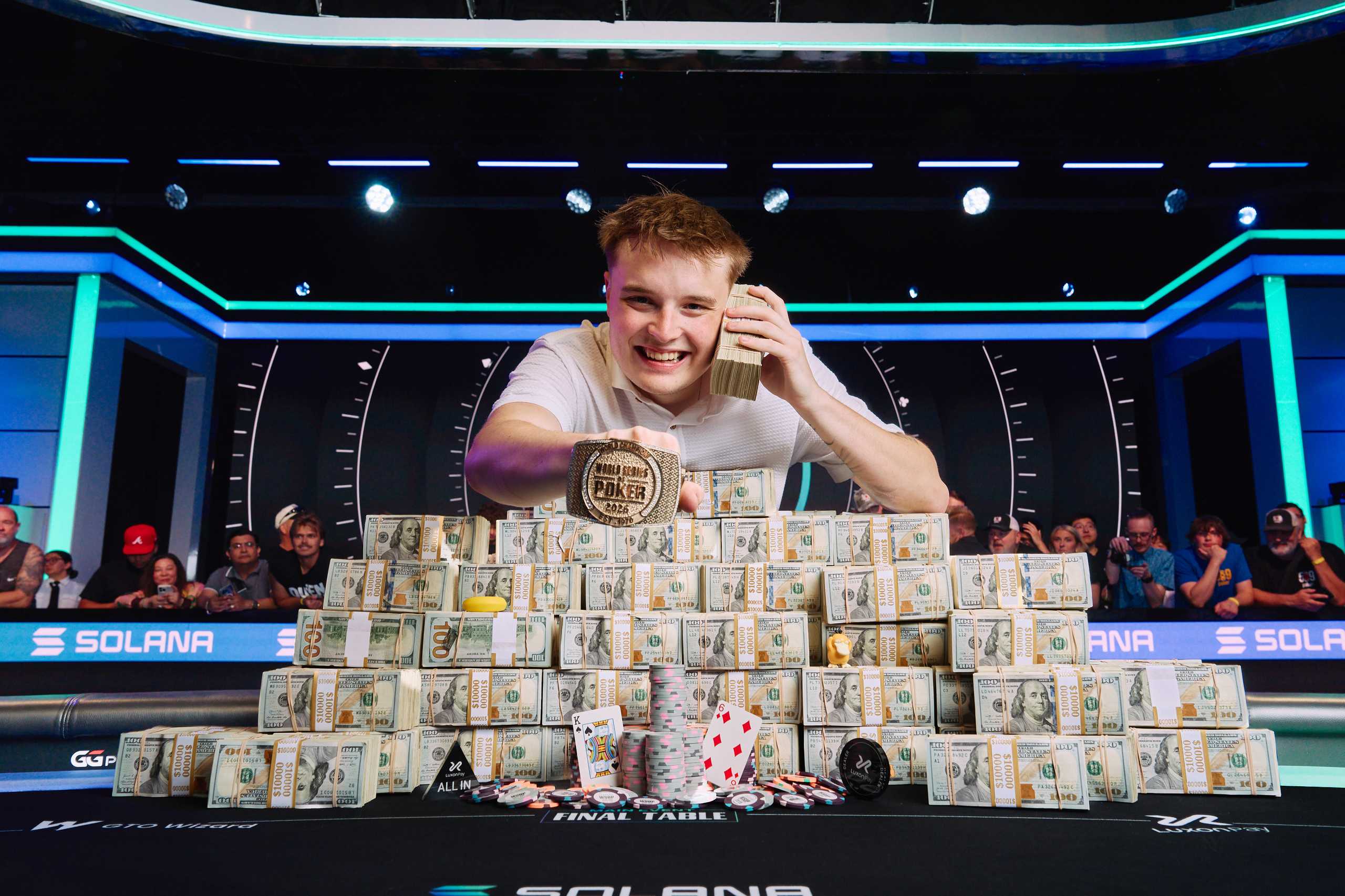
Lucas Jumalon led throughout the final table to capture the 2026 WSOP Main Event bracelet and $10 million. Here’s how the final table unfolded, plus the biggest broadcast highs and lows.

The 2026 World Series of Poker Main Event has crowned its champion. Lucas Jumalon completed a wire-to-wire run as chip leader to win the championship bracelet and $10 million. While Jumalon came out on top, he did have to sweat a serious challenge from an unexpected source. Let’s take a quick look at what happened, as well as some ups and downs from the event.
Marathon Night One Results in Just Two Eliminations
Night one turned into a marathon, lasting six hours, and only two players were eliminated. Evagoras Evagorou was the first player eliminated, losing a flip to Jamie Shaevel. Mario Boos finished in eighth place when Lauri Saaskilahti's K-9 outdrew his pocket eights.
The big story of the night was the rise of two of the shortest stacks at the table. Han Feng and Lauri Saaskilahti started seventh and eighth in chips. Saaskilahti played masterfully, taking advantage of the aggression of Lucas Jumalon to build his stack. He finished the night third in chips.
Feng was the short stack with eight remaining, but a pair of key double-ups, including one against Jumalon, put him back into contention. From there, he rode his rush to build his stack and finish the night in second with 106 million.
Jumalon Dominates While Saaskilahti Puts Himself into Contention on Day 2
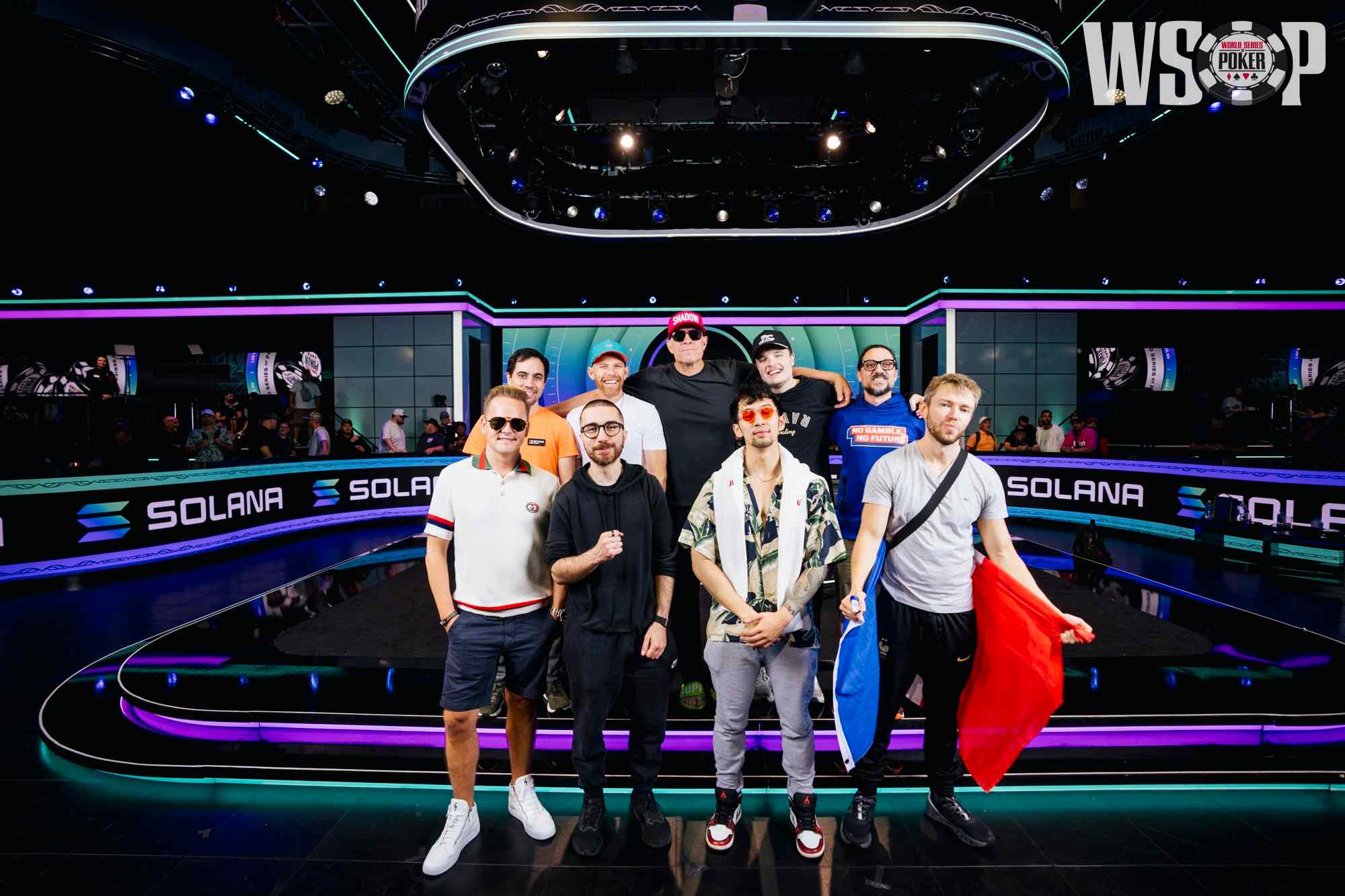
Night 2 proved to be a bit of a bloodbath, with the table shrinking from 7 to heads-up in less than three hours. Jamie Shaevel was the first eliminated. He shoved with K-6 after flopping a gutshot straight draw. Lucas Jumalon called with K-10. The board bricked with running jacks to take play six-handed.
Jumalon ended up collecting another seat card after eliminating Rami Hammoud. Hammoud shoved on Qh-Js on the flop with a flush draw, and Jumalon called with Ah-5h. Hammoud couldn’t catch a spade and left to collect $1.75 million for sixth.
Han Feng’s epic run would stall on Night 2. After starting second in chips, his stack dwindled to just 25 million when he woke up with aces. Saaskilahti put him all in with nines and Feng had a dream spot for a double. That dream spot ended up turning into a nightmare when Saaskilahti flopped a backdoor straight draw and hit runner-runner to his straight and sent Feng out in fifth place.
Michael Gagliano had just three big blinds at this point and shoved pre-flop with Ks-Qs. Jumalon made the easy call with Kd-Jh. A king-high board gave “chopatunities” to both players, but a jack on the turn spelled the end of “Gags” Main Event run.
Just two hands later, Greg Mueller got trapped for the rest of his stack. Lauri Saaskilahti limped in the small blind pre-flop with pocket kings, and Mueller saw a free flop with 10c-4h. The flop fell 4c-Ad-Ac to give Mueller two pair.
After Mueller called a min-bet from Saaskilahti, both players checked the Jh on the turn. After the river fell the 4h, Saaskilahti put Mueller all-in. After an extensive tank, Mueller called and discovered that he was out in third place. Mueller’s “comeback” run in the Main Event ended with a third-place finish and a $3.75 million payday.
Jumalon Wins the 2026 WSOP Main Event
The two remaining players began heads-up play on Wednesday night with just 25 big blinds separating them:
Lucas Jumalon – 328 Million
Lauri Saaskilahti – 225 Million
Early on, it appeared that Jumalon would run away with it, quickly jumping to more than a 3-to-1 chip lead. Saaskilahti then managed a double in the most exciting hand of the night. Jumalon shoved with As-9c and Saaskilahti called with Ah-10d. Jumalon spiked a pair of nines on the turn, but Saaskilahti picked up a flush draw. That draw filled out on the river, and we were almost back to even.
However, things went downhill quickly for Saaskilahti. On the next hand, Saaskilahti lost most of his stack in a big pot when he made a hero call at the worst time possible. His pair of jacks was no good against a rivered flush for Jumalon. After the hand, he was left with less than 10 big blinds.
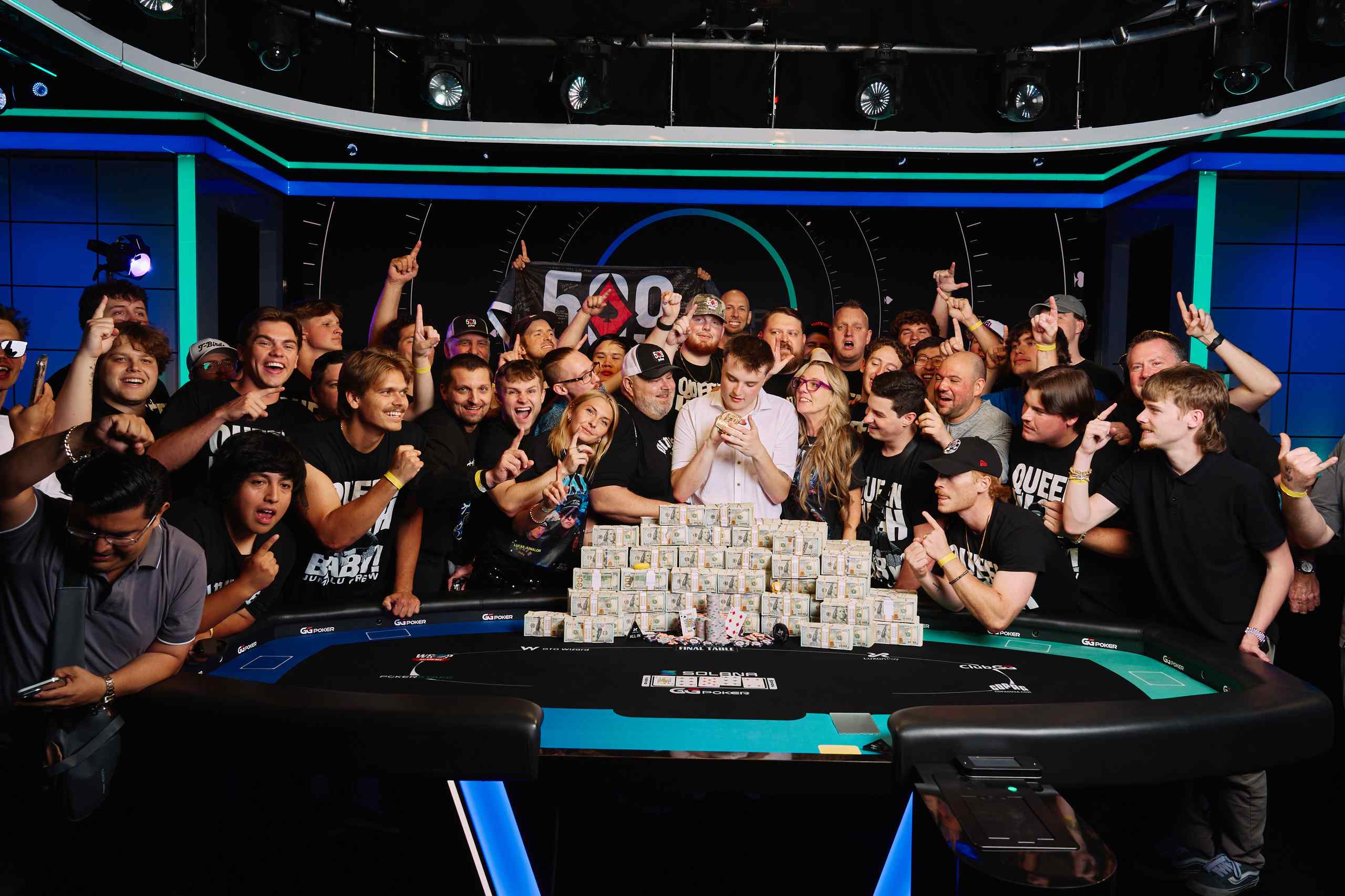
A couple of hands later, Jumalon shoved with Ks-6d and Saaskilahti happily called with As-7d. A six on the flop gave Jumalon a stranglehold on the hand, and another six on the turn sealed the deal and made Lucas Jumalon the 2026 World Series of Poker Main Event Champion. Lauri Saaskilahti finished in second for $6 million.
Lucas Jumalon is the second-youngest champion in WSOP Main Event history. He credited his epic run in this year’s Main Event to hard work and study and became emotional during his interview following the win. Jumalon told reporters that he looks forward to being an ambassador for the game and helping young players become successful.
For his victory, Jumalon wins $10 million in prize money and the Power Rangers morpher-sized WSOP Championship bracelet.
WSOP’s Epic Return Fizzles While Feng and Saaskihlati Sizzles
With the main event now firmly in the books, I wanted to take a few minutes and look at the highs and lows of this final table. What went right during the final table and where could the production improve for 2027?
Down – Night One Went Way Too Long
Organizers scheduled night one for three hours on ESPN2, but play lasted six. While not uncommon to see a final table go long, it is not exactly exciting for casual players watching. For those of us on the East Coast (and not 20-something), a 3 am end time is brutal.
Should the WSOP consider starting the final table broadcast once the final table reaches six? I recommend streaming Day 1 until six are reached and then the final six receive a live broadcast. Yes, organizers did things differently in the past, but a new approach would make for a more exciting pace of play.
Up – Jumalon Continues Streak of Overwhelming Chip Leaders
As I mentioned in my final table preview, over the last 20 years, each player that has entered the WSOP Main Event final table with a 50+ big blind chip lead has won the title. Jumalon continued that streak and did so in dominant fashion.
Jumalon masterfully used his chip position to keep the pressure on and took advantage of good cards when they came. He never let a couple of bad hands or a miracle double-up rattle him, and his measured approach resulted in a world title.
Down – Commentary Team Needs an Upgrade
Call me “old-fashioned,” but I don’t think that Ali Nejad and Nick Schulman are the right commentary team for a broadcast that is supposed to appeal to all viewers. The commentary team tailored their remarks too much toward knowledgeable poker players, which I know some prefer, but it doesn’t have the same feel as many of the past iconic broadcasts that drew many players into poker.
The lowlight of the commentary was on night one when the pair decided that discussing whether a cat or dog would eat their deceased owner was appropriate for worldwide cable TV. This year was supposed to be the WSOP’s epic return to ESPN. For my tastes, the commentary team was far from epic.
Up – Saaskilahti and Feng Elevated The Final Table
If the excitement building up to this final table seemed subdued, that’s because it was. It was a bit challenging to find storylines to hype up due to the table dynamics and Jumalon's overwhelming chip lead. Fortunately, Han Feng and Lauri Saaskilahti provided great storylines, and not just for their attire.
Feng came out looking like “Asian Liberace” and ended up becoming the underdog story of the final table. Saaskilahti looked like a Bond villain and, for a time, was looking to play the spoiler to Jumalon’s coronation. His ice-cold demeanor, even when all-in for his tournament life, earned him fans and added an element to the final table that was missing. Both players turned what could have been a dud of a final table into one that was worth watching.
Down – What Was Up With the Toned Down Celebration
When Jumalon finally won the title, you’d expect the typical rushing of the crown, cheering fans, confetti, and poker dignitaries coming out to congratulate him. Instead, we got a quick interview, a quick bracelet presentation, and “so long folks!”
The wrap-up felt incredibly rushed, especially considering that ESPN still had plenty of time left in its allotment. Looking at the photos that PokerNews posted, you’d think this was any other bracelet win. Again, this year was supposed to mark the big return of the WSOP to ESPN. You’d expect organizers to have celebrated the winner with more fanfare. Instead, we got Sportscenter.
Up – Poker Rails and Players Show Superior Sportsmanship
One thing that really stood out to me in one of the best ways possible was the positive sportsmanship between the players and their rails. While the rails were rowdy, they always kept it fun and positive. I loved how some rails were cheering multiple players, not just the player they were there to see.
I also enjoyed how supportive players were of each other. Every one of these players was a great ambassador of the game and played the game the way it should be played. While colorful players bring in ratings, players like the ones at this final table are what truly grow the game.
James Guill is an experienced iGaming journalist with a diverse background spanning IT, poker, and online gambling media. With over 20 years in the industry, he’s covered a wide range of gaming topics and has been featured in outlets like USA Today and G4 TV.
More Articles like this
Alberta's Online Poker Launch Has a Big Problem
Alberta now has regulated online poker, but players are restricted to a provincial pool. Could shared liquidity offer a solution?
By James Guill
Why Poker Keeps Surviving Every New Gambling Trend
New gambling trends come and go, but poker keeps finding a way to stay in the game.
By Lucie Turner
Who Will Win the 2026 WSOP Main Event?
Lucas Jumalon heads into the 2026 WSOP Main Event final table as the overwhelming chip leader. Is his chip lead truly overwhelming or will someone else rise to win?
By James Guill
Ranking Daniel Negreanu's Eight WSOP Bracelet Wins
Daniel Negreanu's eighth WSOP bracelet adds another chapter to one of poker's greatest careers. We rank every bracelet win by prestige, competition, historical significance, and legacy.
By Lucie Turner
2026 WSOP Main Event Final Table Set. Who Wins $10 Million?
A $10 million first prize is on the line as nine players return in August to battle for poker's biggest championship. Meet the 2026 WSOP Main Event finalists.
By Arthur Crowson
What Is a Bad Beat in Poker?
Bodog explains what a bad beat is in poker, why it happens, how bad beat jackpots work, and how players can manage the emotional and strategic fallout of a tough loss.
By Arthur Crowson