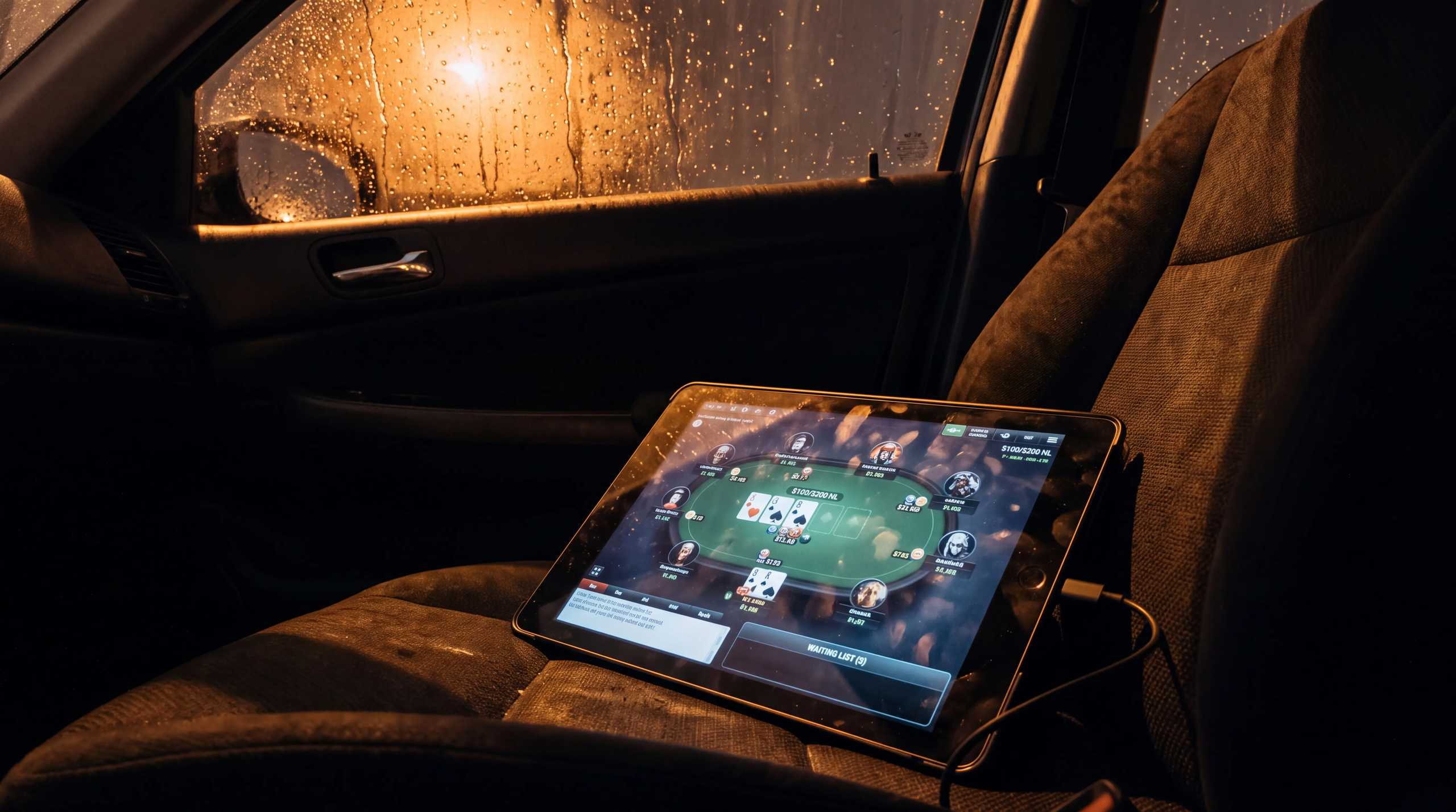
Is Online Poker Running out of American Players?
Online poker revenue has stagnated, but player interest remains steady. Is the industry shrinking, or is limited access preventing further growth?

Online poker was once one of America's fastest-growing forms of gambling. During the poker boom of the 2000s, millions of Americans discovered the game through television, online poker rooms, and the success of players like Chris Moneymaker.
Today, the industry looks much different. Despite more than a decade of state-regulated online poker, only six states have active real-money poker sites. Revenue has largely stagnated, and operators continue looking for ways to increase player traffic.
Is online poker running out of players, or has the regulated industry reached its growth ceiling?
Poker Boom Never Came Back
Recent revenue figures suggest that regulated online poker is struggling to grow.
According to Poker Industry PRO, regulated U.S. online poker generated an estimated $8.1 million in September 2026, down 3.5% compared to September 2025. It was the industry's weakest month since February.
Monthly revenue has generally remained between $7.4 million and $9 million over the past two years. That suggests an industry experiencing stagnation rather than a dramatic collapse.
The bigger question is whether player participation is following the same trend.
How Many Americans Actually Play Online Poker?
Unfortunately, no reliable national figure shows how many Americans actively play online poker.
Operators don't routinely publish unique monthly player counts, and available industry statistics measure different things.
One of the strongest participation estimates comes from Pennsylvania. When the state joined the Multi-State Internet Gaming Agreement (MSIGA) in April 2025, the Pennsylvania Gaming Control Board estimated that approximately 150,000 Pennsylvanians played online poker.
Pennsylvania's entry also expanded the interstate poker player pool by more than 50%. However, those figures don’t establish how many people play daily or monthly. Industry traffic reports offer another perspective, but they also have limitations.
US Online Poker by the Numbers
| Metric | Latest Figure | What it Tells us |
|---|---|---|
| September 2026 regulated revenue | $8.1M | Down 3.5% YoY |
| 2026 revenue through August | $70.2M | Down 1.6% YoY |
| Average regulated cash-game traffic | 754 seats | Concurrent activity, not unique players |
| Daily tournament entries | 31,363 | Includes repeat entries |
| Estimated Pennsylvania players | 150K | Statewide participation estimate |
| States with active regulated poker | 6 | Limited geographic reach |
An October 2026 traffic report from VIP-Grinders estimated 754 average concurrent cash-game seats and 31,363 daily tournament entries across the regulated U.S. market. Cash-game traffic increased 0.5% month over month, while tournament entries rose 8.2%.
Those figures don't suggest a market rapidly losing activity. However, tournament entries aren't unique players, and concurrent cash-game seats don't track unique players or multi-tablers.
Why Poker Needs More Players Than a Sportsbook Does
Online poker faces a challenge that online casinos and sportsbooks generally don't. It needs multiple customers participating simultaneously.
A slot machine doesn't require another player to be online. Neither does placing a sports bet. Poker requires peer-to-peer competition, and enough concurrent players available to support available tournaments and cash games.
This is why interstate shared liquidity has become so important. Pennsylvania joined MSIGA in April 2025, becoming the sixth participating state alongside Michigan, Nevada, New Jersey, Delaware, and West Virginia. In April 2026, Michigan regulators also approved shared poker liquidity for PokerStars on FanDuel across Michigan, Pennsylvania, and New Jersey.
Larger player pools help operators offer more games, bigger tournaments, and shorter waiting times. However, combining existing players across states doesn't necessarily mean the industry is attracting new customers.
Is Online Poker Shrinking or Just Stuck?
Evidence suggests regulated online poker is stagnating rather than declining widely.
While September revenue fell, October's cash-game and tournament traffic improved. Individual operators are also experiencing growth.
PokerStars on FanDuel generated an estimated $2.6 million in August 2026, up approximately 14% year over year. However, that growth occurred while the overall market was relatively flat.
One possibility is that operators are increasingly competing for the same existing players rather than bringing in substantial numbers of new players.
Shared liquidity may improve the experience for those players, but it cannot solve every growth problem.

The Biggest Problem May Be Where Americans Can Play
One of the biggest obstacles facing regulated online poker may be geography.
Only six states currently have active regulated real-money poker sites. Major poker markets such as California, Texas, Florida, and New York remain outside the regulated online poker system. This significantly limits how you can evaluate the industry's popularity.
Americans living outside those major markets may still play offshore poker, participate in alternative poker formats, or simply avoid online poker because regulated options aren't available. Those players don't show up in growth or revenue statistics.
Meanwhile, live poker continues attracting substantial participation. The 2026 WSOP Main Event drew 9,208 entries, making it the fourth-largest Main Event in history despite declining from the 2024 record. That suggests Americans haven't necessarily lost their appetite for poker.
For now, regulated online poker appears to have plateaued. Revenue remains relatively stable, traffic fluctuates, and operators continue expanding shared liquidity.
The industry isn’t running out of players or those interested in playing. Instead, players have few regulated options, and regulated operators are running out of opportunities to reach new ones.
James Guill is an experienced iGaming journalist with a diverse background spanning IT, poker, and online gambling media. With over 20 years in the industry, he’s covered a wide range of gaming topics and has been featured in outlets like USA Today and G4 TV.
More Articles like this
Alberta's Online Poker Launch Has a Big Problem
Alberta now has regulated online poker, but players are restricted to a provincial pool. Could shared liquidity offer a solution?
By James Guill
Why Poker Keeps Surviving Every New Gambling Trend
New gambling trends come and go, but poker keeps finding a way to stay in the game.

By Lucie Turner
Lucas Jumalon Wins: The Highs and Lows of the 2026 WSOP Final Table
Lucas Jumalon led throughout the final table to capture the 2026 WSOP Main Event bracelet and $10 million. Here’s how the final table unfolded, plus the biggest broadcast highs and lows.
By James Guill
Who Will Win the 2026 WSOP Main Event?
Lucas Jumalon heads into the 2026 WSOP Main Event final table as the overwhelming chip leader. Is his chip lead truly overwhelming or will someone else rise to win?

By James Guill
Ranking Daniel Negreanu's Eight WSOP Bracelet Wins
Daniel Negreanu's eighth WSOP bracelet adds another chapter to one of poker's greatest careers. We rank every bracelet win by prestige, competition, historical significance, and legacy.

By Lucie Turner
2026 WSOP Main Event Final Table Set. Who Wins $10 Million?
A $10 million first prize is on the line as nine players return in August to battle for poker's biggest championship. Meet the 2026 WSOP Main Event finalists.

By Arthur Crowson