What is GTO Poker?
This article breaks down what GTO poker means, how Nash equilibrium shapes balanced strategy, and how players can apply game theory optimal concepts at the table.

GTO poker is short for Game Theory Optimal poker, a strategic approach built on Nash equilibrium where a player's betting, calling, and folding frequencies are balanced so no opponent can exploit them regardless of how that opponent plays. It is not a single set of hands or a script, it is a mathematically derived framework for making every decision unexploitable.
Key Takeaways
- GTO poker is grounded in Nash equilibrium, a state where no player can improve results by changing their strategy alone.
- A true GTO strategy is theoretically unexploitable but computationally impossible to solve perfectly for full No Limit Hold'em.
- Solvers like PioSolver approximate GTO outputs by running millions of simulated hand permutations.
- GTO works best as a defensive baseline, while exploitative adjustments generate more profit against weaker opponents.
- Understanding GTO principles helps players recognize when their own ranges are unbalanced and easy to read.
Quick Facts
| Details | Key Feature |
|---|---|
| Difficulty Level | Advanced |
| Estimated Time to Learn | 4 to 8 weeks of focused study with solver practice |
| Best Suited For | Cash game and tournament players moving beyond beginner strategy |
| Related Topic | Exploitative poker adjustments |
Why Does Understanding GTO Poker Matter For Real Players?
Understanding GTO poker matters because it gives players a defensible baseline strategy that prevents opponents from picking apart predictable tendencies. Without a balanced approach, a player who always bets the same way with strong hands or always folds under pressure becomes an easy target for observant regulars. GTO thinking forces a player to mix actions with certain frequencies, which closes off the leaks that cost money over thousands of hands. This matters even more in games where opponents use tracking software and solver-trained ranges, because unbalanced play gets punished quickly at higher stakes.
How Does GTO Poker Strategy Actually Work In Practice?
GTO poker strategy works by calculating the mathematically balanced frequency of betting, checking, calling, and folding across an entire range of hands so that an opponent cannot gain an edge by exploiting any single tendency. The key concept behind GTO poker is the Nash Equilibrium, the point at which two strategies cannot increase their expected value by changing their strategy. In real hands this means a player bets some bluffs and some value hands from the same range, so opponents cannot simply fold every time a bet appears or call every time expecting a bluff. This concept overlaps closely with the debate around GTO vs exploitative poker, since balanced play forms the defensive foundation that exploitative adjustments are built on top of.
Why Do Poker Solvers Matter For Learning GTO Poker Concepts?
Poker solvers matter for learning GTO poker concepts because they perform the heavy computation required to approximate Nash equilibrium outputs that no human could calculate by hand. The first publicly available solver, PioSolver, came out in 2015 and drastically changed the way poker strategy is understood, providing users with Nash equilibrium strategies.These programs take inputs like preflop ranges, stack depths, and bet sizes, then run the game tree forward to display the balanced frequency for every decision point. Players who want to understand poker terminology tied to solver output, including terms like range, frequency, and indifference, can reference a poker glossary to keep definitions straight while studying.
How Do Tracking Tools Support GTO Poker Study Away From The Table?
Tracking tools support GTO poker study away from the table by capturing real hand data that can later be compared against solver-approved frequencies to spot deviations. A player who reviews session statistics can identify spots where their actual bet sizing or continuation frequency drifted far from balanced play, then correct that leak in future sessions. This kind of review process pairs naturally with software explained in a guide to poker HUDs, since tracked stats reveal exactly which situations deserve solver attention first.
What Role Does Nash Equilibrium Play Inside GTO Poker?
Nash equilibrium plays the central role inside GTO poker because it defines the exact point where every player's strategy is a perfect counter to every other player's strategy, leaving no incentive to deviate. Game Theory Optimal Poker refers to a methodology of playing with a Nash equilibrium strategy so that no opposing player can deviate to improve expected value, achieved by betting, calling, and folding at frequencies that prevent counter-strategies. If every player at a table played a perfect GTO strategy simultaneously, the game would trend toward a breakeven outcome for everyone involved.
What Are Practical Examples Of GTO Poker Decisions At The Table?
Practical examples of GTO poker decisions show how balanced frequencies play out in real hands rather than staying abstract. The following two scenarios illustrate how the theory translates into action.
- River bluffing frequency: A player betting the river with a range of 75 percent value hands and 25 percent bluffs forces an opponent into indifference between calling and folding, since calling too much or too little both create exploitable counter-adjustments.
- Preflop shoving ranges: A short-stacked player facing an all-in decision references solved push and fold charts that specify exact stack depths at which shoving or calling becomes correct against a single opponent, removing guesswork from short stack spots common in cash games and tournaments.
What Are The Most Common Mistakes Players Make With GTO Poker?
The most common mistakes players make with GTO poker involve treating solver output as a memorized script instead of a framework for understanding balance. Many players copy exact frequencies from a solver without grasping why those numbers exist, which leaves them unable to adapt when board textures or stack depths shift slightly from the studied example. Another frequent error is applying a full GTO approach against opponents who make obvious mistakes, since a purely balanced strategy leaves easy profit on the table against weak, predictable players. A third mistake is ignoring rake and stack size differences between the solved scenario and the actual game being played, which can make theoretically correct frequencies incorrect in practice.
How Does GTO Poker Compare To Exploitative Poker Strategy?
| Feature | GTO Poker | Exploitative Poker |
|---|---|---|
| Primary Goal | Unexploitable balance | Maximum profit against specific tendencies |
| Risk Level | Low, defensive by design | Higher, depends on read accuracy |
| Best Used Against | Strong, observant opponents | Weak or predictable opponents |
| Study Method | Solver output and range charts | Hand history review and player notes |
The Bodog Insight On GTO Poker
GTO poker gives players a mathematically sound foundation built on Nash equilibrium, one where balanced frequencies across a betting range prevent opponents from finding a profitable counter-strategy. Solvers have made this framework accessible to everyday players, turning what was once guesswork into a study process built on data. Bodog's take is straightforward: use GTO as the floor that keeps you unexploitable, then layer in exploitative reads once you spot a pattern worth attacking, because the players who separate themselves at the tables blend theory with sharp observation rather than relying on either approach alone.
GTO Poker FAQs
What does GTO stand for in poker?
GTO stands for Game Theory Optimal, a strategy built on Nash equilibrium principles.
Can a human actually play perfect GTO poker?
No, full No Limit Hold'em has too many possible states to solve completely, so solvers use abstraction and approximation instead of a perfect solution.
Is GTO poker better than exploitative poker?
Neither is universally better, GTO offers a safer defensive floor while exploitative play captures more value against weaker opponents.
Do I need a solver to learn GTO poker?
A solver speeds up the learning process significantly, though foundational concepts like balanced ranges can be studied through charts and theory first.
Why do GTO ranges include bluffs mixed with value bets?
Mixing bluffs with value bets in the same betting range prevents an opponent from folding or calling correctly every time.
Does GTO poker matter at low stakes?
GTO principles still apply at low stakes, though exploitative adjustments against weaker opponents often produce faster results at these levels.
What is the difference between GTO and a Nash equilibrium?
Nash equilibrium is the mathematical concept, GTO poker is the practical application of that concept to betting decisions at the table.
Continue Learning
- GTO vs Exploitative Poker: a deeper breakdown of when to lean on balanced strategy versus when to attack specific opponent weaknesses.
- Poker Glossary: definitions for solver terminology, range construction, and other strategic terms referenced throughout GTO study.
- Poker HUDs Explained: a guide to the tracking software players use to review hands and compare their tendencies against solved strategy.
- Cash Games vs Tournaments: a comparison of how stack depth and format change which strategic approach fits best.
Sources & Review
- GTO Wizard: What is GTO in Poker?
- Upswing Poker: Best Poker Tools & Software for Serious Players
- arXiv: A Survey on Game Theory Optimal Poker
- Tight Poker: Game Theory Optimal (GTO) Poker
Last Reviewed: July 3, 2026
Reviewed By: Arthur Crowson
Arthur Crowson got his start in traditional newspapers before making the jump to digital media, where he's spent the last ten years writing about poker, finance, crypto, gambling, and emerging tech. Over that time, he's developed a knack for spotting the moments when markets, technology, and gambling pull in the same direction. His work has appeared in publications like PokerListings, CryptoVantage, ValueWalk, and PokerScout.
More Articles like this
Why Poker Keeps Surviving Every New Gambling Trend
New gambling trends come and go, but poker keeps finding a way to stay in the game.
By Lucie Turner
Lucas Jumalon Wins: The Highs and Lows of the 2026 WSOP Final Table
Lucas Jumalon led throughout the final table to capture the 2026 WSOP Main Event bracelet and $10 million. Here’s how the final table unfolded, plus the biggest broadcast highs and lows.
By James Guill
Who Will Win the 2026 WSOP Main Event?
Lucas Jumalon heads into the 2026 WSOP Main Event final table as the overwhelming chip leader. Is his chip lead truly overwhelming or will someone else rise to win?
By James Guill
Ranking Daniel Negreanu's Eight WSOP Bracelet Wins
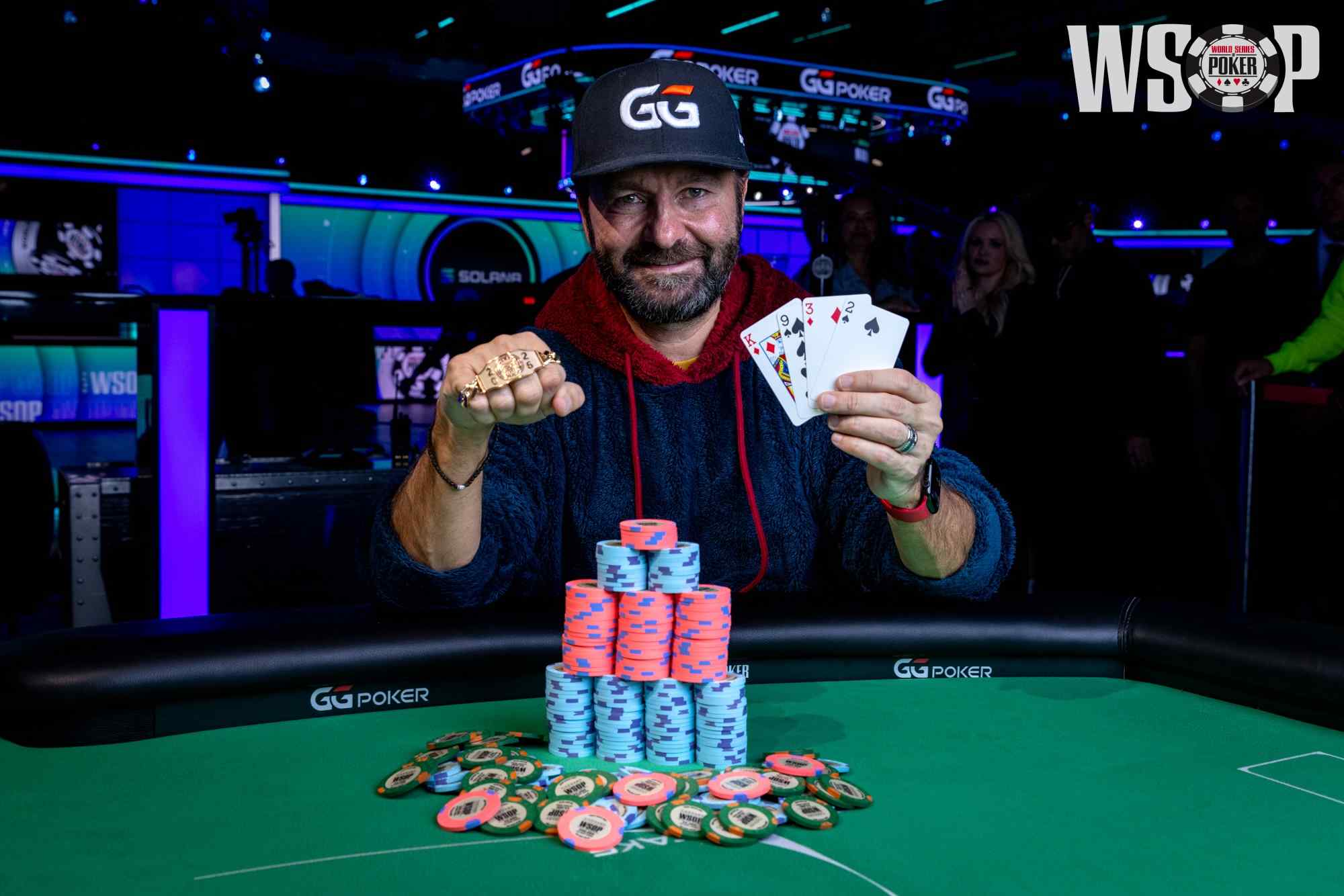
Daniel Negreanu's eighth WSOP bracelet adds another chapter to one of poker's greatest careers. We rank every bracelet win by prestige, competition, historical significance, and legacy.
By Lucie Turner
2026 WSOP Main Event Final Table Set. Who Wins $10 Million?
A $10 million first prize is on the line as nine players return in August to battle for poker's biggest championship. Meet the 2026 WSOP Main Event finalists.

By Arthur Crowson
What Is a Bad Beat in Poker?
Bodog explains what a bad beat is in poker, why it happens, how bad beat jackpots work, and how players can manage the emotional and strategic fallout of a tough loss.
By Arthur Crowson