
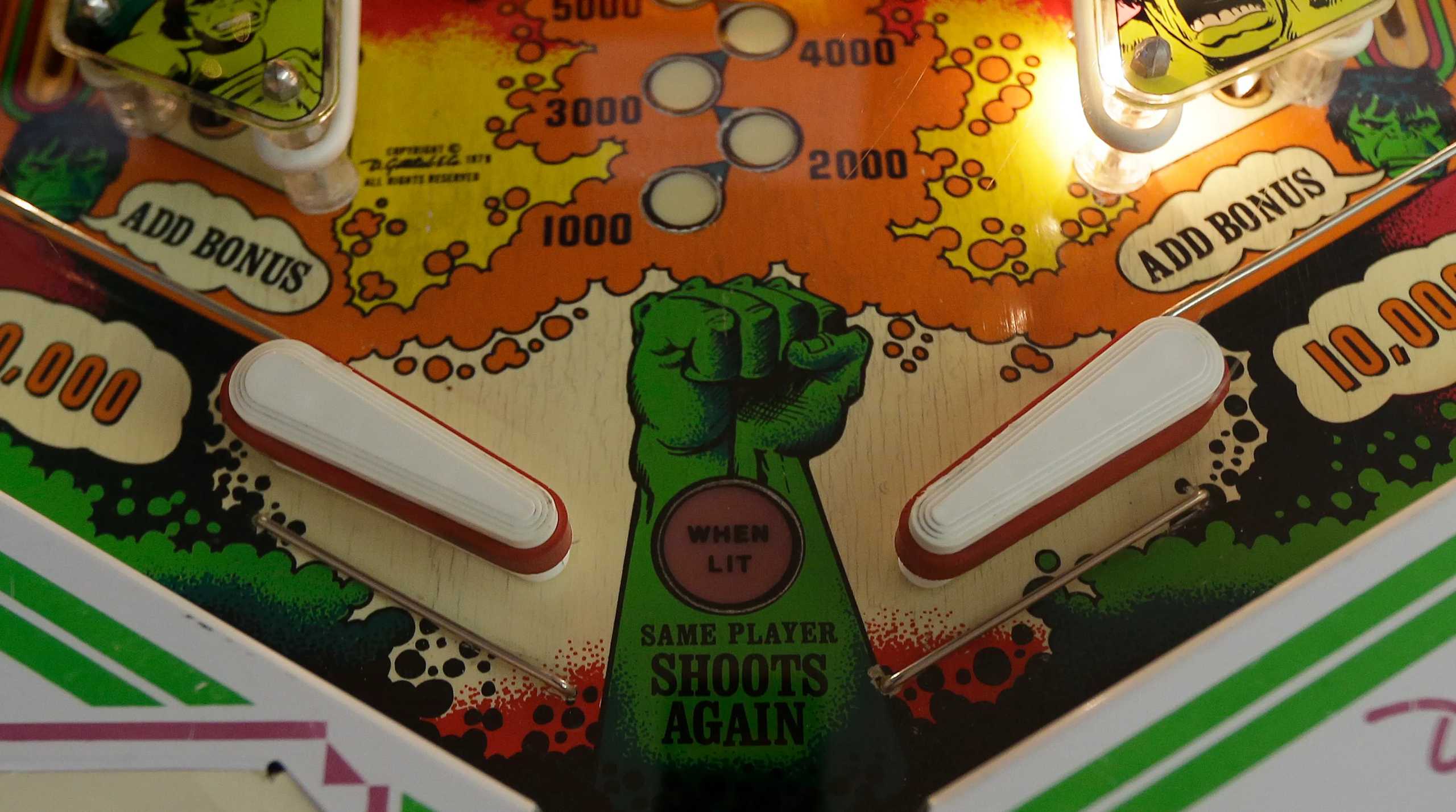
Life’s a Gamble: How Pinball Beat a 34-Year Gambling Ban
In 1976, a magazine writer bet pinball's legal future on a shot with a machine he'd barely touched. He called it anyway, and somehow won.
%20(1).webp)
It's 1976, and Roger Sharpe stands before the New York City Council with the weight of the world on his shoulders (or at least the figurative weight of millions of pinball fans). He's an avid pinball aficionado and historian of the game, and he's about to take a shot that could decide the fate of his beloved game.
Now, pinball machines are staples at arcades, barcades, and (weirdly enough) many car washes (maybe it's just me that notices this?!). That wasn't always the case. The games have a tense history within the gambling industry, once outlawed in major cities. The pinball crackdown was very real (though morality wasn't always the reason) until a California decision and a televised called-shot by Roger Sharpe changed everything.
The Mob-Era Ban
The original high-profile pinball ban happened in New York. Under Mayor Fiorello La Guardia, pinball was outlawed on January 21, 1942.
Before you scoff, consider that the early pinball machines had no flippers. Gravity, luck, and tilt were the primary factors at play, which made the "game of chance" label quite defensible.
La Guardia's full-tilt pinball crackdown wasn't all founded on moral grounds. He framed it as an anti-racketeering measure and a metal conservation initiative. Melting down metal for the war effort seemed more prudent than playing pinball (sad, in my opinion).
Within the year, NYC police had confiscated and destroyed thousands of machines and issued more than 1,000 summonses to enforce the law. La Guardia famously hoisted a sledgehammer to smash a machine himself.
The NY ban had knock-on effects across the country. Chicago, Los Angeles, Milwaukee, and New Orleans all followed with similar bans.
Technology Changed, Laws Followed
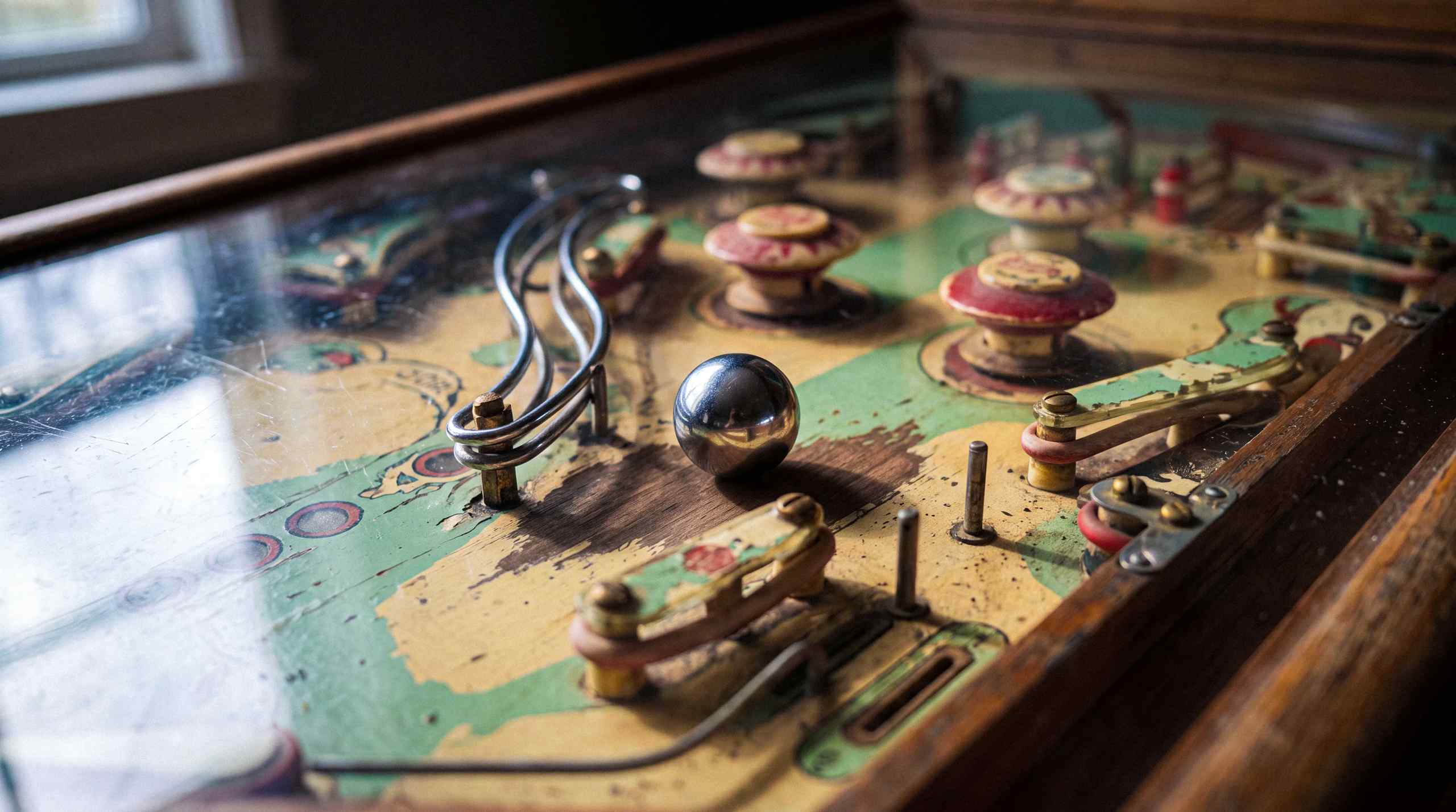
One innovation in pinball literally changed the game: flippers. They're standard in the pinball we know and love today, but they didn't appear in machines until 1947 with Gottlieb's "Humpty Dumpty" game. Players now had actual control over the ball beyond risky tilting of the entire apparatus.
Things started to get legally sticky. I'm generalizing here, but gambling law in most states hinges on "predominantly skill" vs. "predominantly chance."
As is so often the case in gambling, the technology had a head start on the legislation. This was to pinball's detriment. The legal definition of pinball as a game of chance lingered for 30 years after flippers made the designation murky at best.
Fortunately, enforcement was sporadic, allowing many machines to be preserved. Some states informally allowed pinball back in arcades without taking any enforcement action long before the law would catch up.
California Leads The Charge
In the summer of 1974, California's Supreme Court ruled in Cossack v. City of Los Angeles that pinball machines with flippers were predominantly games of skill and not chance.
While this didn't do much on the nationwide scale immediately, it laid the foundation. Proponents of legal pinball now had a strong legal precedent to point to, smoothing the path for similar legislation elsewhere. The Music and Amusement Association (MAA), a trade group representing pinball and jukeboxes, used California's decision as a launchpad for a New York hearing two years later.
Enter Roger Sharpe.
Sharpe's Legendary Shot
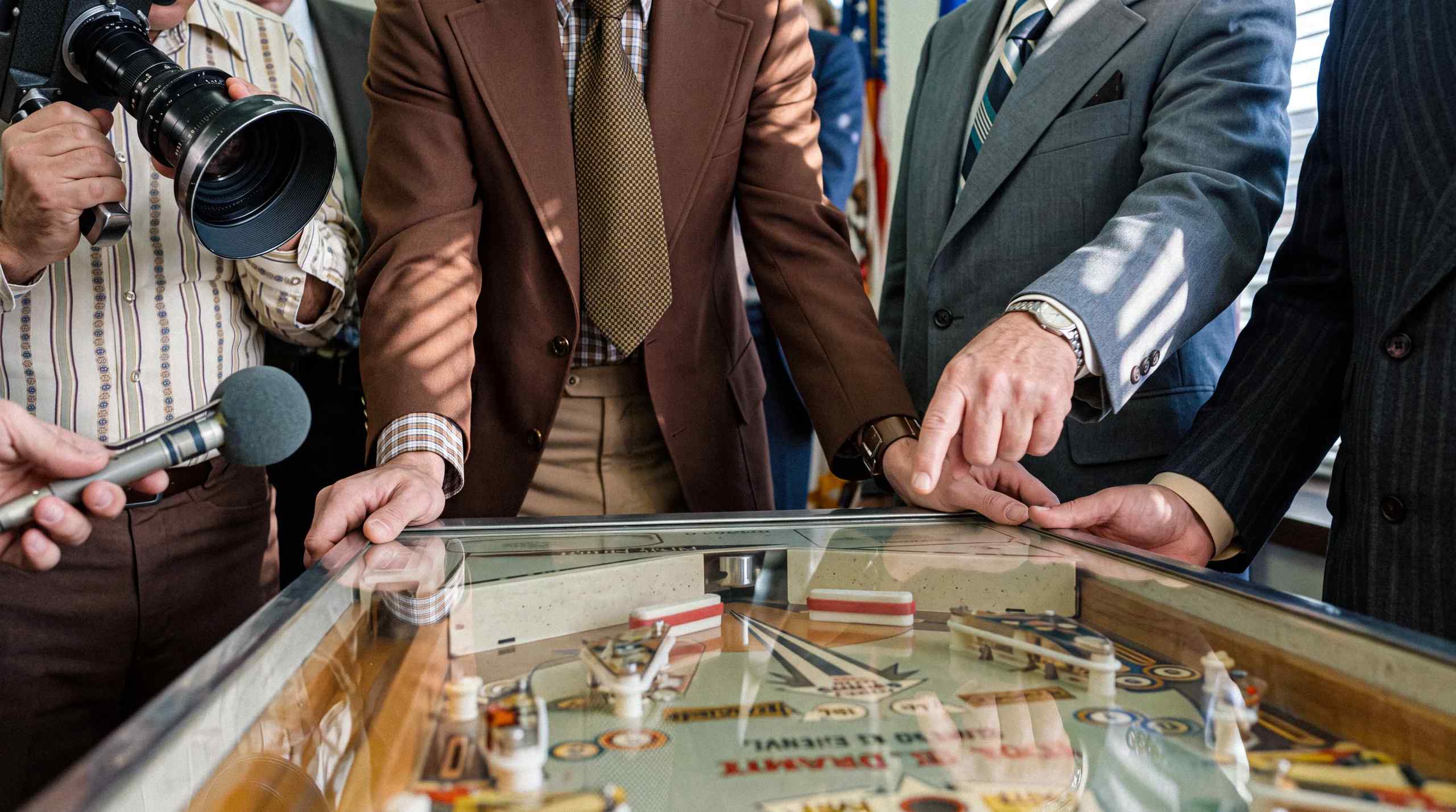
We're back where we started. It's April 2, 1976. Roger Sharpe is hired by the MAA as a star witness before the New York City Council. He's a writer for GQ and one of the best known professional pinballers. His goal is to demonstrate that a skilled player can control where the ball goes and not just react to gravity.
One skeptical councilman suspected a rigged machine and demanded Sharpe use a different one. Sharpe abided, called his shot down the center lane just before pulling the plunger, and…
BOOM. The ball flies down the center lane.
The council would later vote unanimously to repeal the 34-year-old pinball ban.
As with any good story, though, this one has a twist, and it's better than the version most people tell. The machine Sharpe called his shot on wasn't even the one he'd prepared on. He'd spent weeks practicing on a Gottlieb table called El Dorado, but a suspicious councilman worried it had been rigged in his favor and forced him to switch to the backup machine, a billiards-themed table called Bank Shot, one he barely knew. Sharpe has since admitted in interviews that the plunge itself was, in his own words, pretty lucky.
Naturally, this complicates the whole "Miracle Shot Saves Pinball" narrative some prefer, but the sheer dumb luck of that reality is beautiful in its own way, don't you think?
Plus, the outcome remains. You can play pinball nowadays without fearing that a 1940s policeman with a mid-Atlantic accent will barge in with a sledgehammer and ruin your chance at the high score.
Timeline Of Pinball's Legal History
| Year | Event | Impact |
|---|---|---|
| 1942 | NYC bans pinball under Mayor La Guardia | Classified as a gambling device; mass destruction of machines |
| 1947 | Flippers introduced (Gottlieb's Humpty Dumpty) | Players gain real control over the ball for the first time |
| 1974 | Cossack v. City of Los Angeles | CA Supreme Court rules flipper pinball is predominantly skill |
| 1976 | Roger Sharpe's NYC Council demonstration | NYC repeals its 34-year pinball ban |
Conclusion
Here's the part that makes the whole thing better, not worse. Sharpe didn't call his shot on the machine he knew. He called it on the one he'd barely touched, because a nervous councilman thought his practiced table might be rigged. He pulled the plunger anyway, the ball found the lane exactly like he promised, and pinball walked out of that chamber a legal game for the first time in 34 years. Sharpe has since admitted the shot itself was mostly luck, which honestly tracks better than the myth. Skill got him in the room. That skill with a side helping of luck got the ball down the lane. That's most of gambling in a nutshell, isn't it?
So next time you feed quarters into a machine at a car wash of all places, tip your cap to a guy who bet his reputation on a table he'd never played, and somehow won anyway.
Cole Rush is a freelance writer, crossword constructor, and creative tinkerer with more than 10 years of experience writing about anything and everything. Cole’s primary area of expertise is the gambling industry, covering the expansion of sportsbooks and online casinos alongside emerging spaces like sweepstakes casinos and prediction markets.
More Articles like this
Are eBay's "Spin the Wheel" Listings Just Gambling?
A corner of eBay Live auctions off wheel spins instead of actual items. Bid starts at $1, the price climbs, and the winner finds out what they bought only after the wheel stops. Here's why that's not really shopping.
By Cole Rush
Casino Carpets Are Ugly. But Not for the Reason You Think
Casino carpets have long been accused of keeping gamblers disoriented and glued to the games. The truth is considerably more practical, though just as strange.

By Cole Rush
The Strange Gambling Laws Behind Cruise Ship Casinos
Cruise ship casinos only open once a ship clears territorial waters, and the odds, oversight, and rules that follow are nothing like a Vegas floor. Here's what actually changes at sea.

By Cole Rush
Six Reasons Bettors Are Starting to Ditch Credit Cards
States are increasingly questioning whether borrowed money has any place in gambling. From instant interest to damaged credit, the risks can extend far beyond the bet itself.
By Charlon Muscat
How Subscriptions Use Gambling Psychology to Hook You
Streaming services, apps, and subscription boxes may look nothing like a casino, but many tap into the same psychological forces that make gambling so hard to walk away from.
By Cole Rush
The Best Gambling Songs Ever Written, Ranked
From Kenny Rogers to Sting, these seven songs go beyond casino clichés to capture the risk, psychology and obsession behind gambling.

By Cole Rush