

Life’s A Gamble: How Carnival Games Make Casinos Look Good
Carnival games look like harmless fun, but weighted bottles, oval hoops, and brutal math turn most midway booths into a house edge with a stuffed animal attached.
%20(1).webp)
You know the classic carnival game sights. Three shots, five dollars, and a stuffed banana the size of a golden retriever hanging just out of reach. The games look easy. Knock some bottles off a pedestal, pop a balloon with a dart, or make a basket. Looking easy and actually being easy are two very different things, though.
Carnival games have carried a reputation for being crooked since the first traveling fairs pitched their tents, and the reputation is mostly earned. The “rigging” isn’t always in the most player-facing or obvious element of the game. Some games are flat-out impossible. Others are simply brutal on the math. Knowing which is which turns a wasted twenty into a decent afternoon of people-watching.
Three Types of Games, One Kind of Outcome
Carnival operators often sort their own booths into three categories, and the terminology comes straight from carny slang. Hanky-panks are the giveaways, the ring-around-a-bottle or duck-pond games where everyone walks away with something. They exist to pull foot traffic deeper into the midway, but they aren’t the real moneymakers.
Percentage games, or "PC" games, are legitimately winnable, just not often. Operators set them up so the true odds run worse than 3 to 1 against the player, sometimes far worse. No trick is required, just patience and a stack of cash you’re willing to part with.
Then there are alibis and flats, the games with a hidden mechanism the operator controls. A lever under the counter, a magnet, a peg that only releases on command. In carny slang, a game like this is "gaffed," and a booth that cannot be won under any circumstances is a "flat store." These are the games responsible for most of the genre's bad reputation, and they are also the ones that modern regulation targets most harshly. Those regulations mean the games in questions are relatively rare in the wild, but the games that do exist still have their own baked-in disadvantages.
The Milk Bottle Pyramid? Curdled.
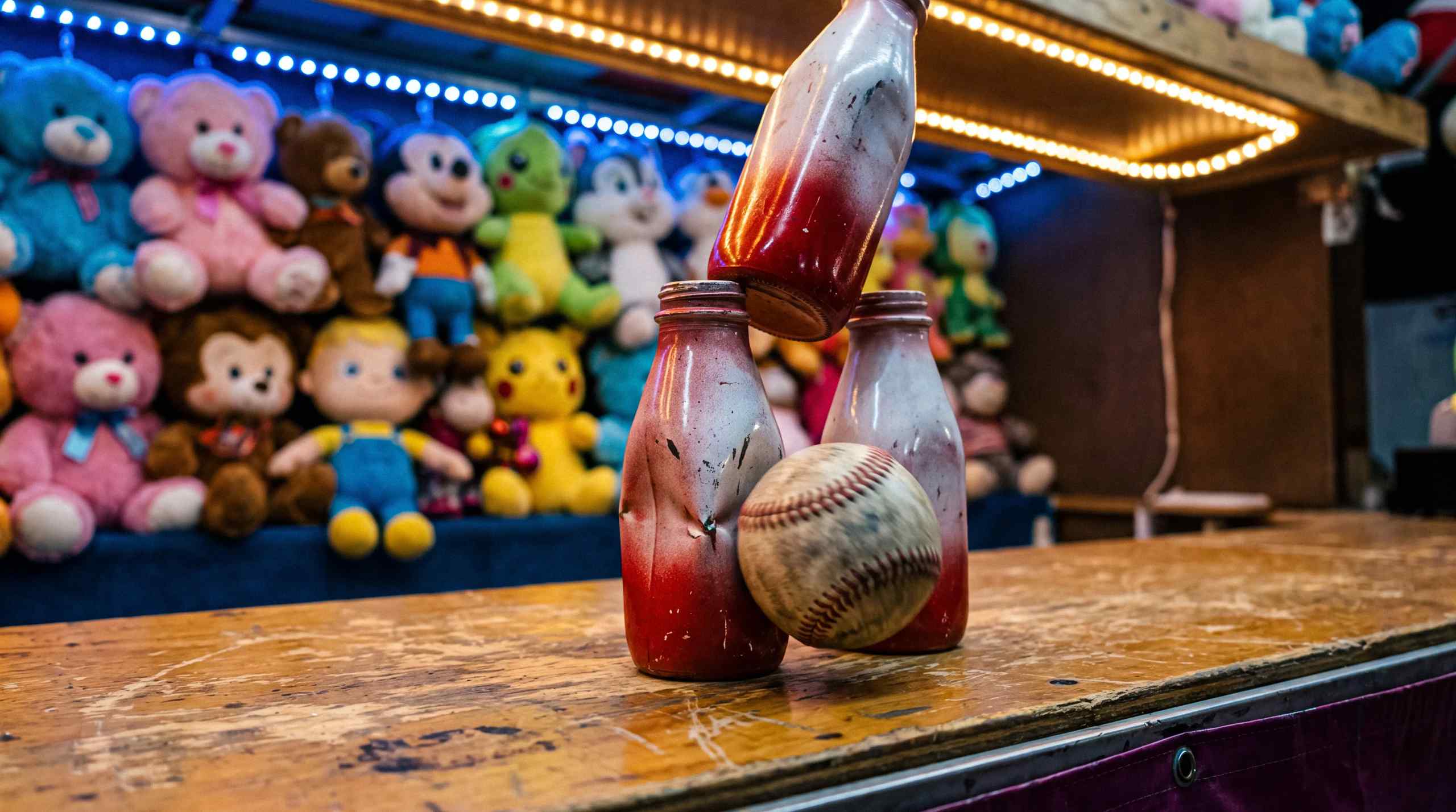
The classic three-bottle pyramid looks like a simple physics problem. Hit the bottom, the stack falls. Historically, unscrupulous operators could use weighted bottles or lighter throwing balls to make an already difficult game even harder.
A common rulle is that you need to knock the bottles completely off the pedestal rather than just knocking them down. All these factors make the game winnable in theory but far more difficult than it looks.

Ring Toss? Wringing You Dry
In ring toss games, The ring and the peg are usually sized so close together that only a near-perfect drop lands cleanly. Everything else is a near-miss by design, the carnival equivalent of the common gambling fallacies that make a near-miss feel like progress instead of a loss. One tip is that the first two rows are generally the best to target as there’s less chance of a neighboring peg to deflect the ring.
Basketball? Rim’s Looking Grim
Former NASA engineer Mark Rober put real numbers behind the basketball toss in his investigation, Carnival Scam Science (and how to WIN), collecting data across two dozen games at a carnival his team wired for observation. He found the hoop at his location sat 11 feet off the ground rather than the regulation 10, and it was slightly oval rather than perfectly round. The balls, meanwhile, are often overinflated, which makes them bounce harder off the rim instead of settling into it. To the untrained eye, this all appears normal, but the small changes to what we expect stack up and make the game more difficult than it has any right to be. All of it shows up in the math, a finding echoed in Mental Floss's coverage.
Balloon Darts? Blunted
Balloon darts are another dubious carnival game that are a representation of percentage game where your odds of actually popping a balloon are quite low (usually far less than 1 in 3).
Operators help stack the deck against customers by underinflating balloons and blunting the tips on darts. To make matters worse, winning a large prize usually requires popping several balloons.
How Bad Are the Odds, Actually?
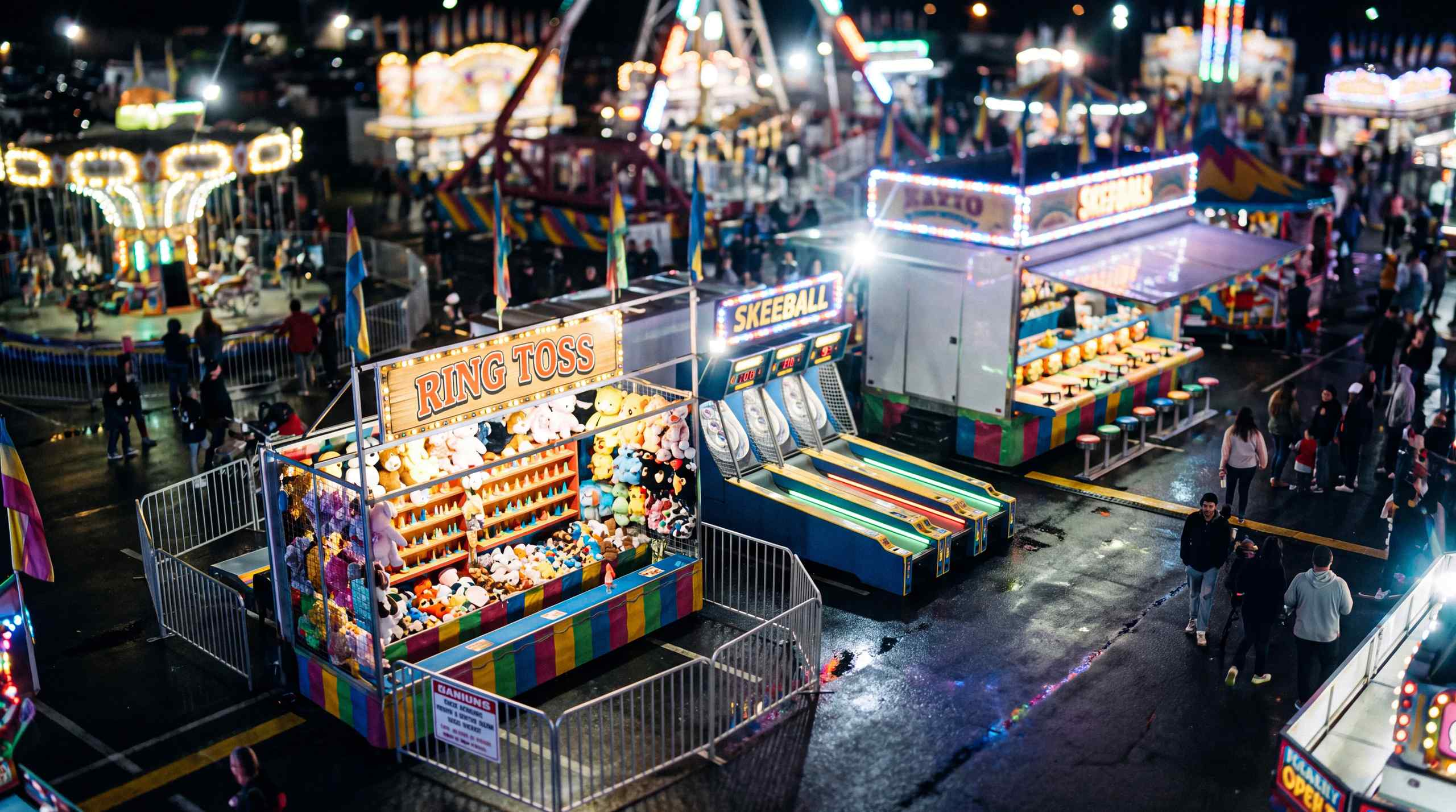
Consumer estimates of carnival win rates cluster around 5 to 15 percent for most games, with some pricier games reportedly dipping to around 1 percent. A 1978 study in The American Statistician actually ran the math on a rigged-tolerance carnival game and confirmed what most carnival-goers suspect intuitively: even a "fair" toss becomes lopsided fast once the winning target shrinks by a few fractions of an inch.
What State Fairs Actually Regulate (and What They Don't)
Rigged games were closer to the norm than the exception in the early 1900s, before organized inspection existed. Coverage of the carnival trade by Texas Monthly traces how that changed over the century, as public pressure and law enforcement scrutiny pushed operators toward games that were at least theoretically winnable. By the 1990s and 2000s, dozens of states had built out formal inspection systems, often run through state agriculture departments, requiring licensing, insurance, and spot checks on traveling carnivals.
Inspectors check that a game is improbable, not impossible. A booth can be brutally, mathematically stacked against the player and still pass inspection, as long as a win is technically possible. That is the same principle behind the house edge on a casino floor, dressed up in string lights instead of felt.
Which Classic Claims Actually Hold Up
Not every rigging story checks out. Hanky-panks genuinely pay out every time, so claims that "every carnival game is a scam" are overly generalized and false. The weighted-bottle and oval-hoop claims hold up well, backed by Rober's own measurements and echoed across independent carnival investigations. The idea that an operator can hit a hidden switch to decide any winner on the spot is real, but it applies specifically to gaffed alibi games, not the percentage games that make up most of a carnival’s real estate.
The honest version of the story: some carnival games are rigged outright, but most are just built to be exceptionally hard. Almost none are the innocent tests of skill the signage suggests. A casino at least publishes its odds. The house always wins there too, just with better lighting and a printed payout table instead of a weighted bottle.
Cole Rush is a freelance writer, crossword constructor, and creative tinkerer with more than 10 years of experience writing about anything and everything. Cole’s primary area of expertise is the gambling industry, covering the expansion of sportsbooks and online casinos alongside emerging spaces like sweepstakes casinos and prediction markets.
More Articles like this
Are eBay's "Spin the Wheel" Listings Just Gambling?
A corner of eBay Live auctions off wheel spins instead of actual items. Bid starts at $1, the price climbs, and the winner finds out what they bought only after the wheel stops. Here's why that's not really shopping.

By Cole Rush
Casino Carpets Are Ugly. But Not for the Reason You Think
Casino carpets have long been accused of keeping gamblers disoriented and glued to the games. The truth is considerably more practical, though just as strange.

By Cole Rush
The Strange Gambling Laws Behind Cruise Ship Casinos
Cruise ship casinos only open once a ship clears territorial waters, and the odds, oversight, and rules that follow are nothing like a Vegas floor. Here's what actually changes at sea.

By Cole Rush
Six Reasons Bettors Are Starting to Ditch Credit Cards
States are increasingly questioning whether borrowed money has any place in gambling. From instant interest to damaged credit, the risks can extend far beyond the bet itself.

By Charlon Muscat
How Subscriptions Use Gambling Psychology to Hook You
Streaming services, apps, and subscription boxes may look nothing like a casino, but many tap into the same psychological forces that make gambling so hard to walk away from.

By Cole Rush
The Best Gambling Songs Ever Written, Ranked
From Kenny Rogers to Sting, these seven songs go beyond casino clichés to capture the risk, psychology and obsession behind gambling.

By Cole Rush