
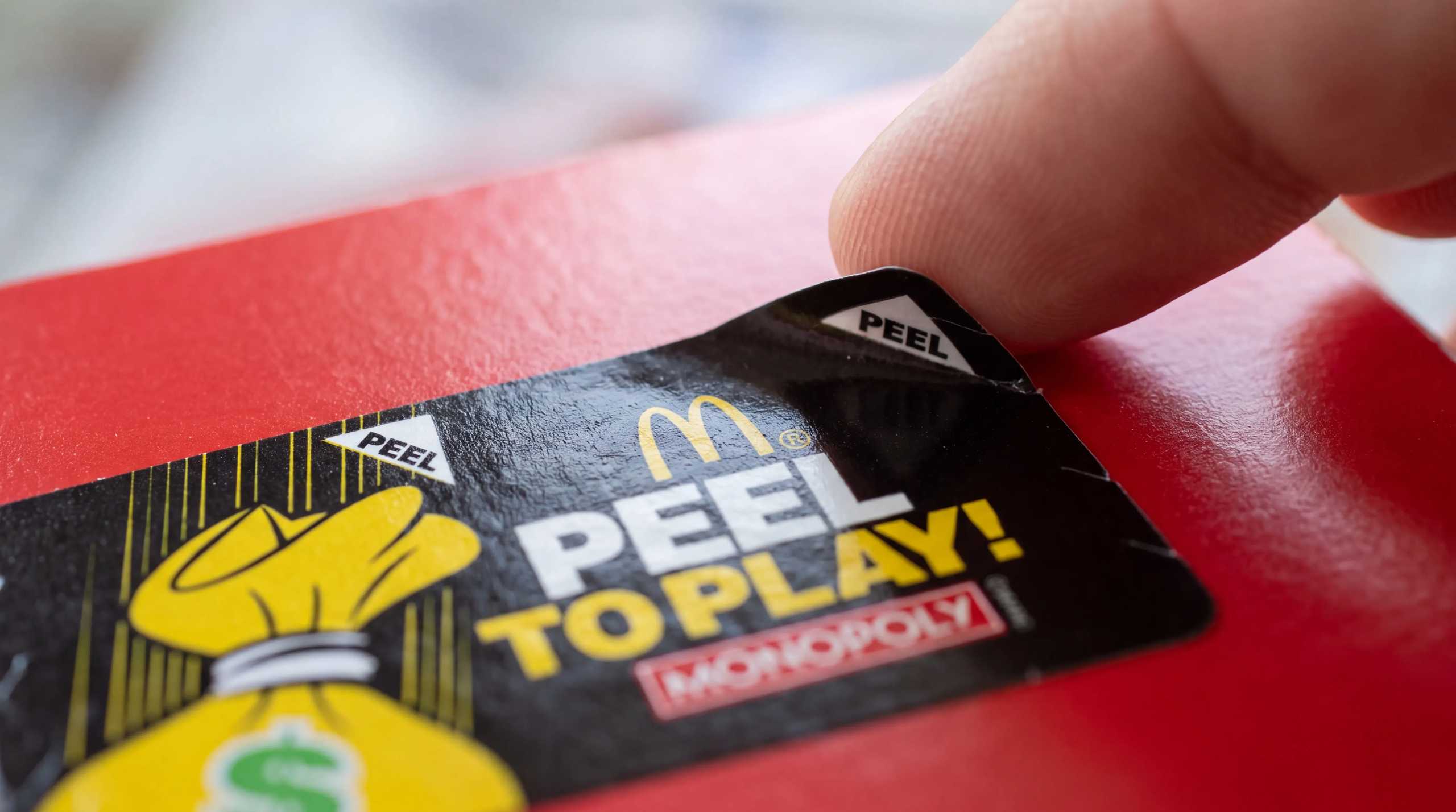
Did McDonald’s Monopoly Teach Us How to Gamble?
McDonald's Monopoly Game asked nothing of players but a tap and a peel. Legally, that's not gambling. Psychologically, the reward wiring looks identical, and that raises an uncomfortable question about who's playing.
%20(1).webp)
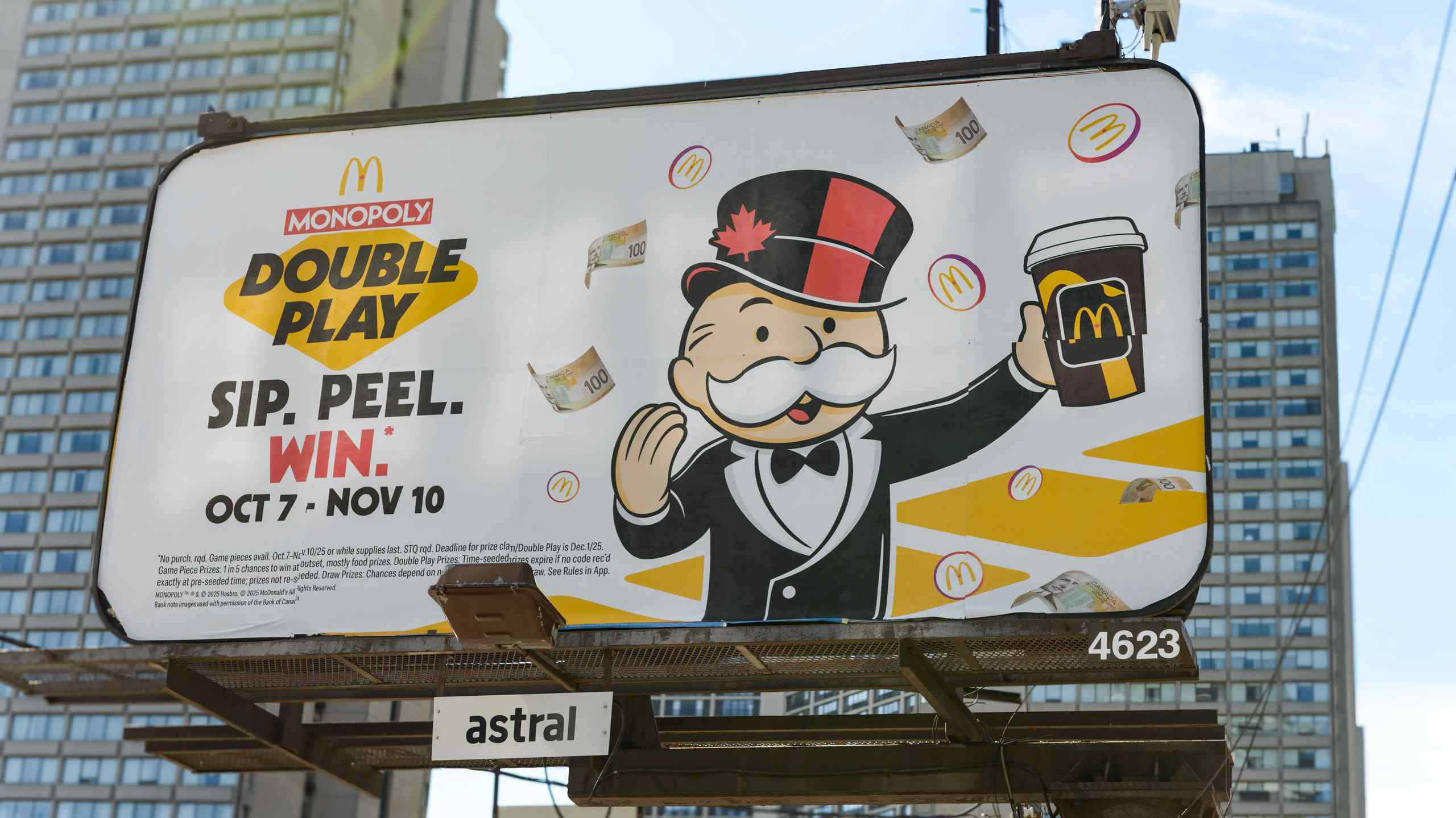
When McDonald's brought back its Monopoly Game last fall after nearly a decade away, one prize buried in the fine print stood out more than the million-dollar grand prize: the odds of winning a 2026 Jeep Grand Cherokee sat at roughly 1 in 13.1 billion. Powerball's jackpot odds are 1 in 292,201,338. Do the math, and a McDonald's game piece was a longer shot than the actual lottery.
No purchase was required to enter. That's precisely why it's worth asking whether a free promotional game can still function like gambling, and whether the answer changes depending on who you ask: a lawyer or a neuroscientist.
The Legal Answer Is Simple
U.S. sweepstakes law hinges on three elements: prize, chance, and consideration. An illegal lottery needs all three. Remove consideration, meaning players don't have to pay or buy anything to enter, and you've built a legal sweepstakes instead. That's why McDonald's offered a free alternate method of entry through the mail or app, no purchase required, no purchase advantage. That single design choice is the entire legal wall between a promotional game and an illegal lottery.
By that standard, the Monopoly Game was never gambling. Case closed, legally speaking. The Federal Trade Commission draws this same prize-chance-consideration line when it warns consumers about sweepstakes scams, and it's the reason casino-style sweepstakes sites and mail-in contests can operate nationwide without a gambling license: the free entry option is what keeps them on the legal side of the fence.
Psychologically Speaking, It’s More Complex
Slot machines are variable thanks to their RTP, volatility, and larger math models. They pay out at unpredictable times and in unpredictable sizes. Psychology researchers have shown this schedule produces the highest, most persistent response rate of any reinforcement pattern, higher than a fixed reward you can count on. Peeling a McDonald's game piece to reveal a property, a food prize, or nothing runs the exact same schedule, the same loop behind why most gamblers lose more than they plan to at an actual slot machine, just dressed up in Golden Arches branding instead of a cabinet.
The deeper hook is the near miss. You don't need to win to get a dopamine response. A study published in Neuropsychopharmacology found that near misses, outcomes that come close to a win without delivering one, activate our brain’s reward centers almost as strongly as an actual win. Peel a piece and reveal Boardwalk when you still need numerous additional properties, and it’s hard for your brain to register that as a loss.
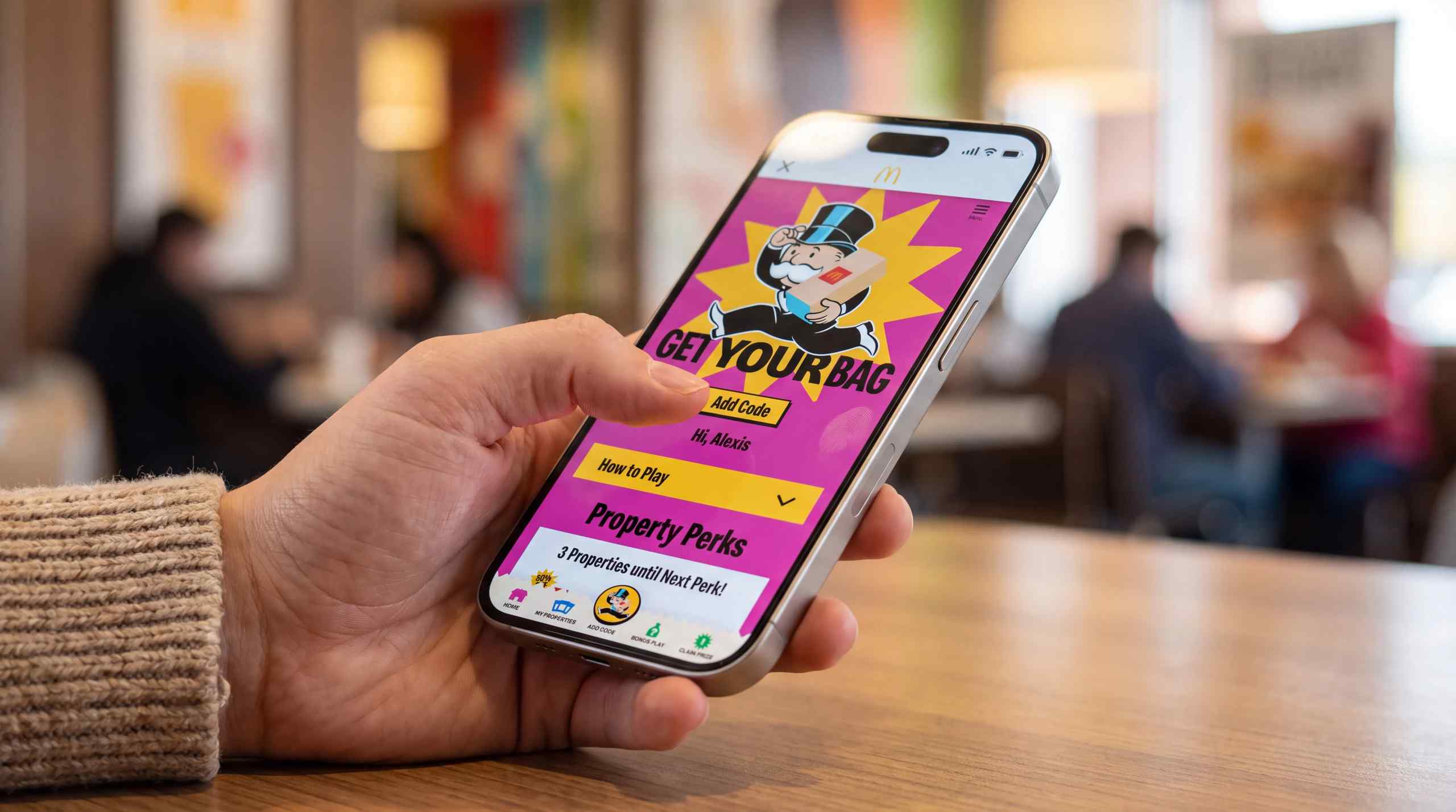
Layer in McDonald's app-based Bonus Play, which gave every physical game piece a second digital chance to win, and you've got a reinforcement structure researchers describe as multi-layered: rewarded for playing, rewarded for near misses, rewarded for the anticipation itself, independent of whether anything gets won.
McDonald's Monopoly Odds vs. Powerball
| Prize | Odds | Cost to Enter |
|---|---|---|
| McDonald's Monopoly instant food prize | 1 in 5 | $0 (no purchase necessary) |
| McDonald's Monopoly 2026 Jeep Grand Cherokee | ~1 in 13.1 billion | $0 (no purchase necessary) |
| Powerball jackpot | 1 in 292,201,338 | $2 per ticket |
The instant food-prize odds are genuinely good, about 1 in 5, and that's by design. Frequent small wins are what keep a variable ratio schedule feeling generous even while the marquee prizes sit at odds longer than any real lottery most people will ever play. It’s the same reasoning behind scratchers with winning odds of 1 in 4 (or thereabouts) inclusive of break-even prizes.
Who's Actually Being Trained Here
This is the part of the argument that deserves more caution than confidence. A handful of studies on adolescents have found that participation in simulated or promotional gambling-like games was associated with real-money gambling later in life. Researchers point to normalization, familiarity with the mechanics, inflated expectations of winning, and straightforward behavioral conditioning as the likely bridge.
None of that makes a Happy Meal box a gateway drug. But a promotional game with a $52,000 SUV and a $1 million cash prize on the table, run at a restaurant chain most American kids visit in a given month, is exactly the kind of exposure those researchers are describing. Whether it meaningfully shapes a kid's relationship with real gambling years later is a live, contested research question. It's worth taking seriously precisely because it isn't settled.
Where This Argument Is Headed Next
It would be unfair to single out McDonalds for this type of promotion. Many businesses employ a similar structure.
Loot boxes in video games are fighting almost this exact battle right now. Courts and regulators in most countries have declined to classify loot boxes as gambling, since money doesn't always change hands and outcomes aren't cashed out. But the psychological research increasingly treats loot box mechanics as functionally identical to gambling, and studies have found consistent correlations between loot box spending and problem-gambling indicators, the same well-documented fallacies that keep players chasing a loss regardless of what triggered it. McDonald's Monopoly Game is the same argument wearing a different outfit. It’s legally above board but psychologically akin to gambling.
The Bottom Line
Ask a lawyer if a free promotional game is gambling, and the answer is no, every time, as long as a real no-purchase path to play exists. Ask a neuroscientist, and the reward centers lighting up in a player's brain don't know or care whether money was on the line. Both answers are correct. That gap between the legal definition and the psychological reality is exactly where promotions like this one are built to live.
Cole Rush is a freelance writer, crossword constructor, and creative tinkerer with more than 10 years of experience writing about anything and everything. Cole’s primary area of expertise is the gambling industry, covering the expansion of sportsbooks and online casinos alongside emerging spaces like sweepstakes casinos and prediction markets.
More Articles like this
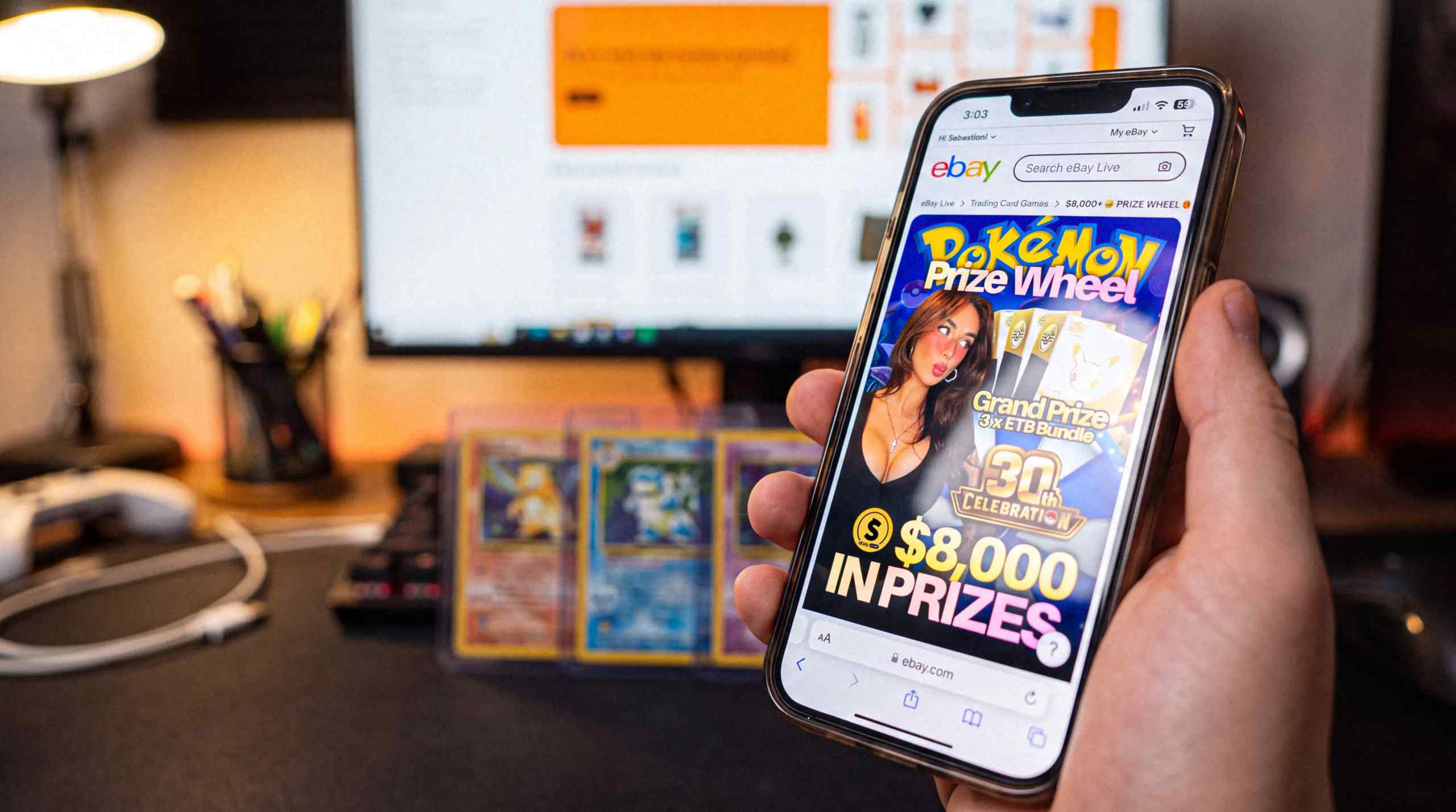
Are eBay's "Spin the Wheel" Listings Just Gambling?
A corner of eBay Live auctions off wheel spins instead of actual items. Bid starts at $1, the price climbs, and the winner finds out what they bought only after the wheel stops. Here's why that's not really shopping.
By Cole Rush
Casino Carpets Are Ugly. But Not for the Reason You Think
Casino carpets have long been accused of keeping gamblers disoriented and glued to the games. The truth is considerably more practical, though just as strange.

By Cole Rush
The Strange Gambling Laws Behind Cruise Ship Casinos
Cruise ship casinos only open once a ship clears territorial waters, and the odds, oversight, and rules that follow are nothing like a Vegas floor. Here's what actually changes at sea.
By Cole Rush
Six Reasons Bettors Are Starting to Ditch Credit Cards
States are increasingly questioning whether borrowed money has any place in gambling. From instant interest to damaged credit, the risks can extend far beyond the bet itself.
By Charlon Muscat
How Subscriptions Use Gambling Psychology to Hook You
Streaming services, apps, and subscription boxes may look nothing like a casino, but many tap into the same psychological forces that make gambling so hard to walk away from.
By Cole Rush
The Best Gambling Songs Ever Written, Ranked
From Kenny Rogers to Sting, these seven songs go beyond casino clichés to capture the risk, psychology and obsession behind gambling.

By Cole Rush