
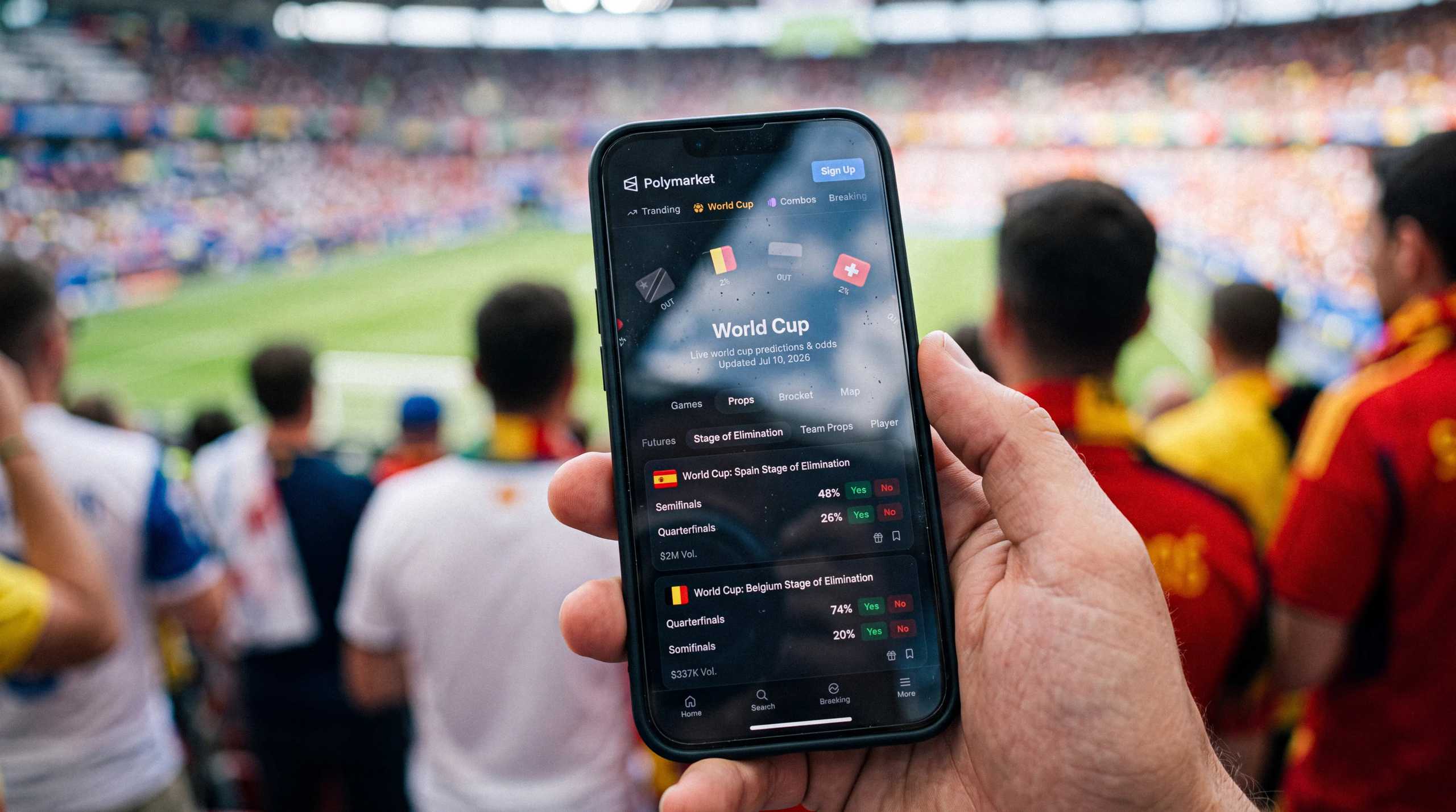
Polymarket Bettors Wagered Millions on USA, Egypt, Cape Verde
Seventeen nations attracted more than $100 million in Polymarket trading during the World Cup. Only six reached the quarter-finals. Here's what that says about prediction market sentiment.

As the World Cup reaches the business end of the tournament, a noticeable anomaly has begun to emerge on prediction markets trading platforms.
With a staggering $4.1B already traded on Polymarket's World Cup Winners market, 17 individual nations have surged past the $100M mark in sports trades–yet the majority of them have already packed their bags, having failed to reach the quarter-finals.
Was it due to excessive favoritism for the now-departed three host nations, Polymarket’s geographic operating restrictions, or just the result of a wave of inspiring underdog stories seen at this year's tournament?
A World Cup of Record Trading Volumes, Feel-Good Stories, and Neglected Favorites
In soccer, survival is everything - when trading on Polymarket however, it would seem most of the time all you need is an investable feel-good backstory.
Firstly, it's worth noting that despite the new 48-team format, even the most optimistic analysts couldn’t have foreseen the unprecedented trading volume at this summer’s World Cup, having already surpassed the $4.1B mark with three rounds still to go. Maybe even more remarkable is not just how many nations managed to attract over $100M in trades, but the number of long-shot teams that did so.
Put simply, it's hard to fathom why pre-tournament favorites Spain and England - two of the last eight teams left in the hunt - still haven't breached the nine-figure milestone, yet rank outsiders including Paraguay, South Korea, and Cape Verde had already achieved this by the round of 32.
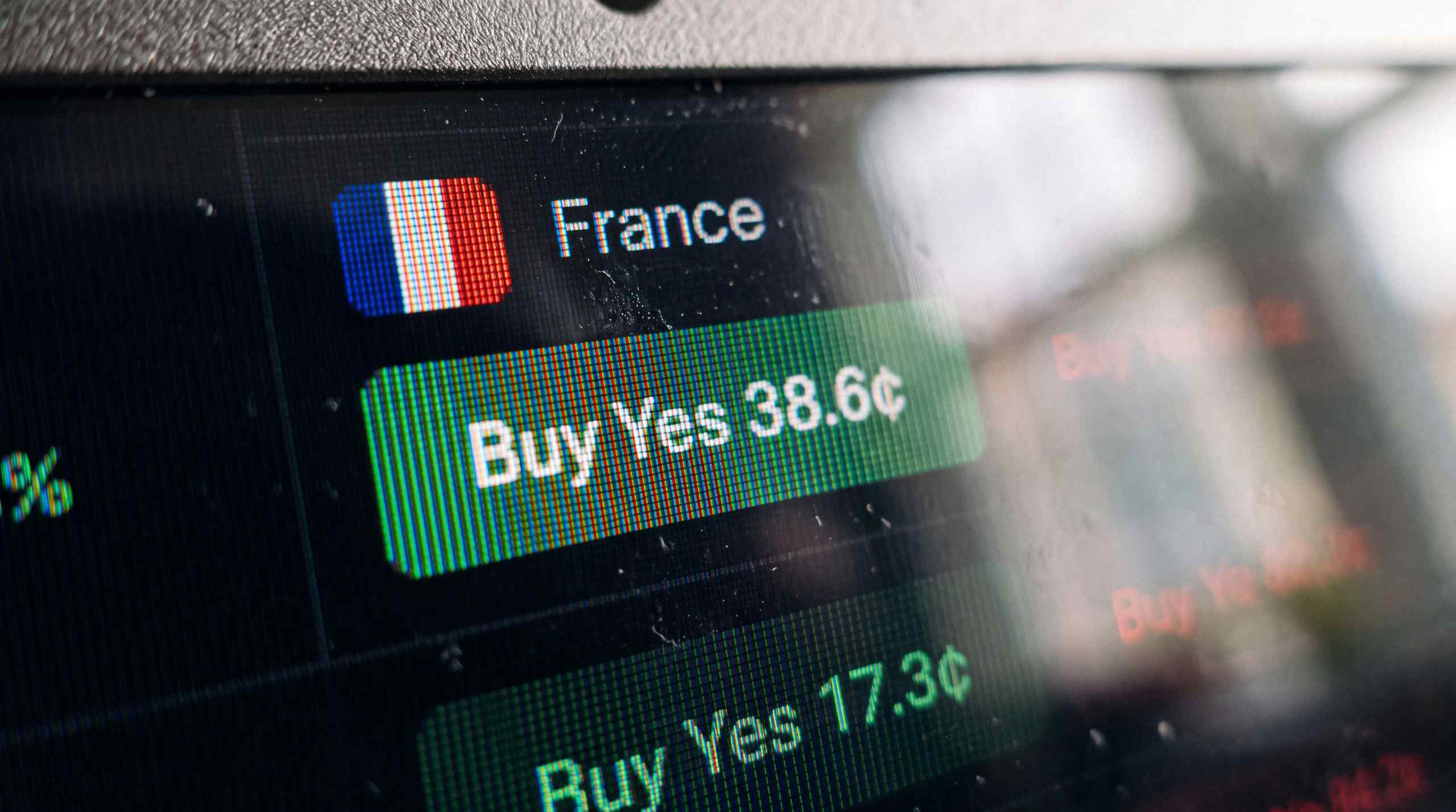
The $100M Club Nobody Wanted to Join
Granted, any team that can command over $100M in trades must be doing something right; still, with over $1.3B wagered on teams that achieved this feat but also made an early exit, it’s probably brought about a lot of heartache among some Polymarket traders.
For starters, the FIFA World Cup has an intriguing track record of the host nations winning the tournament, which probably led to an inevitable surge in trades for the USA, Canada, and Mexico. Despite successfully navigating the group stage and the first knockout round, all three hosts fell in the round of 16, which was both a massive blow for FIFA and the millions of home fans who had once again caught the World Cup fever.
Outside of the host nations, the teams that were commanding a dominant share of trading on Polymarket ranged from the Ronaldo-led perennial dark horses Portugal and seven-time winners of the African Cup of Nations, Egypt, through to charismatic underdogs of Cape Verde.
Yet, while the counterintuitive hype on the trading platforms saw all these teams exceed the $100M mark, 11 of them ended up falling by the wayside before the quarters.
Eliminated Teams To Reach $100M in Traded Volume
| Nation | Traded Volume |
|---|---|
| Egypt | $158.6m |
| USA | $142.5m |
| Mexico | $137.8m |
| Cape Verde | $119.2m |
| Ivory Coast | $111.7m |
| Croatia | $109.5m |
| Portugal | $109.1m |
| South Korea | $107.5m |
| Paraguay | $107.4m |
| Colombia | $104.7m |
| Canada | $102.9m |
Who's Leading the World Cup Charge - and Which Teams Are Yet To Reach $100M Status?
Despite the early exits of legendary tournament specialists such as Brazil and Germany, the trading volumes already wagered on the remaining seven teams seem disproportionately odd. To an outsider, the World Cup Winner market looks almost inverted, as teams such as Norway, and Belgium - underdogs on most of the sportsbook betting apps - have all somehow generated the largest trading activity.
Remaining Teams By Traded Volume
| Nation | Traded Volume | Current Trading Price |
|---|---|---|
| Norway | $121.1m | 6.0¢ |
| Belgium | $120.0m | 2.5¢ |
| Argentina | $120.0m | 20.1¢ |
| Switzerland | $119.0m | 2.2¢ |
| France | $104.1m | 40.0¢ |
| Spain | $95.8m | 18.8¢ |
| England | $89.8m | 16.0¢ |
Contrast that with the likes of England and Spain, who have yet to hit the $100M mark - likewise with firm favorite and two-time winners, France, whose traded contract value remains lower than all but one of the 11 teams that have been eliminated so far.
However, while this might sound absurd, in actual fact this trend mirrors that seen on traditional betting exchanges, which frequently generate higher betting volumes on longer-priced contenders.
Surely Geography Might Explain Each Nation’s Trading Boom?
Logically at least, you could bank on countries with unrestricted access to Polymarket to dominate the trading volumes, as witnessed with nations such as Egypt, the USA, and Morocco, who head up the trading leaderboard.
This would also explain why European teams like France, Spain, and England sit lower down in the wagering volume stakes. After all, all three nations have strict governmental restrictions in relation to residents accessing Polymarket, which prevents World Cup contracts being traded.
However, the one exception to this rule appears to be Belgium, which, despite outlawing Polymarket at home, amassed over $120.0m in trades, before being eliminated.
So, while there seems to be some semblance of credibility to this geographic market access theory, the truth of the matter remains slightly murkier. The reason being that the majority of the market liquidity also happens to coincide with the nations that outperformed their pre-tournament expectations - hence Cape Verde’s $119.2m tally.
The Bottom Line
Just the fact that Polymarket’s inaugural World Cup has already managed to amass more than $4.1B in trading volumes gives absolute credence to the idea that prediction markets are irresistible to sports bettors.
Yet, despite the surprise number of teams that made it into the tournament’s $100M Club, of the 17 nations to achieve this, 11 have already been eliminated, an indicator that would suggest that the monetary value of individual trades does not directly correlate with a team’s success on the pitch.
The reality is - in its current format at least - World Cup prediction markets are as much driven by national enthusiasm, tantalizing underdog narratives, and more practical measures such as platform accessibility as they are by the true probability of a said nation being crowned champions.
Stuart Hughes is a London-based freelance journalist covering sports, travel, lifestyle, and technology. He’s worked with brands like Lenovo, Best Western, and Frontier Airlines, bringing a global perspective shaped by years of travel.
More Articles like this
LeBron to Giannis: Ranking 5 NBA Offseason Stunners
LeBron to Philly, Giannis to Miami, and Wemby staying put. Which NBA offseason move will pay off the most?
By Bill Gelman
NFL Fans Spend $900 to Watch Games. WWE Fans Pay Even More
Think watching every NFL game is expensive? WWE fans would argue otherwise.

By James Guill
How Bad Is It? Ranking the NHL's Original Six by Fan Misery
Nearly 60 years without a Stanley Cup is just the beginning. We rank the NHL's Original Six teams by how much misery their fans have endured.

By Bill Gelman
Why Does Everybody Hate Us? 10 Most Hated Sports Teams Ever
Some teams always win; others get caught breaking the rules. Either extreme is a surefire way to become universally hated, as these 10 sports teams can attest to.
By Stuart Hughes
5 Outrageous Sports Rules That Need to Die
From a missed signature disqualification to a two-minute penalty for a tucked-in jersey, find out about the top five dumbest rules in sport that leave common sense in the locker room.

By Stuart Hughes
The 10 Most Unforgettable Quotes in Sports History
From Jordan's hard truths to Healy's cheeseburger dig, these legendary greats uttered 10 iconic quotes that turned out to be as memorable as their sporting achievements.

By Stuart Hughes