
New Money: Why Young Gamblers are Betting on Politics over Parlays
Young bettors are increasingly turning away from traditional sportsbooks and toward prediction markets that resemble financial trading platforms.
.webp)
You’ve probably been there at 2 am surfing the web, starting off innocently by checking out the latest scores and then suddenly finding yourself 3 levels down a rabbit hole of election conspiracy theories and timelines for the trade war, with your brain turned to mush and your phone at 12%. But tucked away in your fog, you notice something that no one else does. What if your gut were potentially profitable
I mean, not with $10 7-leg parlays that have no chance in hell. But the stats on current live odds are just the collective wisdom of everyone betting on sports, expressed as dollar values.
This is not some hypothetical game. Young people are getting involved in political
prediction markets, and after looking at the numbers, it’s understandable why.
The real reason they're leaving parlays behind
A good, old fashioned sportsbook, really, really, and I can't stress this enough, loves
parlay bettors.
It doesn't matter if you win or lose; each leg you stack just compounds the vig and tanks your expected value to literally nothing. The young betting crowd did the math, and discovered a system that, unlike a rigged carnival game, actually feels more like... Stock trading.
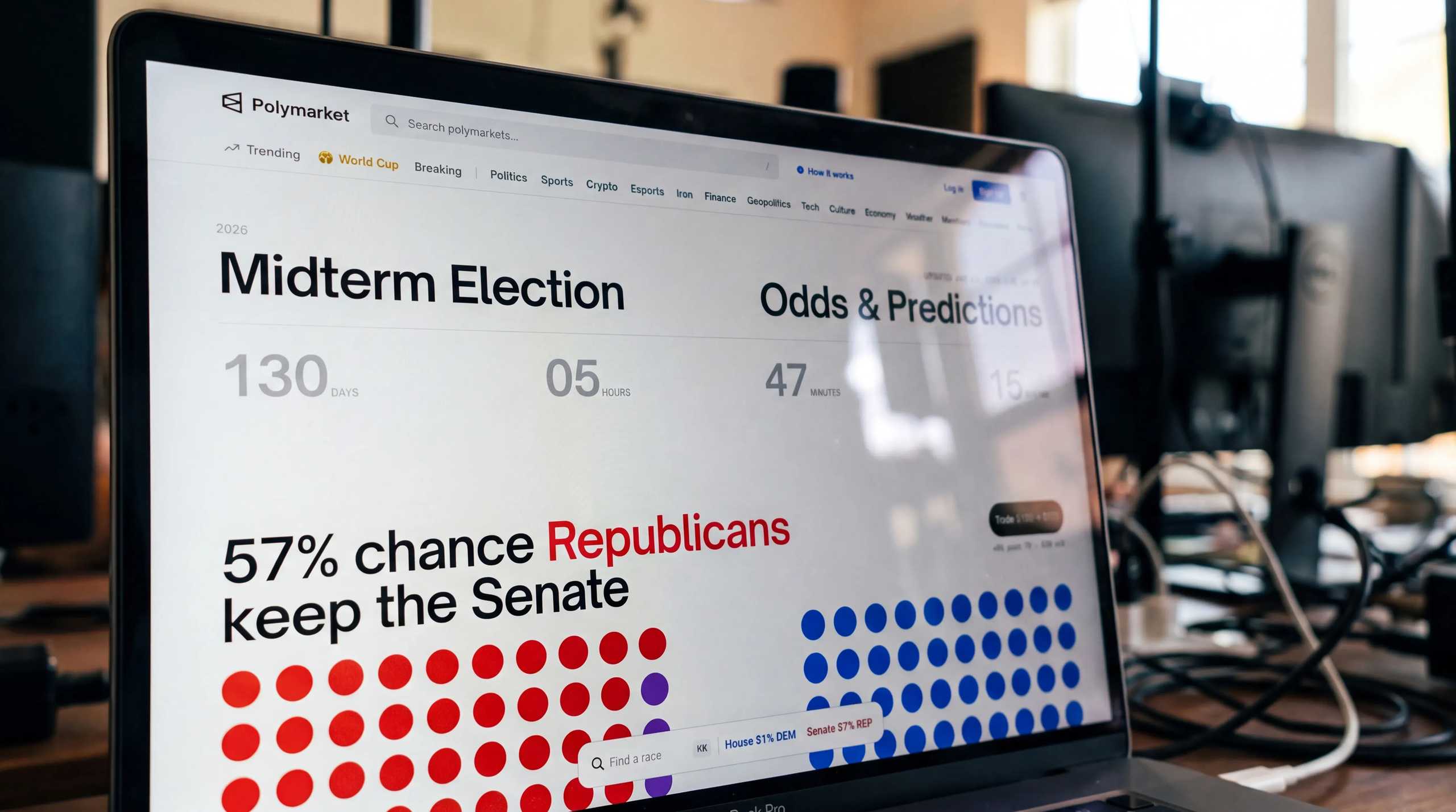
Sites, such as Polymarket and Kalshi, operate as exchanges. There isn't one oddsmaker in a back room deciding on a line. Rather there are thousands, sometimes hundreds of thousands of people betting against each other and slugging it out to discover the real market value.
This results in better liquidity and spreads that are tighter than a typical sportsbook's, resulting in a dramatically lower hold than at any traditional book. If you have ever logged onto Robinhood or played around with a little bit of crypto then you know the feeling. That stock market feel, it’s not a bug but a feature.
Why single bets outperform parlays
This is where multi-leg parlays get stupid, but can make you feel like a genius while
simultaneously making them virtually worthless. You link up five seemingly obvious
predictions, and your odds become zero. Political markets are just betting on one thing at a time. Think a state will go a certain way? Bet on that. Think trade tariffs will get enacted? Bet on that. You don't have to risk both bets together.
You can hedge too. If you bet Candidate A, then turn around and decide things are going your way with Candidate B? Bet some money on Candidate B as well. Now, you have a diversified investment rather than one thing going the distance. You can escape the loser before it is 100% worthless, which is definitely not what happens if you've made it past three legs on a parlay slip.
Cameron George, previously a Walmart stocker, now a crypto evangelist with a lime
green McLaren and five children, knows. "People have always had ideas about what
they're good at. But this is the first time ever you can actually back up that opinion with cash. About anything." He isn't gambling. He is "trading." A key distinction.
The stock market on your phone
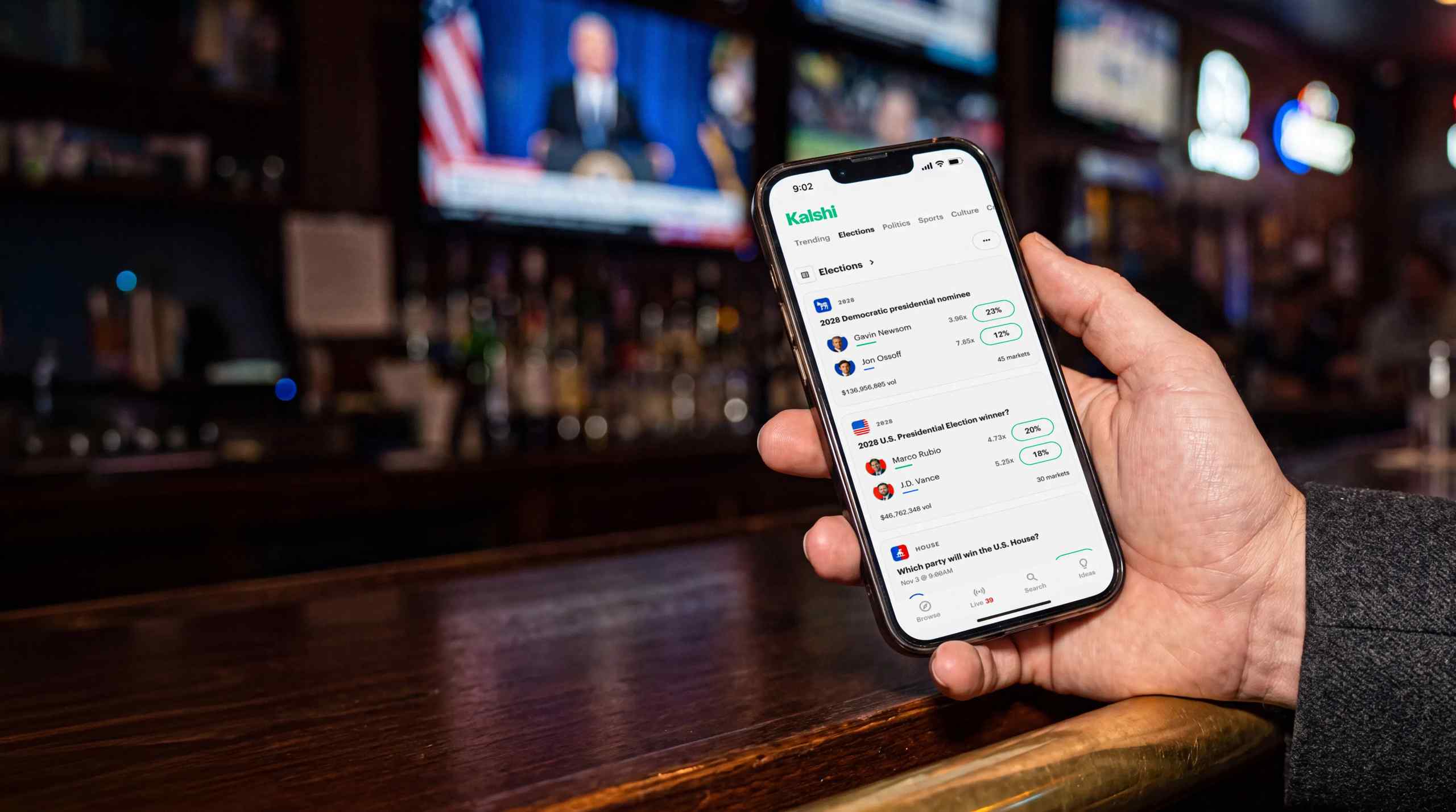
Go to Kalshi or Polymarket right now. Take a look. What do you see? The user interface resembles the Bloomberg terminal more than it does a casino - order books, candlestick charts, bid-ask spreads, and constantly changing percentage odds.
There's nothing to hint at anything that sounds remotely like gambling. No spinning slot machine wheels, no neon colored dice, and no "FREE SPIN!!!!!" pop-ups.
The whole affair has a very cool and calm air about it - a pure financialization of the
news cycle.
The aesthetic is an intentional choice. Under-35 gamblers, and particularly young males, do not want to appear like they are acting like degenerates; they want to feel like they are acting like investors.
These platforms allow them to do so; it isn't a "bet" that they are making, it's taking a
"position". They are not trying to "chase a loss" when they put more money into a
contract that has gone down; they are "rebalancing their portfolio".
Morning Consult data shows that the users are almost all under 45, with a whopping
71% male. More than a quarter of young men have used a prediction market site in the last 6 months. It's young, it's male, it's financially optimistic, and it's sports betting for people who want to "monitor the situation".



The perceived edge: beating the polls with your phone
And here is where the psychology kicks in-betting against a book is betting against the house, while betting on politics appears to be a solvable game because you are working off the same news, polls, and X feed as 'The Experts'.
To the young bettor, doomscrolling feels like market research: the viral tweet, the Reddit jump, the candidate that seems to be beating the polls even though they haven't yet been accounted for. And often you are right.
The prediction markets were more accurate in most of the races in 2024 than the
mainstream polls. Also, when it is your money, there's less idle chatter, as Cameron
points out: "Everyone had an opinion before, but this is actually the first time that people can have an opinion in dollars and cents."
The shift in perspective
The transition for this new breed of bettor from parlays to politics isn't just about
evading the vig. It's about moving from a passivity, in which the game has the cards to the active engagement of writing them yourself.
By wagering solely on singular, event-specific predictions about the day's headlines,
they have changed gambling from lotto to conversational practice.
Smaller position sizes, liquid markets, and an interface that functions like a portfolio
have made them keen.
The real magic of it is that it feels like a great equalizing game, and a timed X thread can actually feel more sophisticated than a Bloomberg terminal. And like gambling, the outcome depends on uncertainty.
They simply seem to have concluded that they would prefer to face that uncertainty
alone than bound by the long odds of coincidence.
Lucie brings almost 20 years of iGaming experience, combining sports writing expertise with deep casino knowledge. Her work spans live sports coverage, slot mechanics, player-focused reviews, and strategic casino content. Known for her no-nonsense, first-hand approach, Lucie cuts through jargon to deliver clear, practical insights for both operators and players.
More Articles like this
NBA Targets Risky Bets. Will Kalshi, Polymarket Play Ball?
The NBA is banning several easily manipulated bets at sportsbooks. But will Kalshi and Polymarket follow suit?

By Stuart Hughes
Kalshi Wants Margin Trading. What Could Go Wrong?
Kalshi’s proposed margin system would let eligible traders put up less than the full value of some positions, freeing capital for other trades while also introducing a new layer of leverage and risk.
By Charlon Muscat
Kalshi, Polymarket Starting to Price the Midterms as Blowout
With just over five weeks to go, Kalshi and Polymarket now heavily favor Democrats for the House and give them the edge in the Senate.
By Stuart Hughes
Kalshi’s NFL Volume Is Exploding. Should Sportsbooks Be Worried?
The NFL season is barely underway, but prediction markets have already handled multiple billions in football trading volume. Is that enough to make sportsbooks nervous?

By Charlon Muscat
Best Prediction Market Apps of 2026
Compare the best prediction market apps and platforms for sports, politics and other events, ranked by market selection, fees, liquidity, user experience and availability.

By James Guill
Prediction Markets vs Sports Betting: Key Differences
Prediction markets vs sports books: odds, vig, trading vs fixed bets, legality by state, combos vs parlays. Which is better for sports bettors?

By Arthur Crowson