

Life’s a Gamble: What Jeopardy! Champs Teach Us About Betting Strategy
From James Holzhauer’s aggressive style to Mattea Roach’s discipline, three champions show how wagering shapes outcomes.
%20(1).webp)
Jeopardy! (yeah, it’s stylized with the exclamation mark) has long been the Everest of trivia. Hell, even I am working on a study guide in the hopes of eventually appearing on the show (I’ve got a long way to go). The game is an elegant, intellectual, and high-octane trivia gauntlet. But simply knowing a lot is just one facet of performing well on Jeopardy! There’s also a gambling element, in which players must wager a chunk of their winnings before they answer a particular clue. They’re essentially betting on their knowledge and hoping it pays off.
Let’s look at wagering in Jeopardy! When it happens, what it means for players, and how it affects outcomes.

How Jeopardy! Wagering Works
There are two types of Jeopardy! clues that involve wagering: Daily Doubles and Final Jeopardy. Daily Doubles are hidden on the game board—one in the Jeopardy round and two in Double Jeopardy. A contestant who selects a Daily Double clue can wager up to their total dollars won so far or, if they have none, up to the highest value on the board that round ($1,000 in Jeopardy and $2,000 in Double Jeopardy). The house minimum bet on Jeopardy! is $5.
Final Jeopardy is the last clue of the game. Contestants are given the category and can wager up to their total earnings so far.
In both cases, a correct response earns players the amount they wagered, while an incorrect response loses it.
One other term to know: runaway. A Jeopardy! game in which one player has a maximum that can’t be beaten by either opponent, even if they bet everything, is considered a runaway.
Let’s dive deeper and look at three legendary Jeopardy! players and what their wagering strategies tell us about the game.
Case Studies: Three Legendary Jeopardy! Champs
Jeopardy! has a pantheon of trivia beasts, and all of them have slightly different approaches to wagering in the game. Today, we’ll focus on three: James Holzhauer, Jamie Ding, and Mattea Roach.
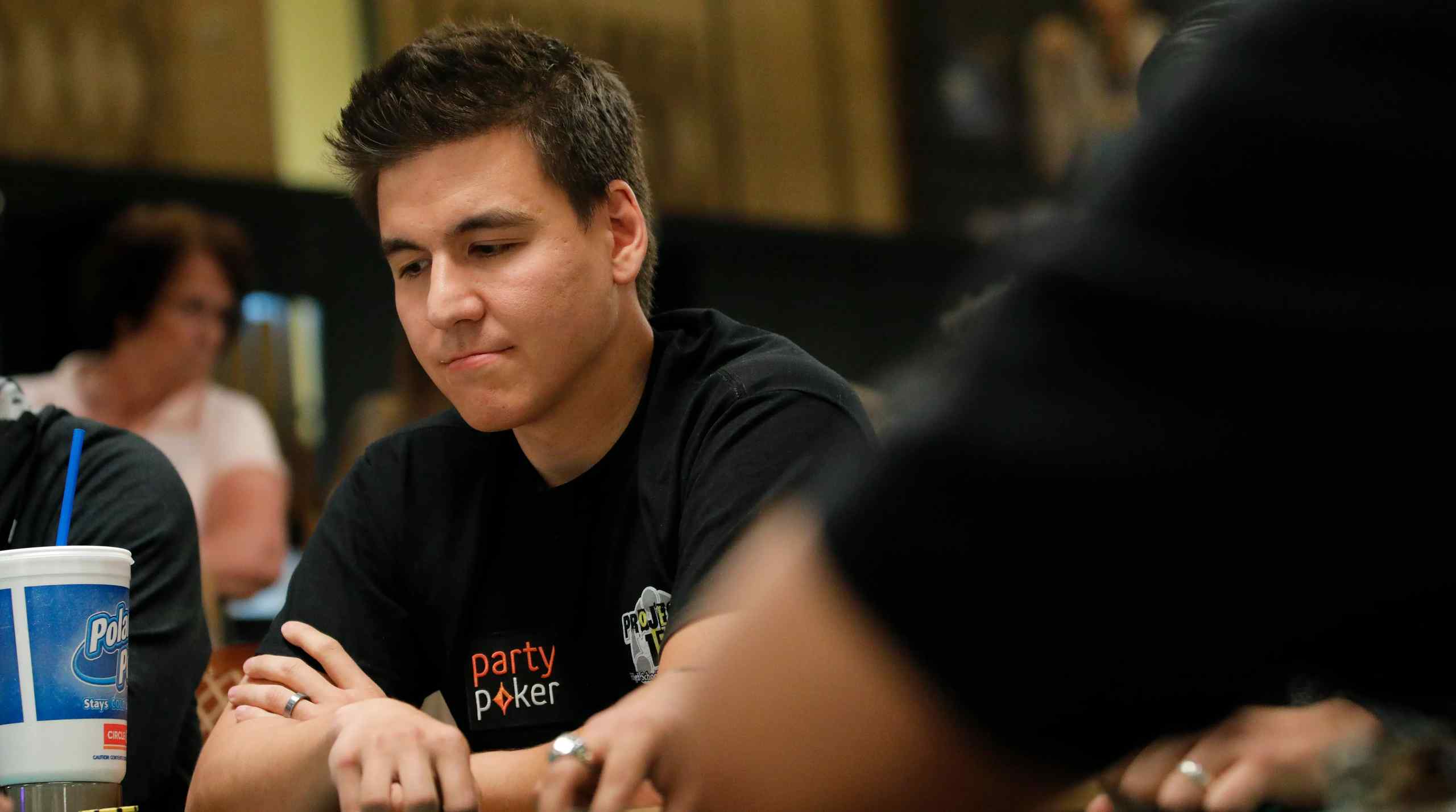
James Holzhauer: The High-Roller
James Holzhauer is something of a Jeopardy! anomaly. He bets big and seeks out the Daily Doubles. And it works. In his initial 32-game regular-season run, he earned $2.46 million. In comparison, our next champion logged 31 games and earned about $800,000. Holzhauer’s dominance in his initial run and other appearances owes at least in part to his aggressive wagering strategy. He averaged $9,000 per Daily Double wager and found 71 of 75 Daily Doubles available to him. Compare that to the average Daily Double wager since 2001, which is a measly $2,500 according to FiveThirtyEight.
When you dig deeper, it all tracks. Holzhauer is a professional sports bettor. He’s no stranger to a gamble. His games often ended in runaways, but that’s not just wagering at work. He also had a deep well of knowledge and quick buzzer fingers backing him up.
Jamie Ding: Calculated Conservatism
Jeopardy! recently crowned its newest super champion, Jamie Ding, who won 31 consecutive games and amassed $882,605 in winnings. This earned him the fifth-place spot in all-time regular-season winnings.
During his run, Ding answered 44 of 60 Daily Doubles correctly, netting roughly $1,450 per Daily Double. He took the more conservative approach, even with categories he knew well. It paid off for much of his run; the vast majority of Ding’s wins were runaways.
However, the giant-killer who finally took Ding down, Greg Shahade, found all three Daily Doubles and bet big on each of them.
Throughout his run, Jamie Ding won games with buzzer mastery and high response accuracy. When he faced an opponent who had both of those things and a riskier betting strategy, his run ended.
Mattea Roach: The Disciplined Tactician
Mattea Roach is a Canadian tutor whose 2022 run spanned 23 games, spurred by their 93% response accuracy and an 88% Daily Double hit rate. Roach’s commitment to the knowledge side of the game led them to make conservative and strategic wagers. They are even on record saying they’re not like one of their fellow super champs:
“I’m not one of those people who’s like, this is… ‘the house’s money’ or money to play around with. I’m no James Holzhauer. So, I like to be conservative with wagering.”
Roach’s strategy worked, leading to a strong run and multiple appearances on Jeopardy! Masters. They profited from small bets and entered Final Jeopardy! with enough cushion to bet smart instead of big.
Three Champs By The Numbers
| Stats | James Holzhauer—2019 | Jamie Ding—2026 | Mattea Roach—2022 |
|---|---|---|---|
| Games Won (regular season) | 32 | 31 | 23 |
| Total Winnings | $2,462,216 | $882,605 | $560,983 |
| Wagering Strategy | Hunted high-value clues, bet big on Daily Doubles. | Conservative, protect-the-lead approach to build runaway wins. | Deliberately conservative to minimize risk. |
| Response Accuracy | 97% | 93% | 93% |
| Daily Double Accuracy | 94.7% | 75% | 85% |
| Final Jeopardy! Accuracy | 97% | 62.5% | 65% |
Comparing and Contrasting
- Risk vs. Reward: Holzhauer played with high risk and high reward. Ding and Roach took a more conservative approach. Both strategies paired well with response accuracy and buzzer speed, so there’s no clear winner between them in terms of success rate. Holzhauer’s approach, though, yielded far more in winnings.
- Daily Double Hunting: Holzhauer played around the board in search of Daily Doubles to build a bankroll. He found 83% of them and answered 91% correctly. Ding and Roach had more typical Daily Double stats.
- Final Jeopardy!: Ding and Roach were more inclined to bet the minimum required to win (e.g., a bet that would get them to $1 more than their opponent if both got it correct). Holzhauer was more into big wagers when he could spare the money, including a whopping $38,314 bet in one Final Jeopardy!
- Mindset: Holzhauer came into the game as a gambler and left a gambler. His strategy reflected that. Roach was 23 during their run and admitted the money was life-changing enough to keep their strategy conservative.
Conclusion
What does this all tell us? There’s no single “correct” way to approach Jeopardy! wagering. If all else is equal (knowledge, buzzer accuracy, etc.), then Holzhauer’s strategy yields the most money, but it also involves higher risk. Roach and Ding have more conservative approaches that still led to impressive runs.
Cole Rush is a freelance writer, crossword constructor, and creative tinkerer with more than 10 years of experience writing about anything and everything. Cole’s primary area of expertise is the gambling industry, covering the expansion of sportsbooks and online casinos alongside emerging spaces like sweepstakes casinos and prediction markets.
More Articles like this
Are eBay's "Spin the Wheel" Listings Just Gambling?
A corner of eBay Live auctions off wheel spins instead of actual items. Bid starts at $1, the price climbs, and the winner finds out what they bought only after the wheel stops. Here's why that's not really shopping.

By Cole Rush
Casino Carpets Are Ugly. But Not for the Reason You Think
Casino carpets have long been accused of keeping gamblers disoriented and glued to the games. The truth is considerably more practical, though just as strange.

By Cole Rush
The Strange Gambling Laws Behind Cruise Ship Casinos
Cruise ship casinos only open once a ship clears territorial waters, and the odds, oversight, and rules that follow are nothing like a Vegas floor. Here's what actually changes at sea.

By Cole Rush
Six Reasons Bettors Are Starting to Ditch Credit Cards
States are increasingly questioning whether borrowed money has any place in gambling. From instant interest to damaged credit, the risks can extend far beyond the bet itself.

By Charlon Muscat
How Subscriptions Use Gambling Psychology to Hook You
Streaming services, apps, and subscription boxes may look nothing like a casino, but many tap into the same psychological forces that make gambling so hard to walk away from.

By Cole Rush
The Best Gambling Songs Ever Written, Ranked
From Kenny Rogers to Sting, these seven songs go beyond casino clichés to capture the risk, psychology and obsession behind gambling.

By Cole Rush