

How Crash Games Rewrote the Rules of Online Gambling
Simple mechanics, instant gameplay, and social interaction have helped crash games challenge slots for the attention of millions of players worldwide.
.webp)
One statistic that surprised me: more than 100 million unique users play crash-type games every month.
These aren't slot or poker players alone—crash games have attracted an entirely new audience. The concept of a crash game is simple: watch a multiplier climb, cash out before it crashes, or lose your bet.
This very simple premise has grown to become a massive gambling phenomenon. The top game in this genre, Aviator, has an interface that looks like a spreadsheet designer's bad dream, yet commands roughly 90% market share of all crash games globally, with 77 million unique monthly players.
According to SPRIBE, the developer behind Aviator, the game processed nearly $160 million in wagers in 2025, growing from approximately $40-70 million during the previous two years.
So why did millions of people switch from playing complex slots to playing a simple game with seemingly no game mechanics? I spoke with SPRIBE's founder, David Natroshvili, to gather additional insight into the rapid growth of crash games.
“The biggest breakthrough wasn't the crash mechanic itself – it was making the experience social and visible,” he said. “Traditional casino games are largely isolated experiences. You place a bet, receive an outcome, and repeat. Aviator transformed that dynamic by allowing players to participate in a shared event happening in real time.”
The one‑button rocket ship
Never played a crash game? Here's the lowdown:
| Category | Details |
|---|---|
| Game Type | Instant-win/Social Multiplayer |
| Core Mechanic | Players bet on a rising multiplier that can crash at any moment; the goal is to cash out before it crashes |
| Number of Players | With over 77 million monthly active users for Aviator alone, this equates to a large percentage of the overall crash game market |
| Availability | Crypto casinos (since the mid-2010s), sweepstakes sites and traditional betting sites |
| Year Launched | The first crash games appeared in the crypto gaming space around mid-2010s. Gained widespread popularity around 2019 |
| Volatility | High (multipliers can crash within seconds or reach significant heights, with players chasing massive potential payouts) |
| Average Round Duration | Super quick-paced: 8-12 seconds per round allows for all-action, high-volume play |
| Average RTP (Return to Player) | ~96–97%, comparable to quality online slots |
| Key Features | Auto cash-out for strategic gameplay, instant multi-player action with live chat & leaderboards |
| Biggest Developers | SPRIBE (Aviator), SmartSoft Gaming (JetX), Pragmatic Play (Spaceman), 1X2 Network, BetGames, and Aviatrix |
So, basically, you have a bet and a multiplier that starts at 1x and increases over time. You cash out to claim winnings. If the multiplier crashes randomly before you cash out, your bet is lost.
Games are instantaneous, with no loading screens or time wasted. Each round is under 30 seconds, so you could play dozens in the time it takes to play one bonus round on a slots game.
Compare this to a standard online slot: 5 reels, 20 pay lines, scatters, wilds, free games, a gamble function and a ludicrous plot—casual gambling of this sort would soon become a full-time job!
These 'crash' games are the anti-slots. They're like the 'Flappy Bird' of the gambling world—simple, relentless and intensely addictive.

Why your brain thinks you’re in control
Crash games use the illusion of control as their main form of excitement, unlike slots, where you spin and hope for the best. Crash game players feel like pilots because they get to decide when to cash out.
This sense of control triggers a dopamine surge, making them think they are using skill.
After some time, a crash game player will begin to think, "I should have cashed out at 2x," but the timing does not matter, because the return to player percentage is going to be the same whenever you cash out.
It doesn’t matter whether it is early or you are chasing 10x, because the game doesn't keep any history of previous rounds and the players' systems mean nothing.
Players will create spreadsheets to track non-existent patterns and stick with systems that they have created before a crash occurs. Similar to what occurs with day trading apps, these players make impulsive decisions, pump up their adrenaline levels, and make enough independent decisions to give them a sense of control.

What Aviator did differently
Crash games weren’t invented by Aviator. They’d been floating around crypto casinos since the mid‑2010s. But Aviator was the first to break out of that niche and go mainstream. So what did they get right?
When you play the game of Aviator, it’s not you in a corner of the internet all by yourself. Down the side of your screen, you can see all of the other players’ games going live: “Player X crashed at 1.43x.” "Player Y cashed out at 17.8x." "Player Z crashed at 3.2x."
It has two beneficial consequences: for the observer, there are real people at the other end; for the gambler, it is a mild form of social manipulation. If the other person gambles and loses their position, you will be cautious; if the other person gets 17x, your own avarice will be intensified. It's peer pressure without verbal communication.
Natroshvili explained why that matters for younger players.
“For Gen Y and Gen Z, entertainment is increasingly community-driven," he said. "Whether it's social media, gaming, streaming, or sports, people want to experience things together. Aviator tapped into that behavioral shift. Seeing thousands of other players, watching cash-outs happen live, celebrating wins, discussing strategies, and sharing reactions created a completely different emotional experience.”
He finished that thought with a line I keep coming back to.
“The game became less about the outcome of an individual round and more about participating in a global community. That's what turned Aviator from a product into a phenomenon.”
The fight over chat that almost didn’t happen
Many at SPRIBE were skeptical at first. It seemed like a headache for moderation and of very little value. Players of casino games are used to playing alone. The ProChat team’s argument was surprisingly simple: if social interaction increased engagement for everything else - Twitch, Discord, MMORPGs- then why wouldn't it for gaming?
The feature initially launched as nice-to-have, and players surprised everyone by embracing it instantly. Communities spontaneously emerged. The same users welcomed each other by name, mourned near misses, and cheered big wins together.
This is where the social experience started to drive the experience rather than complement it. Today, it's one of the only feature that really differentiate the Aviator from almost any classic casino game.

Two bets that looked crazy but paid off
One aspect I love is when a leader bucks the trend and gets it right. Natroshvili gave two examples from early Aviator.
One was sheer simplicity; initially, there was pressure to add more - more visual elements, more mechanics, more features. There was concern that a game with a simple gameplay loop wouldn't be engaging in the long term. Natroshvili thought otherwise.
“Some people worried that a game with such straightforward gameplay couldn't maintain long-term engagement,” he said.
“The opposite happened. Simplicity made the game instantly understandable across cultures, languages, and demographics.”
A player in Brazil, a player in Japan, and a player in Germany all got it in under ten seconds. No translation. No tutorial. That's highly unusual for global games.
Second, mobile-first performance in developing economies. A great deal of engineering effort went into making Aviator's performance robust on entry-level devices; not an exciting engineering problem, and there were questions about the real growth effect.
Natroshvili called it one of the most important decisions they ever made. “It allowed us to reach millions of players in markets that many competitors underestimated and helped create the global scale we see today.”
That’s a big part of why Aviator has 77 million monthly users, while flashier competitors struggle to reach the tens of millions.
Where do we go from here?
And so what's next? SPRIBE views Aviator not as an end product but as a platform—with more social features, tournaments, and communal aspects to its structure.
Natroshvili sees it as the beginning of an ecosystem of products in which engagement is instant, access is immediate, and design is fundamentally entertainment-first. Its newest game Pilot Chicken is just the first brick.
He expects a merging of casino games with social games and interactive entertainment. SPRIBE aims to be at the forefront of it.
Five years down the line, perhaps Aviator will not even be described as a "casino game" but rather as a way people socialise online, with the slight addendum that money is involved.
The final countdown
When I look at the trend overall, I see two approaches to gambling and gaming. One approach: more features, more complexity, more noise.
Improvements to speed of play, reduced resistance in play, and a single decision that counts in play are what allowed crash games to be successful on a massive scale. With simple games that have social interaction and were designed to be played first on mobile devices, Aviator was able to demonstrate that they were simple games and could beat complex games most of the time due to having simple interactions.
The fact that there are currently over 100 million active monthly users who play these games tells you they don't want more complex features, more symbols, or more complicated gameplay, but just want one simple, well-defined decision that can be repeated, with a group of people watching.
What you now have is not a game, but a movement.
Lucie brings almost 20 years of iGaming experience, combining sports writing expertise with deep casino knowledge. Her work spans live sports coverage, slot mechanics, player-focused reviews, and strategic casino content. Known for her no-nonsense, first-hand approach, Lucie cuts through jargon to deliver clear, practical insights for both operators and players.
More Articles like this
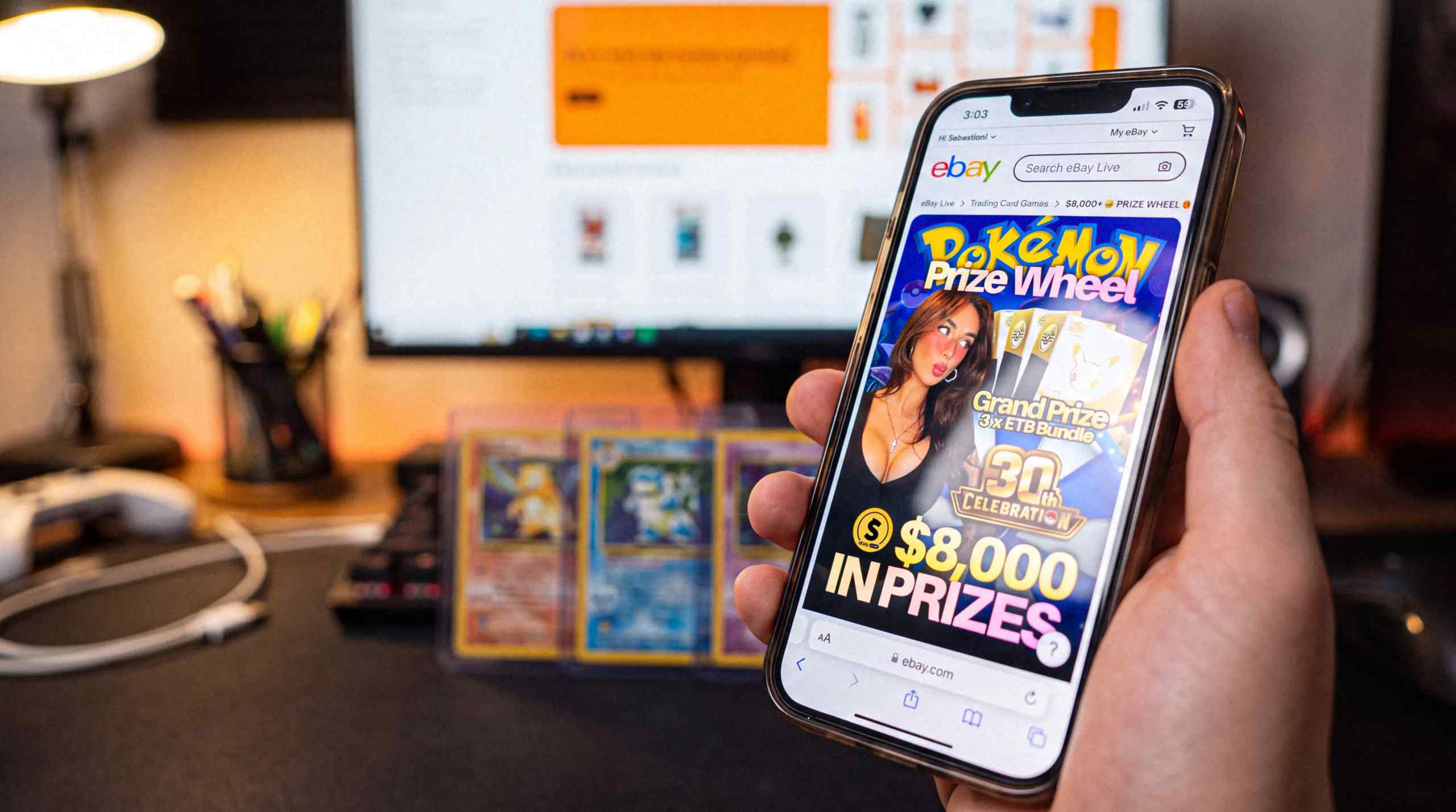
Are eBay's "Spin the Wheel" Listings Just Gambling?
A corner of eBay Live auctions off wheel spins instead of actual items. Bid starts at $1, the price climbs, and the winner finds out what they bought only after the wheel stops. Here's why that's not really shopping.
By Cole Rush
Casino Carpets Are Ugly. But Not for the Reason You Think
Casino carpets have long been accused of keeping gamblers disoriented and glued to the games. The truth is considerably more practical, though just as strange.

By Cole Rush
The Strange Gambling Laws Behind Cruise Ship Casinos
Cruise ship casinos only open once a ship clears territorial waters, and the odds, oversight, and rules that follow are nothing like a Vegas floor. Here's what actually changes at sea.

By Cole Rush
Six Reasons Bettors Are Starting to Ditch Credit Cards
States are increasingly questioning whether borrowed money has any place in gambling. From instant interest to damaged credit, the risks can extend far beyond the bet itself.

By Charlon Muscat
How Subscriptions Use Gambling Psychology to Hook You
Streaming services, apps, and subscription boxes may look nothing like a casino, but many tap into the same psychological forces that make gambling so hard to walk away from.

By Cole Rush
The Best Gambling Songs Ever Written, Ranked
From Kenny Rogers to Sting, these seven songs go beyond casino clichés to capture the risk, psychology and obsession behind gambling.

By Cole Rush