

Is the Bitcoin Mining Apocalypse Coming?
With mining profits under pressure and major companies shifting toward AI, could the 2028 Bitcoin halving trigger a mass exodus from the industry?

Bitcoin mining has never been easy. With rising electricity costs, equipment expenses, and growing competition, miners have long struggled to turn a profit. However, the next couple of years may prove increasingly challenging for the industry.
Bitcoin's next halving is expected in April 2028, reducing mining rewards from 3.125 BTC to 1.5625 BTC per block, a 50% cut in what miners receive for finding a block.
Normally, miners prepare for the halving by upgrading equipment, cutting operating costs, or hoping Bitcoin's price rises enough to offset the reward cut.
This time, something different is happening. Some major mining companies are abandoning Bitcoin for artificial intelligence, while others struggle to stay profitable.
Could the next halving trigger a mass exodus from Bitcoin mining, and if so, what happens to Bitcoin?
Bitcoin Mining Is Already Becoming Less Profitable
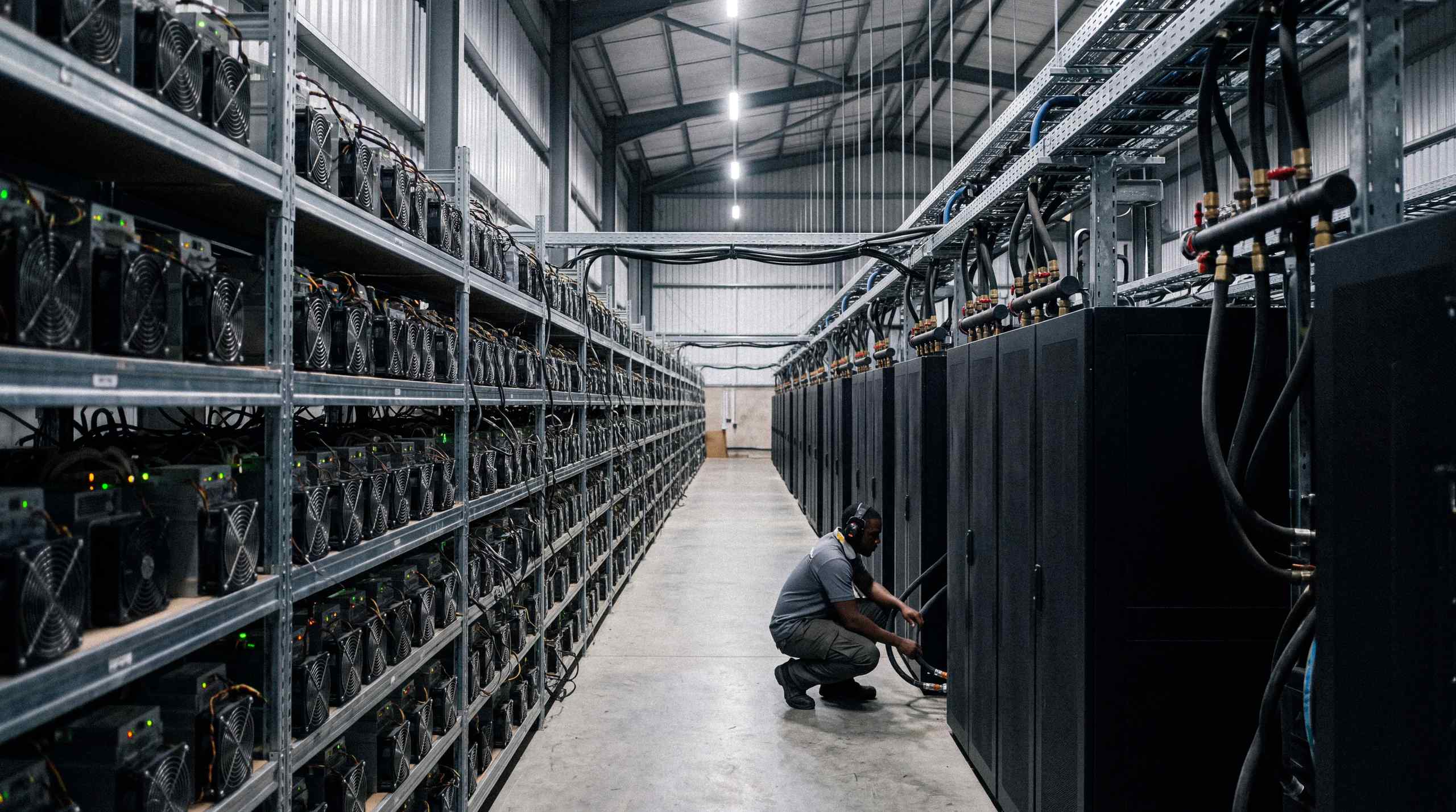
One of the biggest problems facing Bitcoin miners is steadily declining profitability.
According to CoinShares' second-quarter 2026 Bitcoin Mining Report, publicly traded mining companies averaged about $75,500 per Bitcoin in production costs, excluding taxes.
Meanwhile, Bitcoin finished the quarter trading around $58,400. On average, publicly traded miners were spending considerably more to produce Bitcoin than it was worth.
Granted, not every mining company has the same expenses. Electricity costs vary widely, and companies with newer, more efficient equipment can produce Bitcoin more cheaply than competitors running older machines.
Still, the figures illustrate how challenging the industry has become.
Companies also have to contend with Bitcoin's network difficulty, which adjusts based on how quickly blocks are produced. As more computing power joins the network, competition increases, reducing how much Bitcoin individual miners earn.
Of course, the halving is approaching. Mining rewards will be cut in half. Unfortunately, electricity bills, equipment expenses, and other operating costs won't automatically decrease by 50%.
Bitcoin's price could rise enough to compensate, but historical patterns suggest those price increases will be temporary. Following the next bull run, companies will likely be back to paying more to produce Bitcoin than what it’s worth, and at half the current output.
For miners already operating on thin margins, the next reduction in rewards could become a serious problem.
Bitcoin Miners Are Finding Something More Profitable Than Bitcoin
Historically, struggling mining companies had limited options. They could upgrade their equipment, negotiate cheaper electricity rates, reduce or pause output, or leave the industry.
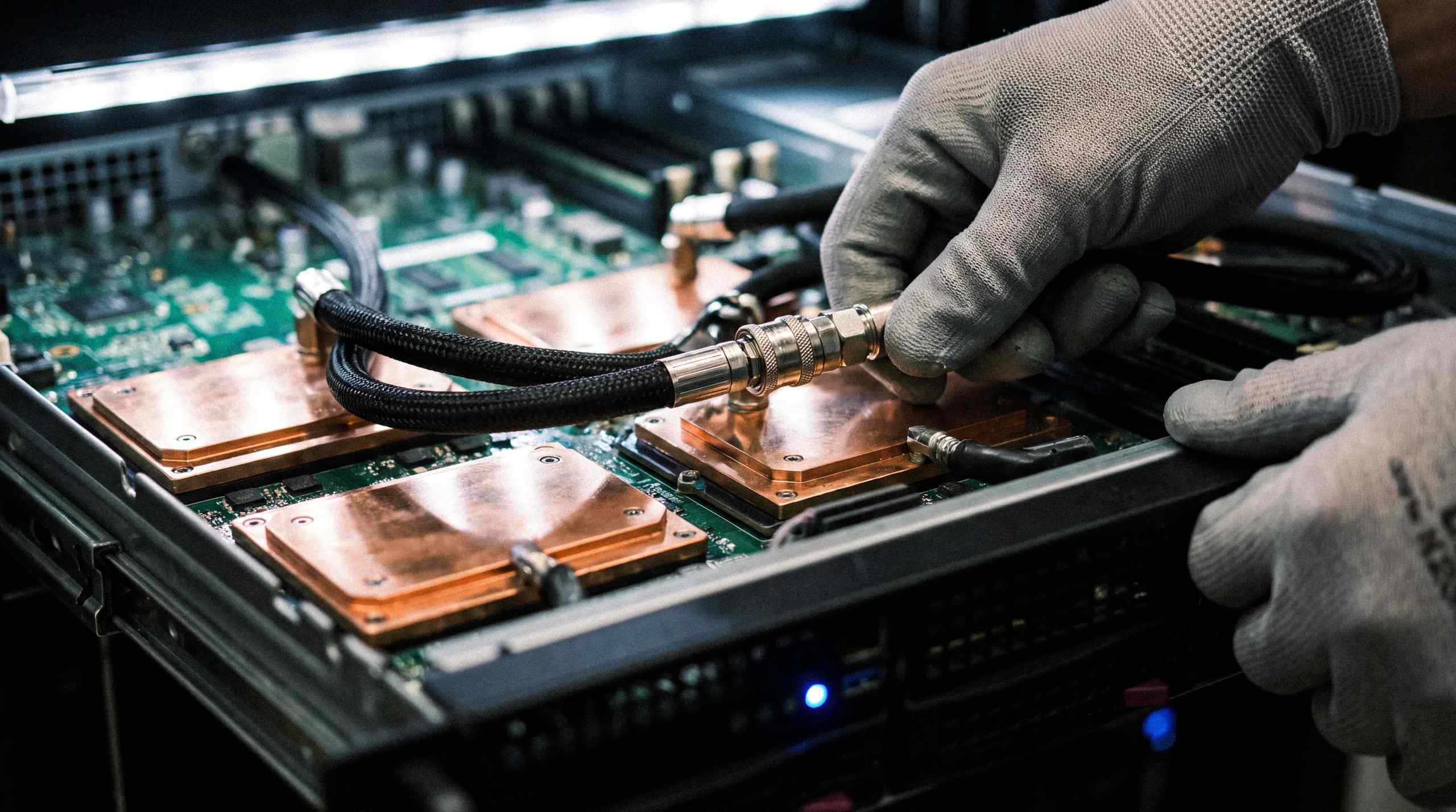
Artificial intelligence has introduced another option. Mining companies already have access to substantial amounts of electricity and large computing facilities, resources AI companies desperately need.
Instead of mining Bitcoin exclusively, some operators are becoming data centers that support AI, with substantial financial incentives.
CoinShares estimates that AI computing could generate approximately $1.5 million in annual profit per megawatt, compared with around $500,000 for Bitcoin mining. That's potentially three times as much profit from the same amount of electricity.
However, converting to an AI infrastructure comes with a cost. AI upgrades require more sophisticated equipment, including advanced cooling and networking. CoinShares estimates that AI facilities can cost $8 to $15 million per megawatt, compared with approximately $700,000 to $1 million for Bitcoin mining infrastructure.
Several major mining companies have decided the potential rewards justify the investment.
Major Mining Companies Are Already Shifting Toward AI
IREN is a prime example of a miner transitioning into AI. In the quarter ending June 30, 2026, the company generated about $70.5 million from AI cloud services, up from $66.7 million from Bitcoin mining.
AI is already the company’s largest revenue source, further supporting its decision to substantially transition from mining to AI by the end of 2026.
TeraWulf has experienced a similar transformation. High-performance computing leases generated approximately 71% of its revenue during the second quarter of 2026.
Meanwhile, Core Scientific has been expanding its data-center business while reducing its commitment to Bitcoin mining. Recent SEC filings confirm the company lost $41.9 million by canceling a substantial mining hardware agreement.
Cipher Digital is increasingly concentrating on high-performance computing facilities rather than Bitcoin production.
Some companies aren't waiting for the next halving. They're transitioning their infrastructure to generate better returns elsewhere.
With the growing need for AI processing, and because the industry isn’t reliant on market trading conditions, Bitcoin mining may become considerably less attractive.
Bitcoin Mining Rewards Post Halving
| Metric | Current / 2026 | After 2028 halving |
|---|---|---|
| Block subsidy | 3.125 BTC | 1.5625 BTC |
| CoinShares Q2 cash cost per BTC | $75,500 | $151,000* |
| AI estimated annual profit/MW | $1.5M | Unknown |
| Mining estimated annual profit/MW | $500,000 | Unknown |
*Hypothetical cost assuming unchanged operating expenses, network conditions and output assumptions, not a forecast. Transaction fees are excluded from the block subsidy figures.
Could the 2028 Halving Trigger a Mining Exodus?
A major shakeout in the mining industry may be on the horizon.
Once the halving arrives, Bitcoin rewards will be cut by 50%. Previous halvings have been followed by Bitcoin bull markets, although there's no guarantee that pattern will continue in 2028.
During the bull market, many miners can turn a profit as Bitcoin's price rises. However, what happens during the bear market?
If mining conditions remained unchanged, the next halving could theoretically double the average cost of producing one Bitcoin from $75,500 to approximately $151,000. In practice, changing network difficulty, equipment efficiency, and electricity prices would influence the actual cost.
Of course, the cost of mining a block will likely be much higher. A significant drop in Bitcoin's price would hit overall profitability even harder.
Some companies might survive by operating more efficient equipment or securing cheaper electricity. Others could temporarily shut down until conditions improve.
But what happens to companies that switch to AI?
Instead of waiting for Bitcoin prices to recover, they might decide to abandon mining altogether.
Odds are, larger competitors will acquire smaller mining operations, particularly those with access to cheap electricity and enough capital to upgrade their equipment.
The result could be an industry dominated by fewer, larger mining businesses.

What Happens to Bitcoin If Miners Start Leaving?
If major mining companies abandon Bitcoin, could the network itself be threatened?
Bitcoin has a built-in mechanism designed to adjust when mining activity changes. About every 2,016 blocks, the network adjusts mining difficulty to keep the average block production time around 10 minutes.
If a significant number of miners shut down, blocks could initially take longer to produce. However, the next difficulty adjustment would ease things for the remaining participants. That could actually improve profitability for miners that stay.
On the downside, a sustained decline in mining power could also make the network more vulnerable to attacks, even if Bitcoin continues processing transactions normally.
We've already seen Bitcoin survive a substantial mining disruption. In 2021, China's crackdown on cryptocurrency mining forced considerable computing power offline. Bitcoin continued operating, and network hashrate eventually recovered as miners relocated and new operations came online.
However, that situation differs significantly from what could happen in 2028. In 2021, miners were responding to government restrictions. Today, companies are voluntarily moving into another industry because they believe it offers better financial opportunities.
The transition will be more gradual but more permanent.
Is Bitcoin Mining Facing an Apocalypse or an Evolution?
The Bitcoin mining industry is changing. Mining profitability is already under heavy pressure, and with another halving approaching, artificial intelligence is offering some operators an alternative way to make money.
Over the next several years, we could see additional companies shut down, merge with competitors, or abandon Bitcoin entirely.
However, this doesn’t mean Bitcoin mining is headed for extinction. As inefficient miners leave, remaining miners could benefit from reduced competition and lower mining difficulty. Companies with inexpensive electricity and modern equipment may be in an even stronger position than before, but they still face profitability challenges.
The bigger question is whether Bitcoin mining will remain attractive enough to compete with other uses for electricity and computing infrastructure.
For years, mining companies built their businesses around the expectation that Bitcoin's long-term appreciation would justify their investments. Now, some are discovering they might not need Bitcoin at all.
The 2028 halving could accelerate that transition, potentially leaving the mining industry looking very different by the time the next bull market arrives.
So, is the Bitcoin mining apocalypse coming? For some mining companies, it may have already started.
For Bitcoin itself, what looks like an apocalypse could turn out to be another major evolution in the industry.
James Guill is an experienced iGaming journalist with a diverse background spanning IT, poker, and online gambling media. With over 20 years in the industry, he’s covered a wide range of gaming topics and has been featured in outlets like USA Today and G4 TV.
More Articles like this
GTA VI By the Numbers: The Biggest Entertainment Gamble Ever?
A budget Rockstar won't confirm, a trailer that beat MrBeast, and a price tag of $79.99. These are the numbers behind GTA VI.

By Cole Rush
Do AI Detectors Like Pangram, ZeroGPT, Grammarly Actually Work?
There are plenty of AI detectors out there – including Pangram, ZeroGPT, Grammarly – but do any of them actually work? The answer might surprise you.

By Cole Rush
Could the NBA's Smart Ball Change Basketball Forever?
The NBA is testing a sensor-equipped ball in preseason games. It won't change a single call this fall, but it points toward faster reviews and fewer officiating arguments.

By Cole Rush
Apple's $3,199 iPhone Duo Is Even Pricier Than You Think
Apple's new $3,199 iPhone Duo is the priciest iPhone ever. But even after adjusting nearly two decades of Apple pricing for inflation, the size of the gap is surprising.

By Cole Rush
Gambling Technology Trends: 5 Technologies That Changed the Industry
From RNGs and live dealer streaming to geolocation and AI, these gambling technology trends transformed the industry—and could help shape what comes next.

By Charlon Muscat
10 iPhone Battery Tips That Bust Common Battery Myths
Your iPhone can chew through battery even when nothing seems to be happening. Plenty of old-school tips barely help, while others kill the features you paid for in the first place.

By Charlon Muscat