
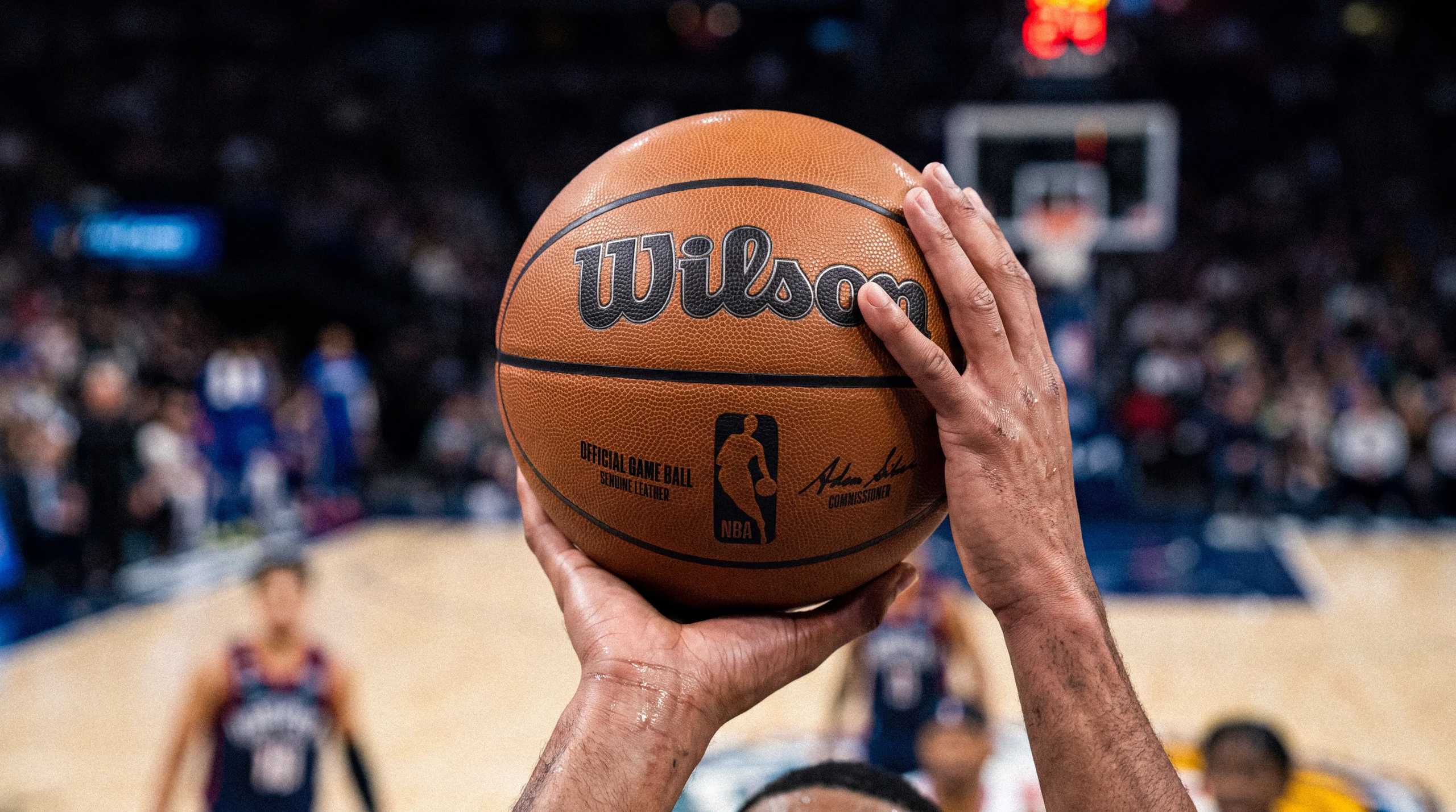
Could the NBA's Smart Ball Change Basketball Forever?
The NBA is testing a sensor-equipped ball in preseason games. It won't change a single call this fall, but it points toward faster reviews and fewer officiating arguments.
%20(1).webp)
Every NBA fan knows the scene: a loose ball skips toward the sideline, three refs point three directions, and the game stops for a long look at a replay monitor. The league's newest experiment aims at that exact moment. The goal is a basketball that can feed precise movement data into a system designed to help officials make faster, more accurate calls.
So far, though, the smart ball is just a test.
What the NBA Is Testing
The league announced earlier this month that select preseason games will use a smart basketball with a Bluetooth sensor inside. Wilson built the ball. The sensor sits in the air valve and, according to Fast Company, adds about one gram, roughly 1/600th of the ball's weight.
The key limit: the data is for research only. Nothing the ball records will affect calls in those games, and the technology won't carry into the regular season. The NBA also said the ball's sensor can collect data for possible future use in real-time officiating.
Here's how it works, per Fast Company's explainer. The ball sends data to a small number of antennas around the arena, tracking measurements such as acceleration. That gets combined with video and other sources to build models for officiating. The league first tried the ball in the 2025-26 G League season and at the 2026 Summer League.
Players aren't told which ball they're using. The NBA's head of basketball research and development, Tom Ryan, said the test is blind, so player feedback shows whether the sensor changes how the ball feels or performs. After Summer League, the league says players couldn't tell the difference.
What Fans Could Get Out of It
This is the part fans care about. Some benefits are plausible, and one has the commissioner's backing.
- Faster out-of-bounds and possession calls: Fast Company reports that Commissioner Adam Silver has said AI-assisted officiating could automate calls like out of bounds and which team has possession. Silver said in May that such calls could be instantaneous, letting human officials focus on subjective ones. If it works, it would cut the long huddles around the monitor.
- Fewer replay delays: The same logic applies to reviews. A sensor reading confirming the last touch could be faster than frame-by-frame video. The NBA hasn't shown a time savings yet.
- New stats and broadcast graphics: A ball that reports its own movement could, in theory, feed new numbers on shots, passes, and ball speed. Nothing in the league's announcement promises that. It's a reasonable guess about where the data could go.
Of course, even perfect ball tracking wouldn't settle arguments over charging fouls, illegal contact, or other judgment calls. Those would still require human interpretation.
The Refs Are Getting Tech, Too
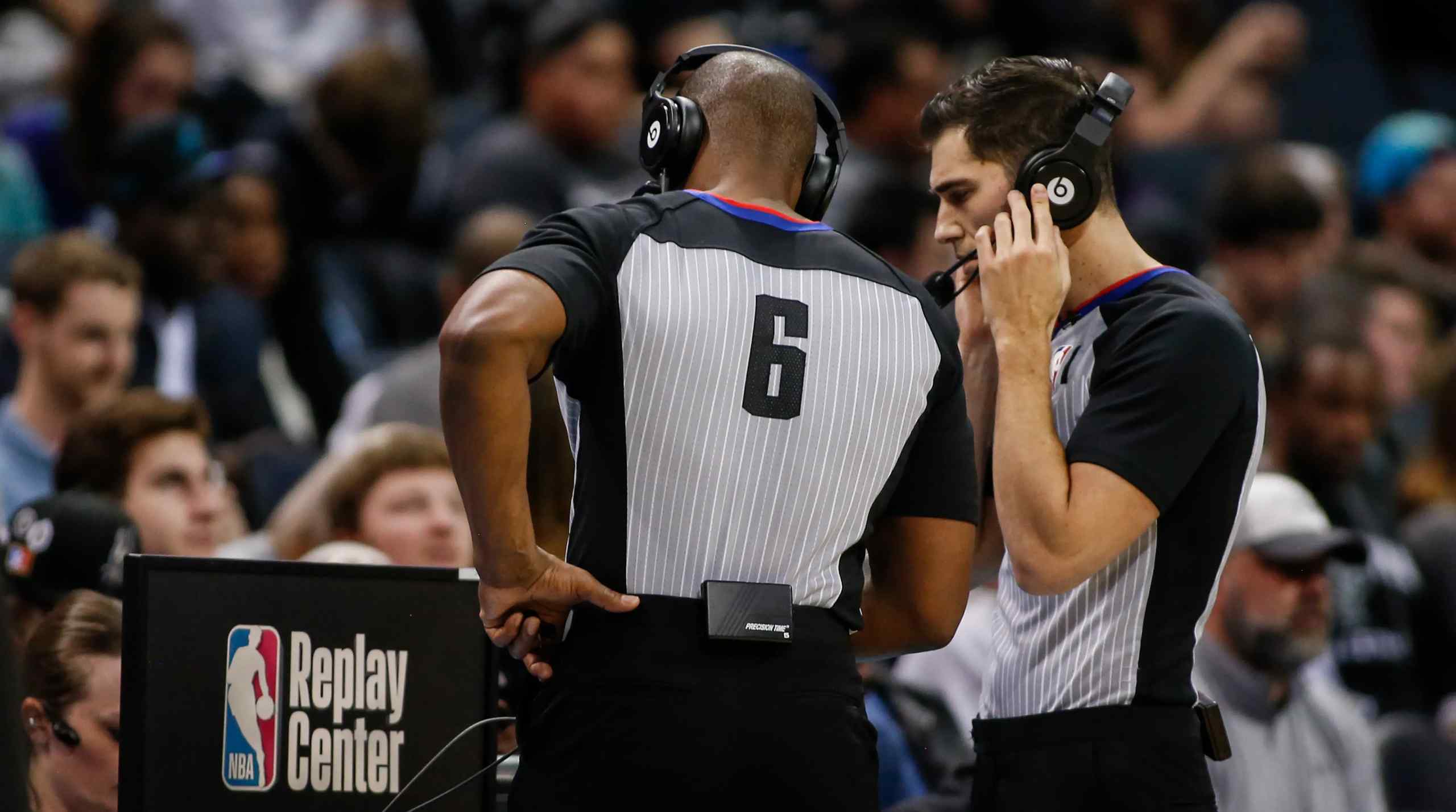
A second experiment is more concrete. Officials in select games will wear wrist devices that connect them with the replay center in designated situations: replay reviews, scoring changes, and clock malfunctions. The NBA called the summer pilot successful.
For fans, this could matter as much as the ball. Some stoppages come down to communication between the court and the replay center. If a ref can flag a clock error to the replay center from the wrist, the crew spends less time crowded around a courtside monitor.
Is There a Downside?
Yes, and soccer offers a preview.
At this summer's World Cup, Croatia thought it had equalized against Portugal until sensor data helped officials identify an offside infringement in the buildup. Croatia's coach, Zlatko Dalić, complained that decisions like that take the joy out of football. A ball that rules instantly can also erase a moment the crowd had already celebrated.
Other risks are practical. Sensors have to be reliable in a loud, crowded arena. The league hasn't published accuracy thresholds, and it hasn't said how sensor data would work with human judgment when the two disagree. More tech can also mean more stoppages if officials have to double-check a machine. And if players noticed any difference in the ball, the experiment would stall.
Sports bettors will watch this one closely, too. Officiating calls can swing a spread, so faster, more consistent calls matter to them as much as to fans. Consistency cuts both ways, since a machine call can end a game's late drama as easily as it fixes a missed one.
NBA Smart Basketball: What's Possible vs. What's Proven
| Potential Benefit | How It Could Help Fans | Status Today |
|---|---|---|
| Sensor in the ball | Gathers movement data for officiating models | Testing in select preseason games; research only |
| Faster out-of-bounds and possession calls | Fewer stoppages for close plays | Silver has floated it; not in use |
| Quicker replay reviews | Less time watching refs at the monitor | Not yet demonstrated |
| Ref wrist wearables | Faster contact with replay center on reviews, scoring, and clock issues | Piloted in summer; testing in select preseason games |
| New stats and broadcast graphics | More detail on shots and ball movement | Speculative; not announced |
Is This the Future?
Probably, in some form. Sensor-based calls already exist in other sports, and Silver has said he sees them coming to the NBA. The preseason test is the cautious first step: prove the ball plays like a normal one, then prove the data is accurate enough to trust.
Fans should watch whether it shortens the parts of games people hate, like long replay reviews, without taking away the human drama. The regular season will start without it, so any verdict waits on what the league shares from this test. For now, the smart ball is a promising idea with exactly zero calls to its name.
Cole Rush is a freelance writer, crossword constructor, and creative tinkerer with more than 10 years of experience writing about anything and everything. Cole’s primary area of expertise is the gambling industry, covering the expansion of sportsbooks and online casinos alongside emerging spaces like sweepstakes casinos and prediction markets.
More Articles like this
Apple's $3,199 iPhone Duo Is Even Pricier Than You Think
Apple's new $3,199 iPhone Duo is the priciest iPhone ever. But even after adjusting nearly two decades of Apple pricing for inflation, the size of the gap is surprising.
.webp)
By Cole Rush
Gambling Technology Trends: 5 Technologies That Changed the Industry
From RNGs and live dealer streaming to geolocation and AI, these gambling technology trends transformed the industry—and could help shape what comes next.
By Charlon Muscat
10 iPhone Battery Tips That Bust Common Battery Myths
Your iPhone can chew through battery even when nothing seems to be happening. Plenty of old-school tips barely help, while others kill the features you paid for in the first place.
By Charlon Muscat
Could GTA VI Bring Back Casinos? Here’s What We Know So Far
GTA VI has lottery signs and gambling references, but Rockstar hasn’t confirmed a casino. Here’s what the clues and GTA’s history tell us so far.

By Charlon Muscat
How Streamers and YouTubers Rewired Gambling Culture
Forget billboards. The gambling industry's most effective marketers are streamers who build parasocial relationships and promote affiliate codes. Here's how they work, why they work, and what it means for you.
By Cole Rush
Investing or Gambling? It's Harder to Tell Than Ever Before
Meme stocks, penny shares, and leveraged ETFs may all promise traders big paydays, but from the outside looking in, it’s still just gambling, isn’t it?
By Stuart Hughes