
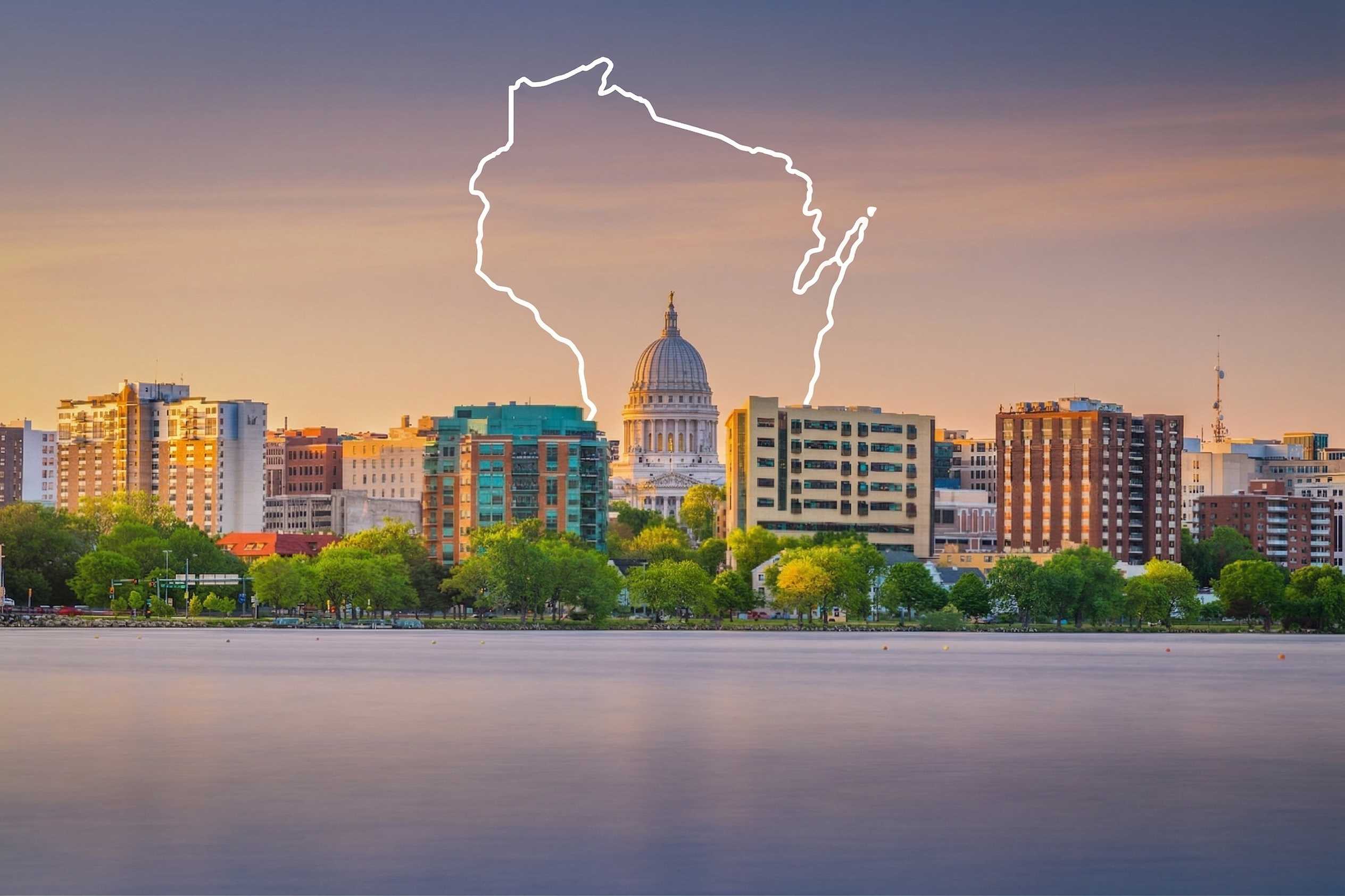
Wisconsin Sports Betting: Is It Legal and Where Can You Bet in 2026?
Tribal sportsbooks are your only legal option today, but full-fledged online sportsbooks are on the way.

Sports betting is legal in Wisconsin with significant restrictions, but the landscape is shifting fast in 2026. Assembly Bill 601 was passed in the state legislature and signed into law by Governor Tony Evers. Online sports betting is now legal, but WI is in the thick of regulatory discussions. Currently, regulated sports wagering is limited to in-person betting at select tribal casinos operating under state-negotiated gaming compacts.
For Wisconsin residents who want to bet on the Green Bay Packers, Milwaukee Bucks, or Milwaukee Brewers right now, the options are real but narrow. As soon as Wisconsin’s government and tribal interests agree on regulations and framework for sports betting, those options will expand quickly.
BETTING-BY-REGION
BETTING-BY-REGION
Wisconsin
Mobile Sportsbooks
Prediction Markets
4 markets available



.webp)
Online Casinos
Sweepstakes Casinos
Available statewide
Daily Fantasy Sports
Legal Status Overview: Wisconsin Sports Betting at a Glance
Wisconsin's approach to legal sports betting is unlike most states. Rather than passing broad commercial gambling legislation, the Badger State has allowed individual federally recognized tribes to amend their gaming compacts with the state to include sports wagering. This means the legal framework is tribal-first, and any bettor hoping to place a regulated wager must do so on tribal land.
- Retail sports betting: Legal at select tribal casinos under amended gaming compacts
- Statewide online sports betting: Legal but not yet live
- Mobile betting apps (statewide): Not available until tribes and regulators agree on a framework. Currently, geofenced tribal apps only work on casino property
- Real-money online casino gambling: Not legal under Wisconsin state law
- Daily Fantasy Sports (DFS): Accepted by major platforms; operates in a legal gray zone with no explicit state prohibition
- Sweepstakes casinos: Legal under Wisconsin's promotional gaming laws
- Minimum betting age at tribal casinos: 19 years old
- Minimum age for DFS platforms: 18 years old
The constitutional backbone of Wisconsin's gambling restrictions is Article IV, Section 24 of the Wisconsin Constitution, which prohibits all forms of gambling unless lawmakers carve out a specific exception. That is how tribal gaming and the state lottery exist.
How Wisconsin Sports Betting Became Legal Through Tribal Compacts
Wisconsin's path to legal sports betting did not come through a sweeping legislative overhaul. Instead, it arrived quietly through a series of tribal-state compact amendments, allowing federally recognized tribes to renegotiate the terms of their existing gaming agreements with the state to include new forms of wagering, such as sports betting.
The legal foundation for tribal gaming in Wisconsin, and across the United States, is the Indian Gaming Regulatory Act (IGRA), a federal law enacted in 1988. IGRA provides the framework under which tribes can offer gaming on their sovereign lands, provided they negotiate compacts with the relevant state government. In Wisconsin, the governor has the authority to approve compact amendments, which is how sports betting was introduced without requiring a full legislative vote or constitutional change.
The timeline of compact amendments that brought retail sports betting to Wisconsin is as follows:
- July 2021: Governor Tony Evers signed a compact amendment with the Oneida Nation, making it the first Wisconsin tribe authorized to offer in-person sports betting. The Oneida Casino in Green Bay launched the state's first legal sportsbook in November 2021.
- 2022: Both the Forest County Potawatomi Community and the St. Croix Chippewa tribe reached their own compact amendments, expanding retail sports betting to additional locations across the state.
- March 2024: The St. Croix Casino in Hertel opened its third retail sports betting location.
- May 2024: The Potawatomi Sportsbook opened at Potawatomi Casino Hotel in Milwaukee, giving the state's largest city its first legal in-person sportsbook.
- April 2024: The federal government approved a new gaming compact between Wisconsin and the Lac du Flambeau Band of Lake Superior Chippewa Indians, though that tribe has not yet launched sports betting operations.
As of mid-2026, six tribal casino locations across Wisconsin offer legal in-person sports betting. The Oneida Nation's network is the most expansive, with wagering available at the main Oneida Casino in Green Bay as well as at several Oneida One-Stop convenience locations in the surrounding area.
Assembly Bill 601: Wisconsin Online Sports Betting on the Brink
The most significant development in Wisconsin online sports betting in years came on February 19, 2026, when the Wisconsin State Assembly passed Assembly Bill 601 (AB 601) by voice vote. The bill, authored by Assembly Majority Leader Tyler August (R-Walworth), would authorize Wisconsin's 11 compacted tribes to offer online sports betting statewide for the first time, using a legal framework modeled on Florida's hub-and-spoke system.
Under the hub-and-spoke model, online sports bets placed by Wisconsin residents anywhere in the state are legally processed through servers located on tribal land. AB 601 applies the model to Wisconsin, allowing tribes to offer mobile wagering platforms accessible statewide, provided the server infrastructure remains on sovereign tribal land.
Following its initial momentum, the legislation successfully cleared its final hurdles when the Wisconsin State Senate passed the bill on March 17, 2026. Governor Tony Evers signed the historic legislation into law on April 9, 2026, officially enacting it as 2025 Wisconsin Act 247.
While the statutory path for statewide mobile sports betting is now fully legal, the market is not yet open. The bottleneck has shifted from the legislature to the executive branch, where Governor Evers and state regulators must now negotiate and finalize individual, updated gaming compact amendments with each of the state's 11 sovereign tribal nations before any statewide apps can legally launch.
A major sticking point during the legislative process was revenue distribution. Federal tribal gaming law mandates that at least 60% of all revenue generated by a Native American gaming operation remain with the tribe. The Sports Betting Alliance, a lobbying group representing DraftKings, FanDuel, BetMGM, and Fanatics, spoke against the bill at public hearings, arguing that the 60% revenue requirement would make Wisconsin an unattractive market for major commercial sportsbook operators. Because the market is structured strictly around tribal sovereignty under Act 247, independent commercial licenses are off the table. Operators will instead have to wait to see if tribes choose to operate their own proprietary books or partner directly with commercial brands via individual skin agreements.
There were also constitutional objections during the bill's progression. The Wisconsin Institute for Law and Liberty argued that AB 601 violated the Wisconsin Constitution by altering the criminal definition of a bet to expand gambling without a direct referendum vote from the public. Despite these objections, the financial incentive for the state remains a driving factor. In-state retail sports betting already generates approximately $60 million per year for Wisconsin; adding a statewide online channel will significantly expand that revenue stream, which ultimately provides supporters with a compelling reason to push the legislation across the finish line.
Where to Bet on Wisconsin Sports Right Now: Legal Tribal Sportsbooks
For Wisconsin residents and visitors who want to place a legal sports wager today, the options are limited to in-person retail sportsbooks at authorized tribal casino locations. Here is where legal sports betting is currently available in the Badger State:
- Oneida Casino (Green Bay): The state's first and most established legal sportsbook, operated by the Oneida Nation with technology support from International Game Technology (IGT). Wagering is also available at multiple Oneida One-Stop locations in the Green Bay area.
- Potawatomi Casino Hotel (Milwaukee): The Forest County Potawatomi Community's flagship Milwaukee property, which opened its Potawatomi Sportsbook in May 2024. Bettors can select wagers online via the sportsbook's website and place bets in the lounge or at 24/7 kiosks on-site.
- St. Croix Casino (Danbury, Turtle Lake, and Hertel): The St. Croix Chippewa tribe operates retail sportsbooks at three locations across northwestern Wisconsin.
- Ho-Chunk Gaming (Wisconsin Dells, Madison, Black River Falls): Ho-Chunk Gaming operates seven Wisconsin locations, including properties in Wisconsin Dells, Madison, and Black River Falls. Select venues (most notably Wisconsin Dells) offer a full suite of table games and poker, with sportsbook services expected as tribal compacts are finalized.
Mobile betting apps tied to these tribal operators are geofenced; they function only when you’re physically located on sovereign tribal land. Statewide mobile access, where a Wisconsin resident could open an app from their home in Madison or Milwaukee and place a bet, is on the way but not yet available.
Bettors at tribal sportsbooks must be at least 21 years old to place a wager, consistent with tribal gaming laws. Wagering on in-state college teams, such as the Wisconsin Badgers, is not permitted at tribal sportsbooks under current compact terms. Bettors can, however, wager on out-of-state college athletics and on professional teams, including the Green Bay Packers, Milwaukee Bucks, and Milwaukee Brewers.
Wisconsin Sports Teams: What Bettors Are Watching
Wisconsin's sports culture is deeply passionate, and the state's major professional and collegiate franchises are at the heart of local betting interest. Understanding which teams drive wagering demand helps explain why the push for expanded legal sports betting in Wisconsin has such strong public support.
The Green Bay Packers are the crown jewel of Wisconsin sports. One of the oldest franchises in the NFL, the Packers compete in the NFC North and are the only community-owned major league sports team in the United States. With four Super Bowl titles and a legendary home at Lambeau Field in Green Bay, the Packers generate enormous betting interest both locally and nationally. NFL betting on the Packers is among the most popular wagering markets at Wisconsin's tribal sportsbooks.
The Milwaukee Bucks represent Wisconsin in the NBA's Eastern Conference. The Bucks have a storied history, including NBA championships and a roster that has featured all-time greats such as Kareem Abdul-Jabbar and Oscar Robertson. In the modern era, Giannis Antetokounmpo, "The Greek Freak," has made the Bucks one of the league's most compelling franchises. Basketball betting on the Bucks draws significant local interest, particularly during the NBA playoffs.
The Milwaukee Brewers are Wisconsin's MLB franchise, competing in the National League Central division. The Brewers have played in Milwaukee since 1970 and call American Family Field home. While the team has not yet won a World Series championship, they remain a beloved local institution and a popular betting market during the MLB season, from opening day moneylines to futures on their championship odds.
The Wisconsin Badgers, the athletic programs of the University of Wisconsin-Madison, round out the state's major sports identity. The Badgers compete across multiple NCAA sports, with college football and men's basketball drawing the most betting attention. However, as noted above, wagering on in-state college teams is currently prohibited at Wisconsin's tribal sportsbooks, though DFS platforms may offer Badgers-related contests depending on the operator.
Daily Fantasy Sports and Legal Online Alternatives in Wisconsin
Statewide online sports betting was only recently legalized, and no platforms have launched yet, pending negotiations over tribal compacts. Many Wisconsin residents have turned to daily fantasy sports (DFS) and social sportsbook platforms as legal alternatives. These options occupy a distinct legal space from traditional regulated sports wagering and are worth understanding clearly.
DFS platforms like DraftKings and FanDuel accept Wisconsin residents and offer contests where players build rosters of real athletes and compete based on individual player statistics rather than the outcome of a game. Wisconsin has never passed formal legislation to regulate DFS contests, leaving the space in a legal grey area, though major platforms have operated in the state for over a decade without legal interference. The minimum age for DFS participation is 18, lower than the 21-year minimum required at tribal sportsbooks.
Social sportsbooks and sweepstakes-model platforms represent another legal avenue for Wisconsin residents who want a sports betting experience without visiting a tribal casino. These platforms use a dual-currency system, typically offering free-play coins for entertainment and sweepstakes coins that can be redeemed for prizes, which allows them to operate under promotional gaming laws rather than gambling statutes. Because free entry is always available, these platforms are not classified as gambling under Wisconsin law.
Platforms available to Wisconsin residents in this category include:
- Thrillzz: A social sportsbook that allows players aged 19 and older to make picks on sporting events, including games involving the Milwaukee Bucks and Green Bay Packers, using in-house virtual currency. Thrillzz Sweeps Coins can be used to win tickets redeemable for real cash prizes.
- Underdog Fantasy: A DFS platform offering skill-based Pick'em contests and Best Ball drafts. Legal for Wisconsin residents aged 18 and older under DFS regulations.
- RealPrize Casino: A sweepstakes casino platform offering hundreds of slot and table game titles, with a clear redemption system and mobile-first design accessible to Wisconsin players.
- Sixty6 Casino: A sweepstakes casino focused on slot gameplay, offering a streamlined experience for Wisconsin players seeking casual online gaming.
- Hello Millions Casino: Another sweepstakes platform available to Wisconsin residents, offering casino-style games under promotional gaming laws.
These platforms are legal alternatives, not licensed sportsbooks. They do not offer the same regulated protections as a state-licensed wagering environment. Wisconsin residents should be cautious about offshore gambling sites that claim to accept real-money sports bets.
Wisconsin Online Gambling Laws: The Broader Picture
Beyond sports betting, Wisconsin's online gambling landscape is notably restrictive. Wisconsin Statutes Chapter 945 prohibits any betting pool or device for gain unless specifically authorized by statute or tribal compact. To date, no state law has authorized real-money internet casino play. This means that online slots, online poker, and online table games are all prohibited under Wisconsin law, regardless of whether the platform is based in the United States or offshore.
The state's conservative policy stance toward gambling expansion reflects a broader political reality: Wisconsin's legislature has historically prioritized protecting tribal sovereignty and the revenue flows embedded in tribal-state compacts. Any major expansion of commercial online gambling would require a constitutional amendment, which must pass two consecutive legislative sessions before going to Wisconsin voters for approval. That is a multi-year process that lawmakers have shown little appetite to initiate.
Neighboring states paint a stark contrast. Illinois and Michigan have both embraced full-scale online sports betting and, in Michigan's case, legal online casino gaming through 15 licensed operators. New Jersey has been a national leader in regulated online gambling since 2013.
For Wisconsin residents seeking legal online gambling options in the interim, sweepstakes casinos remain the only compliant path to internet-based gaming. These platforms operate under U.S. sweepstakes and promotional laws, and because free entry is always available, they avoid the "consideration" element that defines illegal gambling under Wisconsin statutes. They are not a substitute for a fully regulated iGaming market, but they are legal, accessible, and increasingly sophisticated in their game offerings.
Responsible Gambling and Regulatory Protections in Wisconsin
Wisconsin's regulated tribal sportsbooks operate under responsible gambling frameworks embedded in their gaming compacts. These frameworks include age verification requirements, self-exclusion programs, and problem gambling resources. The Wisconsin Council on Problem Gambling operates a 24/7 confidential helpline at 1-800-GAMBLE-5, providing support for anyone struggling with gambling-related issues.
At tribal sportsbooks, bettors must present valid identification to verify their age, the minimum is 21 years old, before placing any wager. Tribal gaming operations are subject to oversight by the National Indian Gaming Commission (NIGC) at the federal level and by the Wisconsin Department of Administration's Division of Gaming at the state level. These bodies ensure that tribal gaming compacts are adhered to and that consumer protections remain in place.
Now that AB 601 is law, the updated tribal compacts, which must still be negotiated and approved by the Bureau of Indian Affairs before any platform launches, are expected to require tribes to incorporate responsible gambling tools into their mobile platforms, including deposit limits, session time limits, and voluntary self-exclusion options.
What's Legal in Wisconsin
A Quick Reference Guide
| Product | Legal Status | Notes |
|---|---|---|
| Sports Betting (Online) | ⚠️ Legal, not yet live | Awaiting regulation and Tribal Compacts |
| Sports Betting (Retail) | Tribal Casinos | Beau Rivage, Gold Strike, IP Casino, Harrah's Gulf Coast. |
| Daily Fantasy Sports | ✅ Legal & Regulated | PrizePicks, Underdog Fantasy, DraftKings. |
| Prediction Markets | ⚠️ Operating | Kalshi (CFTC-regulated), Polymarket (crypto-based). |
| Sweepstakes Casinos | ✅Allowed | Stake.us, WOW Vegas, Chumba Casino, High 5 Casino. |
| Online Casinos (Real Money) | ❌ Illegal | None, no licensed operators in Wisconsin. |
The signing of AB 601 into law on April 9, 2026 marks the most significant legislative step toward statewide online sports betting in Wisconsin's history. The direction is set and what remains is execution.
Wisconsin's 11 tribes must now renegotiate their gaming compacts with the state to include online sports betting, and those amended compacts require federal approval from the U.S. Department of the Interior. That process takes time. Even with compact talks already underway, a statewide mobile launch before late 2026 or early 2027 is unlikely.
The revenue model under AB 601 keeps the market tribal-first. Major commercial operators like DraftKings and FanDuel opposed the law over a provision requiring tribes to retain at least 60% of online betting revenue, making independent entry financially unviable for most national brands. That means Wisconsin's eventual online market may feature fewer competing platforms and less aggressive promotional offers than neighboring states like Illinois. The tradeoff is a market built on regulated tribal compacts rather than a fully commercial free-for-all.
The open question is no longer whether Wisconsin will have statewide online sports betting, but how quickly tribes and the state can clear the federal approval process and which operators will ultimately decide the Wisconsin market is worth entering on the tribes' terms.
What Comes Next: The Future of Wisconsin Sports Betting
The passage of AB 601 by the Wisconsin State Assembly in February 2026 marks the most significant legislative step toward statewide online sports betting in the Badger State's history. Whether the bill clears the Senate and is signed into law by Governor Evers remains to be seen, but the direction of travel is clear. Economic pressure from neighboring states, growing public demand for mobile wagering access, and the tribes' own interest in protecting their market share from unregulated competitors all point toward eventual expansion.
If AB 601 passes and is signed into law, Wisconsin's tribes would need to renegotiate their gaming compacts with the state to include online sports betting, and those amended compacts would require federal approval from the U.S. Department of the Interior. That process takes time, meaning that even if the Senate passes the bill in spring 2026, statewide mobile sports betting may not launch until late 2026 or early 2027 at the earliest.
The revenue model under AB 601 would likely limit the market to tribal operators and their chosen technology partners, rather than opening the door to major commercial sportsbooks like DraftKings and FanDuel as independent operators. That is a meaningful distinction for bettors, as it may mean fewer competing platforms and potentially less aggressive promotional offers than bettors in states like Illinois or New Jersey enjoy. However, it also means that Wisconsin's online sports betting market, if it launches, would be built on a foundation of tribal sovereignty and regulated gaming compacts, not the commercial free-for-all that has characterized some other state rollouts.
For now, Wisconsin remains one of the more restrictive states in the country when it comes to legal online gambling. But 2026 is shaping up to be a genuinely pivotal year, and Bodog will be tracking every development as it happens.
Wisconsin Sports Betting in 2026: Know the Rules, Play It Smart
Here is the bottom line on Wisconsin sports betting in 2026: legal, regulated wagering exists, but it is geographically and technologically constrained. In-person sports betting at tribal casinos, including the Oneida Casino in Green Bay, the Potawatomi Casino Hotel in Milwaukee, and St. Croix Casino locations across the state, is the only fully legal option for placing a regulated sports wager. Statewide Wisconsin online sports betting does not yet exist, though Assembly Bill 601 has cleared the Assembly and awaits Senate action that could change the landscape before the year is out.
For Wisconsin residents who want to legally engage in sports wagering right now, the practical options are tribal retail sportsbooks, DFS platforms like DraftKings and FanDuel, and social sportsbooks or sweepstakes platforms operating under promotional gaming laws. Offshore gambling sites are not a legal or safe alternative, as they operate outside U.S. regulatory oversight and offer no consumer protections under Wisconsin law.
The constitutional framework governing Wisconsin online gambling is unlikely to change overnight. Article IV, Section 24 of the Wisconsin Constitution remains the binding constraint on any major expansion of legal gambling in the state, and any commercial online casino market would require a constitutional amendment approved by Wisconsin voters. That is a long road, but the tribal compact model has already proven it can deliver incremental, meaningful progress.
Wisconsin sports fans have plenty to bet on, from the Green Bay Packers' NFC North campaigns to the Milwaukee Bucks' playoff pushes and the Milwaukee Brewers' National League Central battles. Soon, the options will become far more vast when mobile sportsbooks launch.
Wisconsin Sports Betting FAQs
Is sports betting legal in Wisconsin?
Yes. Retail sports betting is legal at select tribal casinos. Statewide online sports betting was legalized when Governor Evers signed AB 601 on April 9, 2026, but no mobile platforms have launched yet pending tribal compact negotiations.
Where can I legally bet on sports in Wisconsin right now?
At tribal casino locations, including Oneida Casino (Green Bay and associated One-Stop locations), Potawatomi Casino Hotel (Milwaukee), and St. Croix Casino locations in Danbury, Turtle Lake, and Hertel. You must be physically present and at least 21 to wager.
Is online sports betting legal in Wisconsin?
It's now legal but not yet live. AB 601 was signed into law on April 9, 2026, authorizing Wisconsin's tribes to offer statewide mobile betting via a hub-and-spoke model. Until tribes renegotiate their compacts and receive federal approval, existing mobile apps remain geofenced to tribal land only.
What is Assembly Bill 60,1 and what does it mean for Wisconsin bettors?
AB 601 is bipartisan legislation signed into law on April 9, 2026. It authorizes Wisconsin's 11 tribes to offer statewide online sports betting using a hub-and-spoke model — bets placed anywhere in Wisconsin are processed through servers on tribal land. A launch date depends on how quickly tribes can renegotiate compacts and receive federal approval.
Can I use DraftKings or FanDuel for sports betting in Wisconsin?
Not for traditional sports wagering yet. Both platforms are available in Wisconsin for DFS contests (18+), but their sportsbook apps aren't legally available statewide. Under AB 601, tribes could partner with operators like DraftKings or FanDuel, though the 60% tribal revenue requirement may deter major commercial operators from entering.
What is the minimum age to bet on sports in Wisconsin?
21 for tribal sportsbooks, 18 for DFS and sweepstakes platforms.
Are there legal online gambling options in Wisconsin?
Real-money online casinos are not legal in Wisconsin. Sweepstakes casino platforms are legal. They operate under promotional gaming laws with free entry always available.
Can I bet on the Green Bay Packers, Milwaukee Bucks, or Milwaukee Brewers in Wisconsin?
Yes, all three are available at tribal sportsbooks. Wagering on in-state college teams like the Wisconsin Badgers is prohibited at tribal sportsbooks, though some DFS and social sportsbook platforms offer Badgers-related contests.
Bodog’s Sports Betting Guides by State
At Bodog, we feature up-to-date coverage of sports betting in each state. Explore the following list and find our authoritative guide to sports betting in your home state.
Alabama
Alaska
Arizona
Arkansas
California
Colorado
Connecticut
Delaware
Florida
Georgia
Hawaii
Idaho
Illinois
Indiana
Iowa
Kansas
Kentucky
Louisiana
Maine
Maryland
Massachusetts
Michigan
Minnesota
Mississippi
Missouri
Montana
Nebraska
Nevada
New Hampshire
New Jersey
New Mexico
New York
North Carolina
North Dakota
Ohio
Oklahoma
Oregon
Pennsylvania
Rhode Island
South Carolina
South Dakota
Tennessee
Texas
Utah
Vermont
Virginia
Washington
West Virginia
Wyoming
James Guill is an experienced iGaming journalist with a diverse background spanning IT, poker, and online gambling media. With over 20 years in the industry, he’s covered a wide range of gaming topics and has been featured in outlets like USA Today and G4 TV.
More Articles like this
Do NHL Stars Lose Their Edge After Signing Huge Contracts?
Do NHL stars really take their foot off the gas after a big payday? We analyzed 29 major contracts to find out.

By Charlon Muscat
Five Iconic World Series Moments Since the Brewers' Appearance
The Brewers are back in the World Series after 44 years. From Bill Buckner's error to the Cubs ending their curse, plenty has happened since 1982.
By Bill Gelman
LeBron to Giannis: Ranking 5 NBA Offseason Stunners
LeBron to Philly, Giannis to Miami, and Wemby staying put. Which NBA offseason move will pay off the most?
By Bill Gelman
NFL Fans Spend $900 to Watch Games. WWE Fans Pay Even More
Think watching every NFL game is expensive? WWE fans would argue otherwise.

By James Guill
How Bad Is It? Ranking the NHL's Original Six by Fan Misery
Nearly 60 years without a Stanley Cup is just the beginning. We rank the NHL's Original Six teams by how much misery their fans have endured.
By Bill Gelman
Why Does Everybody Hate Us? 10 Most Hated Sports Teams Ever
Some teams always win; others get caught breaking the rules. Either extreme is a surefire way to become universally hated, as these 10 sports teams can attest to.
By Stuart Hughes