
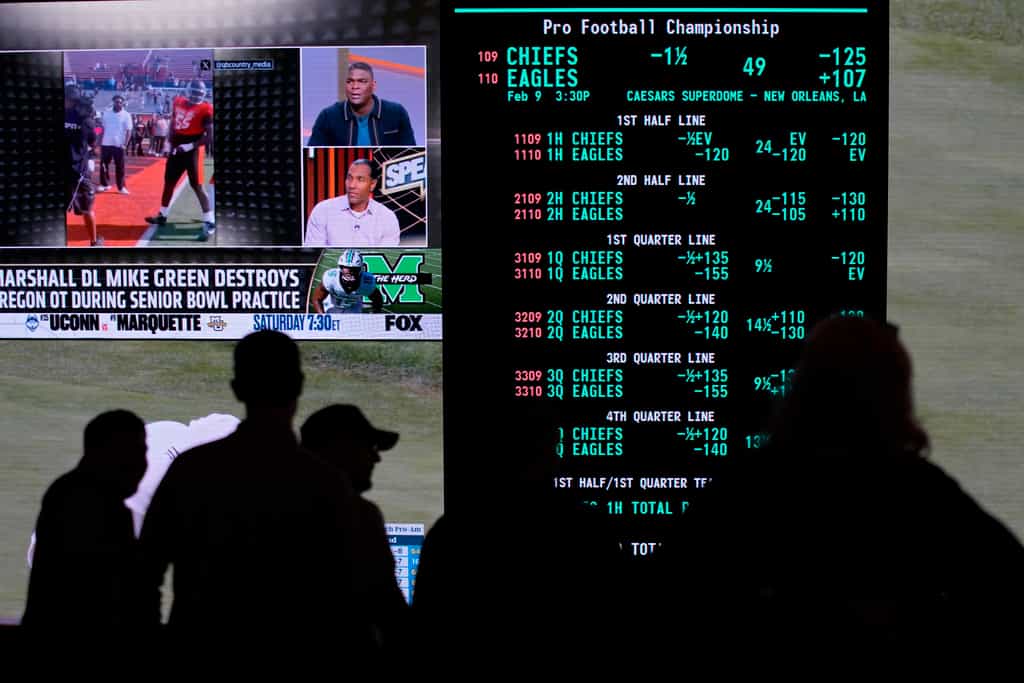
What Is Market Efficiency?
A breakdown of how market efficiency shapes sports betting odds, why it matters for bettors, and where real inefficiencies still exist.

Market efficiency is the degree to which sports betting odds accurately reflect the true probability of an outcome. A perfectly efficient market leaves no consistent way to beat the price, because every scrap of relevant information is already baked into the number.
Key Takeaways
- Market efficiency measures how closely betting odds match an event's real probability.
- The concept comes directly from financial economics and the efficient market hypothesis.
- Major leagues with heavy betting volume tend to be more efficient than niche sports.
- Small, exploitable inefficiencies do exist, but research shows they rarely produce lasting profit.
- Liquidity and information flow are the two biggest drivers of how efficient a market becomes.
Quick Facts Box
| Category | Detail |
|---|---|
| Difficulty Level | Intermediate |
| Estimated Time to Learn | 15 to 20 minutes |
| Best Suited For | Bettors comparing lines across multiple sportsbooks |
| Related Topic | Favorite-longshot bias in betting odds |
Why Does Market Efficiency Matter For Bettors?
Market efficiency matters for bettors because it determines whether a betting line offers real value or simply mirrors the true odds of an outcome. Understanding this concept helps a bettor decide when a number is worth attacking and when it is simply priced correctly.
Once a bettor grasps how efficient a market is, they stop chasing mirages. Efficient markets punish guesswork, so knowing where the market is weakest points a sharp bettor toward the sports and situations where research still pays off.
How Do Efficient And Inefficient Betting Markets Compare?
| Feature | Efficient Market | Inefficient Market |
|---|---|---|
| Betting Volume | High | Low |
| Odds Movement | Fast, reacts to news instantly | Slow, lags behind new information |
| Example Sports | NFL, NBA, English Premier League | Minor leagues, niche or lower-tier events |
| Edge Potential For Bettors | Minimal and short-lived | Larger but harder to access consistently |
What Does Market Efficiency Mean In Sports Betting?
Market efficiency in sports betting means the posted odds already account for every piece of public information about a game. This idea was borrowed from finance, where the efficient market hypothesis states that asset prices reflect all available information at any given moment. Applied to a sportsbook, this means the line already contains injury reports, weather, form, and public sentiment before a bettor ever looks at it.
Because of this, beating an efficient line consistently on a risk-adjusted basis becomes extremely difficult. The point spread or moneyline is not a guess. It is the market's collective best estimate of what will happen.
How Do Sportsbooks Create Efficient Betting Markets?
Sportsbooks create efficient betting markets by pulling in enough volume and sharp money to correct mispriced lines quickly. High liquidity lets prices adjust the moment new information appears, which pushes the odds closer to the true probability of an outcome. Markets with thin volume behave differently, and the risks of trading in thin markets show up clearly in the hidden dangers of trading low-liquidity prediction markets, where a single large bet can distort a price far more than it should.
How Does Information Flow Affect Market Efficiency?
Information flow affects market efficiency by determining how fast new facts get absorbed into the odds. A market stays efficient only as long as sharp bettors and syndicates keep testing prices and correcting mistakes in real time. This dynamic has shifted as attention moves toward faster-moving venues, and how prediction markets have sidelined the on-field action shows how quickly capital can migrate toward the fastest-reacting price discovery tool available.
What Are The Three Forms Of Market Efficiency In Betting?
The three forms of market efficiency in betting are weak, semi-strong, and strong, each describing how much information gets priced in. Weak-form efficiency means historical odds and results carry no exploitable pattern. Semi-strong efficiency means all publicly available information, including news and stats, is already reflected in the price.
Strong-form efficiency is the strictest version. It holds only if every bet on an event carries the same expected return, leaving zero edge even for insiders. Academic research on North American sports found technical inefficiencies in some markets, though the size of that edge was consistently small across seasons.
What Are Real Examples Of Market Efficiency And Inefficiency?
A clear example of exploited inefficiency involves manipulated or thinly traded markets, where a small trade skews the price far past fair value. This exact pattern played out publicly, and inside the 35,000 dollar hair dryer hack on Polymarket demonstrates how a low-liquidity contract can be pushed away from its true probability with a modest amount of capital.
Another example shows how suspicious patterns raise questions about whether a market is truly efficient at all. A 98 percent win rate on Polymarket raises even more questions precisely because true efficiency should make consistent, outsized win rates statistically improbable over the long run.
What Are Common Mistakes People Make About Market Efficiency?
A common mistake is assuming every sportsbook line is perfectly efficient at all times. Efficiency is a spectrum, not a switch, and it varies by sport, league, and even by which sportsbook posted the number first.
- Confusing a fast-moving line with an efficient one, when speed and accuracy are not the same thing.
- Believing efficiency means nobody profits, when small, short-lived edges do surface in thinner markets.
- Ignoring the favorite-longshot bias, a well-documented pricing pattern that skews odds on extreme favorites and extreme underdogs.
- Treating one sharp bookmaker's number as proof the entire market has already corrected.
How Does Market Efficiency Compare To Prediction Markets?
Market efficiency in sports betting and prediction markets both rely on collective pricing, but they reach that price through different mechanisms. Sportsbooks set fixed odds and adjust them based on incoming bets, while prediction markets let traders buy and sell shares directly, closer to how a stock exchange works. This structural difference is explored directly in prediction markets vs sports betting, which breaks down how each model handles new information and liquidity.
Sports Betting vs. Prediction Markets: Key Differences
| Aspect | Sports Betting | Prediction Markets |
|---|---|---|
| Price Mechanism | Bookmaker-set odds | Trader-driven share prices |
| Adjustment Speed | Fast in major leagues | Can be fast or slow depending on volume |
| Efficiency Driver | Sharp betting volume | Trading liquidity and arbitrage |
Bodog's Take: What Should Bettors Remember About Market Efficiency?
Market efficiency explains why beating the sportsbook consistently is hard, not impossible. The bigger the league and the deeper the liquidity, the tighter the price gets to true probability. Smaller markets still leave room for sharp research to matter.
Bodog's take is simple: chase the gaps where information hasn't fully settled yet, not the marquee games where millions of dollars have already done the pricing work. That's where discipline beats volume, and where a bettor's edge actually survives contact with the market.
Market Efficiency FAQs
What is market efficiency in simple terms?
Market efficiency in simple terms means betting odds already reflect the true chances of an outcome, leaving little room for a consistent edge.
Is the sports betting market fully efficient?
The sports betting market is not fully efficient. Research on major North American leagues found small, sport-specific inefficiencies that persisted over time but produced only modest, often insignificant returns.
Which sports have the most efficient betting markets?
The NFL, NBA, and English Premier League tend to have the most efficient betting markets because they attract the highest betting volume and media coverage.
Why do smaller leagues have less efficient markets?
Smaller leagues have less efficient markets because lower betting volume and thinner liquidity slow down how quickly odds react to new information.
Can a bettor consistently beat an efficient market?
A bettor cannot easily beat a truly efficient market on a risk-adjusted basis over the long run, since the odds already price in available information.
What is the favorite-longshot bias?
The favorite-longshot bias is a documented pricing pattern where bettors slightly overvalue underdogs and undervalue favorites relative to their true probability.
How is market efficiency tested by researchers?
Researchers test market efficiency by comparing implied probabilities from odds against actual outcomes across large datasets, checking for statistically significant patterns.
Continue Learning
- How Prediction Markets Work: a breakdown of the mechanics behind trader-driven pricing.
- How To Read Prediction Market Odds: a practical guide to converting prices into implied probability.
- Polymarket Review: a closer look at one of the largest prediction market platforms.
- What A Knicks Promo Revealed About The Future Of Prediction Markets: a look at where prediction markets may be heading next.
Sources & Review
Arthur Crowson got his start in traditional newspapers before making the jump to digital media, where he's spent the last ten years writing about poker, finance, crypto, gambling, and emerging tech. Over that time, he's developed a knack for spotting the moments when markets, technology, and gambling pull in the same direction. His work has appeared in publications like PokerListings, CryptoVantage, ValueWalk, and PokerScout.
More Articles like this
Why Does Everybody Hate Us? 10 Most Hated Sports Teams Ever
Some teams always win; others get caught breaking the rules. Either extreme is a surefire way to become universally hated, as these 10 sports teams can attest to.
By Stuart Hughes
5 Outrageous Sports Rules That Need to Die
From a missed signature disqualification to a two-minute penalty for a tucked-in jersey, find out about the top five dumbest rules in sport that leave common sense in the locker room.

By Stuart Hughes
The 10 Most Unforgettable Quotes in Sports History
From Jordan's hard truths to Healy's cheeseburger dig, these legendary greats uttered 10 iconic quotes that turned out to be as memorable as their sporting achievements.

By Stuart Hughes
Eight Years, Eight NBA Champions. Is Parity Here to Stay?
Eight different teams have won the NBA championship in eight years, the longest such streak in league history. Can the Knicks finally break the cycle, or will another contender claim the crown?

By Bill Gelman
Is This the Biggest Acquisition Era in Sports Betting History?
Sportsbooks, prediction markets, and sweepstakes apps are fighting for the same customers. We compared 11 welcome offers to see who's offering the biggest incentives.

By Cole Rush
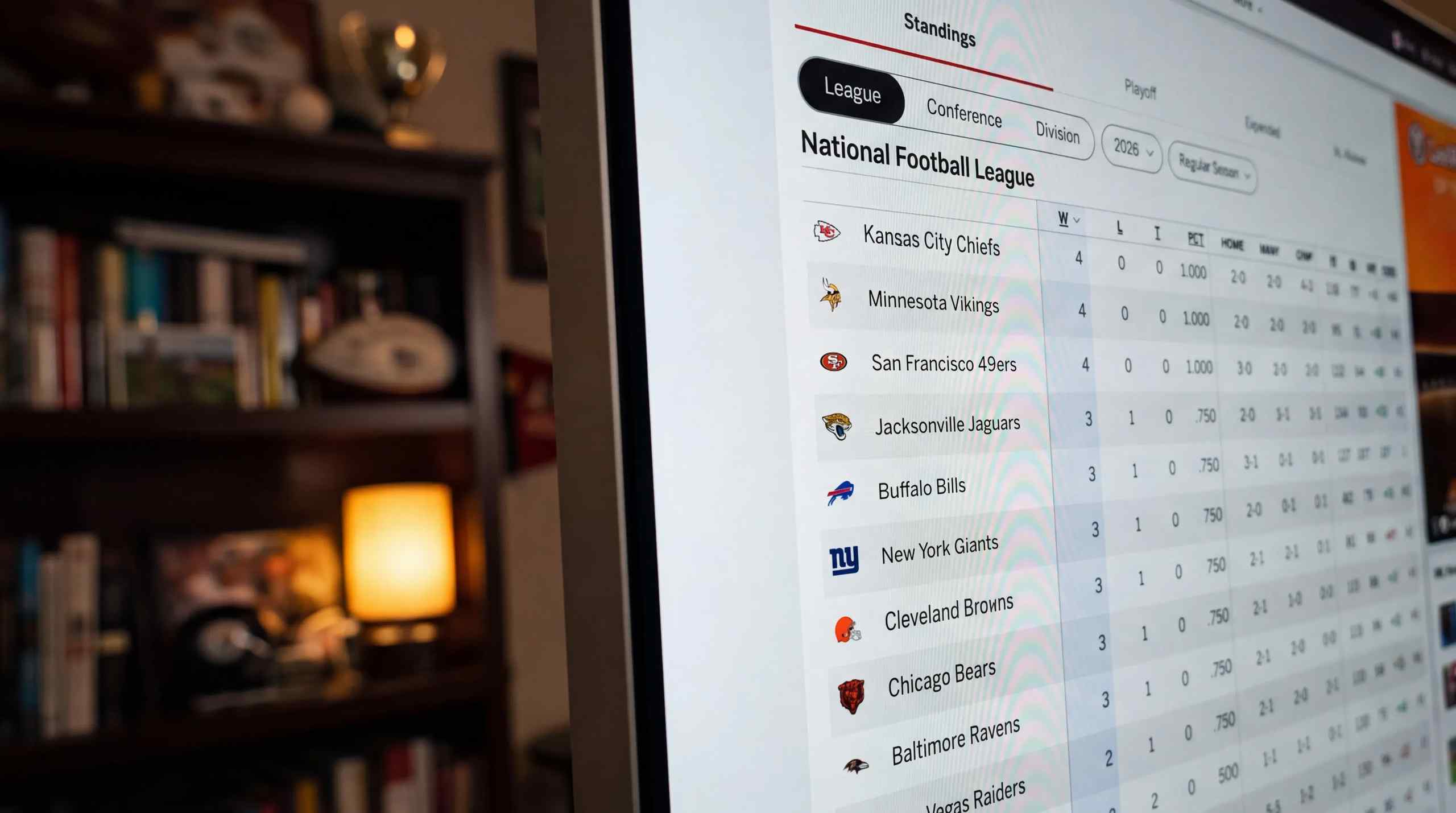
Does a 4-0 NFL Start Mean You're Playoff Bound?
A 4-0 start can put your team on the fast track to the playoffs, but history shows that even Super Bowl champions don't always start strong.
By Marcus Mosher