

Which Politicians Are Leading the Charge on Prediction Markets?
Prediction markets are no longer flying under Washington's radar. Here's a look at the politicians shaping the industry's future.
%20(1).webp)
Like any financial or gambling-adjacent industry, prediction markets are making politicians' ears perk up. It's no surprise that's the case, considering platforms like Kalshi, Polymarket, and others blur the lines between heavily regulated spaces like gambling, fintech, and the stock market.
Increasing legal attention is being paid to prediction markets in Washington and state governments. Minnesota just moved to ban prediction markets, but the Trump administration sued.
Such legal battles may be the norm for the foreseeable future, and each side will have its own power players.
Why Prediction Markets Matter Politically
Prediction markets divide opinions in Washington. Supporters see them as useful financial forecasting tools, while critics see them as unregulated gambling products with consumer-protection and insider-trading risks.
That tension has left politicians debating whether these platforms should be regulated as event contracts, gambling products, or something else.
Platforms like Kalshi, Polymarket, and Crypto.com are gaining traction among traders. Trading volume on some markets is exorbitant. Super Bowl trading volume on prediction market platforms surpassed $1 billion in 2026 alone — the kind of number that gets Washington's attention fast.
Politicians Leading the Conversation on Prediction Markets
| Politician | Party + State | Position | Key Issue |
|---|---|---|---|
| Dave McCormick | R-PA | Pro-framework / reform | Co-sponsored Prediction Market Act of 2026 |
| Kirsten Gillibrand | D-NY | Pro-framework / reform | Co-sponsored Prediction Market Act of 2026 |
| Todd Young | R-IN | Insider-trading reform | Public Integrity in Financial Prediction Markets Act |
| Elissa Slotkin | D-M | Reform + consumer protection | Restrictions on sports, war, terrorism, assassination contracts |
| Adam Schiff | D-CA | Reform + sports-contract restrictions | Co-sponsored sports-related restrictions |
| John Curtis | R-UT | Reform + sports-contract restrictions | Co-sponsored sports-related restrictions |
| Chuck Schumer | D-NY | Anti-corruption focus | Wants bans tied to wars, elections, economic crises |
| Catherine Cortez Masto | D-NV | Gambling-style restrictions | Co-sponsored Prediction Markets Are Gambling Act |
Pro-Innovation and Market Expansion Supporters
The leaders of this particular charge are Dave McCormick (R-PA) and Kirsten Gillibrand (D-NY). They aren't opposed to prediction markets. Instead, they want guardrails to protect consumers.
Their co-sponsored Prediction Market Act of 2026 would ban elected officials from using prediction platforms and create a clear-cut regulatory framework allowing sites like Kalshi and others to operate legally. The bill mainly targets insider trading and aims to remove prediction markets from the grey area where they currently reside (similar to DFS battles a few years back).
Also in this camp are Todd Young (R-IN), Elissa Slotkin (D-MI), John Curtis (R-UT), and Adam Schiff (D-CA). They introduced the Public Integrity in Financial Prediction Markets Act of 2026. Like McCormick and Gillibrand's bill, it would bar government officials and employees from insider trading on prediction markets.
Most of the politicians in this category are trying to crack down on other politicians. Worth noting: both Curtis and Schiff have also co-sponsored legislation designed to restrict sports-related prediction contracts, a sign that their positions are more layered than a single bill can capture.
Consumer Protection Advocates and Skeptics
Meanwhile, some politicians are much more cautious about the proliferation of prediction markets.
Chuck Schumer (D-NY) takes a slightly more defined stance than some of his colleagues. He argues that lawmakers and staff shouldn't be able to use prediction markets, but specifically extends that prohibition to wars, elections, or economic crises. Schumer's stance seems rooted in the worry that prediction markets could provide a hotbed for political corruption. Bernie Moreno (R-OH) and Alex Padilla (D-CA) take a similar stand. Moreno sponsored a Senate resolution banning senators from prediction market trading, which passed unanimously, while Padilla amended it to cover staff as well.
Catherine Cortez Masto (D-NV) draws a harder line. She co-sponsored the Prediction Markets Are Gambling Act, introduced by Schiff and Curtis, which would bar CFTC-registered platforms like Kalshi from listing contracts resembling sports bets or casino-style games.
Cortez Masto is joined in this opinion by others, including state government voices. The sports betting comparison is concerning for many states, whether they offer legal sports betting or not. Either way, sports contracts represent wagering, according to those opposed.
Middle Ground With Sharp Edges
Elissa Slotkin earned a mention in the first subsection, but it's worth exploring her stance more here. Not only is Slotkin firmly in the "insider-trading reform" lane, but she's also a strong voice in the consumer-protection debate. She has urged the CFTC to maintain restrictions on sports, war, terrorism, and assassination contracts. Slotkin wants prediction markets to exist in a heavily regulated space, like their gambling counterparts.

The Regulatory Battle Behind the Scenes
Central to the prediction market debate is the Commodity Futures Trading Commission (CFTC). In March, the CFTC issued a proposed rulemaking notice seeking guidance on how event contracts should be regulated. The CFTC is embroiled in ongoing arguments and occasional formal legal battles with some states (see Minnesota) revolving around prediction markets. The question might start out as "Are they legal?" But it can soon shift to "Who will regulate and control them?"
Different perspectives are fighting for dominance here:
- The CFTC sees prediction markets as federally regulated event contracts.
- Gambling regulators see unauthorized online gambling platforms, especially with sports contracts.
- Lawmakers see opportunities for corruption and insider trading alongside a wealth of consumer protection red flags.
- Prediction market operators see an avenue to become federally approved and viable in the long term.
So much of the argument surrounds terminology and definitions. Prediction markets and their providers position the industry as financial only, with trading instead of betting. Even so, Kalshi recently teamed up with the National Council on Problem Gambling. The lines are so blurry that they may not even exist.
What Happens Next?
Ask your magic 8-ball what comes next for prediction markets, and the most viable answer is "Ask again later." We're in a hurry-up-and-wait scenario as the power players duke it out. Possibilities include:
- Widespread federal approval and adoption.
- Cautious expansion with strict regulation.
- Full integration into the financial space.
- State-by-state fragmentation, much like online gambling.
Naturally, that list is devoid of nuance, but it shows us in broad strokes just some of the possible outcomes. Notice that I left out "complete illegality." That's a possibility, too, but there's so much money involved, I don't see how prediction markets simply get wiped out.
Cole Rush is a freelance writer, crossword constructor, and creative tinkerer with more than 10 years of experience writing about anything and everything. Cole’s primary area of expertise is the gambling industry, covering the expansion of sportsbooks and online casinos alongside emerging spaces like sweepstakes casinos and prediction markets.
More Articles like this
Kalshi Wants Margin Trading. What Could Go Wrong?
Kalshi’s proposed margin system would let eligible traders put up less than the full value of some positions, freeing capital for other trades while also introducing a new layer of leverage and risk.

By Charlon Muscat
Kalshi, Polymarket Starting to Price the Midterms as Blowout
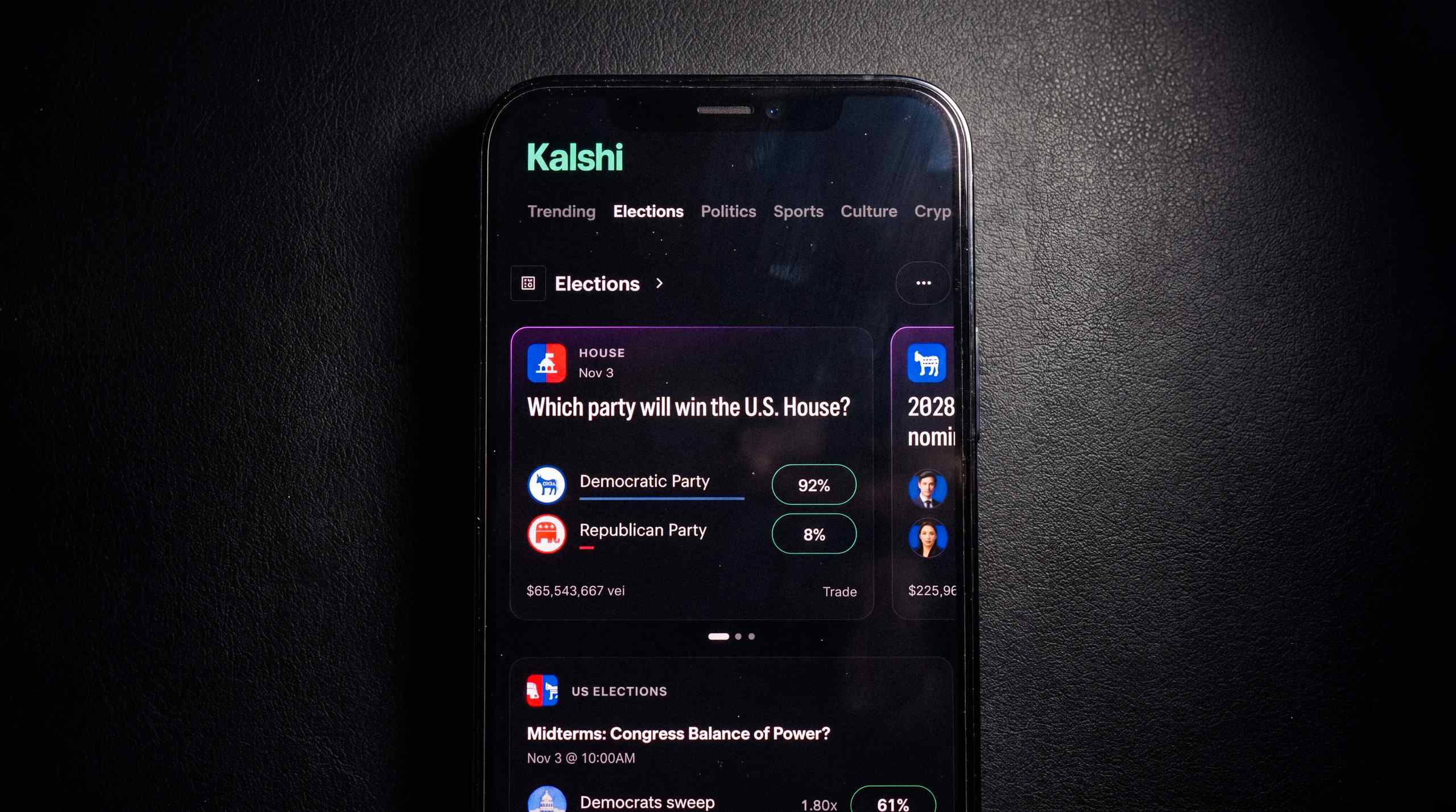
With just over five weeks to go, Kalshi and Polymarket now heavily favor Democrats for the House and give them the edge in the Senate.
By Stuart Hughes
Kalshi’s NFL Volume Is Exploding. Should Sportsbooks Be Worried?
The NFL season is barely underway, but prediction markets have already handled multiple billions in football trading volume. Is that enough to make sportsbooks nervous?

By Charlon Muscat
Best Prediction Market Apps of 2026
Compare the best prediction market apps and platforms for sports, politics and other events, ranked by market selection, fees, liquidity, user experience and availability.

By James Guill
Prediction Markets vs Sports Betting: Key Differences
Prediction markets vs sports books: odds, vig, trading vs fixed bets, legality by state, combos vs parlays. Which is better for sports bettors?

By Arthur Crowson
Sydney Sweeney to LeBron: Prediction Markets Bet on Star Power
Sydney Sweeney just became an equity partner at Novig. She joins a growing list of A-listers cashing massive checks from prediction markets, including LeBron James, Timothée Chalamet and many others.

By Cole Rush