
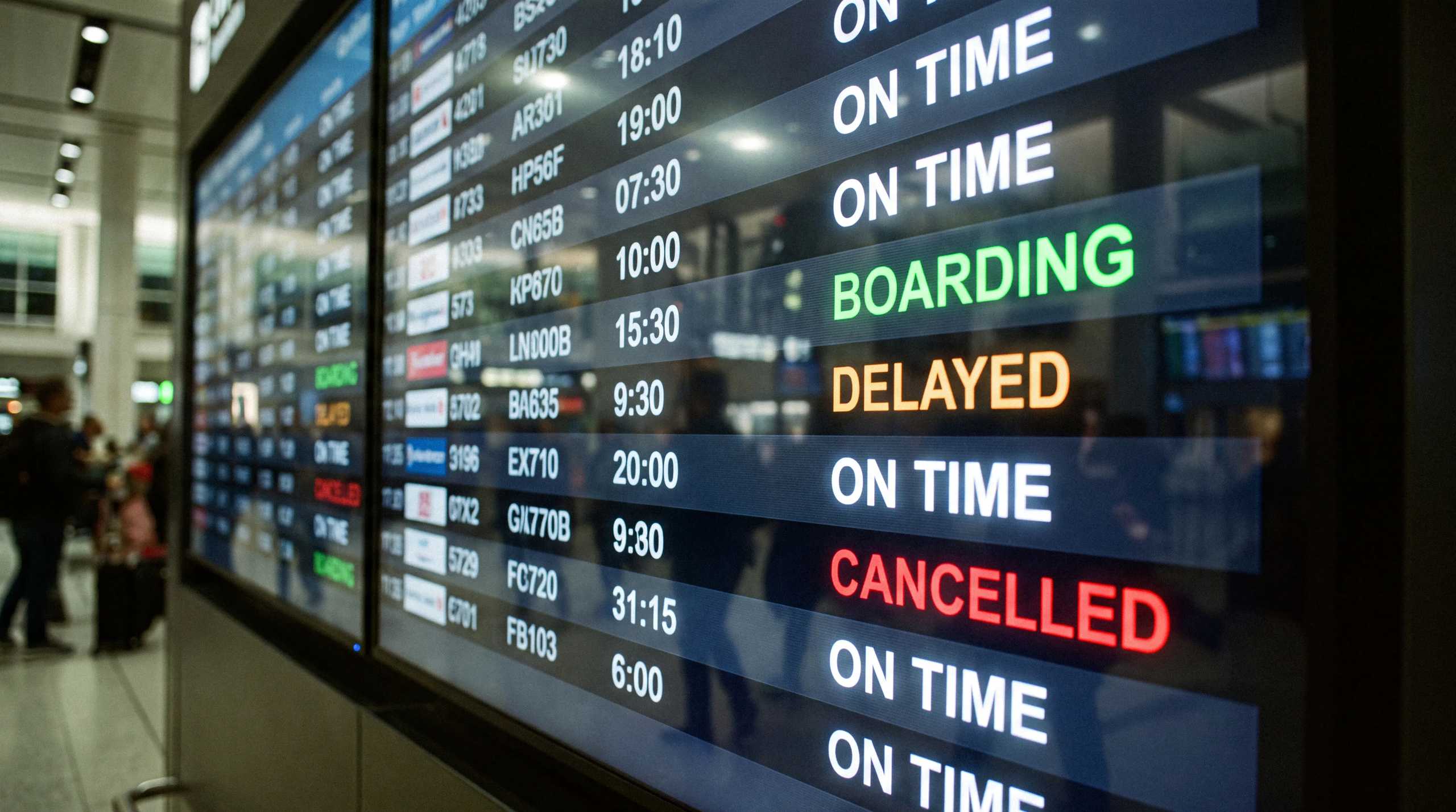
Betting on Flight Cancellations Is Kalshi’s Latest Controversy
FlightAware sued Kalshi over flight cancellation bets, then dropped the case a day later. Retail interest barely existed, but the dispute raises several bigger questions about the prediction market.
%20(1).webp)
Flight delayed? Annoying. Flight canceled, and you had a position on Kalshi? That's a payout.
Kalshi introduced markets in July, letting traders wager on the percentage of U.S. flights canceled nationwide and at individual airports. Flight-tracking company FlightAware sued the platform on Aug. 11, alleging Kalshi used its data and trademark without permission to settle those contracts. A day later, FlightAware dropped the case just as fast as it had filed it.
The lawsuit came and went in 24 hours. The stranger question it raised didn't: should people be allowed to profit when flights get canceled?
How Flight-Cancellation Markets Work
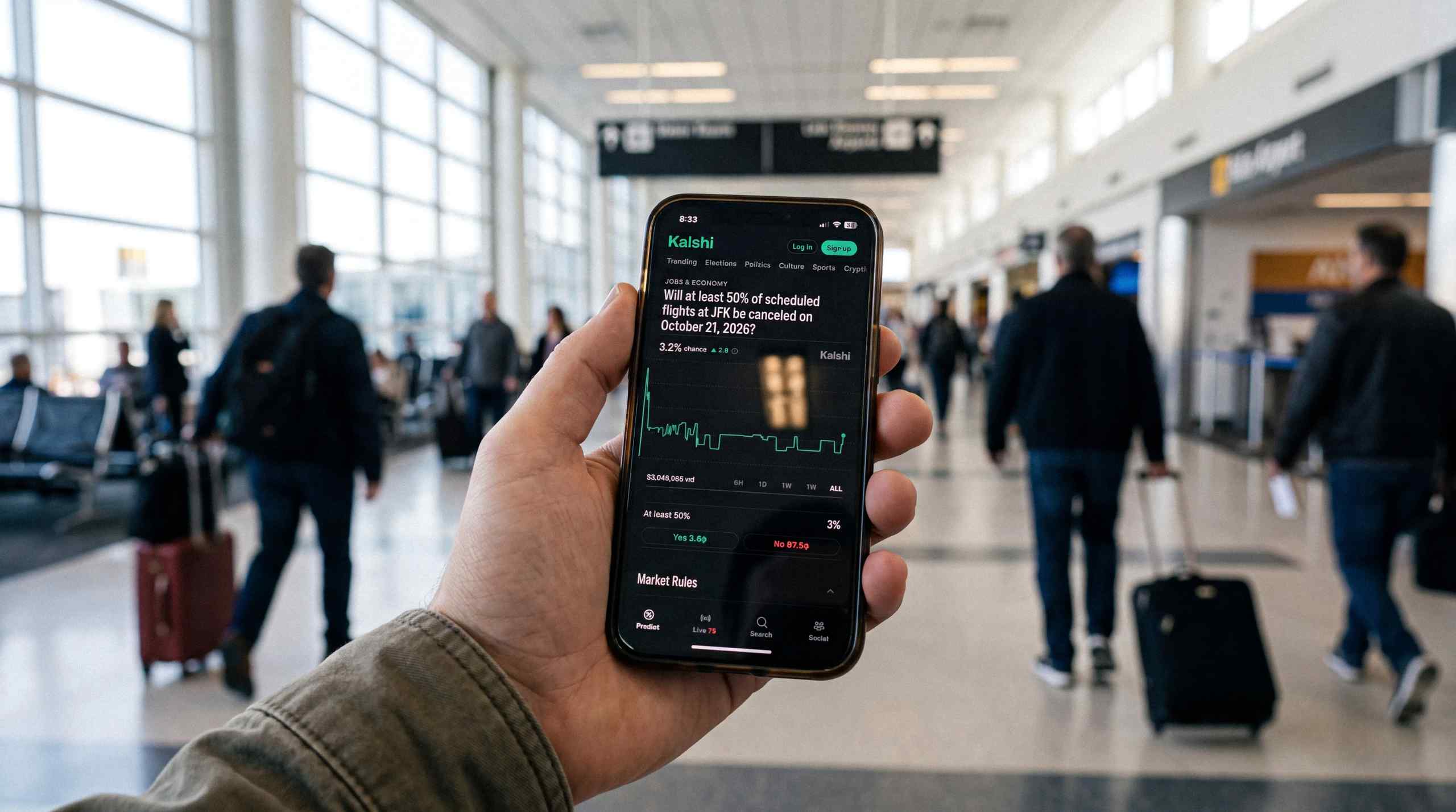
Kalshi's contracts ask traders to predict whether the share of canceled flights at a given airport, or nationwide, crosses a set threshold over a defined window. Buy "Yes" or "No," and the contract pays $1 if you're right, nothing if you're wrong. Kalshi launched the retail version in July, filing a CFTC self-certification for the product at the same time, and initially named FlightAware as the markets' "Primary Source Agency."
Social media backlash arrived almost immediately, with users warning that someone determined to cash in could try to force a cancellation. Kalshi paused the broader contracts, then came back with a narrower, harder-to-game version: a JFK-specific contract open only to roughly 1,000 institutional users, betting on whether more than half of flights would be canceled Oct. 21-22. A firm hosting a prediction-markets conference on those dates paid $12,000 to create the contract as a hedge, with market maker Susquehanna backing a $3 million payout if the threshold was hit. The retail contracts stayed live, though barely. One nationwide retail contract running through Aug. 14 had generated only about $1,842 in trading volume Kalshi's $148 billion for the year.
Why Did FlightAware Sue, Then Walk Away?
FlightAware's complaint accused Kalshi of using its flight data and registered trademark without a commercial agreement, despite account terms barring betting-related use, and of ignoring cease-and-desist letters. The suit sought damages, a jury trial, and an injunction. Kalshi denied wrongdoing, calling its use of FlightAware's name "nominative fair use," and pointed to Department of Transportation data as an alternative source of settlement.
One day after filing in a New York federal court, FlightAware voluntarily dismissed the case without prejudice, leaving the door open to refile without explanation. The likeliest scenario? A public-relations headache paired with a market that had barely traded wasn't worth fighting over, at least not yet.
Can Traders Influence the Outcome?
Data rights aside, FlightAware's complaint raised a crucial question: what happens when someone trading a contract also has some ability to affect its outcome?
Kalshi tried to address the most obvious version of that problem by excluding deliberate disruptions such as bomb threats, sabotage, cyberattacks, drones and laser incidents from triggering a normal payout.
Nobody has produced evidence of actual flight sabotage tied to Kalshi's markets. However, the incentive structure alone was enough to trigger backlash, and it isn't a new problem for prediction markets. The same logic surfaces whenever eerily accurate Polymarket bets raise questions. Airline staff, airport workers, election officials, corporate insiders, even athletes and coaches, all sit closer to outcomes than someone trading on them from the outside. That's a different wager than one on something entirely beyond your control, like the spin of a slot machine or roll of the dice.
Flight Cancellations Aren't Kalshi's First Rodeo
The FlightAware dispute is only the newest entry on a growing list. New York's governor and attorney general sued Kalshi in July, arguing that its sports contracts constitute unlicensed gambling, which is one reason DraftKings and FanDuel can't ignore prediction markets as competitors. Arizona went further, filing the first criminal charges against Kalshi in March over unlicensed gambling and election wagering tied to races as specific as the state's own secretary of state contest. And in February, Kalshi froze $54 million in bets on whether Iran's Ali Khamenei would leave power, then invoked a "death carveout" after he was killed in U.S.-Israeli airstrikes, a call that landed the company in its own class-action lawsuit.
Prediction Market Controversies At A Glance
| Market Type | Approx. Volume | Primary Controversy | Legal/Regulatory Action |
|---|---|---|---|
| Flight Cancellations | ~$1,800 (retail) | Data and trademark use | Lawsuit filed and dropped within 24 hours (Aug. 2026) |
| Sports Contracts | Not disclosed | Gambling classification | New York lawsuit (July 2026); Arizona criminal charges (March 2026) |
| Election Contracts | Not disclosed | Insider trading risk | Folded into Arizona's criminal complaint |
| Khamenei Leadership | $54M+ | "Death carveout" dispute | Class-action lawsuit (March 2026) |
Where Should Prediction Markets Draw the Line?
Line these controversies up, and a pattern emerges. Some markets carry an insider problem, where someone knows the outcome before the crowd does. Some involve a manipulation problem, where someone can directly shape the result. Others carry an incentive problem, where profit and harm point in the same direction. And plenty carry a resolution problem, where the "objective" outcome hinges on a rule nobody read closely. See: Khamenei. Flight cancellations affect three of the four at once.
Prediction Markets Are Finding Their Boundaries in Real Time
Kalshi has expanded into sports, politics, weather, and now air travel too fast for anyone (regulators included) to keep up. That kind of experimentation guarantees edge cases and potential suits like the short-lived FlightAware one. Every new controversy nudges the industry's real question a little further from "can this become a market" and closer to "should it." The flight-cancellation dispute barely lasted a month. The boundary it tested will take a lot longer to find.
Cole Rush is a freelance writer, crossword constructor, and creative tinkerer with more than 10 years of experience writing about anything and everything. Cole’s primary area of expertise is the gambling industry, covering the expansion of sportsbooks and online casinos alongside emerging spaces like sweepstakes casinos and prediction markets.
More Articles like this
NBA Targets Risky Bets. Will Kalshi, Polymarket Play Ball?
The NBA is banning several easily manipulated bets at sportsbooks. But will Kalshi and Polymarket follow suit?

By Stuart Hughes
Kalshi Wants Margin Trading. What Could Go Wrong?
Kalshi’s proposed margin system would let eligible traders put up less than the full value of some positions, freeing capital for other trades while also introducing a new layer of leverage and risk.

By Charlon Muscat
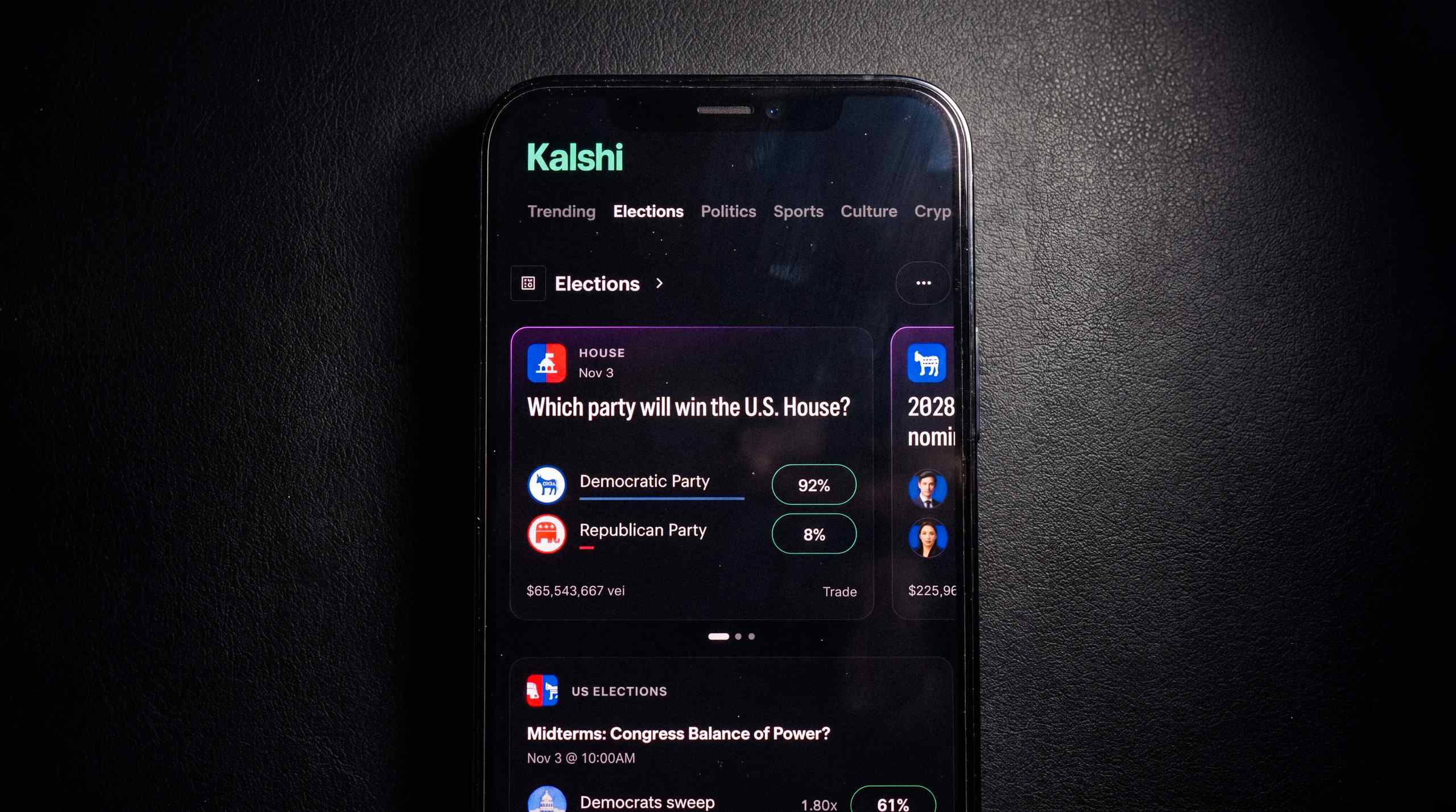
Kalshi, Polymarket Starting to Price the Midterms as Blowout
With just over five weeks to go, Kalshi and Polymarket now heavily favor Democrats for the House and give them the edge in the Senate.
By Stuart Hughes
Kalshi’s NFL Volume Is Exploding. Should Sportsbooks Be Worried?
The NFL season is barely underway, but prediction markets have already handled multiple billions in football trading volume. Is that enough to make sportsbooks nervous?

By Charlon Muscat
Best Prediction Market Apps of 2026
Compare the best prediction market apps and platforms for sports, politics and other events, ranked by market selection, fees, liquidity, user experience and availability.

By James Guill
Prediction Markets vs Sports Betting: Key Differences
Prediction markets vs sports books: odds, vig, trading vs fixed bets, legality by state, combos vs parlays. Which is better for sports bettors?

By Arthur Crowson