
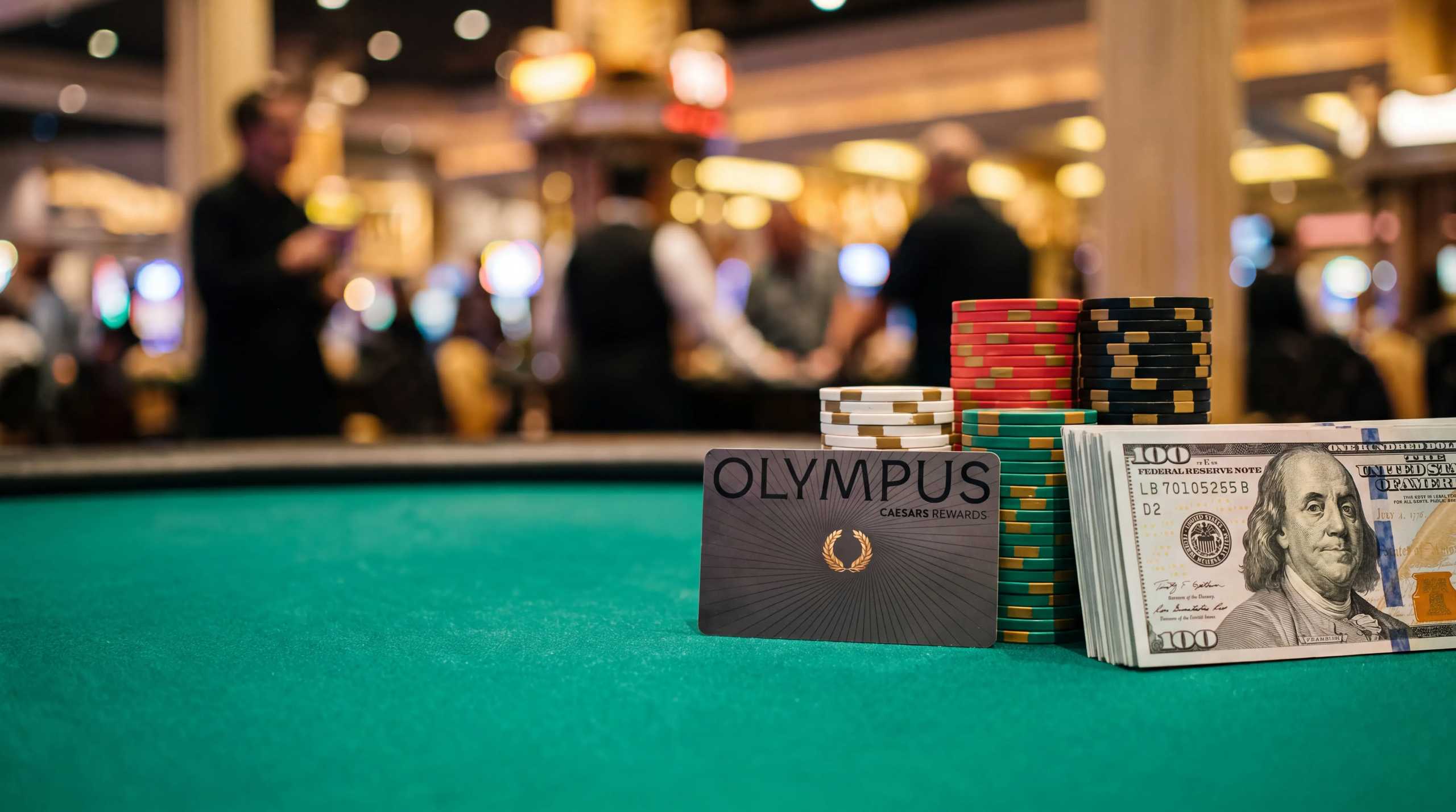
What Does Caesars’ $1.5 Million ‘Olympus’ Status Really Cost?
There’s putting $1.5 million through a slot machine. And then there’s losing it. Caesars’ new invitation-only Olympus tier got those two ideas tangled together.

A $1.5 million price tag has followed Caesars’ new top loyalty tier since it was announced. That number comes from taking the credits needed to qualify and running them through the standard slot formula, which treats wagering turnover like the cost of admission. But Caesars doesn’t hand out Tier Credits on one flat scale. The earning pace changes depending on what customers play, buy, or book. I ran the basic numbers, and some paths land nowhere near the figure making the rounds.
The $1.5 million Olympus figure needs an asterisk
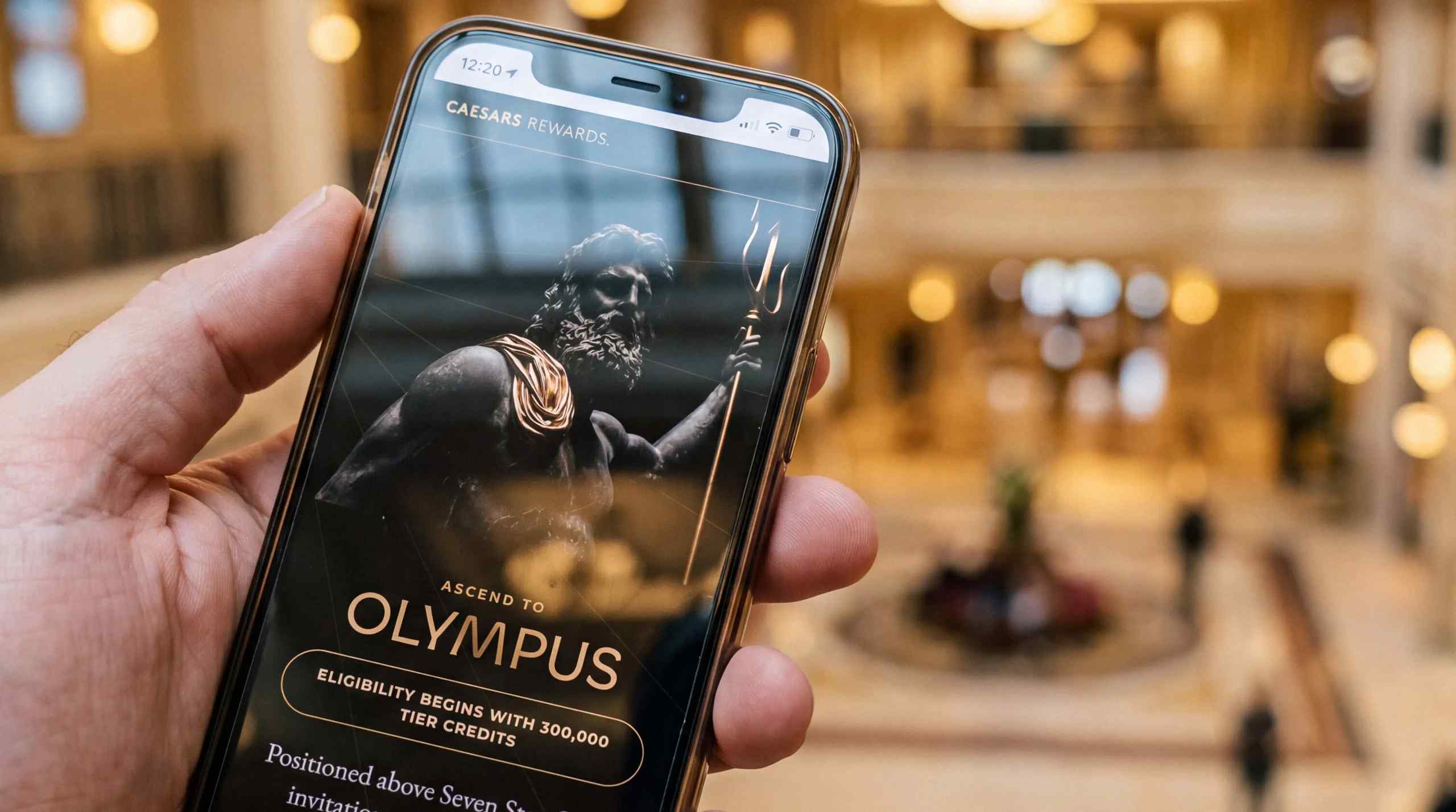
Caesars has added a new rung at the very top of its loyalty ladder. Olympus, a step above Seven Stars, calls for 300,000 Tier Credits by December 31, 2026, plus an invitation. The Las Vegas Review Journal translated that into a $1.5 million spending hurdle. Thing is, that number only works if you run the math on the standard slot rate of $5 in coin-in per credit.
Caesars explains that the credits can come from all over the property and beyond, including gaming, online play, hotel stays, dining, entertainment, and partner purchases. Reaching the threshold only makes a member eligible for consideration. As I said, you still need an invite to get into Olympus. I’d call it a hybrid setup, the kind of casino loyalty program where the score is public but the final VIP call happens behind closed doors. Caesars expects to name the founding members in January 2027, with benefits starting February 1.
Proposed Olympus VIP benefits include the following:
- 40% faster Reward Credit earnings
- Seven-night annual retreat
- Suite upgrades when available
- Members-only events.

There’s more than one way to reach 300,000
I took every fixed rate on Caesars’ earn and rewards page and worked backward from 300,000 base Tier Credits. What I left out were the potential daily bonuses, multipliers, and card awards. Otherwise, you wind up comparing the rulebook with somebody’s absolute best-case run.
What it takes to earn Olympus Status
| Route | Published earn rate | Activity for 300,000 base credits | What the dollar figure means |
|---|---|---|---|
| WSOP Online | 1 credit per $0.50 in rake or fees | $150,000 (~$1.5 Million in tournament buy-ins) | Operator fees, not poker buy-ins |
| Hotels, dining, shopping and amenities | 1 per $1 | $300,000 | Qualifying cash spend; goods or services are received |
| Racing or live keno | 1 per $3 | $900,000 | Wagering handle |
| Slots and online slots | 1 per $5 | $1.5 million | Coin-in, including recycled winnings |
| Video poker or bingo | 1 per $10 | $3 million | Wagering turnover |
| Online table games | 1 per $25 | $7.5 million | Wagering turnover |
| Sportsbook, maximum rates | 10, 30 or 50 per $100 | $3 million straight ($1 million parlay, $600,000 SGP) | Wagering handle |
| Sportsbook, shorter odds | 1 per $100 | $30 million | Wagering handle |
Don't read these numbers as what somebody is guaranteed to spend or lose. A winning sportsbook bet, for example, pays money back, and hotel spending gets you a room. Caesars also says some machines award credits at slower rates, with certain rules changing from one property to the next. Table games are harder to pin down because there’s no public rate you can simply run backward. Caesars bases those credits on the game, the average bet, and how long someone plays. Live WSOP event earnings likewise vary by event and buy-in.
$1.5 million in coin-in is not $1.5 million lost
Even though physical and online slots technically work out to $3 million, the number being measured here is coin-in, and that’s cumulative. Meaning every wager through the machine gets added to the total, including winnings played right back through the same slot.
Someone could start with $10,000, recycle payouts through more spins, and generate far more than $10,000 in coin-in before cashing out.
Hence why the headline figure can run well ahead of what the customer actually had at stake out of pocket.
Nevada’s June 2026 gaming report puts the Las Vegas Strip slot win rate (the share of wagers casinos keep after payouts) at 7.74% for the 12 months through June. Use that as a rough industry yardstick, and $1.5 million in coin-in works out to about $116,100 retained by the casino, and therefore the same amount lost by players in aggregate. Of course, this is by no means considering it as a prediction for one candidate. The figure covers all reporting Strip casinos, not Caesars alone, and mixes many denominations. Actual results can land far above or below it. A machine’s theoretical return to player (RTP) only starts to show itself over a very large sample anyway. But still, $116,100 gives you a much better sense of the scale than reading the slot route as a straight $1.5 million cost.
Bonuses can cut the slot requirement by two-thirds
Now put Caesars’ daily bonuses into the equation, and, once again, that $1.5 million starts coming down. On a qualifying promotional day, 5,000 base Tier Credits get another 10,000 added on top. Do that 20 times, and you’re at 100,000 base credits plus 200,000 in bonuses, which is enough to reach the Olympus consideration threshold.
On standard slots, that means $500,000 in coin-in rather than $1.5 million. Using the same 7.74% Strip proxy gives $38,700 in aggregate expected loss. Video poker would still take $1 million in turnover. Another catch is that the daily bonuses don’t apply to online casino or sportsbook credits, and, as per Caesars, the offers can vary from one property to another.
Over on the hospitality side, eligible dining, entertainment, shopping, and spa spending can earn the same daily bonuses. Nightly room rates and resort fees are included.
Disclaimer: None of this is meant as a reason to spend more chasing a loyalty tier. A healthy gambling budget should come first. Set that limit before rewards enter the picture, and don’t move it to make a points target fit.
Caesars rewards the bets it values most
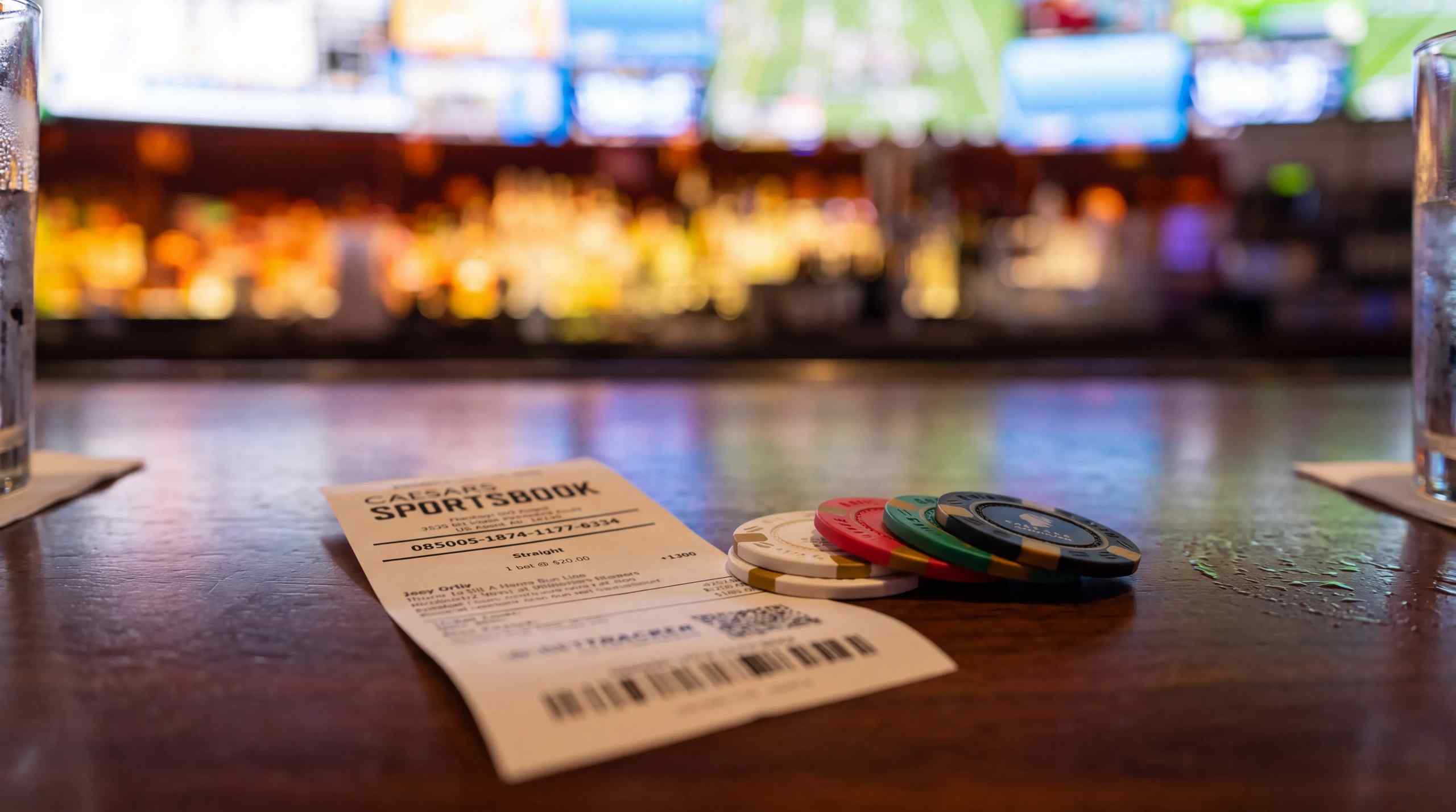
If anything gives away how uneven Tier Credits can be, it’s the sportsbook rates. At the top published level, the same $100 can earn very different amounts depending on how you play it.
- Same-game parlay: multiple picks from the same game bundled into one ticket. A qualifying $100 wager earns 50 Tier Credits.
- Regular parlay: multiple selections combined across games or events, with every leg needing to hit. The same $100 earns 30 credits.
- Straight bet: one selection, one outcome. Put down $100, and you get 10.
So, dollar for dollar, an SGP moves you toward the next tier five times faster than a straight wager.
A lot of that comes down to product economics. Caesars’ sportsbook glossary pegs a balanced -110 market at about 4.5% hold and flags SGPs as one of the formats where the house generally has a bigger edge. I go deeper into the mechanics in my explainer on same-game parlay pricing, but the short version is that those bigger potential payouts come with layers of margin built into the price. For the book, that can make an SGP a much more profitable product than a straight wager.
There is no single price of admission to Olympus
Caesars’ Olympus loyalty tier does not cost $1.5 million. That figure comes from standard slot coin-in on one path, and some of it may simply be winnings fed right back through the same machine. Earn those credits another way, and the total can look very different, especially once you factor in the daily bonuses. What Caesars actually asks for is 300,000 Tier Credits by December 31, 2026. And even that only gets a member considered. Olympus is invitation-only, so the last step is Caesars deciding to send one.
Charlon Muscat is an established iGaming expert who entered the space in 2019 and went on to build a name across both casino and sportsbook content.
More Articles like this
Are eBay's "Spin the Wheel" Listings Just Gambling?
A corner of eBay Live auctions off wheel spins instead of actual items. Bid starts at $1, the price climbs, and the winner finds out what they bought only after the wheel stops. Here's why that's not really shopping.

By Cole Rush
Casino Carpets Are Ugly. But Not for the Reason You Think
Casino carpets have long been accused of keeping gamblers disoriented and glued to the games. The truth is considerably more practical, though just as strange.

By Cole Rush
The Strange Gambling Laws Behind Cruise Ship Casinos
Cruise ship casinos only open once a ship clears territorial waters, and the odds, oversight, and rules that follow are nothing like a Vegas floor. Here's what actually changes at sea.
By Cole Rush
Six Reasons Bettors Are Starting to Ditch Credit Cards
States are increasingly questioning whether borrowed money has any place in gambling. From instant interest to damaged credit, the risks can extend far beyond the bet itself.
By Charlon Muscat
How Subscriptions Use Gambling Psychology to Hook You
Streaming services, apps, and subscription boxes may look nothing like a casino, but many tap into the same psychological forces that make gambling so hard to walk away from.

By Cole Rush
The Best Gambling Songs Ever Written, Ranked
From Kenny Rogers to Sting, these seven songs go beyond casino clichés to capture the risk, psychology and obsession behind gambling.

By Cole Rush