

Think You Need 10,000 Steps a Day? Science Says Otherwise
For decades, the daily 10,000-step goal has been hardwired into our brains, but the science behind the benefits of walking tells a very different story.

Granted, we typically recite the 10,000-step goal as if it is gospel, but whether you're clocking up the miles on your commute to work or walking around in circles in the kitchen last thing at night, the truth of the matter is, you might already be walking enough.
For the record, hitting a daily step count is now one of the world's most popular wellness habits, and for good reason too. As one of the simplest and most inexpensive ways to improve your physical and mental wellbeing, it turns out the story behind the famous 10,000-step target has more to do with an astute 1960s marketing campaign than real-world medical science.
Where Did 10,000 Steps Come From?
Remarkably, the now-famous daily step count target actually originated in Japan as part of a marketing campaign for what would become the world’s first wearable fitness device, the Manpo-kei.
Designed to capitalize on the popularity of the then-1964 Tokyo Olympics, the Manpo-kei, literally translated to mean ‘10,000-step meter’, was a ploy derived using primative scientific evidence that suggested daily walking targets had some positive health benefits.
The only problem was, nobody really knew just how many steps people needed to complete for it to be an effective target: 10,000 just made for a compelling tag line.
In more recent times, fitness trackers like Fitbit, smartwatches, and wellness apps have continued to evolve, but they stuck to the ten thousand step mantra as a default target. Needless to say, what began as a clever advertising campaign soon became the unofficial and universally accepted recommendation, despite researchers never having identified the optimal threshold amount until recently.
So, What Does the Research Say About 10,000 Steps?
Remarkably, recent studies have actually confirmed that many of the biggest health gains occur well before most people reach the 10,000 steps mark. Perhaps the most notable being the 2025 review published in The Lancet Public Health, which analyzed the data metrics of more than 160,000 adults worldwide.
Decisively, compared to individuals walking fewer than 2,000 steps a day, the results of the study calculated that 7,000 daily steps were credited with helping to significantly lower risks of:
- Heart disease
- Dementia
- Cancer
- Depression
- Type 2 diabetes
- Falls
- Premature death
It also showed that the benefits generally increased as people became more active, yet many of the health improvements began levelling off once people hit 7,000 per day. In fact, the only exception to this appeared to be dementia, which showcased further improvements the more people walked.
Nevertheless, let’s face it, 7,000 steps is no easy feat, particularly when trying to maintain it as a daily routine - however, fear not, all is not lost.
Incredibly, simply elevating your step count from 2,000 to 4,000 steps has been shown to measurably improve cardiovascular health, with experts repeatedly emphasizing that consistency, rather than a one-size-fits-all target, is what can produce the best long-term benefits.
Daily Steps and Health Advantages
| Daily Steps | Potential Health Benefits |
|---|---|
| 4,000 | Notable improvements compared to lower activity levels, with early reductions in health risks, as well as improved overall mobility. |
| 6,000 | Lower risk of cardiovascular disease and improved overall fitness levels, particularly for older adults and previously inactive people. |
| 8,000 | Most major health benefits are achieved, including lower risks of heart disease, type 2 diabetes, certain cancers, and premature death. |
| 10,000 | Sizeable health improvements continue, although the number of benefits can begin to plateau, but it remains a desirable daily target for active individuals. |
| 12,000+ | Additional gains for some people, particularly for cardiovascular fitness and potentially reducing risk of developing dementia, but it offers diminishing returns in comparison to lower step counts. |
Do Fitness Trackers Actually Change Our Behavior?
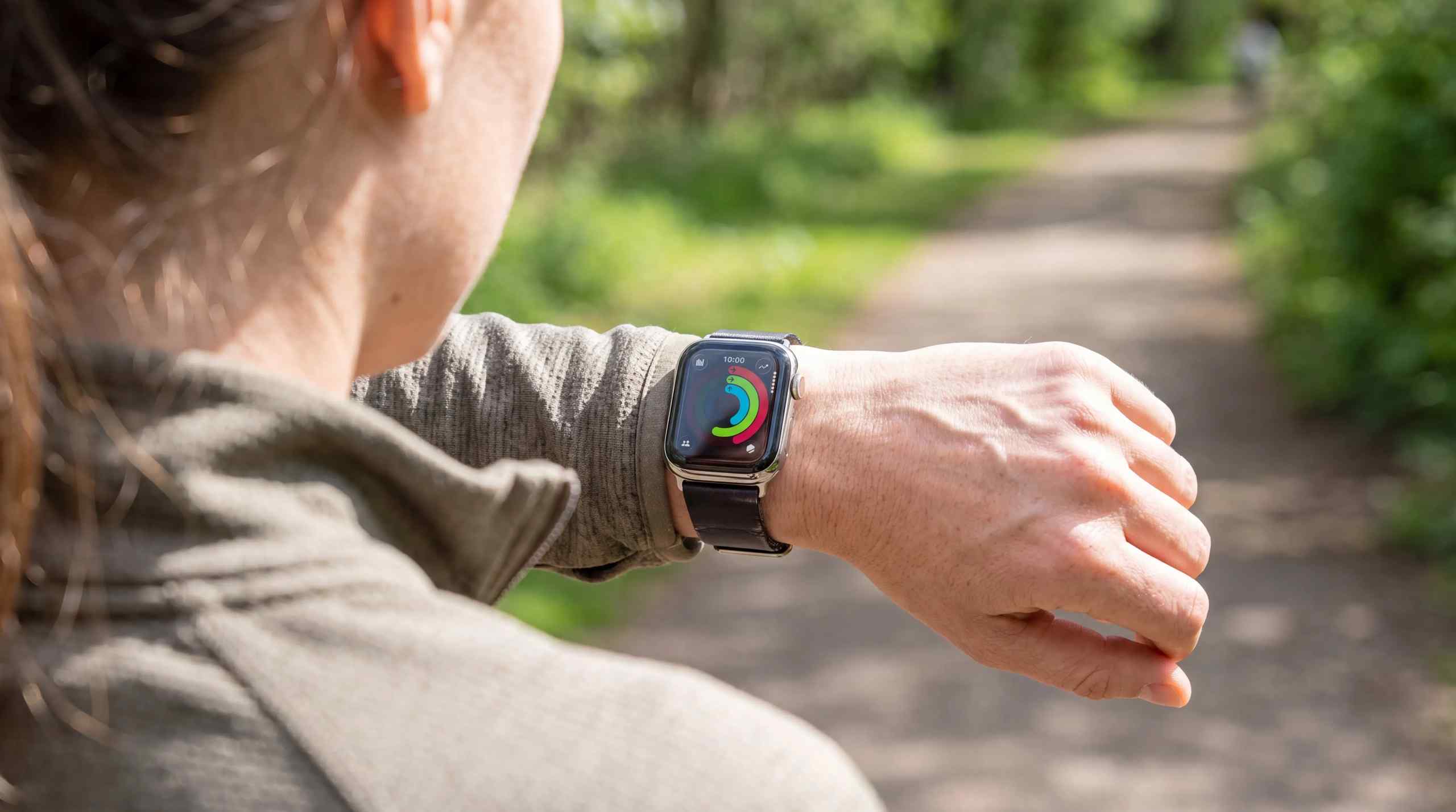
You might not think it, but fitness trackers work because they gamify this invisible habit by way of displaying a tangible goal to aim for. While schemes like the UK's NHS-driven "marathon a month" challenge aim to incentivize people to walk 30 minutes a day, a physical step count gives you immediate feedback on your daily steps progression, and more often than not, an actionable psychological incentive to reach your target.
Top 5 Wearable Step Counters
- Garmin Vivoactive 6
- Apple Watch Series 11
- Oura Ring 4
- Fitbit Air
- Whoop MG
In addition to pedometers, modern wearables are also becoming way more sophisticated, to incorporate your sleep, heart rate, recovery, and stress levels, not to mention the inclusion now of AI-personalized health coaching.
Importantly, while these extra features can help build healthier daily routines, experts still insist these should support manageable healthy habits rather than pressuring people to complete multiple challenges, which is why a standard step count is a fantastic baseline metric.

Is Walking the Ultimate Wellness Habit?
Undoubtedly, walking remains the one true form of exercise that almost anyone can do regardless of age or fitness levels. After all, there are no expensive gym memberships or need for specialized equipment, yet it steadily improves your cardiovascular fitness, regulates your blood sugar, supports your joint health, while also strengthening your muscles and bones, and boosting your mood.
Regardless, perhaps walking’s biggest selling point is just how easily it naturally fits into our everyday lives. Whether you’re out walking the dog, heading to the store on foot, or simply enjoying an evening walk with your friends and family, every step forward is basically a step towards a healthier you.

Beyond 10,000 Steps: How You Can Augment Your Step Count Challenge
For those of you who are curious about how step counts fit within the overall wellness puzzle, there are a number of factors to consider.
For instance, increasing the intensity or speed of your walks can dramatically elevate your heart rate to optimize the health benefits of achieving your step count. Furthermore, minimizing sedentary behavior, particularly during the working day, can also help, such as making time for a 5-minute walk every hour.
Another key factor is the need for recovery, which is why elite athletes tend to be so obsessed with sleep. Essentially, quality sleep aids effective recovery, giving both your body and brain the time needed to repair and recharge for tomorrow’s step challenge.
Meanwhile, public health guidelines also recommend adults complete at least 150 minutes of moderate-intensity activity each week, which can include strength training or jogging for a little added boost.
Walking works best when combined with:
- Brisk walking that tends to elevate your heart rate.
- Partaking in strength training at least twice each week.
- Breaking up long periods of sitting throughout the day.
- Sustainable daily routines you can realistically maintain.
- Consistent, high-quality sleep for recovery.
The Bottom Line on 10000 Steps
It’s hard to argue with the science, as while the inflated target of old may have initially been more marketing spiel than based on hardcore facts - the truth of the matter is that walking every day can meaningfully improve your health.
So forget the 10,000 steps and try to target 7,000 if you can, and while chasing that target may still sound daunting, just know that simply increasing your daily step count might be enough to help you fend off longer-term health problems.
10,000 Steps FAQs
How many km is 10,000 steps?
For most adults, 10,000 steps is approximately 7 to 8 kilometres (4.3 to 5 miles). The exact distance depends on your stride length, which varies based on height and walking style.
As a general guide:
- Shorter stride: ~7 km
- Average stride: ~7.5 km
- Longer stride: ~8 km
If you know your height or stride length, you can calculate a more accurate distance.
How many miles is 10,000 steps?
For most adults, 10,000 steps is approximately 4.5 to 5 miles. The exact distance depends on your stride length, which varies based on your height, walking style, and pace.
As a general guide:
- Shorter stride: ~4.3 miles
- Average stride: ~4.7 miles
- Longer stride: ~5 miles
If you know your stride length, you can calculate a more accurate distance by multiplying your average step length by 10,000.
How long does it take to walk 10,000 steps?
For most people, walking 10,000 steps takes between 1 hour 30 minutes and 2 hours. The exact time depends on your pace:
Walking Pace | Time for 10,000 Steps |
|---|---|
Leisurely (3 km/h) | About 2 hours |
Moderate (5 km/h) | About 1 hour 30 minutes |
Brisk (6–6.5 km/h) | About 1 hour 10–20 minutes |
You don't have to complete all 10,000 steps in one walk. Many people reach the goal through several shorter walks throughout the day.
How many calories does walking 10,000 steps burn?
Walking 10,000 steps typically burns between 300 and 500 calories. The exact number depends on factors such as your body weight, walking speed, terrain, and fitness level. Typical estimates include:
- 125 lb (57 kg): 250–320 calories
- 155 lb (70 kg): 300–400 calories
- 185 lb (84 kg): 380–500 calories
Walking uphill, carrying weight, or increasing your pace can burn even more calories than walking the same number of steps on flat ground.
Stuart Hughes is a London-based freelance journalist covering sports, travel, lifestyle, and technology. He’s worked with brands like Lenovo, Best Western, and Frontier Airlines, bringing a global perspective shaped by years of travel.
More Articles like this
Why Hobbies Are Good for You (Even Watching Sports)
Research links hobbies to better mood, sharper thinking, and lower disease risk. Even rooting for a team can help, as long as the benefit comes from the community and not just the scoreboard.

By Cole Rush
Is Sitting as Bad as Smoking? Not Even Close
We've all heard that sitting is the new smoking. But while spending too much time on the couch carries genuine health risks, the science behind this alarming comparison tells a very different story.

By Stuart Hughes
Seven Ways Your Brain Tricks You Into Taking Risks
From chasing losses to trusting AI predictions, science reveals seven mental traps that can make risky decisions feel surprisingly reasonable.

By Stuart Hughes
From Creatine to Collagen: Which Supplements Actually Work?
From bigger muscles and healthier skin to getting a better night's sleep, wellness supplement advertising promises the world, but is the marketing department spinning scientific facts?

By Stuart Hughes
The 5 Craziest Wellness Trends People Once Swore By
Beauty is pain, or so the saying goes. Throw in the promise of a shortcut, and people will listen. Some of the wellness trends that caught on, though, were wild even by the standards of their own time.
.webp)
By Charlon Muscat
Time to Wake Up: 8 Hours of Sleep Isn't a Magic Number
For years, eight hours has been drilled into us as the perfect night's kip. Turns out, the sleep doctors think there's more to getting a good night's sleep than just clocking up the hours.

By Stuart Hughes