
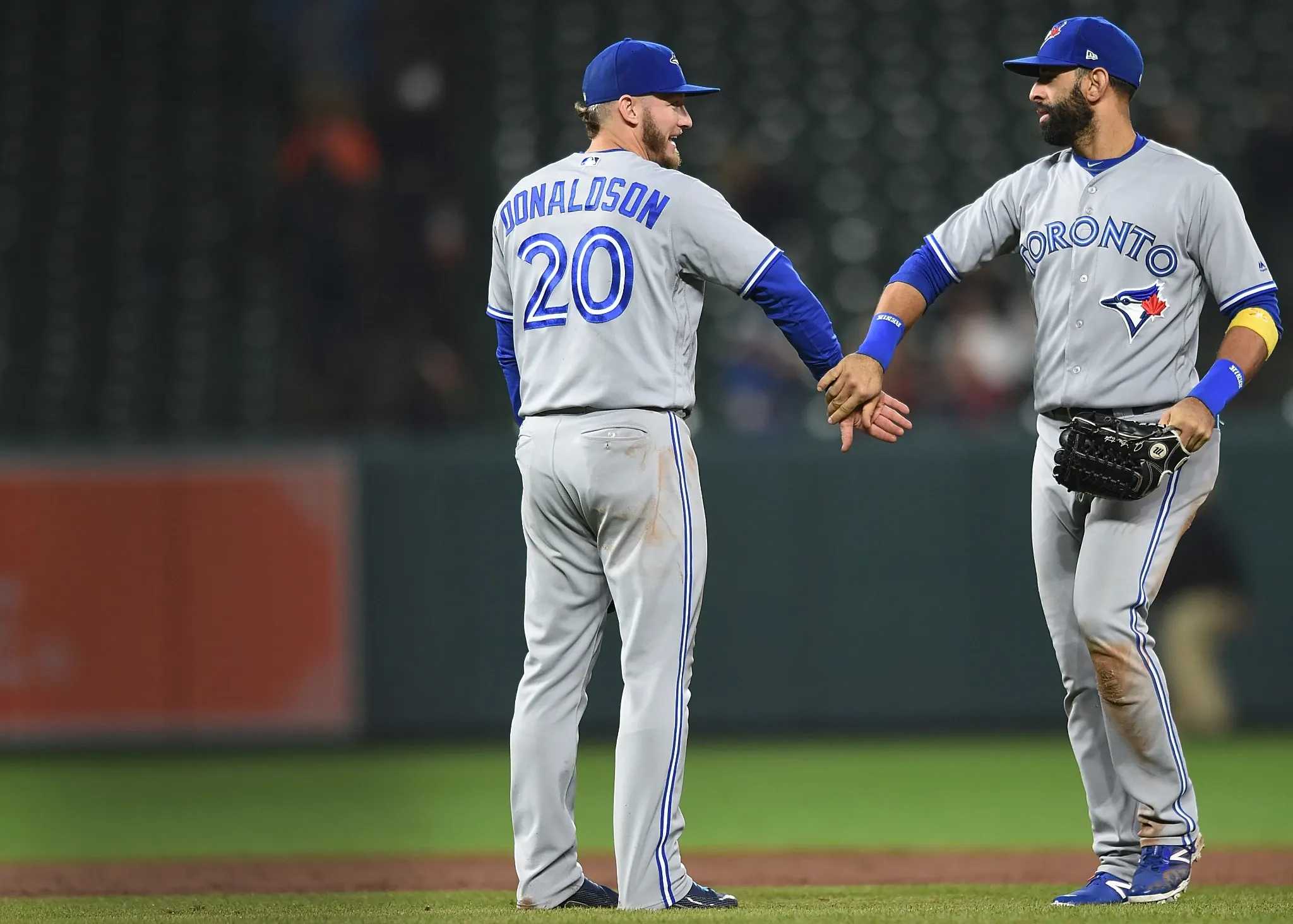
Best Ever Blue Jays Players
Canada's baseball team has produced some of the greatest players in MLB history. These are the five Blue Jays who defined the franchise.

Toronto has been building a baseball culture since 1977, and the back-to-back World Series titles in 1992 and 1993 cemented the sport in the country's consciousness. The franchise has produced Hall of Famers, generational sluggers, and one of the most iconic postseason moments in baseball history. In 2025, the Blue Jays returned to the World Series for the first time since 1993, pushing the Dodgers to seven games before falling in extra innings. These are the five players who defined what the franchise is capable of at its best. For Canadian sports fans, the Blue Jays have always been more than just a team. These are the five players who defined what the franchise is capable of at its best.
The Blue Jays' all-time greats at a glance
Key stats and career highlights for each player on the list.
| Player | Position | Years | Key stats | Distinction |
|---|---|---|---|---|
| Roberto Alomar | 2B | 1991–1995 | .307 avg, 206 SB | Hall of Fame 2011 |
| Roy Halladay | SP | 1998–2009 | 148 W, 3.43 ERA | Hall of Fame 2019 |
| Carlos Delgado | 1B | 1993–2004 | 336 HR, 1,058 RBI | Franchise HR record |
| Dave Stieb | SP | 1979–1992 | 175 W, 3.44 ERA | Only no-hitter in Jays history |
| Jose Bautista | RF | 2008–2017 | 288 HR, 2x HR leader | Franchise single-season HR record |
The Best Toronto Blue Jays Players of All Time
From Ontario schoolyards to backyard diamonds in British Columbia, the Blue Jays have given Canadian baseball fans players worth cheering for across every province. These are the five who stood tallest in franchise history.
Roberto Alomar: The Best Blue Jay Who Ever Lived
No player defines the Toronto Blue Jays more completely than Roberto Alomar. The argument that he is the greatest second baseman in baseball history is not a stretch: a .300 career average, 210 home runs, 1,134 RBIs, 474 stolen bases, and 10 Gold Gloves across 16 seasons.
The Jays acquired Alomar after the 1990 season alongside Joe Carter, giving up Fred McGriff and Tony Fernandez to get them. It turned out to be one of the great trades in franchise history. Over five seasons in Toronto, Alomar hit .307 with 55 home runs and 206 stolen bases, but his postseason performances are what set him apart. In the 1993 playoffs alone, he hit .388 with a .944 OPS, 10 stolen bases, and 8 runs scored across 12 games.
He was elected to the Baseball Hall of Fame in 2011 and became the first player depicted as a Blue Jay on a Hall of Fame plaque.
Dave Stieb: The Ace Nobody Talks About Enough
Dave Stieb was selected in the fifth round of the 1978 MLB Draft and spent all but one of his 16 big league seasons in Toronto. He is the franchise's all-time leader in wins (175), innings pitched (2,873), strikeouts (1,658), starts (408), shutouts (30), and complete games (103).
The no-hitter story is one of baseball's crueller footnotes. Stieb was retired within two outs of a no-hitter three separate times, including in back-to-back games in 1988 and a near-perfect game in 1989. He finally got it done in September 1990 against the Cleveland Indians, the only no-hitter in Blue Jays history.
He did all of this on some genuinely bad Blue Jays teams, finishing 176-137 with a 3.44 ERA. He never won a Cy Young. He received one MLB Hall of Fame ballot look and was not included on the 2026 Contemporary Baseball Era committee ballot, which considered players like Barry Bonds and Roger Clemens. The gap between his career and his recognition remains one of the more glaring oversights in the sport.
Roy Halladay: The Best Pitcher of His Generation
Roy Halladay was the 17th overall pick in 1995 and became the best pitcher in baseball through the 2000s. After a rocky start that sent him back to the minors to reinvent his approach, he returned in 2001 as the unquestioned ace of the rotation.
His 2003 season stands as one of the best by any pitcher in that decade: 22 wins to lead the league, 9 complete games, 266 innings pitched, and the AL Cy Young Award. He never made the playoffs as a Blue Jay, which remains a genuine injustice given how dominant he was.
Traded to Philadelphia ahead of the 2010 season, Halladay threw a no-hitter in his first career playoff start and won a second Cy Young. He finished with a 203-105 record and a 3.38 ERA across 416 games and was inducted into the Hall of Fame in 2018.
He died in a plane crash in 2017. He was 40.
Carlos Delgado: A Decade of Quietly Being the Best Hitter in the Lineup
The Jays signed Delgado out of Puerto Rico as a 16-year-old, and by the time he left in 2004 he owned most of the franchise's offensive records. He still does: 336 home runs, 1,058 RBIs, 2,786 total bases, and a franchise-record 6,000-plus plate appearances with Toronto.
Delgado hit 30 or more home runs in eight straight seasons and drove in 100 or more runs in six consecutive seasons. He never made the postseason as a Blue Jay, which is part of why he never got the wider recognition his numbers deserved. He went on to have a long run with the Mets but his peak years belong to Toronto.
Jose Bautista: The Bat Flip and Everything Before It
Bautista spent the early part of his career bouncing between teams without much distinction before landing in Toronto in 2008. In 2010, he hit 54 home runs seemingly from nowhere, set the franchise single-season record, and led the majors in home runs in back-to-back seasons.
His broader contribution was pulling the Blue Jays back into relevance. Toronto made their first playoff appearance in 22 years in 2015, and the image of Bautista flipping his bat after a go-ahead three-run home run against the Texas Rangers in the ALDS is the most replicated moment in franchise history.
He never won a ring in Toronto. The bat flip lives forever anyway.
The Bottom Line
The Blue Jays have never been a sustained dynasty, but the individual talent this franchise has produced is hard to argue with. Two Hall of Famers in Alomar and Halladay, a decade of Delgado quietly being the best hitter in any lineup he stood in, and a bat flip that a generation of Canadian kids grew up watching. Toronto made it back to the World Series in 2025 for the first time since 1993, losing a seven-game classic to the Dodgers in one of the most dramatic Game 7s in baseball history. The drought is over in one sense. The ring still isn't there. But when it comes, it will have shoulders like these to stand on.
James Guill is an experienced iGaming journalist with a diverse background spanning IT, poker, and online gambling media. With over 20 years in the industry, he’s covered a wide range of gaming topics and has been featured in outlets like USA Today and G4 TV.
More Articles like this
Do NHL Stars Lose Their Edge After Signing Huge Contracts?
Do NHL stars really take their foot off the gas after a big payday? We analyzed 29 major contracts to find out.
By Charlon Muscat
Five Iconic World Series Moments Since the Brewers' Appearance
The Brewers are back in the World Series after 44 years. From Bill Buckner's error to the Cubs ending their curse, plenty has happened since 1982.
By Bill Gelman
LeBron to Giannis: Ranking 5 NBA Offseason Stunners
LeBron to Philly, Giannis to Miami, and Wemby staying put. Which NBA offseason move will pay off the most?
By Bill Gelman
NFL Fans Spend $900 to Watch Games. WWE Fans Pay Even More
Think watching every NFL game is expensive? WWE fans would argue otherwise.

By James Guill
How Bad Is It? Ranking the NHL's Original Six by Fan Misery
Nearly 60 years without a Stanley Cup is just the beginning. We rank the NHL's Original Six teams by how much misery their fans have endured.
By Bill Gelman
Why Does Everybody Hate Us? 10 Most Hated Sports Teams Ever
Some teams always win; others get caught breaking the rules. Either extreme is a surefire way to become universally hated, as these 10 sports teams can attest to.
By Stuart Hughes