
Best Soccer Teams of All Time
From Manchester United's dramatic treble to Real Madrid's Champions League dynasty, we rank the greatest soccer teams to ever grace the pitch and make the case for each one.

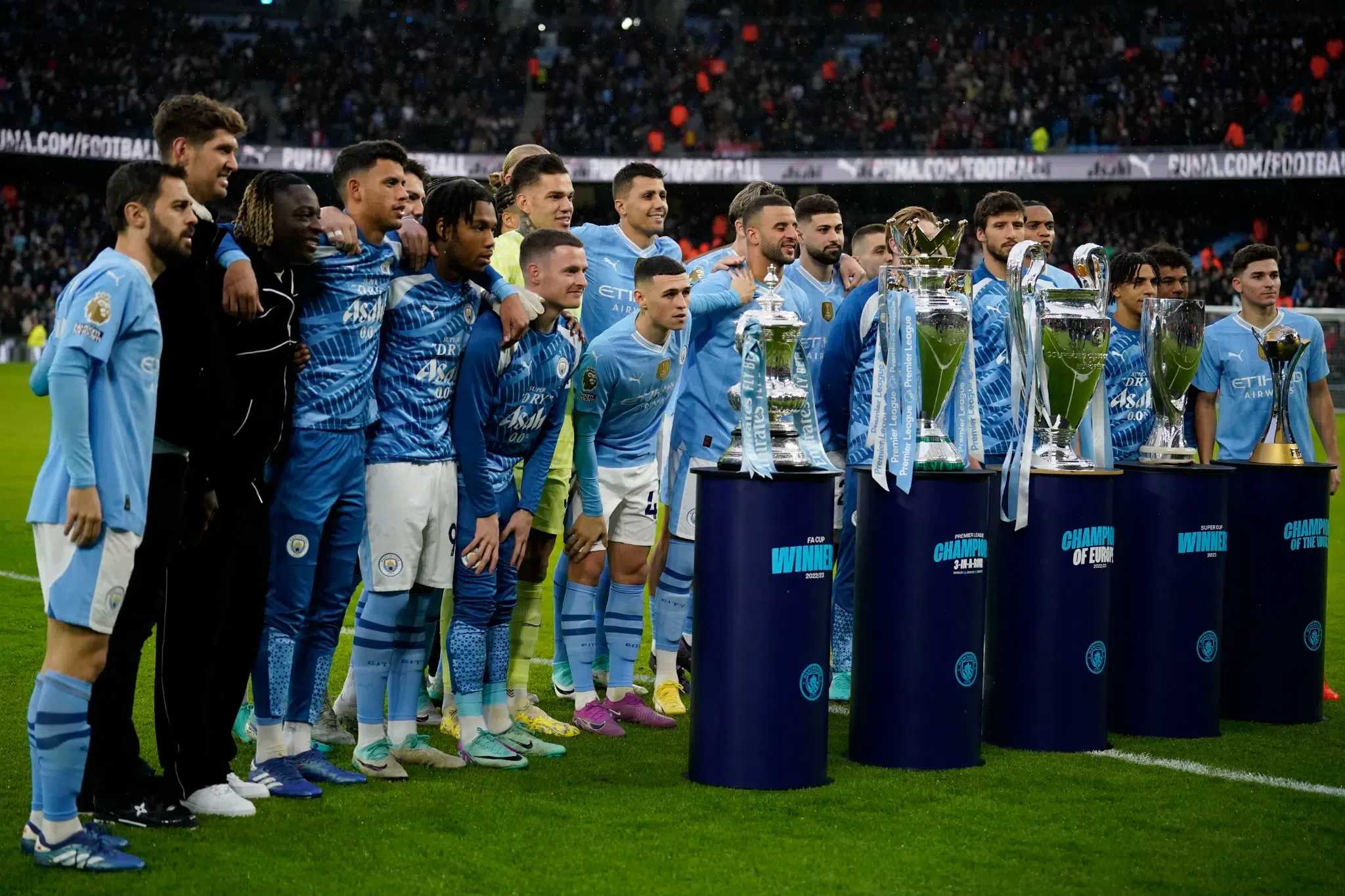
Despite Manchester City’s relative dominance on the domestic scene, the biggest trophy of them all had yet to land in the trophy cabinet of the blue half of Manchester.
All that changed on a memorable night in Istanbul, with Rodri’s fine strike making the difference between City and three-time winners Inter Milan.
Victory in Turkey saw City match their Mancunian rivals’ 1999 treble of an EPL title, FA Cup triumph, and Champions League glory. Both surely have to be considered as one of the greatest achievements in the sport, but is that enough to make the Manchester team one of the greatest of all time?
When ranking the best soccer teams of all time, experts look at a combination of factors such as Champions League wins, European Cup final appearances, points per game, and goal differential. The quality of opponents faced, trophy counts, and a team's sustained success are also key, with many ranking systems giving extra weight to domestic league performance. Beyond statistics, qualitative factors like a team's legacy, cultural impact, and influence on the sport, such as revolutionary playing styles, are crucial in identifying the greatest teams in football history.
Introduction to Soccer
Soccer, known as football in most parts of the world, is the planet’s most popular sport, captivating billions of fans across every continent. Played between two teams of eleven players, the objective is simple: score more goals than the other team by maneuvering the ball into the opponent’s net using any part of the body except the hands and arms (goalkeepers excepted). This simplicity is part of soccer’s universal appeal, but experienced watchers know that it is a game of immense skill, strategy, and athleticism.
The sport’s biggest stage is the FIFA World Cup, held every four years, where national teams from around the globe compete for the ultimate prize in football. The World Cup final is a spectacle watched by millions, uniting fans in celebration of the beautiful game. At the club level, the UEFA Champions League stands as the most prestigious competition, bringing together the top teams from Europe’s elite leagues. The Champions League final is the one of the most-watched annual sporting events, with clubs battling through intense knockout rounds for a shot at glory.
Manchester United 1999
Long before Pep Guardiola arrived and established the blue side of Manchester as English soccer’s dominant force, it was their cross-city rivals that ruled the British game. Sir Alex Ferguson created a dynasty that would last long in the memory, and there was no greater United side than that which won the treble in 1999.
A legendary team featuring the likes of Roy Keane, David Beckham, and Paul Scholes, punctuated by a relentless, attacking philosophy, this was a team that overcame all obstacles and odds. During their Champions League run, United sometimes lost or trailed in the first leg of knockout ties, but managed to overturn deficits in the second leg, showing the crucial impact of the first leg results on their path to the final. There was no more fitting example of this than their final triumph, a last-minute victory against Bayern Munich after trailing for most of the game, to secure the Champions League title and their place in footballing history forever.
Real Madrid 2018
If trophies are the ultimate mark of greatness in football, then few sides can claim to rival Real Madrid. The serial winners have had many iconic teams over the years and equally iconic players, yet their most impressive feat may have occurred in 2018.
The Galacticos, led by former midfield maestro Zinedine Zidane, had suffered a lackluster season domestically, having been knocked out of the Copa del Rey and chasing Barcelona in the league. It looked as though the season would be one to forget.
However, Madrid proved itself worthy of their insurmountable reputation. They embarked on one of the best European campaigns ever, beating PSG, Bayern Munich, and Juventus on their way to the final. Their final test was a Liverpool side that seemed destined for glory. It was not to be, though, as Real’s sheer ruthlessness won out in the end, helped by one of the best goals ever scored in a European final. The result? A historic three-peat in the Champions League, a feat not likely to ever be repeated. By winning three consecutive Champions League titles from 2016 to 2018, Real Madrid became the most successful club in European football history. Even in seasons like 2011-12, when Real Madrid scored a record 121 goals and achieved 100 points in La Liga, they still did not win the Champions League, highlighting the difficulty and prestige of the competition.
Barcelona 2009
While Pep Guardiola is currently revered by the Manchester City faithful, it was in the streets of Barcelona where he first established his reputation. A former player and permanent fan of the Catalan club, Guardiola immediately made some huge calls when appointed, letting go of club legends Deco and Ronaldinho.
It was a big play by a man who would become known for moves of that magnitude, but it paid off brilliantly. He nurtured the talents of an emerging Lionel Messi, guiding him from a hot prospect to a 38-goal superstar, and installed a scintillating style of play.
Soon, Guardiola’s Barcelona dominated in every competition they played in. They won the Copa del Rey, pipped Real Madrid to the league, and demolished Ferguson’s United to secure European glory too. Barcelona's 2008-09 team is often regarded as one of the greatest of all time, winning the treble with Lionel Messi, Xavi, and Andres Iniesta at their peak. From 2008 to 2012, Barcelona's dominance under Guardiola showcased a refined version of tiki-taka, a style characterized by short passing and movement, which not only led to unprecedented success but also influenced the playing philosophy of clubs worldwide and set a new standard for possession-based soccer.
Barcelona's sustained excellence continued under Luis Enrique, who guided the club to another treble in the 2014-15 season, including the Champions League, further cementing their legacy and demonstrating the tactical evolution of the team.
Liverpool 1984
Sometimes, it can be easy to forget the accomplishments of teams before the Premier League and UEFA era. While they may not be the most remembered team now for those outside of the Merseyside faithful, Liverpool’s 1983-84 team rivals any of the others mentioned in this list.
Led by Joe Fagan, appointed after the legendary Bob Paisley, Liverpool went on a dominant run, which saw star player Ian Rush score 47 goals in all competitions. They first beat Everton in the League Cup final, before securing a third successive Division 1 title, becoming only the third side to do so.
Their final test came against AS Roma in the Stadio Olimpico in the European cup final. It was a tense game that ended 1-1 after extra time, leading to a nail-biting penalty shootout. They won 4-2 and became the first English side to win three major trophies in a single season, a historic achievement still talked about by Liverpool fans to this day.
Other legendary teams have also left their mark on European football history. The Lisbon Lions, Celtic's 1967 team, famously won the European Cup final with a squad made up entirely of local Glasgow players. Nottingham Forest, under Brian Clough, achieved back-to-back European Cup victories in the late 1970s and early 1980s, a feat that remains remarkable. Leeds United, led by the likes of Jack Charlton and Johnny Giles, were renowned for their toughness and tactical prowess, collecting major trophies and earning a reputation as a 'mean machine' during the late 1960s and early 1970s. Like Liverpool, these teams achieved remarkable feats, such as winning five titles or major trophies in a short span, cementing their place among the best soccer teams of all time.
When trials and tribulations arise, true greats step up.
Perhaps the most surprising part of Manchester City’s success is how unlikely it looked earlier in the 2023 season. In February, City looked like a team on the decline... Even with a record-breaking Haaland up front, it seemed as if the Blues were destined to end the season without silverware.
Manchester City 2023
Perhaps the most surprising part of Manchester City’s success is how unlikely it seemsed at the beginning of the 2023 season. In February, City looked like a team on the decline. Their stars were tired after a mid-season World Cup, they trailed behind Arsenal in the league, and had even been knocked out of the League Cup by bottom-placed Southampton.
Even with a record-breaking Haaland up front, it seemed as if the Blues were destined to end the season without silverware. But when trials and tribulations arise, true greats step up. Guardiola, recognizing the need for drastic change, did what he does best.
He switched to an innovative 3-2-2-2-1 formation, transitioning John Stones to a hybrid midfield role, one in which he excelled, and relied on previous bit-part players like Nathan Ake to take a prominent part in the team.
The results were seismic. They caught Arsenal in the league, beating them twice in two title-clinching ties, emerged triumphant in the FA Cup against their fiercest rivals, Manchester United, and topped it off with a first-ever Champions League to seal a historic treble. If there had been any doubts over Guardiola and his City side’s legacy, all were dismissed when the final whistle blew on that famous night in Istanbul.
Tactical Evolution of Soccer’s Greatest Teams
The evolution of the best soccer teams of all time has often been driven by revolutionary playing styles and tactical innovation. AC Milan’s late 1980s to early 1990s team, under Arrigo Sacchi, introduced a revolutionary tactical approach to defending and attacking, setting new standards in European football. Bayern Munich’s 2012-13 season is widely considered the best in history, as the same team achieved a record 2.68 points per game and a goal differential of 2.35, winning the Champions League and all domestic titles. Their tactical approach under Jupp Heynckes, blending high pressing and quick transitions, set a new benchmark for attacking football in Europe.
The concept of 'Total Football', introduced by Rinus Michels and the Dutch national team in the 1970s, emphasized fluid positional play and high pressing, fundamentally influencing modern soccer tactics. Ajax’s adoption of Total Football, with Frank Rijkaard playing a key role in their UEFA Cup and 1995 Champions League wins, showcased the power of positional interchange. Teams like Brazil 1970 and Ajax have left a lasting legacy on the tactical evolution of the game.
Other clubs and managers have also shaped football history. Atletico Madrid’s notable achievements in La Liga and Europe include upset victories over larger clubs, while Gerard Piqué was a key defender for Barcelona during their Champions League campaigns, including their battles against Bayern Munich. Arsene Wenger’s innovative coaching at Arsenal inspired modern football philosophies and included predictions about unbeaten seasons, while Jose Mourinho’s tactical influence and title-winning achievements with Chelsea, Porto, and Real Madrid are widely recognized. West Germany’s national team in the early 1970s dominated with victories at the 1972 European Championship and the 1974 World Cup. Leicester City’s 2015-16 Premier League win stands as one of the greatest underdog stories and a cultural phenomenon in football history. The New York Cosmos, featuring legends like Pelé and Franz Beckenbauer, became a cultural phenomenon in the 1970s, boosting soccer’s popularity in the United States.
South American Soccer Teams
No discussion of the best soccer teams of all time would be complete without recognizing the giants of South American football. Clubs like Boca Juniors and River Plate from Argentina have become legendary, not just for their fierce rivalry but for their remarkable achievements on the continental and world stage. Boca Juniors, with their passionate fanbase and iconic blue and gold kit, have claimed multiple Copa Libertadores titles and have twice lifted the Intercontinental Cup, defeating European champions to prove their status as a world-class club. River Plate, their eternal rivals, have also enjoyed continental glory, with several Libertadores wins and memorable performances in the final against top teams from across the globe.
Brazilian clubs such as Santos and São Paulo have also left their mark, producing world-renowned talents and winning international honors. Santos, the club where Pelé became a global icon, dominated South American football during their golden era, while São Paulo’s triumphs in the Libertadores and Intercontinental Cup cemented their reputation as a powerhouse.
These South American teams are celebrated not only for their trophies but for their unique style of play, passionate supporters, and ability to produce some of the greatest players in football history. Their influence extends far beyond their own leagues, shaping the global game and inspiring fans and clubs around the world.
Factors that Contribute to a Team’s Success
What makes a soccer team truly great? While trophies and titles are the most visible markers of success, the stories often run much deeper. Legendary managers like Sir Alex Ferguson, Pep Guardiola, and Zinedine Zidane have shown that tactical innovation and leadership are crucial in building a successful club. The presence of world-class players, such as Lionel Messi, Thierry Henry, or Norman Hunter, can elevate a team from contenders to champions, especially when they deliver in the biggest games, such as a Champions League final or a decisive league title match.
Club culture and fan support also play a vital role. The best teams are often those with a strong identity, a loyal following, and a history of overcoming adversity. Whether it’s the relentless drive of Manchester United in the 1999 season, the tactical brilliance of Barcelona under Guardiola, or the resilience of Liverpool’s 1984 squad, each successful team has its own unique formula.
Consistency across a season, the ability to perform under pressure in the Champions League quarterfinals or the second leg of a European cup tie, and the vision to adapt to new challenges all contribute to a team’s legacy. Ultimately, the combination of talent, leadership, strategy, and unwavering support from fans is what transforms a good team into the best team in football history.
The Five Greatest Soccer Teams at a Glance
| Manager | Club | Era | Style | Legacy |
|---|---|---|---|---|
| Sir Alex Ferguson | Man United | 1986-2013 | Attacking, relentless | 13 league titles, 2 Champions Leagues |
| Pep Guardiola | Barcelona / Man City | 2008-present | Tiki-taka, high press | 3 trebles across two clubs |
| Zinedine Zidane | Real Madrid | 2016-2018 | Pragmatic, ruthless | 3 consecutive Champions Leagues |
| Joe Fagan | Liverpool | 1983-1985 | Disciplined, clinical | Treble in first season in charge |
Final Thoughts on the Greatest Soccer Team of All Time
The debate over the greatest team in football history is as passionate as the sport itself. From Manchester United’s dramatic treble to Real Madrid’s Champions League dominance, from Barcelona’s total football to the legendary South American clubs, each team has left an indelible mark on the game. What unites them all is a relentless pursuit of excellence, a commitment to entertaining fans, and a legacy that inspires future generations.
As soccer continues to evolve, new teams will rise, new legends will be born, and the quest for the next best team will go on. That debate also spills over into the sports betting world, where bettors have long argued over which dynasty would have been the hardest to bet against. Whether you cheer for an English team, a South American powerhouse, or a European giant, one thing is certain: football’s rich history and unforgettable moments will keep fans debating and celebrating for years to come.
Greatest Soccer Team of All Time FAQs
What criteria are used to rank the best soccer teams of all time?
Rankings consider a combination of factors, including trophy counts, points per game, goal differential, quality of opponents, sustained success, and cultural impact. Extra weight is often given to domestic league performance and Champions League success.
How has tactical innovation influenced the greatest soccer teams?
Revolutionary playing styles, such as Total Football and tiki-taka, have shaped the success of iconic teams by enhancing fluidity, possession, and pressing. Managers like Pep Guardiola and Arrigo Sacchi are noted for their tactical contributions.
Which managers have had the biggest impact on football history?
Legendary managers such as Sir Alex Ferguson, Pep Guardiola, Zinedine Zidane, Jose Mourinho, and Arrigo Sacchi have each built dominant teams and introduced tactical innovations that influenced the sport globally.
What role does cultural impact play in defining the best teams?
Beyond trophies, teams like the New York Cosmos and Barcelona have left lasting legacies by influencing playing styles, inspiring fans worldwide, and contributing to football’s global growth and cultural significance.
Are South American teams included in the list of the best soccer teams?
Absolutely. Clubs like Boca Juniors, River Plate, Santos, and São Paulo are celebrated for their international success, unique playing styles, and contributions to football history.
James Guill is an experienced iGaming journalist with a diverse background spanning IT, poker, and online gambling media. With over 20 years in the industry, he’s covered a wide range of gaming topics and has been featured in outlets like USA Today and G4 TV.
More Articles like this
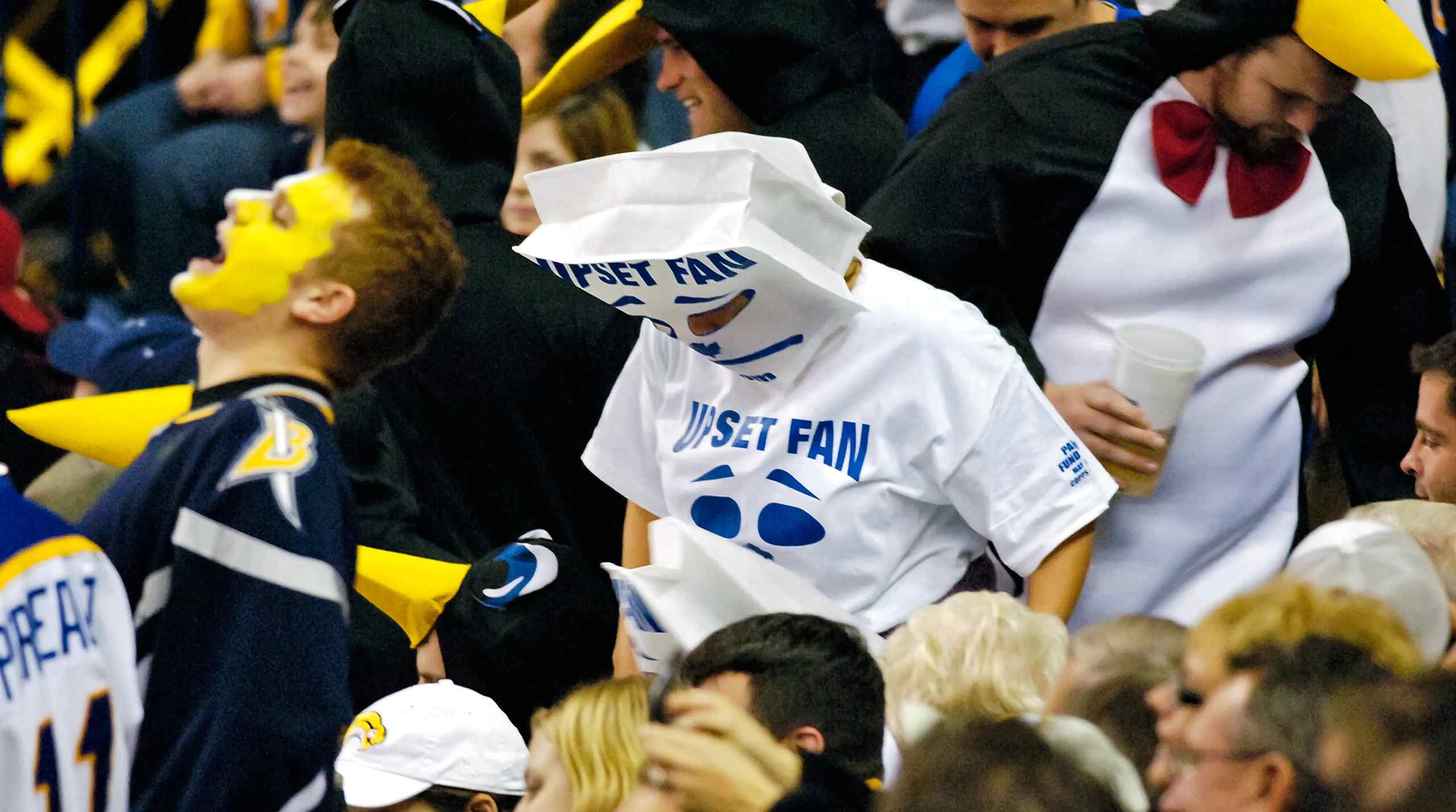
How Bad Is It? Ranking the NHL's Original Six by Fan Misery
Nearly 60 years without a Stanley Cup is just the beginning. We rank the NHL's Original Six teams by how much misery their fans have endured.
By Bill Gelman
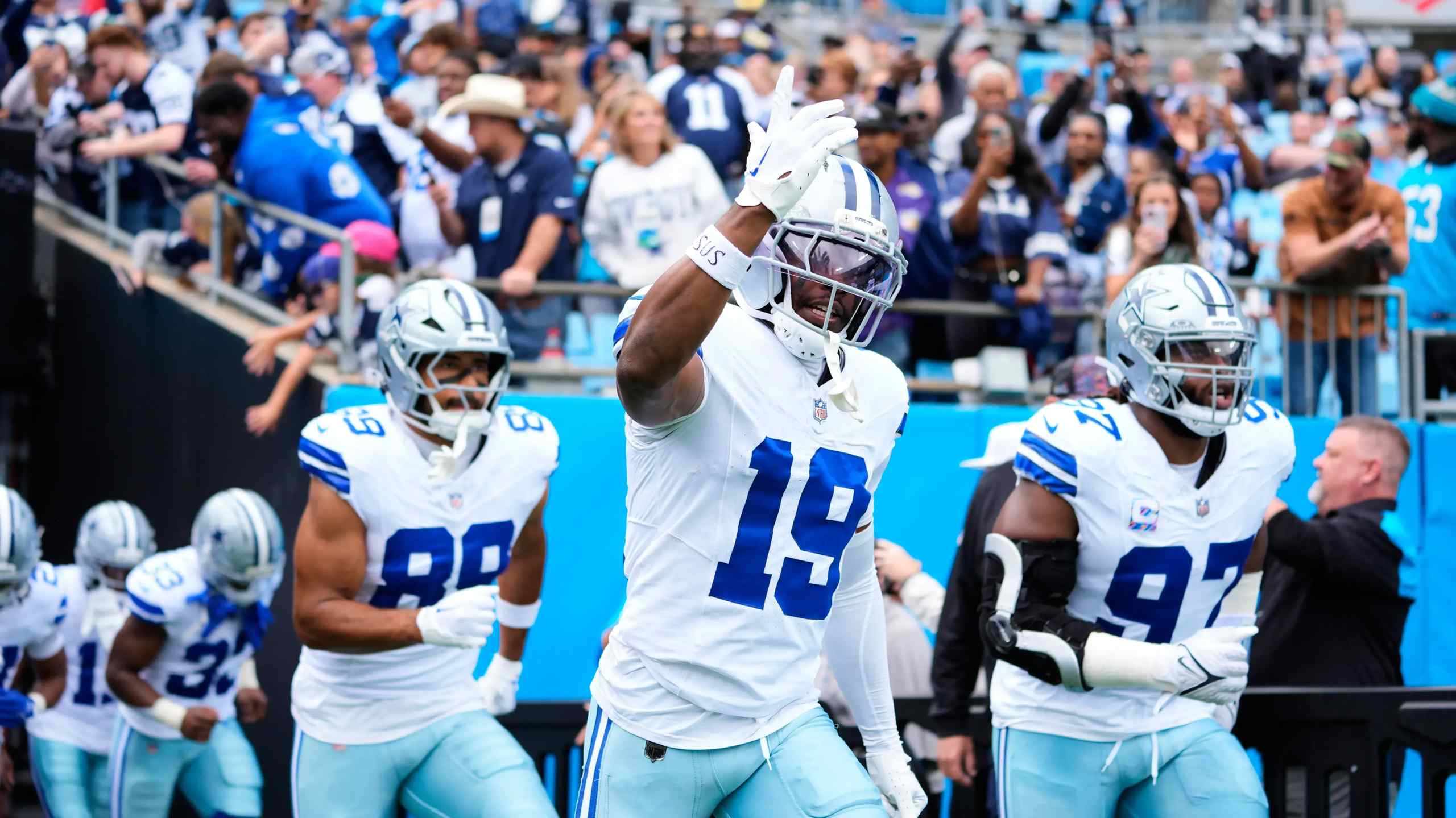
Why Does Everybody Hate Us? 10 Most Hated Sports Teams Ever
Some teams always win; others get caught breaking the rules. Either extreme is a surefire way to become universally hated, as these 10 sports teams can attest to.
By Stuart Hughes
5 Outrageous Sports Rules That Need to Die
From a missed signature disqualification to a two-minute penalty for a tucked-in jersey, find out about the top five dumbest rules in sport that leave common sense in the locker room.

By Stuart Hughes
The 10 Most Unforgettable Quotes in Sports History
From Jordan's hard truths to Healy's cheeseburger dig, these legendary greats uttered 10 iconic quotes that turned out to be as memorable as their sporting achievements.

By Stuart Hughes
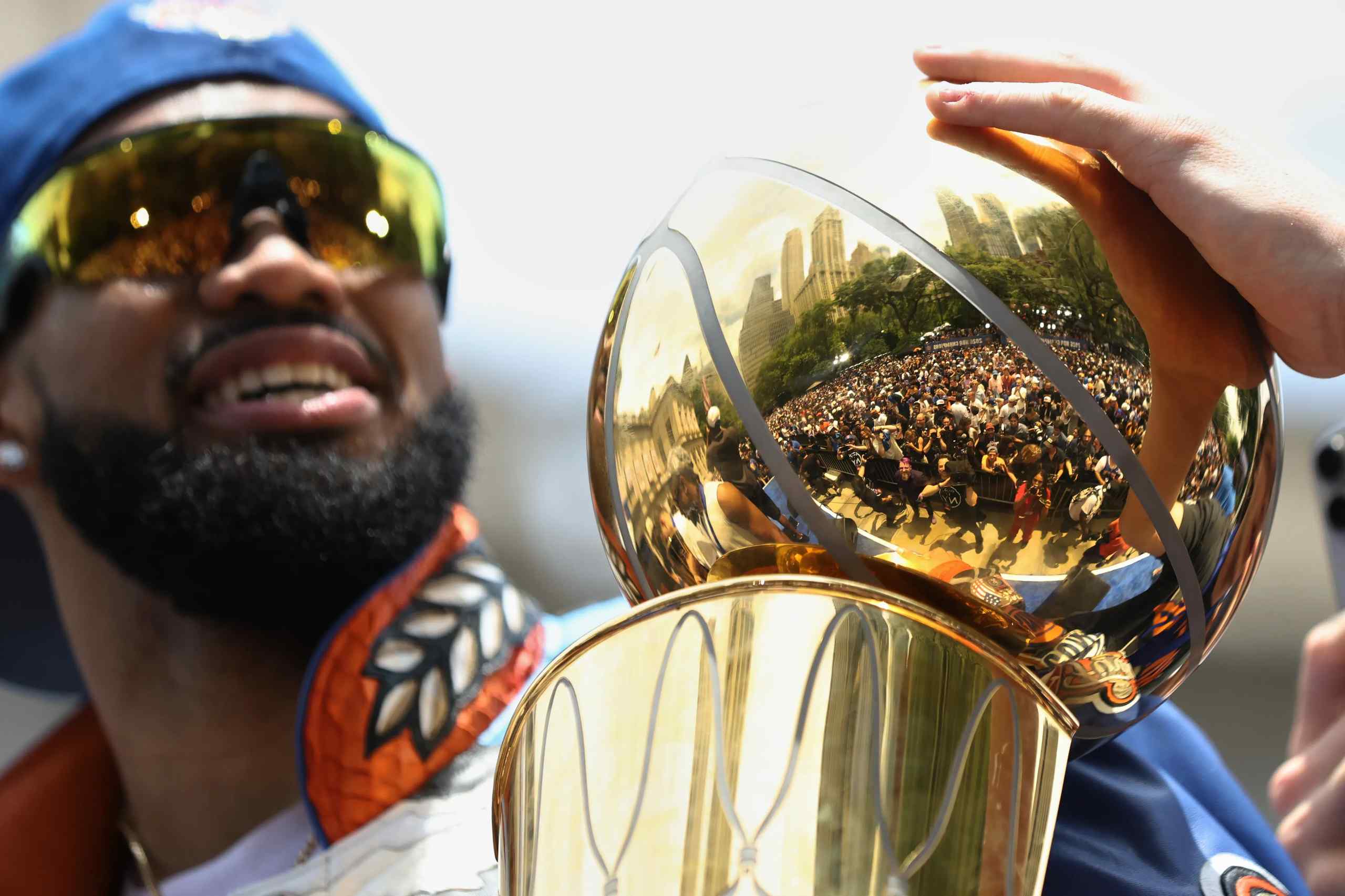
Eight Years, Eight NBA Champions. Is Parity Here to Stay?
Eight different teams have won the NBA championship in eight years, the longest such streak in league history. Can the Knicks finally break the cycle, or will another contender claim the crown?
By Bill Gelman
Is This the Biggest Acquisition Era in Sports Betting History?
Sportsbooks, prediction markets, and sweepstakes apps are fighting for the same customers. We compared 11 welcome offers to see who's offering the biggest incentives.

By Cole Rush