

Alberta Just Broke the Two-Province Ceiling on iGaming and sports betting
Ontario had the only game in town for four years. Alberta just ended that, and more than half of Canada now has a real choice in regulated operators. Here's how it happened, and who's watching closest.

Alberta opened its own competitive iGaming market July 13, 2026, becoming the second Canadian province to let licensed private operators compete alongside a provincial platform.
For four years, Ontario had the sports betting field to itself.
When it launched Canada's first competitive regulated online market on April 4, 2022, private operators like FanDuel, DraftKings, BetMGM, Caesars, and theScore Bet moved in. Everyone else kept funneling players through government-run platforms. That monopoly ended on July 13, 2026.
For the first time, most Canadians now live somewhere with a real choice of regulated operators, not just one.
Four Years in the Making, Not an Accident
Alberta's launch looks sudden. It wasn't.
Ontario handed Alberta something no province had before: a real Canadian case study, not a theory. Instead of drafting blind, Alberta watched Ontario's licensing process, consumer protections, and commercial results, then built its own version.
The iGaming Alberta Act passed in 2025. Operators registered in early 2026. The market opened July 13.
Canadian Province Regulated Gambling Timeline
| Date | Milestone |
|---|---|
| April 4, 2022 | Ontario launches Canada's first regulated competitive iGaming market |
| 2023-2024 | Alberta studies Ontario's regulatory model |
| May 2025 | Alberta passes the iGaming Alberta Act |
| January 2026 | Alberta operator registration begins |
| July 13, 2026 | Alberta's competitive market officially launches |
Why Alberta Actually Made the Move
Ontario de-risked the decision. Alberta didn't have to guess at tax revenue or consumer protection outcomes. It had four years of Canadian data showing private operators could outperform grey-market sites on player safety while operating under real oversight.
Dale Nally put his name on it. The Service Alberta and Red Tape Reduction Minister argued, consistently, that Albertans were already gambling offshore whether the province liked it or not. His pitch: regulate it, protect players better, and stop handing that revenue to operators who owe Alberta nothing.
Industry groups did the legwork. The Canadian Gaming Association spent years pushing four arguments:
- Better consumer protection
- Stronger responsible gambling tools
- Higher channelization away from grey-market sites
- Keeping gambling revenue in Canada
Ontario's track record turned those from talking points into evidence.
Operators were already halfway there. Brands with Canadian operations through Ontario didn't need to enter a new country. They needed to extend one they already understood, compliance, payment rails, and player expectations included.
The Immediate Change: Choice
Before July 2026, Albertans mostly had one option: Play Alberta.
Now they have that, plus licensed private operators competing for their business under AGLC and Alberta iGaming Corporation (AiGC) oversight. Dozens of operators were approved at launch, though not every one flipped on immediately, some commercial and technical integrations are still catching up.
Competition tends to deliver the same things everywhere it shows up: bigger game libraries, sharper welcome offers, better mobile products, and faster iteration. Alberta players get all of it inside a regulated system, not a grey-market gamble.
The Real Story is the Math
Canada Gambling Markets by Population
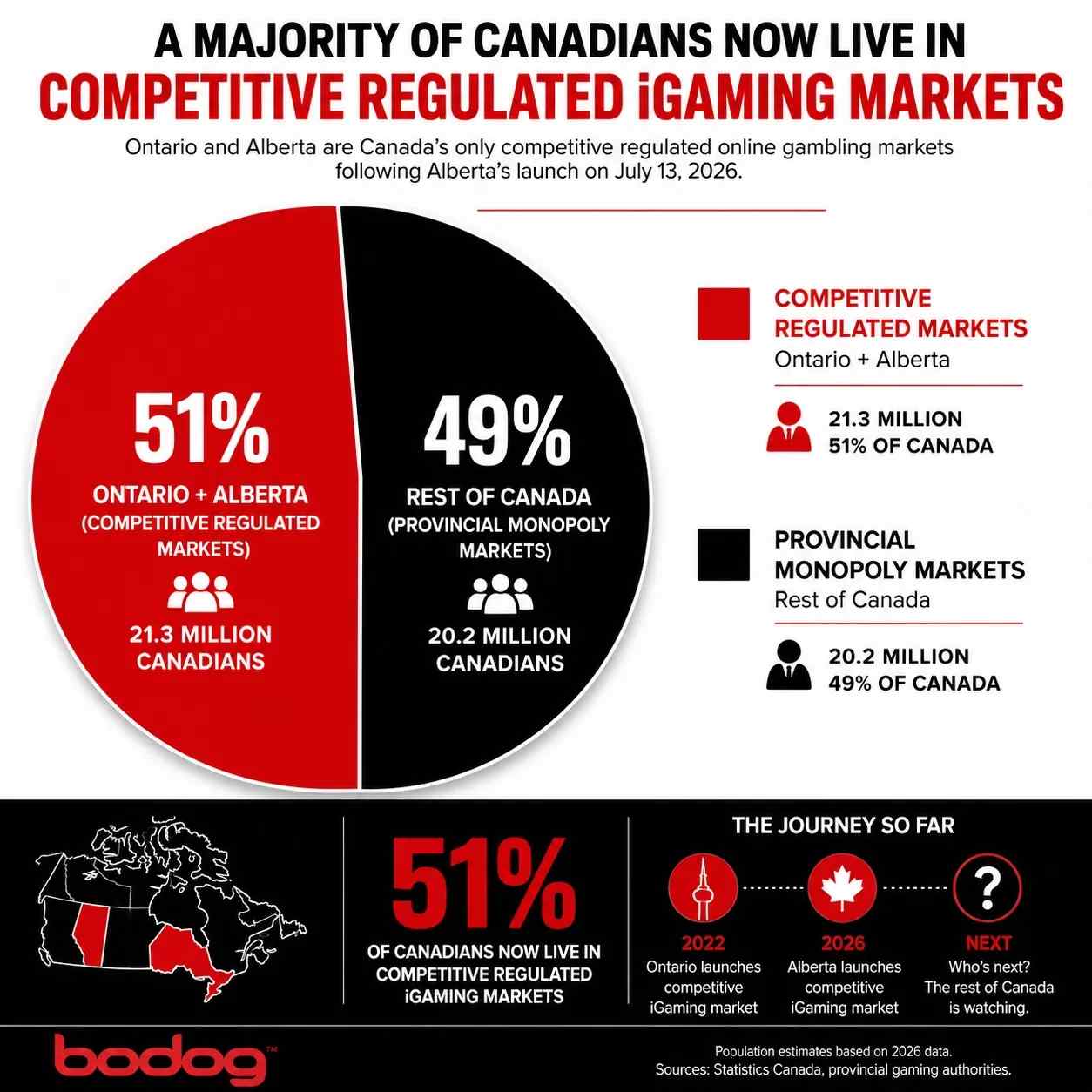
Ontario and Alberta combined cover roughly 51% of Canada's population.
| Province | Population |
|---|---|
| Ontario | 16.2 million |
| Alberta | 5.1 million |
| Ontario + Alberta combined | 21.3 million |
| Canada overall | 41.5 million |
Which Province is Next for Regulation?
The real question isn't whether Alberta was a fluke. It's who follows.
- British Columbia is the obvious candidate. PlayNow already gives it a mature platform, plus one of Canada's largest populations and the regulatory muscle to run a competitive market if Victoria decides monopoly isn't worth defending.
- Quebec has the population to matter just as much. Loto-Québec is one of the strongest provincial operators in the country, though, which makes any shift toward competition a heavier political lift.
- Manitoba and Saskatchewan are locked into the PlayNow partnership with BC. Breaking from that shared model would take more coordination than Alberta's solo move ever did.
- Atlantic Canada runs on a four-province shared model through Atlantic Lottery. That structure makes a near-term shift the least likely of the group.
Arthur Crowson got his start in traditional newspapers before making the jump to digital media, where he's spent the last ten years writing about poker, finance, crypto, gambling, and emerging tech. Over that time, he's developed a knack for spotting the moments when markets, technology, and gambling pull in the same direction. His work has appeared in publications like PokerListings, CryptoVantage, ValueWalk, and PokerScout.
More Articles like this
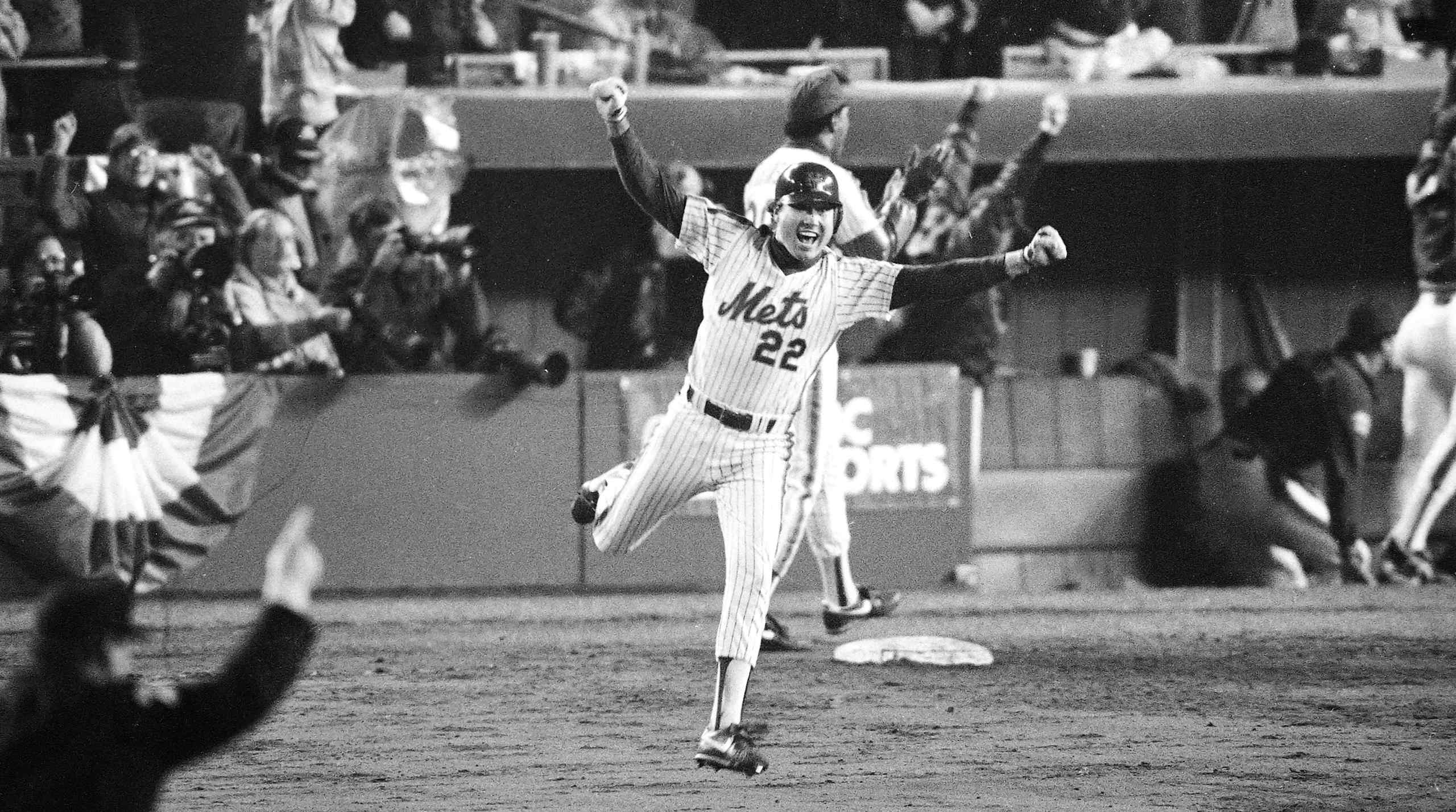
Five Iconic World Series Moments Since the Brewers' Appearance
The Brewers are back in the World Series after 44 years. From Bill Buckner's error to the Cubs ending their curse, plenty has happened since 1982.
By Bill Gelman
LeBron to Giannis: Ranking 5 NBA Offseason Stunners
LeBron to Philly, Giannis to Miami, and Wemby staying put. Which NBA offseason move will pay off the most?

By Bill Gelman
NFL Fans Spend $900 to Watch Games. WWE Fans Pay Even More
Think watching every NFL game is expensive? WWE fans would argue otherwise.

By James Guill
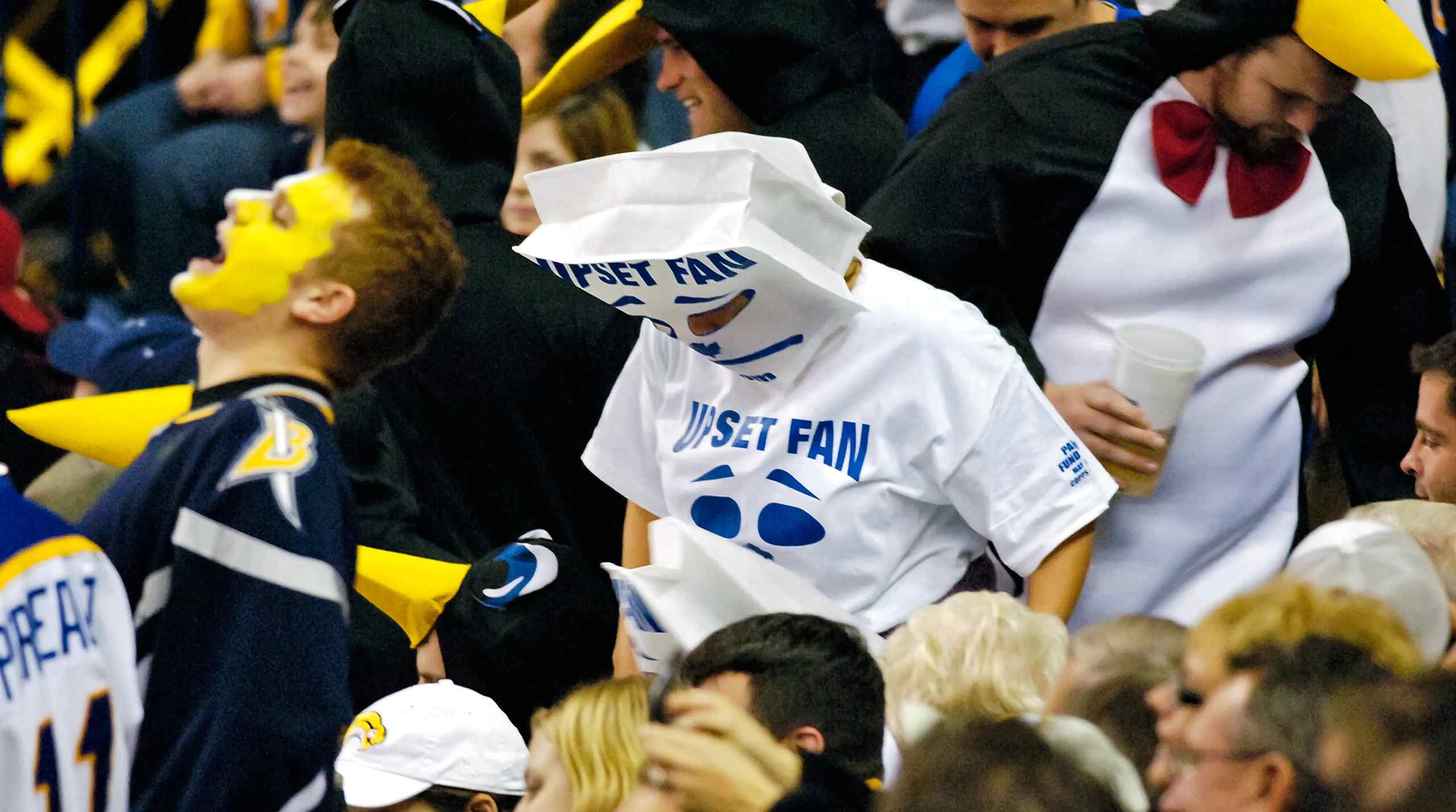
How Bad Is It? Ranking the NHL's Original Six by Fan Misery
Nearly 60 years without a Stanley Cup is just the beginning. We rank the NHL's Original Six teams by how much misery their fans have endured.
By Bill Gelman
Why Does Everybody Hate Us? 10 Most Hated Sports Teams Ever
Some teams always win; others get caught breaking the rules. Either extreme is a surefire way to become universally hated, as these 10 sports teams can attest to.

By Stuart Hughes
5 Outrageous Sports Rules That Need to Die
From a missed signature disqualification to a two-minute penalty for a tucked-in jersey, find out about the top five dumbest rules in sport that leave common sense in the locker room.

By Stuart Hughes