

Are Love Island Betting Markets Bringing More Women to Prediction Markets?
The trading frenzy around reality TV suggests entertainment prediction markets may be attracting a different audience than traditional sportsbooks.

Prediction markets have largely been associated with elections, finance, and sports, but now they’re starting to attract action on reality shows, particularly Love Island.
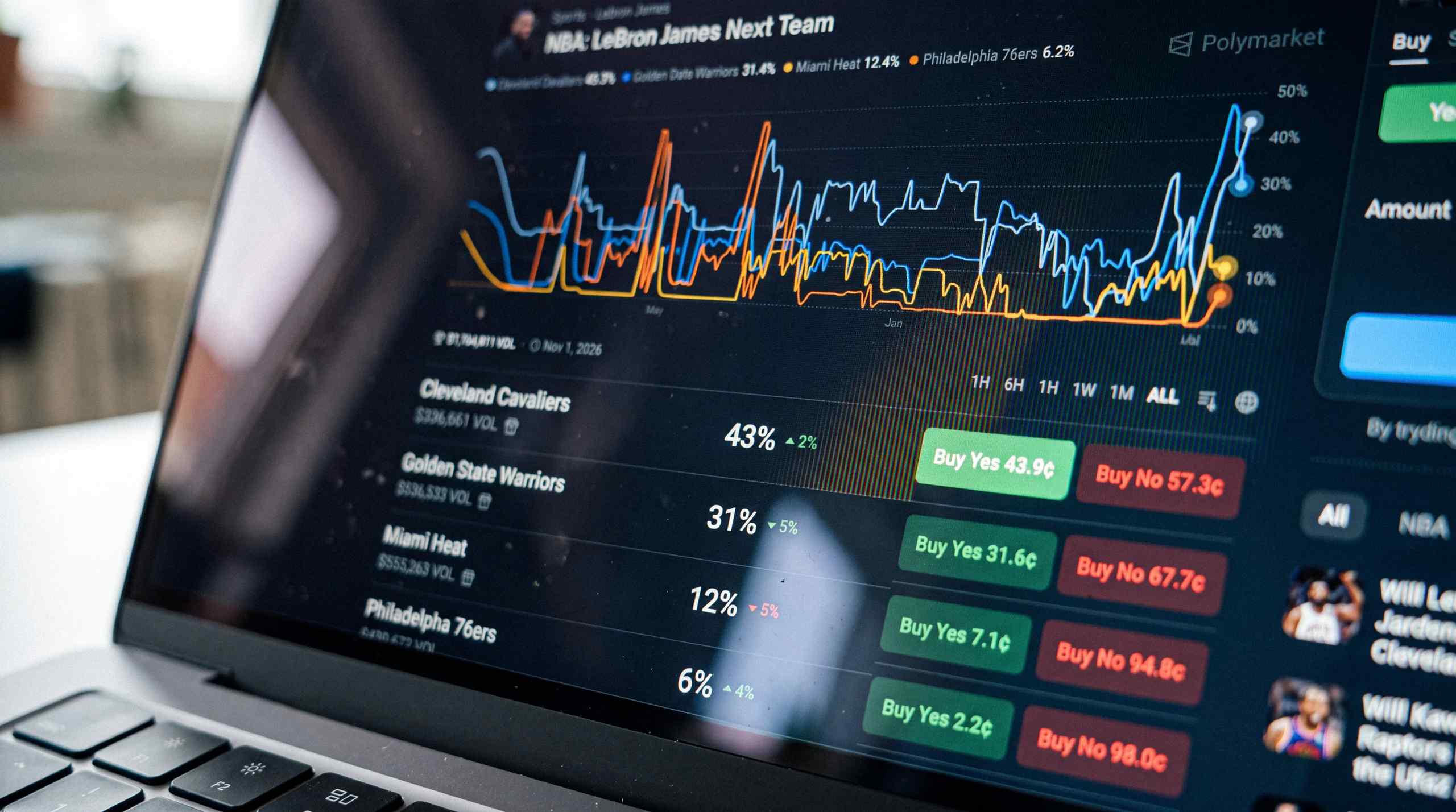
Platforms like Kalshi and Polymarket have built their reputations on letting users trade contracts tied to Federal Reserve rate decisions, elections, and NBA game outcomes.
But one of their fastest-growing categories may be reality television.
Love Island contracts are reportedly attracting a wave of new users to prediction market platforms like Kalshi, particularly women who have never placed a traditional sports bet. The show's current season generated over $77 million in trading volume, making it Kalshi's largest TV market to date.
The Rise of Love Island Markets
Love Island has become an unlikely catalyst for prediction market growth. According to Barron's, Kalshi's Love Island markets have driven a significant influx of female traders, with women now accounting for 26% of all users on the platform, roughly double the percentage from a year ago.
The current season of Love Island USA resulted in a 106% increase in weekly female active users on Kalshi via mobile devices between June 8 and June 28, according to a report from research firm Apptopia. During that same period, male users only saw a 54% increase.
Kalshi says its Love Island markets have attracted significantly more women than men, with female traders outnumbering male participants by roughly three to one. The company also reports that nearly two-thirds of users whose first trade was placed in a Love Island market are women, highlighting how entertainment-based prediction markets are expanding beyond the platform's traditional audience.
The markets cover outcomes like which couple will win, who will be dumped next, and whether specific contestants will make it to the finale. Kalshi isn't officially partnered with Peacock or the show itself, but the timing of market activity around the show's broadcast has created a natural engagement loop for viewers.

Do Prediction Markets Have a Different Audience?
The demographic data suggest prediction markets may attract users for reasons that differ significantly from sports betting.
Close to 40% of young men between 18 and 34 use prediction markets, according to an April survey from Navigator Research. That suggests the core audience for prediction markets has historically been young, male, and financially oriented.
The Atlantic reported in April 2026 that prediction markets are trying to woo women through matcha memes and #girlboss ads, suggesting platforms are hoping to court the demographic through culture-focused marketing rather than traditional sports imagery.
Education and income data for prediction market users are less clear, but the platforms' regulatory structure, as Kalshi operates as a CFTC-regulated exchange rather than a traditional sportsbook, may attract users with higher financial literacy who view prediction markets as investment vehicles rather than gambling.
Geographic distribution also differs. Kalshi is available nationwide as a prediction market, while traditional sportsbooks face state-by-state restrictions. This could broaden the potential audience beyond states with legal sports betting.
How Does This Compare to Traditional Sportsbooks?
Sportsbooks have historically been dominated by male users. Women accounted for 32% of the total sports betting market, according to a Morgan Stanley survey, slightly down from the 2022 survey but a considerable increase from 21% in 2020.
Fanatics boasts the largest share of women bettors at 39%, just ahead of Caesars at 38%. In contrast, DraftKings and FanDuel were next, with women accounting for just 22% of each book's player base.
User Demographics: Prediction Markets vs. Traditional Sportsbooks
| Platform | Estimated Male Users | Estimated Female Users | Primary Market |
|---|---|---|---|
| Kalshi (overall) | 74% | 26% | Elections, Finance, Sports, Culture |
| Kalshi (Love Island) | 25% | 75% | Reality TV |
| Polymarket | 80% | <20% | Crypto, Politics, Finance |
| DraftKings | 78% | 22% | Sports |
| FanDuel | 75% | 25% | Sports |
| Caesars | 62% | 38% | Sports |
| Fanatics | 61% | 39% | Sports |
Why Entertainment May Be a Better Entry Point
People who would never describe themselves as gamblers may still enjoy forecasting entertainment outcomes. Prediction markets may be becoming as much about participation as speculation.
Reality television offers several advantages as an entry point:
- Familiarity: Love Island viewers already follow the show's narrative arc. They know the contestants, understand the format, and have opinions about who will win.
- Lower stigma: Prediction markets are regulated as financial exchanges rather than gambling platforms. Users trade "contracts" rather than place "bets."
- Community participation: Social media drives Love Island conversation. Trading on Kalshi becomes a way to participate in that conversation with financial stakes. The platform's TikTok advertising campaign targeting female Love Island fans has amplified this effect.
- Pop culture integration: Prediction markets are expanding into celebrity news, award shows, and other entertainment categories. The Love Island success suggests these markets could attract users who care more about pop culture than sports or politics.
- Celebrity culture: The rise of influencer marketing and celebrity-driven content has created a natural bridge between entertainment consumption and prediction market participation.
The Atlantic's reporting on "girl math" framing, where prediction markets are marketed as savvy financial decisions rather than gambling, suggests platforms are actively repositioning themselves to appeal to female users.

Could This Change the Industry?
Entertainment contracts could become one of the industry's biggest growth opportunities if they successfully diversify the user base. Kalshi's success with Love Island suggests other reality shows, award ceremonies, and celebrity events could follow with growth.
Additionally, women who start with Love Island markets may eventually branch into sports or politics. Kalshi's overall female user base has doubled over the past year, suggesting entertainment markets can serve as a funnel to broader prediction market participation.
While Kalshi isn't officially partnered with Peacock, the success of Love Island markets could encourage formal partnerships between prediction platforms and media companies. Imagine HBO Max offering prediction markets for Game of Thrones spinoffs or Netflix integrating Kalshi-style contracts for reality show finales.
The industry is watching. Polymarket has also expanded into culture markets, though its user base remains more male-dominated. If Kalshi's Love Island success proves replicable, other platforms will likely follow with their own entertainment offerings.
Conclusion
Love Island's impact on Kalshi suggests entertainment prediction markets may be changing who participates in online betting. The show's markets have driven an increase in female active users.
Traditional sportsbooks remain male-dominated, and Love Island markets on Kalshi have achieved a female majority among traders, suggesting prediction markets can use entertainment contracts to attract a different audience than sports betting.
The implications are significant. If entertainment markets continue to diversify prediction market users, platforms could achieve mainstream adoption faster than traditional sportsbooks.
Whether this trend proves sustainable remains to be seen. But Love Island's $77 million in trading volume suggests entertainment prediction markets are more than a novelty, they may be the industry's next growth frontier.
Pat Evans is a Grand Rapids-based journalist and editor covering the intersection of business, sports, lifestyle, and gambling regulation. With a background in business journalism and legislative reporting (LSR, iGamingBusiness), he brings an analytical, human-focused approach to stories about modern trends. His work has appeared in regional and national publications, and he is also the author of two books on beer history.
More Articles like this
Pop Culture Prediction Markets: Betting on Awards, Reality TV, and More
Oscar envelopes, Survivor finales, Spotify's #1 song. It's all tradeable now. We break down how pop culture prediction markets work, why they're booming, and the leaks and fraud following the money.

By Cole Rush
Trump, Haaland or Bad Bunny: Who Will Top Google in 2026?
The race to top Google’s Year in Search 2026 is a wild ride. We analyze if Erling Haaland, Bad Bunny, or Donald Trump will win based on prediction market data and past trends.

By Lucie Turner
Can Prediction Market Traders Beat the Emmy Awards Gurus?
As Hollywood pundits argue over the 2026 Emmys, Kalshi's prediction markets are quietly letting punters back their own selections with real money trades. So, do they know something the experts don't?

By Stuart Hughes
Meet Rothera: Robinhood's Challenger to Kalshi and Polymarket
Could Kalshi and Polymarket prediction market dominance be under threat, as Robinhood-backed Rothera surges to $2 billion in opening-month trades during the FIFA World Cup?

By Stuart Hughes
US Betting Barriers Dwindling During Trump’s Second Term
Trump’s second term hasn’t just changed politics. It’s turned prediction markets, sports betting, and crypto into America’s everyday risk economy.

By Lucie Turner
How Prediction Markets Have Sidelined the On-Field Action
From Ronaldo's Tears to Presidential Pardons - Why Prediction Markets’ Reach Extends Beyond Just Sports Betting
By Stuart Hughes
