

The Sports Betting Terms You’re Probably Using Wrong
Gambling conversations are full of insider language. Misunderstanding them makes the discussion harder to follow and can result in fundamentally different conclusions about the bets themselves.

Ever been talking NFL spreads when somebody starts explaining how they middled between -3 and -5, and you just take another sip of your beer, hoping to ride out the conversation? Or maybe while watching a pregame betting show, the hosts start debating whether there's still any closing line value left, and you're wondering if you missed something.
Like middling and CLV, there are plenty of gambling terms that get thrown around every day but are often misunderstood. Today, I'm breaking down 10 of them so you'll know exactly what people mean the next time they come up. Check out our sports betting glossary to read all of them.
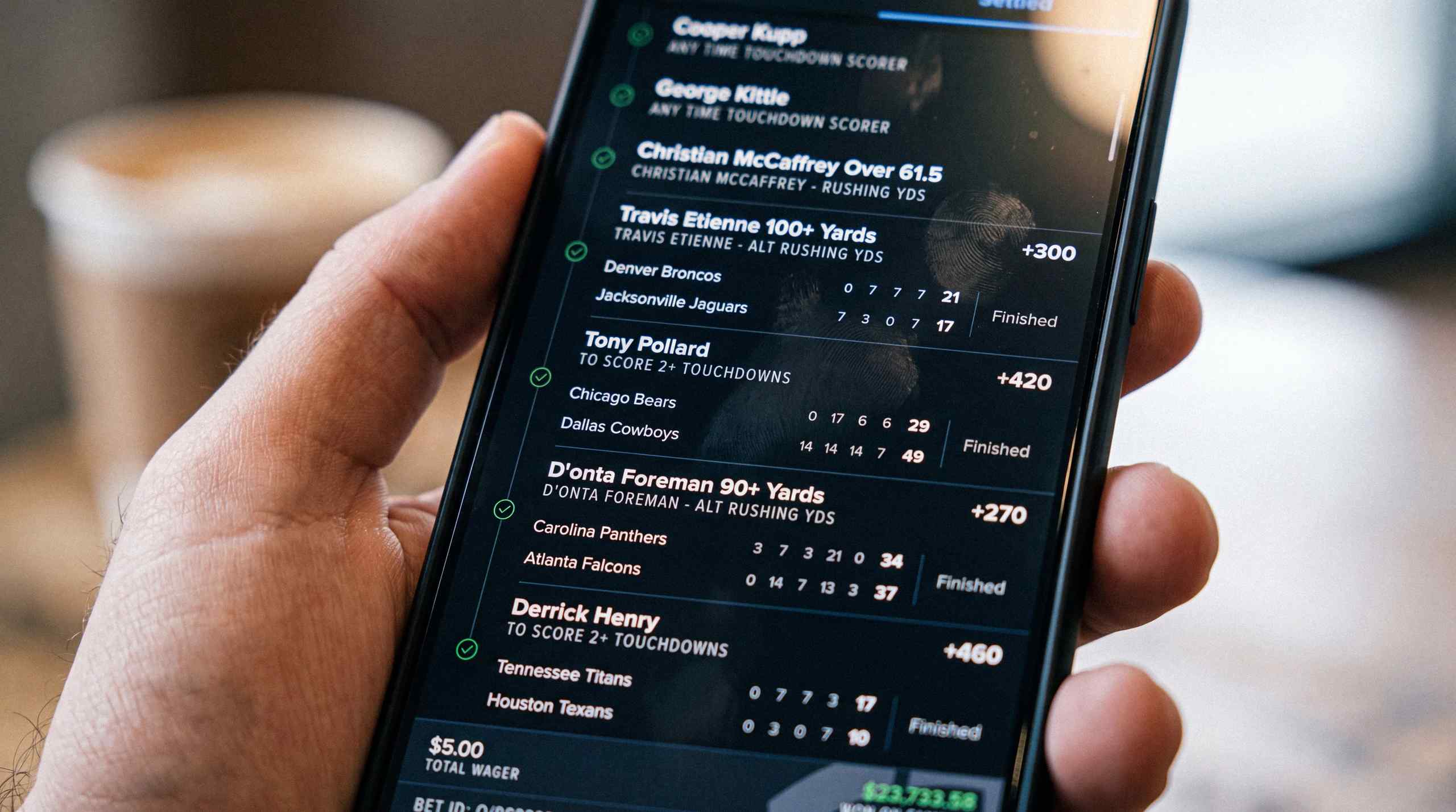
Where does the American sports betting vocab come from?
Most articles on the subject say sports betting has a language of its own. The thing is, though, many words trace back to somewhere else, while others are coming from foreign languages, often with their original pronunciation getting lost in translation.
Many basic terms trace their roots to horse racing, one of America’s earliest major organized sports gambling markets, where bookmakers had to quote prices and communicate changing odds quickly. The practical demands of the racetrack encouraged compact notation, specialized jargon, and, in some places, coded signals.
As the industry expanded, it carried over concepts such as odds, favorites, lines, and laying a price. Team sports did add innovations, most notably the American point spread, while Las Vegas oddsmakers and illegal bookmaking networks contributed their own expressions and conventions.
More recently, gambling vocabulary—particularly around prediction markets—has increasingly overlapped with the language of economics and finance. Add decades of everyday slang, and you get the language sports bettors speak today.

10 misunderstood gambling terms, explained
The table below covers the 10 gambling terms I find people misunderstand most often in conversation—and, of course, what they actually mean.
| Term | Common Misunderstanding | What It Means | How You'll Hear It |
|---|---|---|---|
| Juice (Vig) | Thinking it’s a separate fee added on top of the bet | The sportsbook's built-in commission, reflected in the odds. | “They're charging too much juice on that side” |
| Closing Line | Easy to confuse with the final score or assume it refers to the line after the game is over. | The final betting market before the game begins (the number and its associated odds). | "The Chiefs closed at -6.5 after opening at -4." |
| Closing Line Value (CLV) | Sounds like it's measuring how much money a bet won. | How your bet compares to the closing line. If you got a better number than the market closed at, you gained CLV. | "I took -3.5. It closed -5.5. I beat the closing line by two points." |
| Steam Move | A quick line change often gets called a steam move, even though not every sudden move qualifies. | A fast, significant line movement caused by respected bettors or large wagers hitting multiple sportsbooks at once. | "We saw a steam move on the Over this morning." |
| Expected Value (EV) | Calling a bet "positive EV" makes it sound like it's likely to win. | Expected Value (EV) tells you whether the odds offered are worth the risk. | “I'm only betting it because it's +EV.” |
| Implied Probability | "Implied" can be mistaken for the sportsbook's prediction. | The probability suggested by the current betting odds, which changes as prices move. | "Odds of +200 imply about a 33% chance of winning." |
| Middle / Middling | Taking both sides of a bet—or confusing it with arbitrage | Taking both sides of the same game after the line moves enough to leave a gap where both bets can win. | “I bet Chiefs -3 early, then took Raiders +5 after the line moved. If the Chiefs win by 4, I cash both bets. If they win by 3 or 5, I still win one bet and get my stake back on the other.” |
| Arbitrage (Arb) | Confusing it with hedging or simply betting both sides. | Placing bets at different sportsbooks where the odds guarantee a profit regardless of the outcome. | "One sportsbook has Team A +110, while a prediction market is pricing Team B cheaply enough to create an arbitrage opportunity." |
| Consensus Line | Believing it's the most accurate, or best, line. | The average line available across sportsbooks. | "Most books have -4.5, so that's considered the consensus line." |
| Push | Thinking push means a close call or that the bet had no action | Push is when a bet lands exactly on the betting line, so the wager gets voided and you get your money back. | "Chiefs -3 pushed after they won by exactly three points." |
Sports betting terms with multiple meanings
Then you've got terms that mean completely different things depending on the context. Here are five examples:
Line
- "The line is Chiefs -6.5." = The point spread.
- "What's the line on the Yankees tonight?" = The moneyline price (odds).
- "The total line opened at 47.5." = The over/under
- "The lines are out for Week 1." = Sportsbooks have posted their markets.
Action
- "There's a lot of action on the Chiefs." = A high volume of bets.
- "He likes action." = Enjoys betting frequently.
- "The book took sharp action on the under." = Bets placed by bettors (often implying respected or professional bettors).
- "No action." = A bet has been voided.
Value
- "There's value on the Bengals at +180." = The odds are better than the bettor believes they should be.
- "I'm looking for value." = Seeking bets with positive expected value.
- "That book offers good value." = Competitive odds or promotions, not necessarily a +EV wager.
- "The line has lost its value." = The odds have changed enough that the edge has disappeared.
Pool
- "I'm in an NFL survivor pool." = A competition among participants with its own rules.
- "The win pool has reached $2 million." = The total money wagered on a betting market.
- "The exacta pool is much smaller than the win pool." = A specific pari-mutuel betting category.
- "The pool has grown to 500 entrants." = The group of participants.
- "The prize pool is $500,000." = The money available to be won.
- "The betting pool includes all 20 runners." = The set of selectable entrants.
- "The jackpot pool rolled over again." = A prize fund that accumulates over time.
- "The sportsbook increased the bonus pool." = Money reserved for bonuses or promotions.
Pick
- "My pick is the Chiefs." = Here, pick refers to the selection.
- "The game is a pick'em." = A game with no favorite; neither team is giving points.
- "I'm betting the Pick 6." = A specific wager type requiring multiple correct selections.
- "Join our NFL pick'em." = A contest in which participants predict game winners.
- "He went 12-for-16 on his picks." = The collection of selections a bettor or handicapper has made.
Speak like a bettor, think like one
At the end of the day, it's about, as AngelList co-founder Naval Ravikant puts it, understanding the fundamentals rather than memorizing. I'd also encourage you to speak up, especially in a friendly setting, if a conversation turns to a term you're not familiar with. Trust me, it's easier than getting put on the spot and drawing a complete blank.
More importantly, never make a decision based on something you don't fully understand, whether it's a piece of jargon or how a particular market works. Knowing the terminology is part of gambling responsibly. There's no basis for an informed choice with unanswered questions still on the table.
Charlon Muscat is an established iGaming expert who entered the space in 2019 and went on to build a name across both casino and sportsbook content.
More Articles like this
Do NHL Stars Lose Their Edge After Signing Huge Contracts?
Do NHL stars really take their foot off the gas after a big payday? We analyzed 29 major contracts to find out.
By Charlon Muscat
Five Iconic World Series Moments Since the Brewers' Appearance
The Brewers are back in the World Series after 44 years. From Bill Buckner's error to the Cubs ending their curse, plenty has happened since 1982.
By Bill Gelman
LeBron to Giannis: Ranking 5 NBA Offseason Stunners
LeBron to Philly, Giannis to Miami, and Wemby staying put. Which NBA offseason move will pay off the most?
By Bill Gelman
NFL Fans Spend $900 to Watch Games. WWE Fans Pay Even More
Think watching every NFL game is expensive? WWE fans would argue otherwise.

By James Guill
How Bad Is It? Ranking the NHL's Original Six by Fan Misery
Nearly 60 years without a Stanley Cup is just the beginning. We rank the NHL's Original Six teams by how much misery their fans have endured.
By Bill Gelman
Why Does Everybody Hate Us? 10 Most Hated Sports Teams Ever
Some teams always win; others get caught breaking the rules. Either extreme is a surefire way to become universally hated, as these 10 sports teams can attest to.
By Stuart Hughes