
No Sponsorship, No Problem: How Nike, Levi's Won the World Cup
From covered-up logos to viral stunts, check out how these clever brands turned FIFA's strict advertising rules into the biggest marketing own goal of the World Cup.
For nearly a century now, soccer's World Cup has commanded unrivaled global audiences, uniting billions of fans to make it the biggest single-sport event on the planet. With that comes billions of dollars in potential sponsorship, which has made the World Cup the highest-profile advertising billboard on the market, with mega-brands spending eye-watering sums just to get a slice of the action.
Yet FIFA's draconian advertising rules and regulations during the 2026 World Cup have led to some of the most entertaining and viral – not to mention successful - guerrilla brand marketing campaigns that didn't cost a cent. In a tournament expected to see advertising spend exceed $10.5 billion, here's how Nike, Levi's, and Beats stole all the headlines ahead of FIFA partners Adidas, Coca-Cola, and McDonald's.
The Great Cover-Ups That Created a FIFA PR Nightmare
FIFA, renowned for courting big-name brands for millions of dollars in sponsorship, knew that it had to protect the exclusivity of sponsors including Adidas, Coca-Cola, and McDonald's by keeping rival brands out of the spotlight. The only problem was… the strategy backfired spectacularly on a global scale, turning these routine brand blackouts into some of the tournament's biggest viral moments.
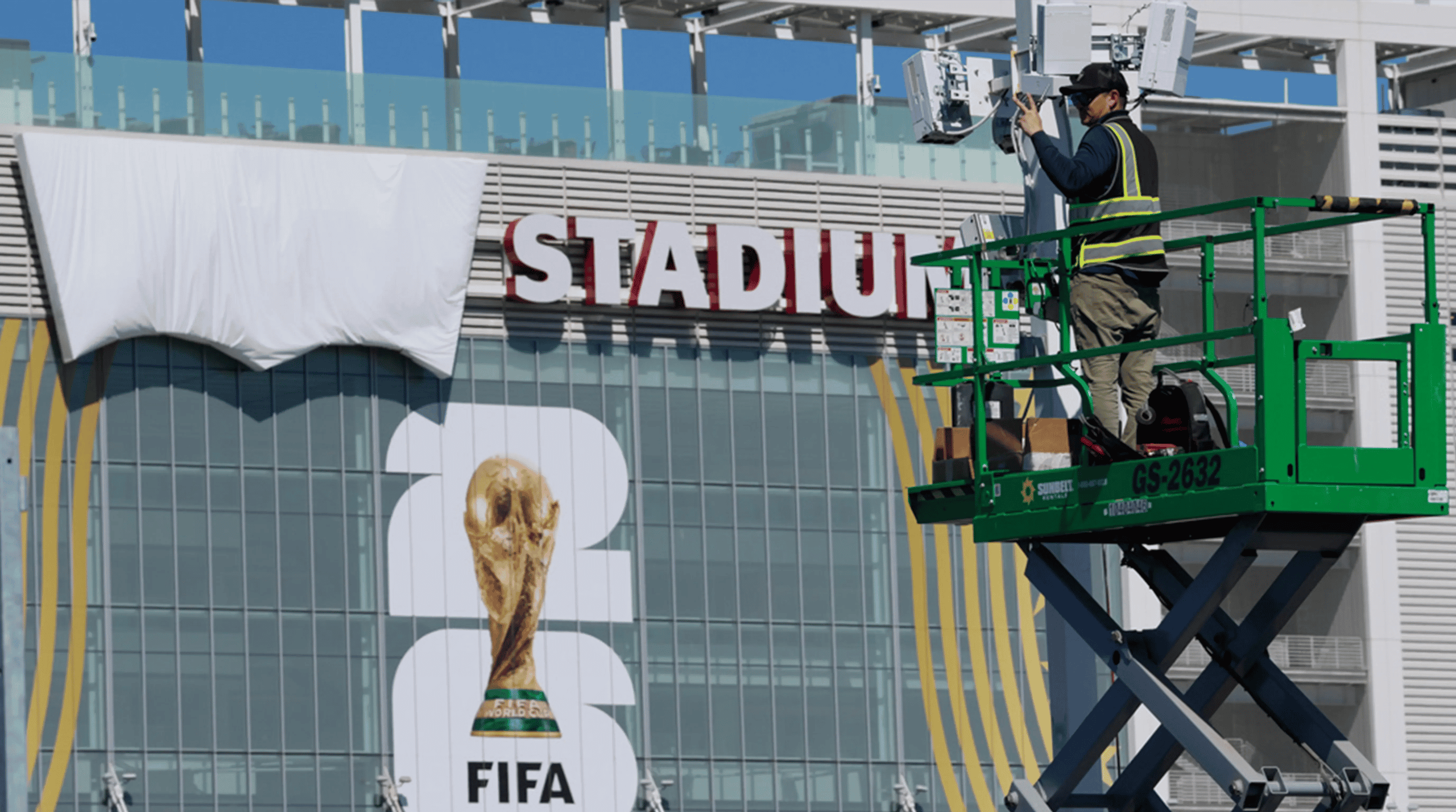
The most notable of these were the soccer tournament venues themselves, as non-sponsored branding was rather amateurishly covered up, as seen at Levi's Stadium in Santa Clara and Gillette Stadium in Boston.
Levi's fully leaned into the moment with a social post and a TikTok video revealing its covered, yet blatantly observable stadium logo, which generated over nine million views. Not missing a trick, the marketing geniuses at Levi's then repurposed the cover-up campaign by covering its logo in a similar fashion on its social media channels, as well as its flagship stores in London, Paris, Berlin, Milan, Hong Kong, Brazil and Mexico.
FIFA's censorship didn't end there, as they also taped over every Heinz logo on the ketchup bottles distributed across the countless media zones at every World Cup venue, while also masking the Beats by Dre logo on German superstar Jamal Musiala's headphones. Far from vanishing, both Heinz and Beats became lightning rods for a wave of online titillation, with experts claiming the faux pas was a textbook example of the Streisand Effect, where attempts to suppress attention actually end up amplifying it.
Five faceplant moments that proved FIFA's cover-up backfired:
- Levi's Stadium gained more notoriety with its logo hidden than visible.
- Heinz instigated a limited-edition product inspired by its taped-over ketchup bottles.
- Beats used masking tape to tease an unreleased headphone launch.
- Gillette transformed its covered stadium logo into a shaving-foam gag.
The Brands That Scored With Cinematic World Cup Video Campaigns
While many of these rogue campaigns deployed elements of mischief and provocation, brands that pursued more orthodox strategies showcased that old-school methods are still just as effective.
Adidas' five-minute ‘Backyard Legends’ film brought together current and former soccer legends, including Lionel Messi, Jude Bellingham, Zinedine Zidane, and David Beckham, for a fictional football showdown that garnered 7.9M views on YouTube.
Not to be outdone, however, Nike - who are not an official World Cup sponsor - created a stellar six-minute ‘Rip The Script’ campaign video featuring a blockbuster cast list of who's who in soccer, including Mbappe, Ronaldo, Zlatan, Cantona, and Haaland, that surpassed 78M views on the same platform.
Meanwhile, FIFA partner LEGO set about delivering one of the tournament's biggest surprises, releasing a video of arguably the current Ballon d'Or lineup of Messi, Ronaldo, Mbappé and Vinícius Jr on Instagram. All sat around the same table, the quartet was filmed building a LEGO World Cup trophy, with the advert now credited with generating over $46 million in earned media value to date.
Millions Bought Official Access… But Social Media Chose Its Own Winners
Don't be fooled, being an official sponsor at the World Cup still brings with it a sizable return on investment, but social media has completely revolutionized brand-driven engagement these days.
World Cup Marketing Spend by the Numbers
| Firm | Volume Spent Per World Cup Cycle |
|---|---|
| Coca-Cola | $150 million to $200 million |
| Adidas | $70 million to $100 million |
| McDonald's | $65 million to $95 million |
| Levi's | $0 |
| Heinz | $0 |
| Beats by Dre | $0 |
Nonetheless, in the run-up to the 2026 FIFA World Cup, non-sponsored collaborations generated almost 61 million engagements in comparison to just 33 million for official sponsors, according to market research firm Meltwater. Furthermore, since the World Cup kicked off, unofficial brands have also racked up more than 57,000 social mentions, comfortably more than has been achieved by FIFA's paying partners, at around 43,000.
Part and parcel of the likes of Levi's and Nike's cheeky and rebellious viral marketing ploys set about appealing to a wider online audience, not just its die-hard brand evangelists, with its genuine "stick it to the man" undertones. A likely scenario for this being that audiences have perhaps grown fatigued by traditional sponsorship overload and much prefer spontaneous and humorous campaigns steeped in situational awareness.
Ingenuity Still Wins Out as Sponsored Brands Get Creative
Aside from the furor surrounding FIFA’s PR gaffes, looking around, if the World Cup has proved anything, it’s that boring sponsorship campaigns are a thing of the past.
Long-standing FIFA partners McDonald's broke the mould again by creating a football treasure hunt by randomly including nine collectible cups with stars including David Beckham, Lamine Yamal, and Ronaldinho into every World Cup meal. By doing so, fans raced to collect all nine, which sparked millions of reveal videos, swaps, and most importantly repeat purchases that have already generated over eight million engagements across more than 100 countries.
Deodorant kingpins Rexona even managed to capitalize on previously untapped marketing real estate by including their brand name under the armpits of the gameday officials. In doing so, their ‘It Won’t Let You Down’ campaign meant that during all 104 World Cup games, every card shown by the referee or linesman’s offside flag would reveal a perfectly positioned logo demonstrating its product was working hard in the sweltering conditions.
The Bottom Line
Undoubtedly, this year’s World Cup has completely rewritten the tournament’s marketing playbook to a captivated target audience.
Of course, FIFA's official sponsors are still rewarded with exclusive rights and the prestige of having their branding synonymous with the World Cup, but for brands like Levi’s, Heinz, and Nike, it's turned into a clever backdoor viral marketing goldmine they were more than happy to exploit.
With the 2030 World Cup set to be hosted by Morocco, Portugal, and Spain next time around, will FIFA be savvier with their trademark enforcement measures, or will there now be a rush for brands to start sponsoring the next tournament's host stadiums - only time will tell.
Stuart Hughes is a London-based freelance journalist covering sports, travel, lifestyle, and technology. He’s worked with brands like Lenovo, Best Western, and Frontier Airlines, bringing a global perspective shaped by years of travel.
More Articles like this
Why Does Everybody Hate Us? Top 10 Most Hated Sports Teams Ever
Some teams always win; others get caught breaking the rules. Either extreme is a surefire way to become universally hated, as these 10 sports teams can attest to.
By Stuart Hughes
5 Outrageous Sports Rules That Need to Die
From a missed signature disqualification to a two-minute penalty for a tucked-in jersey, find out about the top five dumbest rules in sport that leave common sense in the locker room.
By Stuart Hughes
The 10 Most Unforgettable Quotes in Sports History
From Jordan's hard truths to Healy's cheeseburger dig, these legendary greats uttered 10 iconic quotes that turned out to be as memorable as their sporting achievements.
By Stuart Hughes
Eight Years, Eight NBA Champions. Is Parity Here to Stay?
Eight different teams have won the NBA championship in eight years, the longest such streak in league history. Can the Knicks finally break the cycle, or will another contender claim the crown?
By Bill Gelman
Is This the Biggest Acquisition Era in Sports Betting History?
Sportsbooks, prediction markets, and sweepstakes apps are fighting for the same customers. We compared 11 welcome offers to see who's offering the biggest incentives.
By Cole Rush
Does a 4-0 NFL Start Mean You're Playoff Bound?
A 4-0 start can put your team on the fast track to the playoffs, but history shows that even Super Bowl champions don't always start strong.
By Marcus Mosher