
What Is an Alternate Spread?
A direct, sourced explanation of how alternate spreads work in sports betting, why the odds shift, and how bettors use them to trade payout size for risk.

In sports betting, an alternate spread is a modified point spread that lets a bettor pick a different margin of victory than the sportsbook's standard line, with the odds shifting to match. Moving the number in your favor lowers the payout, while moving it against you raises the payout.
Alternative Spreads: Key Takeaways
- An alternate spread lets bettors move the point spread up or down from the standard line in exchange for adjusted odds.
- Buying points toward your side lowers the payout; selling points away from your side raises it.
- Alternate spreads exist on the same board as the main spread, just at different half-point increments.
- They appear in every major point-spread sport, including football, basketball, hockey, and baseball run lines.
- Crossing key numbers like 3 and 7 in football usually costs more in odds than moving through less common numbers.
Quick Facts
| Category | Key Feature |
|---|---|
| Difficulty Level | Beginner to intermediate |
| Estimated Time to Learn | 5 to 10 minutes |
| Best Suited For | Bettors who already understand standard point spreads and want more control over risk |
| Related Topic | Point spread betting |
Why Does Understanding an Alternate Spread Matter for Sports Bettors?
Understanding an alternate spread matters because it directly controls how much risk and payout a bettor accepts on the same game. A bettor who only ever plays the standard line misses opportunities to shrink risk on a shaky pick or boost payout on a strong one. Knowing how the odds move as the spread changes helps a bettor spot value instead of guessing at a number.
How Do Standard and Alternate Spread Odds Compare?
| Spread Version | Example Line | Typical Odds | Effect |
|---|---|---|---|
| Standard Spread | Team A -6.5 | -110 | Market-set balance point between favorite and underdog |
| Alternate Spread (buy points) | Team A -3.5 | -160 to -200 | Lower payout, easier margin to cover |
| Alternate Spread (sell points) | Team A -10.5 | +150 to +300 | Higher payout, tougher margin to cover |
What Is an Alternate Spread and How Does It Actually Work?
An alternate spread works by taking the sportsbook's main point spread and shifting the number in half-point steps, with the price changing at each step. If a football game opens with the favorite at -6.5, a bettor can instead take that same team at -3.5 for a smaller favorable margin and worse odds, or -10.5 for a bigger margin and better odds. The sportsbook recalculates the payout at every alternate line to reflect how likely that specific margin is to hit.
What Is the Difference Between an Alternate Spread and a Standard Point Spread?
The difference between an alternate spread and a standard point spread comes down to who sets the number and what it costs to change it. A standard point spread is the single line the sportsbook sets to balance action on both sides, usually priced close to -110. An alternate spread takes that same matchup and offers several other margins at once, each carrying its own odds instead of one fixed price.
How Do Sportsbooks Price an Alternate Spread?
Sportsbooks price an alternate spread by adjusting the odds based on how far the new number sits from the market's true line. The further a bettor moves the spread in their favor, the shorter the odds become, since the bet becomes easier to win. This pricing logic works the same way on an alternate total, where moving the over/under number changes the payout in a nearly identical pattern.
Which Sports Commonly Offer Alternate Spread Betting?
Alternate spread betting is available on nearly every sport where a standard point spread exists, including the NFL, NBA, college football, and college basketball. Hockey and baseball offer a narrower version through alternate puck lines and run lines, since those sports carry lower-scoring, more predictable margins. Soccer books offer alternate handicaps that function the same way, just measured in goals instead of points.
What Are Real Examples of an Alternate Spread Bet?
A bettor watching an NFL game with the favorite listed at -6.5 might believe that team wins by double digits. Taking the alternate spread at -10.5 pays more than the standard line, but only cashes if the favorite clears that larger margin.
In an NBA matchup where the home team is favored by 2.5 points, a cautious bettor could buy the line down to -1.5 or even pick a small favorite in a moneyline-style spot bet on a specific player prop tied to the same game for a smaller, steadier profit. Both moves use the same underlying spread market, just tuned to a different comfort level.
What Common Mistakes Do Bettors Make With Alternate Spreads?
The most common mistake is chasing a big payout on a sold spread without checking whether the team can realistically cover that wider margin. Bettors also overlook how much extra vig gets baked in when a line crosses a key number like 3 or 7 in football. Another frequent error is comparing alternate spread odds at only one sportsbook, when prices for the same line often differ by 10 to 20 cents between operators.
How Does an Alternate Spread Compare to a Point Spread, Alternate Total, and Teaser?
An alternate spread compares closely to a point spread, an alternate total, and a same-game teaser, since all four adjust risk on a margin-based bet, but each does it differently. A point spread offers one fixed number at standard odds, an alternate spread offers many numbers at shifting odds, and an alternate total applies that same shifting-odds logic to combined scoring instead of margin of victory. A same-game teaser moves several spreads or totals within one parlay-style ticket for a fixed, more modest payout boost.
Comparing Spread, Total, and Teaser Bet Types
| Bet Type | What Moves | Odds Structure | Best For |
|---|---|---|---|
| Point Spread | Nothing, fixed by book | Standard, near -110 | Straightforward margin bets |
| Alternate Spread | Margin of victory | Variable, shifts per half-point | Customizing risk on one game |
| Alternate Total | Combined score line | Variable, shifts per half-point | Customizing over/under confidence |
| Same-Game Teaser | Multiple lines at once | Fixed teaser payout | Combining several safer legs |
What's the Bottom Line on Alternate Spread Betting?
An alternate spread gives a bettor control over the exact margin they want to bet, trading a bigger payout for tougher odds or a safer number for a smaller one. The tool only pays off when the bettor's read on the game justifies the price being charged for that adjustment. Bodog bettors who track key numbers, compare pricing across markets, and treat the standard spread as a baseline rather than the only option tend to get more out of this market than those who chase the flashiest payout on the board.
Alternate Spread Bets FAQs
What does an alternate spread mean in betting?
An alternate spread means a bettor is choosing a different point margin than the sportsbook's main line, with the payout adjusted to match that chosen margin.
Is an alternate spread the same as buying points?
Buying points is one form of using an alternate spread, specifically when a bettor moves the number in their own favor and accepts shorter odds in return.
Can an alternate spread result in a push?
An alternate spread can result in a push when the line lands on a whole number and the final margin matches exactly, though many books use half-point alternates to avoid that outcome.
Do alternate spreads carry more vig than standard spreads?
Alternate spreads often carry more vig the further the line moves from the market's original number, especially across common margins like 3 or 7 in football.
Which sports have the widest alternate spread options?
Football and basketball tend to have the widest alternate spread menus, since higher-scoring, more variable games support a broader range of margins.
Should beginners use alternate spreads?
Beginners can use alternate spreads once they understand how standard point spreads work, since the same core logic applies with adjusted pricing.
How is an alternate spread different from a moneyline bet?
An alternate spread still requires covering a point margin, while a moneyline bet only requires picking the outright winner of the game.
Continue Learning
- What Is a Point Spread: a breakdown of how the standard spread market works before adding alternate lines.
- What Is an Alternate Total: a guide to adjusting over/under lines the same way alternate spreads adjust margins.
- What Is a Same Game Teaser: an explanation of combining multiple adjusted lines into one ticket.
- What Is a Spot Bet: a look at single-event and player-specific wagers that often pair with spread markets.
Sources & Review
The Bodog editorial team is comprised of experts in the iGaming, Sportsbetting, Lifestyle, Travel Wellness and Casino space.
More Articles like this
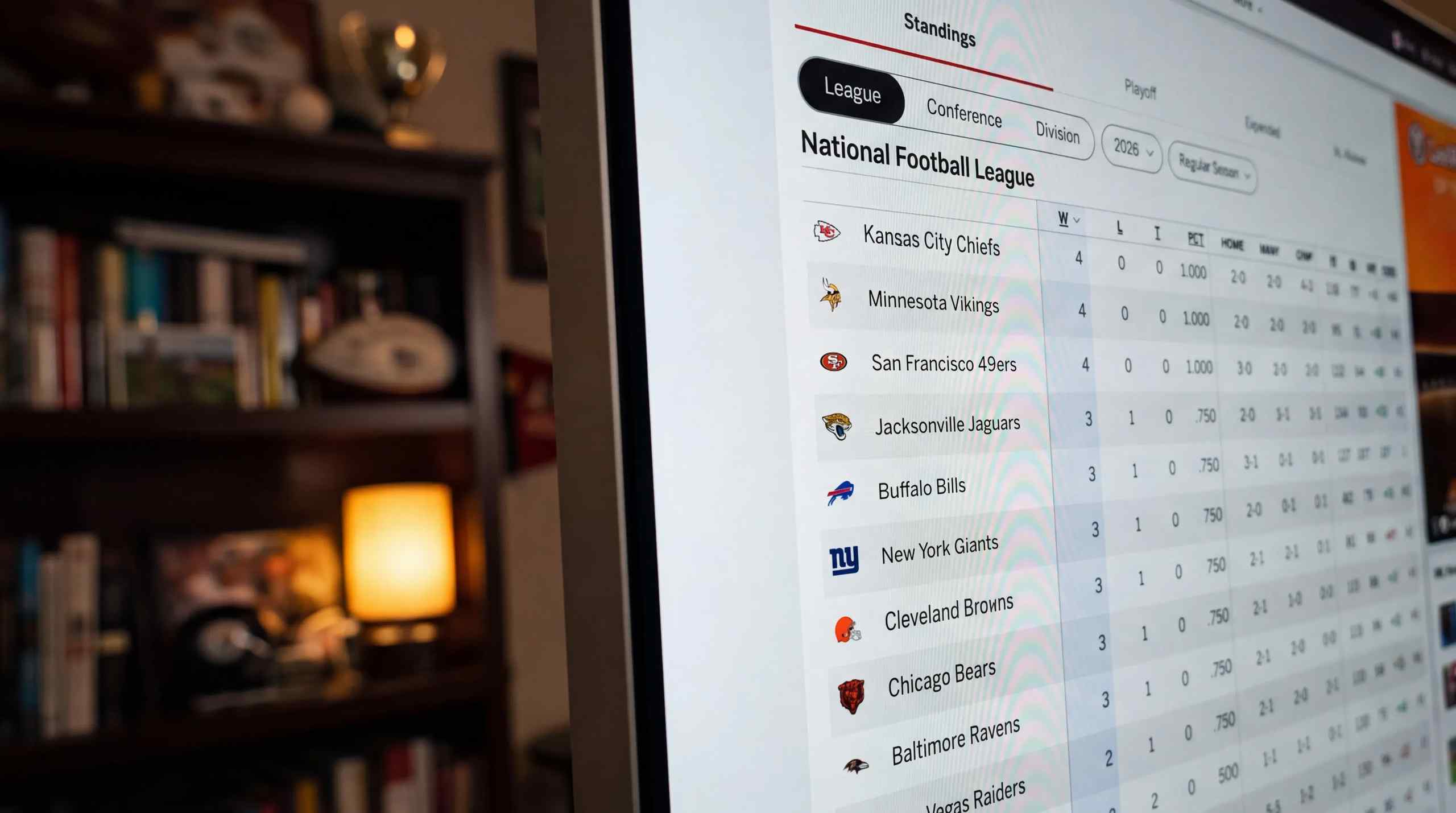
Does a 4-0 NFL Start Mean You're Playoff Bound?
A 4-0 start can put your team on the fast track to the playoffs, but history shows that even Super Bowl champions don't always start strong.
By Marcus Mosher
The 8 Greatest Sports Movies Ever Made, Ranked
Rocky isn't No. 1 by default. We ranked the eight greatest sports movies ever made, from a boxing warhorse to a table tennis fever dream, weighing critical scores against what actually stuck.
By Cole Rush
Which Sports Punish Losing Teams the Most?
From a punishing relegation to first draft pick optimism, discover which sporting leagues have the highest penalties for a losing season and those that feel comparatively lenient.
By Stuart Hughes
MLB Playoff Byes Aren't the Advantage You Might Think
Since baseball went to its current 12-team playoff format, the results show that bye teams only hold a slight Division Series advantage over Wild Card winners.

By Bill Gelman
McKenna, Martone Lead 5 NHL Rookies to Watch
Gavin McKenna and Porter Martone enter as the favorites, but a deep 2026-27 rookie class gives the Calder Trophy race plenty of potential challengers.

By Bill Gelman
Parlaymint Wants to Turn Parlays Into a Team Sport
Parlaymint turns the group parlay into a social sport, giving every bettor one pick, a share of the payout and potentially the entire bill if their leg is the only one that loses.
By Charlon Muscat