

A Week of Sports Betting with AI: The Ultimate Edge?
AI-generated bets delivered a strong week, with smart parlays and well-timed picks. But even with better inputs, success still came down to bankroll control and avoiding risky habits.

Last week felt like I was running a tiny hedge fund powered by spreadsheets, wire‑to‑wire highlights, and a bot that talks like a Vegas linemaker.
I’m a journalist who writes about gambling regulation, but this was different: I wanted to treat sports betting like a side lab experiment, using AI as a research tool (specifically Perplexity), then betting only as a way to test my own discipline.
I started with a fixed bankroll I’d already set aside for “entertainment” money, nothing tied to rent, bills, or emergencies. For me, responsible gambling is of utmost importance. And that’s rule No. 1 I kept repeating to myself: Never bet money that needs to stay in your wallet.
I broke that into 20 “units,” and from Saturday to Sunday, starting with the Final Four and ending on The Masters, every bet was just one unit, unless the math and matchup symmetry screamed for heavier action.
Talk smart about bets with AI
Prompts are key when working with AI agents. For this, it was fairly simple and included an “act like a Vegas bookmaker and tout” and “[sport] expert”.
From there, keep the bets small and just ask for something along the lines of, “What are the best or safest bets for [event?” From there, it will spit out a list of several seemingly safe bets for that day’s action, whether it’s a specific event or a slate of MLB games.
It can recommend single bet action, or lump together a few for a nice parlay boost. As a rule, I like to stay with single bets, as odds get long for parlays and how sportsbooks make money. But this week, I mostly actually went with a few small parlays that worked together, and it worked out nicely.
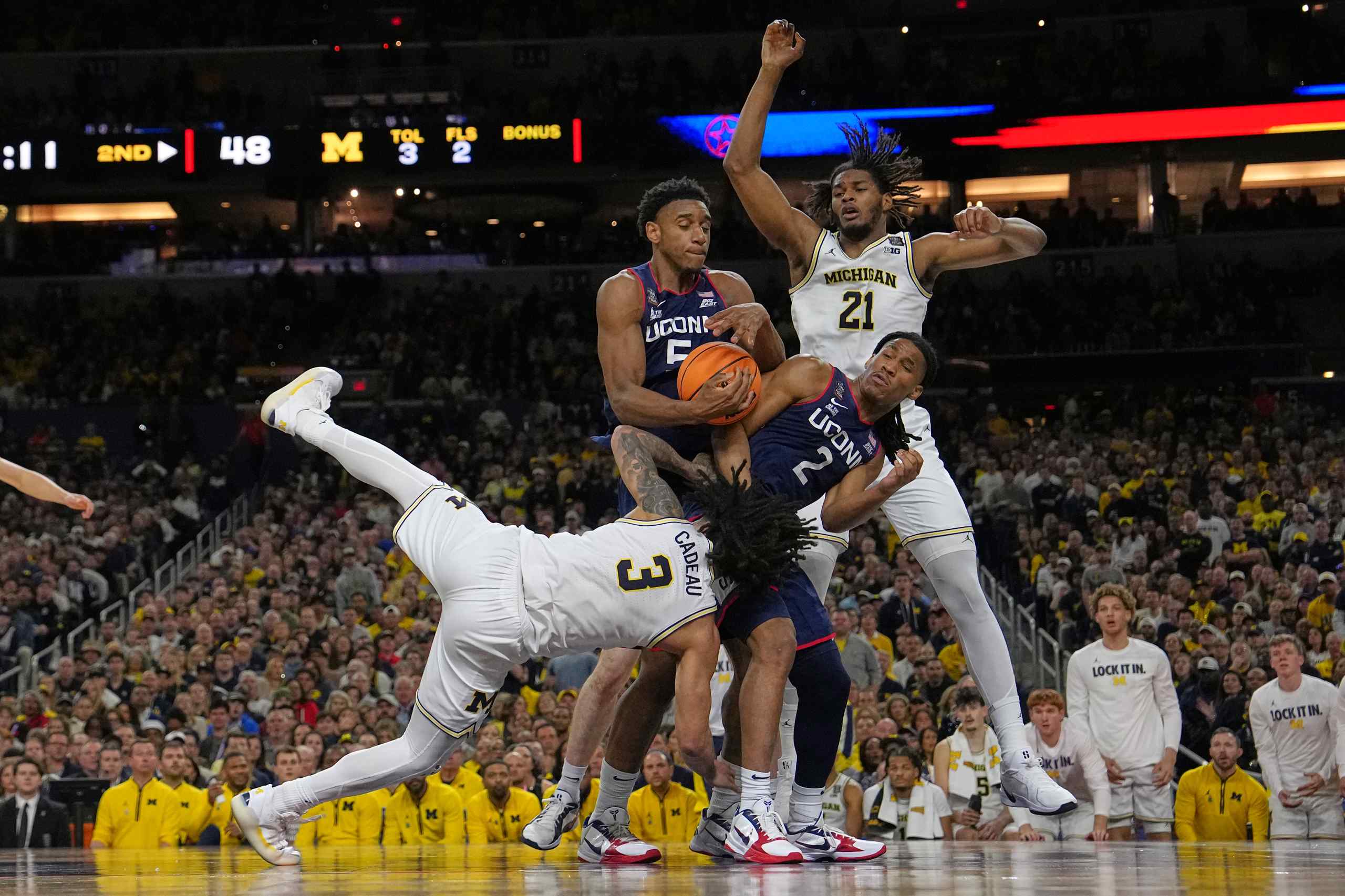
Final Four shows related markets work
On April 4, the Final Four felt like a perfect spot for a short, logical parlay to start my experiment. I started Arizona Money Line + UConn Money Line at +396 for 1 unit. AI told me that in a bracket‑style tournament, you’re essentially betting that both teams avoid the kind of mental‑fatigue, late‑whistle, free‑throw‑free‑fall chaos that can kill favorites. The math behind that line: Oddsmakers build in a healthy “parlay tax” because two heavy‑favorite money lines still carry noise and +396 was actually a fair premium for picking two Goliaths.
I lost it that night when Arizona folded under pressure to eventual national champions Michigan. The lesson: avoid straight “favorite + favorite” parlays; they look clean on paper but eat volatility for dinner.
Big win with AI sports betting
But then I cleaned up with a related four-leg parlay: UConn ML, Tarris Reed 15+ points, Keaton Wagler 12+ points, and Illinois team points under 70.5, at +367 for 1 unit.
From the AI linemaker’s view, that’s a blend of a near‑certain UConn win and three props built on known roles and tempo:
- Reed is a big‑bodied interior presence
- Wagler is a volume‑shooting guard
- Illinois plays a slower, grind‑style tempo.
It hit. I banked that win as a reminder that short, related parlays rooted in roles and tempo can be sharper than random “jackpot” tickets.
National championship: Betting pace and spots
I followed similar logic as the UConn-Illinois parlay heading into Monday’s NCAA Championship Game.
My AI bookmaker told me UConn +6.5 and the total under 146.5 at +335 for 2 units was a good idea. Oddsmakers had priced this as a close, high‑efficiency game. The line made us consider two things:
- UConn’s defense and conditioned‑guard rotation, which historically shrinks point‑spread gaps against elite opponents.
- The fact that national title games often play slower, with more fouls, timeouts, and conservative half‑court basketball.
Taking the under and the 6.5 blended those two ideas: If the game is tighter than advertised, the spread becomes a cushion and the tempo keeps the total closer to 140 than 150.
UConn barely held the spread, but the bet hit and gave me some confidence for the rest of the week.
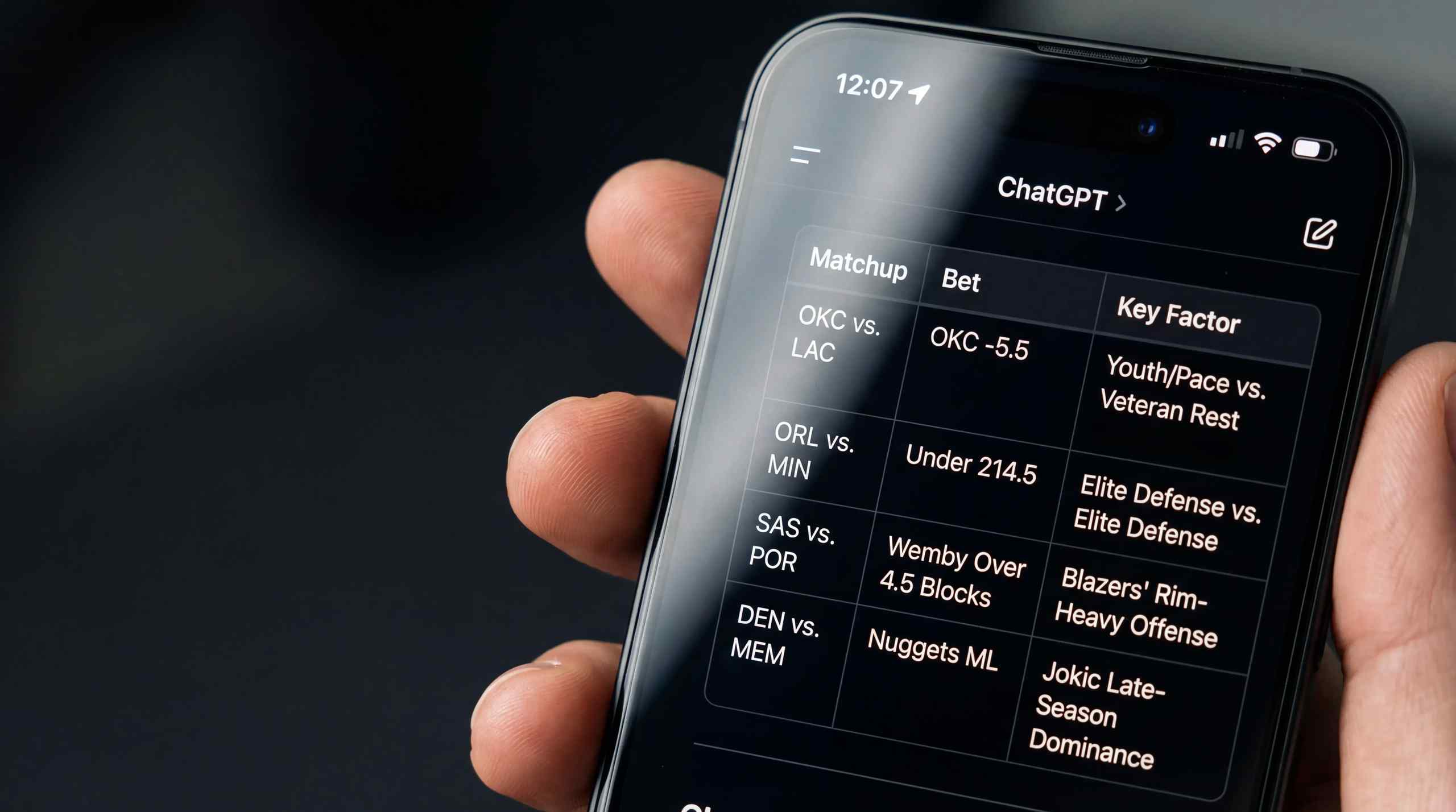
Baseball parlay: A cocky reality check
On April 7, I went with Paul Skenes 6+ strikeouts, Tigers ML, Tarik Skubal, 8+ strikeouts at +369 for 1 unit. The AI oddsmaker logic on that ticket:
- Skenes and Skubal are both high‑k, high‑usage starters. Their individual overs are priced around even‑money or slightly plus.
- The Tigers ML, against a weaker opponent on that card with Skubal on the mound, was a modest favorite.
Smashed together, a Skubal hit would mean a Tigers win, with a safe bet on Skenes. Well, Skenes went over, but the Tigers lost and Skubal didn’t reach his eight Ks. The math was fine; the variance was brutal. It reminded me that even when each leg is “smart,” parlays can amplify disaster.
The Masters cleans up
By April 8, the Masters had become the centerpiece of my week. The AI‑style logic I used to pick Rory McIlroy to win (1 unit) lines up neatly with how an oddsmaker would price him.
Pre‑tournament, Rory opened around +550, tied with Scottie Scheffler as one of two co‑favorites at Augusta. That of course, comes as McIlroy could play without pressure and with confidence after winning last year’s green jacket. After a dominant start and a six‑shot lead through 36 holes, books briefly installed him at short favorite territory.
But Saturday’s 73 blew that lead and rattled the market.
That’s why I pounced. While he blew his six-shot lead heading into Sunday, the bet hit when Rory held on for a 71 and his second straight green jacket.
On April 9, I faded my own overconfidence and went Justin Rose top 20, live at +105, for 1 unit. From an oddsmaker’s lens, Rose entered the final round around 8‑under, three back, and in the +1300 to +1500 range to win. This was a specific ask to AI following a gut feeling watching Rose play over the first few rounds.
AI told me the live +105 top‑20 line was a classic “value mop‑up.” You’re not betting on a miracle win, just on a veteran who’s putted well all week to stay in the mix. It hit cleanly, and it reinforced a simple rule: Sometimes the best bet is a modest, probability‑heavy underdog side, not the hero parlay.
How it all played out
| Bet description | Odds | Units | Result |
|---|---|---|---|
| Arizona ML + UConn ML | +396 | 1 | L |
| UConn ML + props | +367 | 1 | W |
| UConn +6.5 & under 146.5 | +335 | 2 | W |
| Skenes + Tigers + Skubal | +369 | 1 | L |
| McIlroy to win | +550 | 1 | W |
| Rose top 20 live | +105 | 1 | W |
If you run that through a rough equivalence, the week was a significant net positive. The losses were two high‑variance parlays that didn’t materialize. It was definitely a better week than I’ve ever had just trying to piece together my own thoughts on what could happen.
If this week had one through‑line, it was: bet small, bet what you know, bet smart, and bet only what you can afford to lose. Using AI sharpened my research, but discipline, like bankroll management, unit sizing, and avoiding “sure‑thing” parlays, kept the week nicely profitable.
The smart bettor can eke out long‑term value through line‑shopping and selection. Finally, it's important to remember that your mileage may vary when using AI for sports betting.
More Articles like this
Why Does Everybody Hate Us? 10 Most Hated Sports Teams Ever
Some teams always win; others get caught breaking the rules. Either extreme is a surefire way to become universally hated, as these 10 sports teams can attest to.
By Stuart Hughes
5 Outrageous Sports Rules That Need to Die
From a missed signature disqualification to a two-minute penalty for a tucked-in jersey, find out about the top five dumbest rules in sport that leave common sense in the locker room.

By Stuart Hughes
The 10 Most Unforgettable Quotes in Sports History
From Jordan's hard truths to Healy's cheeseburger dig, these legendary greats uttered 10 iconic quotes that turned out to be as memorable as their sporting achievements.
By Stuart Hughes
Eight Years, Eight NBA Champions. Is Parity Here to Stay?
Eight different teams have won the NBA championship in eight years, the longest such streak in league history. Can the Knicks finally break the cycle, or will another contender claim the crown?
By Bill Gelman
Is This the Biggest Acquisition Era in Sports Betting History?
Sportsbooks, prediction markets, and sweepstakes apps are fighting for the same customers. We compared 11 welcome offers to see who's offering the biggest incentives.
By Cole Rush
Does a 4-0 NFL Start Mean You're Playoff Bound?
A 4-0 start can put your team on the fast track to the playoffs, but history shows that even Super Bowl champions don't always start strong.
By Marcus Mosher
Pat Evans is a Grand Rapids-based journalist and editor covering the intersection of business, sports, lifestyle, and gambling regulation. With a background in business journalism and legislative reporting (LSR, iGamingBusiness), he brings an analytical, human-focused approach to stories about modern trends. His work has appeared in regional and national publications, and he is also the author of two books on beer history.
More Articles like this
Why Does Everybody Hate Us? 10 Most Hated Sports Teams Ever
Some teams always win; others get caught breaking the rules. Either extreme is a surefire way to become universally hated, as these 10 sports teams can attest to.
By Stuart Hughes
5 Outrageous Sports Rules That Need to Die
From a missed signature disqualification to a two-minute penalty for a tucked-in jersey, find out about the top five dumbest rules in sport that leave common sense in the locker room.
By Stuart Hughes
The 10 Most Unforgettable Quotes in Sports History
From Jordan's hard truths to Healy's cheeseburger dig, these legendary greats uttered 10 iconic quotes that turned out to be as memorable as their sporting achievements.
By Stuart Hughes
Eight Years, Eight NBA Champions. Is Parity Here to Stay?
Eight different teams have won the NBA championship in eight years, the longest such streak in league history. Can the Knicks finally break the cycle, or will another contender claim the crown?
By Bill Gelman
Is This the Biggest Acquisition Era in Sports Betting History?
Sportsbooks, prediction markets, and sweepstakes apps are fighting for the same customers. We compared 11 welcome offers to see who's offering the biggest incentives.
By Cole Rush
Does a 4-0 NFL Start Mean You're Playoff Bound?
A 4-0 start can put your team on the fast track to the playoffs, but history shows that even Super Bowl champions don't always start strong.
By Marcus Mosher